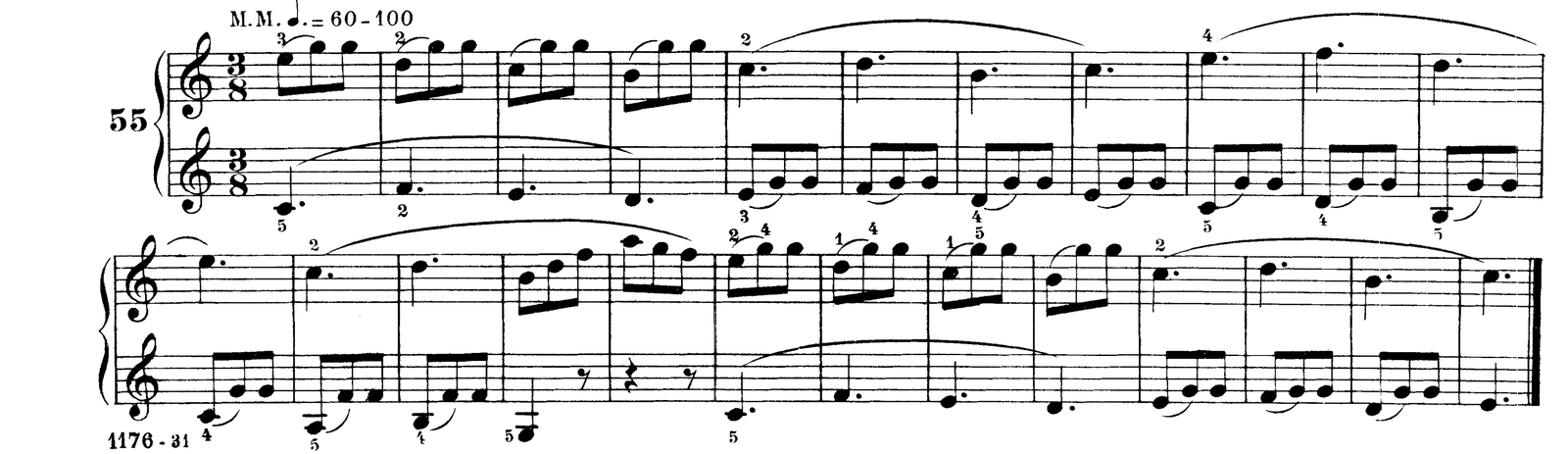
The repeated note in the following composition can just as well be played with the same finger, using a hand motion. The speed should ultimately be rather fast, and the rhythm as if we counted in measures of 12-8, i.e. count four, each measure being a beat.
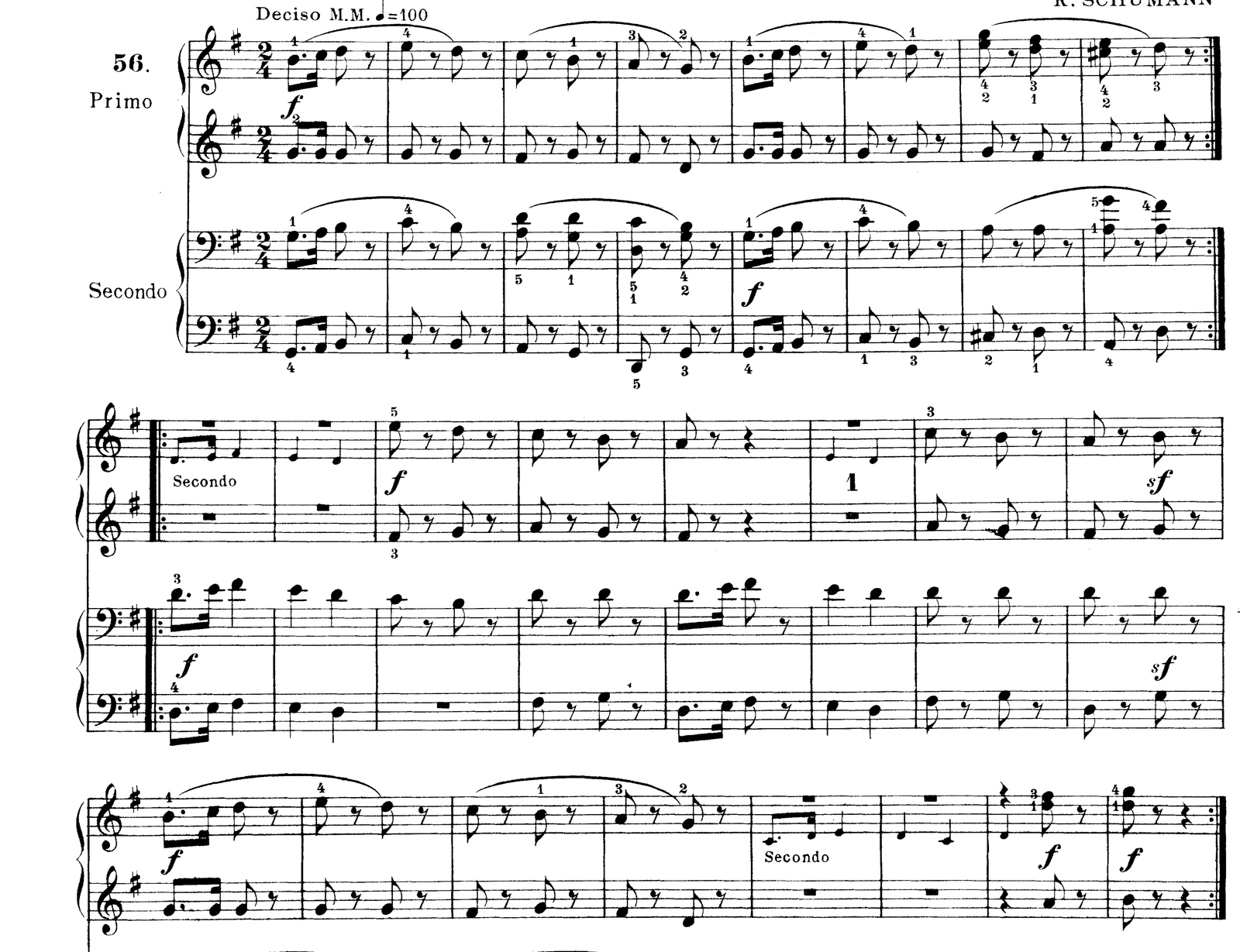
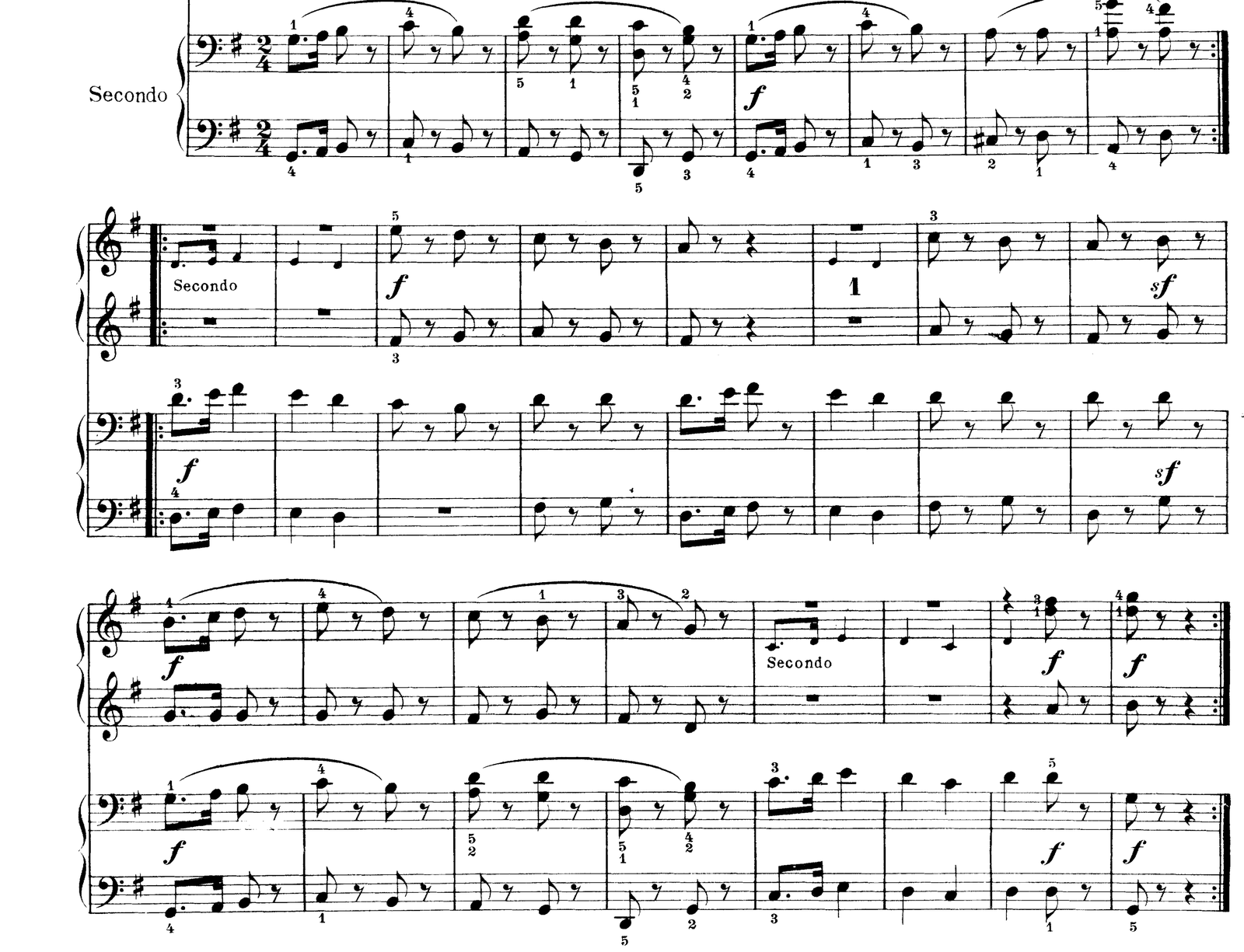
A favorite march by a great writer, here so divided between two players as to make each individual part easy, while the music is quite the same as the great master wrote it. The pupil should study both parts, the Primo and also the Secondo, the latter being particularly useful as a reading exercise from the bass clef.
Preparatory to this plaintive little song in minor mode it might be well to play the scale of A minor a few times, in order to make the positions easier. The melody well sustained, accompaniment quiet.
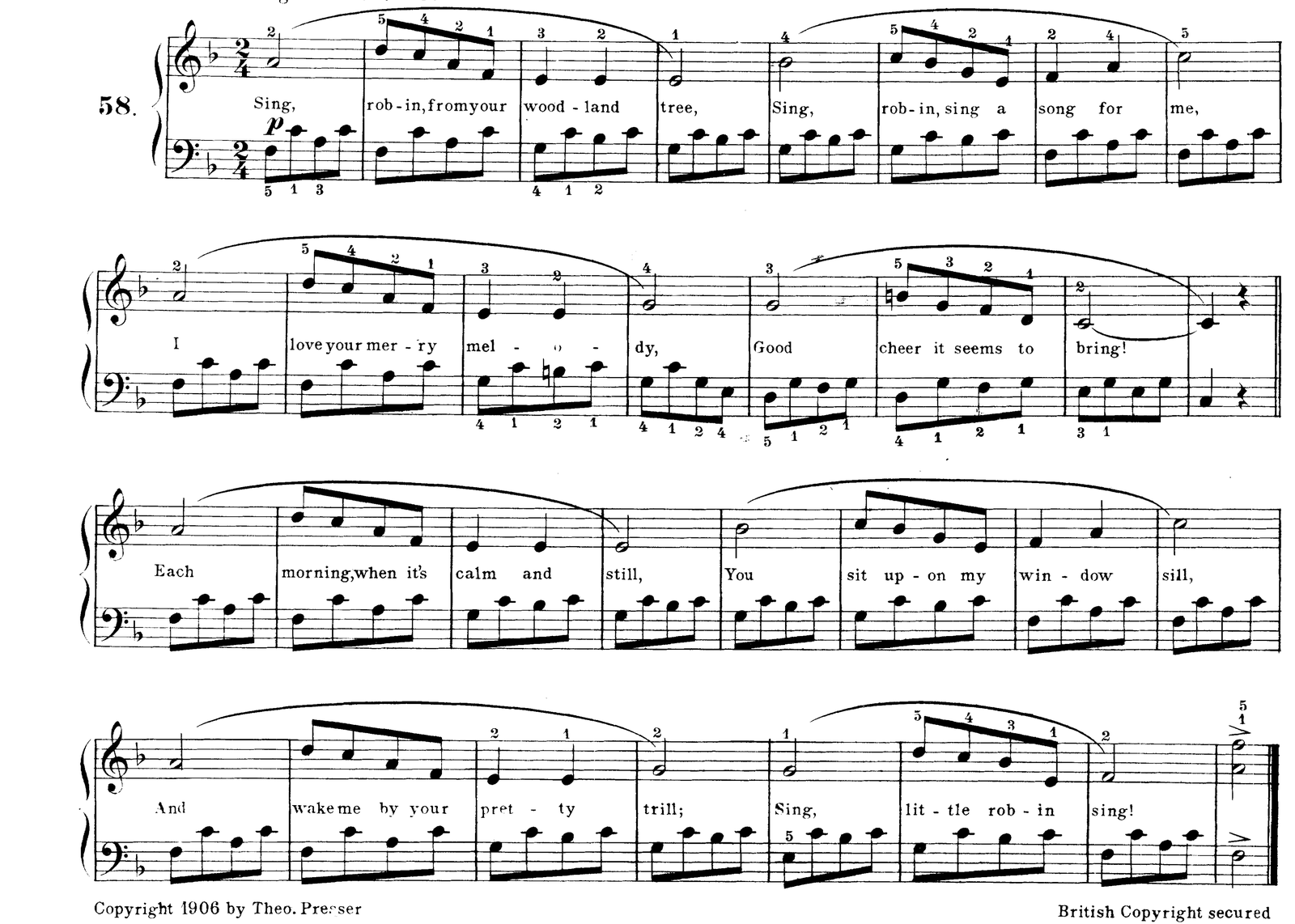
Preparatory to playing this bright little song in the key of F, it will be useful first to play the scale; then to study the left hand positions carefully; there are but few of them and the best way to get a comprehensive idea of them is to play them as chords, m. 1, m. 3, 11, 12, 13, 15. Then it will be easy to carry the accompaniment without slighting the melody.
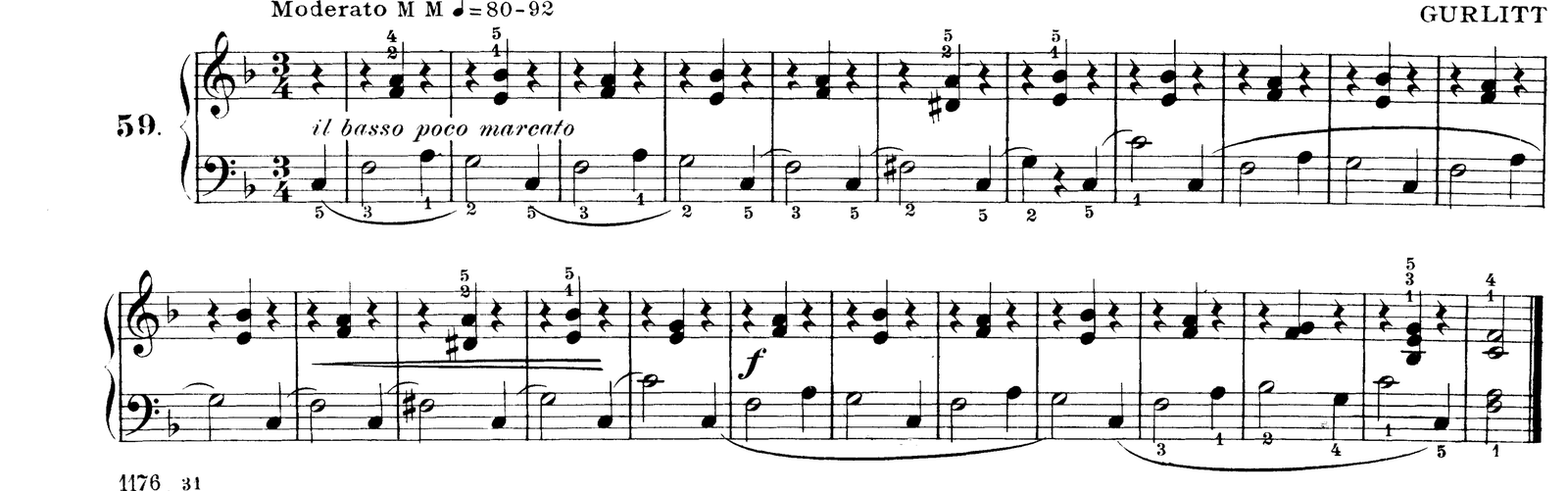
In No.59 the melody is in the bass, which must therefore have the true melodic quality, or intensity. This is not the same thing as greater volume or force, but rather intensity, in the sense of meaning it more. Every tone of the melody is meant - like a word especially adressed to one; whereas the accompaniment is merely a passenger, a friend, a distant relative of the melody.
 Playable Books