 Playable Books
George Frederick McKay · section 19 of 111
The Trumpet
Read and hear this section in the playable edition →In his Symphony in D minor, Franck has written for the two types of trumpet: the standard orchestral trumpet, which has the more vigorously strident and martial tone that results from the shape of the bell;
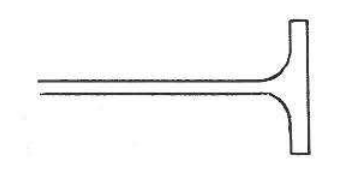
and the cornet, with its mellower tone which results from a more graduated bell.
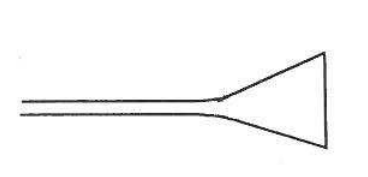
Although the timbres are different the playing techniques and resulting problems are much the same.
The few lowest tones are rather inferior in quality and should not be used too often. As the top of the range is approached the tones become excitingly stringent and furnish an
intensity well known to composers of dramatic music. Good players like to produce these tones, but because of the effort required they should be used sparingly.
The trumpets are the loudest of the instruments and this must be taken into consideration when marking the dynamics. When muted they are surprisingly weak.
Traditionally, trumpets have been thought of as instruments of fanfare, and composers of the past too often limited use of the trumpet to a detached articulation. Modern players, however, can do surprisingly well with legato effects and should be challenged more often by legato melodies and designs. When playing legato the player will need to pause for breath, and this should be considered when marking the legato phrasing.
Rapid staccato is possible but not easy, and should be limited to brief patterns which allow the player time to prepare for each active segment of the pattern.

Twentieth-Century developments in the use of mutes have added greatly to the variety of trumpet timbre. For instance, the straight mute creates a silvery, miniaturish sound; the Harmon mute adds a mellower lyricism to the tone; the cup mute produces a genial, slightly mocking distortion. When it had only its natural strident tone the trumpet was doomed to either foreground or silence. With the invention of the mutes it became possible for the trumpets to play a more subtle role and to contribute a new, more fluid and legato action to rhythmic and harmonic background.
For the most striking and modern use of mutes and other trumpet effects, listen with analytical curiosity to all kinds of dance band and jazz recordings. It will also be profitable to ob-
serve the remarkable use made by Stravinsky of both open and muted trumpets in Petrouchka. In this score there are many instances of trumpet effect which are given the foreground for dramatic purposes. In the Franck Symphony in D minor there is unique use of both trumpets and cornets to create a richness of harmonic effect.