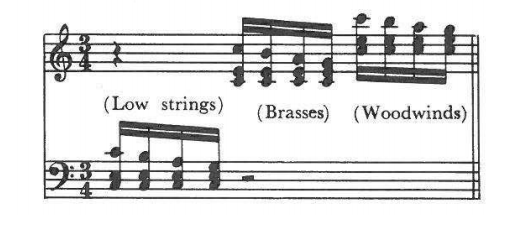
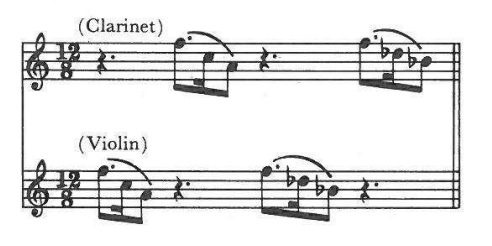
second one. It is not necessary to change register as in the first example, but this is usually done. Note that the changes come rather rapidly and that there is recourse to the natural contrast in timbres between the instrumental families.
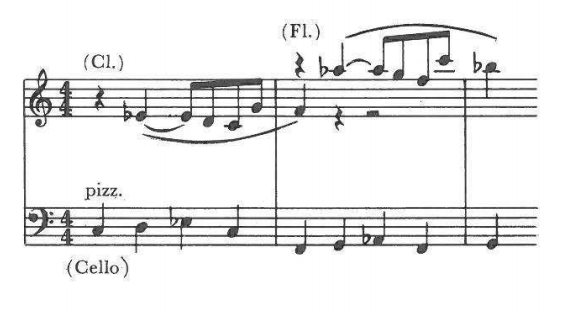
Occasionally the contrast will be applied more mildly, as in the next example, which features change of register within a family of instruments.
The antiphonal effect is most desirably stark when each new timbre can be heard without interference from any other element. Nevertheless, antiphonal alternation is also striking when acting in conjunction with another design element, as shown here:
Still another type of antiphonal interest is that which results when groups are placed off-stage in different parts of the auditorium and then are heard alternately as they answer back and forth. Good examples of this "stereophonic" effect are to be found in the use of offstage trumpet in the Beethoven Leonore Overture No. 3 and in the Berlioz Requiem; the latter specifies performance with different groups stationed in various parts of the auditorium. The full excitement of such antiphonal music can be experienced only in actual performance.
 Playable Books