 Playable Books
Jean-Philippe Rameau · section 37 of 109
Chapter twenty-three
Read and hear this section in the playable edition →On meter
Meter has such power in music that it alone can stir the different passions we have just attributed to the other parts of this art. Without it, all our expression would become languid and fruitless. We may say that it is natural to everyone: almost against our will, it draws us into following its movement. Only some extraordinary accident can make us insensible to it. Hence it is evident, as Descartes says on page 58, that animals could dance in time if taught or long accustomed to it, since this requires only natural effort and movement. It is therefore wrong to accuse people of having no ear merely because they are unaccustomed to a certain movement, or because the attention demanded by dancing, singing, or playing an instrument takes away the attention they could give to meter.
We can derive meter from the principle of harmony, since it consists only in the numbers two, three, and four, which give us the octave divided arithmetically and harmonically. Moreover, since meter consists only in equal movements, we can reduce it to two beats: the interval between the first and second movements naturally continues equally. Experience proves this in our natural movements—walking, repeatedly striking with the hand, or moving the head. All subsequent movements will equal the first two unless we deliberately alter them by a will contrary to nature. Meter would therefore present little difficulty in music if only one sound or note were heard per beat, as in plainchant. The difficulty would still be easy to remove if all notes within one beat were equal, since equal movement is natural to us. Their number produces no new proportions, just as the numbers containing the ratios of all chords do not: four, six, eight, ten, twelve, fifteen, sixteen, twenty, and so forth are composed of the first numbers two, three, and five. But dots, syncopations, and similar passages can be felt only through long practice.
To train someone’s ear, it would be appropriate to let them choose an even, somewhat slow tempo. At first, have them sing or play only one note per beat. Once this habit is fully established, have them perform two, four, eight, and sixteen notes per beat without changing the tempo. Remain with each exercise as long as necessary for it to become effortless. Then proceed similarly with three and six notes. Reserve dots, syncopations, and similar passages for last. Afterward it will be easy to repeat these things faster or slower, to make the first and last beats of each measure perceptible, and to mark them with tempos of the hand or foot. All this depends only on the teacher’s and pupil’s patience.
Some may think this little advice out of place, but I believe others will welcome it. I have noticed many people losing their taste for music because they think nature has denied them what, as we see, depends only on habit.
To distinguish meter in music, one must know the numerals placed at the beginning of a piece and the values of the signs we call notes, rests, and so forth. These are thoroughly explained in the books of Messrs. de Brossard, Loullier, l’Affillard, and others; scarcely any musician is unable to teach them. We shall therefore give no examples here, assuming anyone studying composition or accompaniment already knows these things. Several people, however, have pointed out their difficulty distinguishing meters from the different arrangements of numerals used to mark them. Here is how that difficulty could be removed, using only 2, 3, and 4 to distinguish every usable meter.
First suppose that since meter is distinguished only as two, three, or four beats, no other numerals are needed. Nothing would better distinguish its slowness or speed than the note values filling each measure. Knowing that the whole note moves more slowly than the half note, and likewise the half more slowly than the quarter, the quarter than the eighth, and the eighth than the sixteenth, who would not immediately understand that a whole-note beat means slower tempo than a half-note beat, and similarly from half to quarter, and so on?
A whole-note beat would give the slowest meter of all, distinguished by the Italians as Adagio or Largo.
A half-note beat would be somewhat less slow, suitable for tender and graceful melodies: what Italians distinguish as Andante or Gratioso.
A quarter-note beat would have a lively, cheerful character, distinguished by Italians as Vivace or Allegro.
An eighth-note beat would be the fastest, called Presto by the Italians. In three-beat meter, one could also use a sixteenth note per beat for the very rapid movement they call Prestissimo; in two-beat meter, an eighth-note beat can express that movement. With slow, less slow, lively, cheerful, and very rapid music thus distinguished by beat values, only more expressive terms need be added where appropriate: tenderly, gracefully, detached, connected, or louré.
The numeral at a piece’s beginning tells us its beats per measure. To identify the value of each beat, the author can place the appropriate note immediately before the clef for the performers’ understanding. This saves calculating the collection of notes in each beat, whose total must equal that beat’s note value. Furthermore, this note may be placed at the staff position of the piece’s key, as in the following examples.
Examples
Four beats
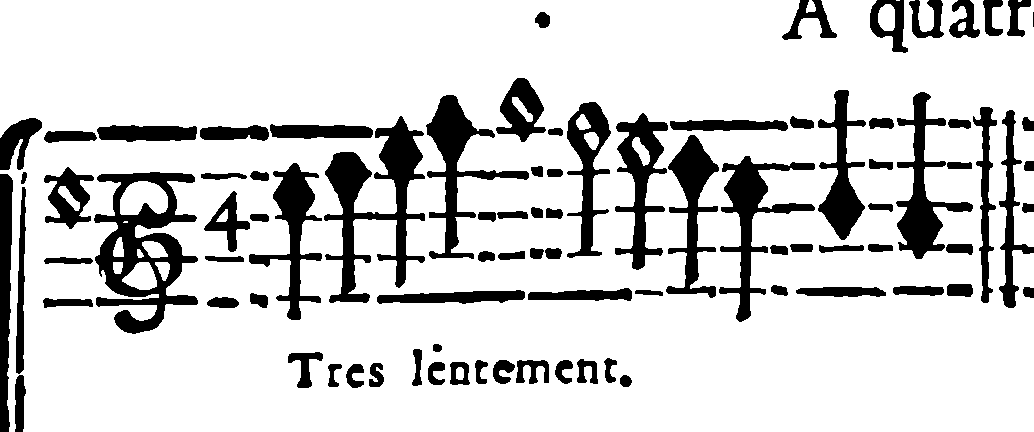
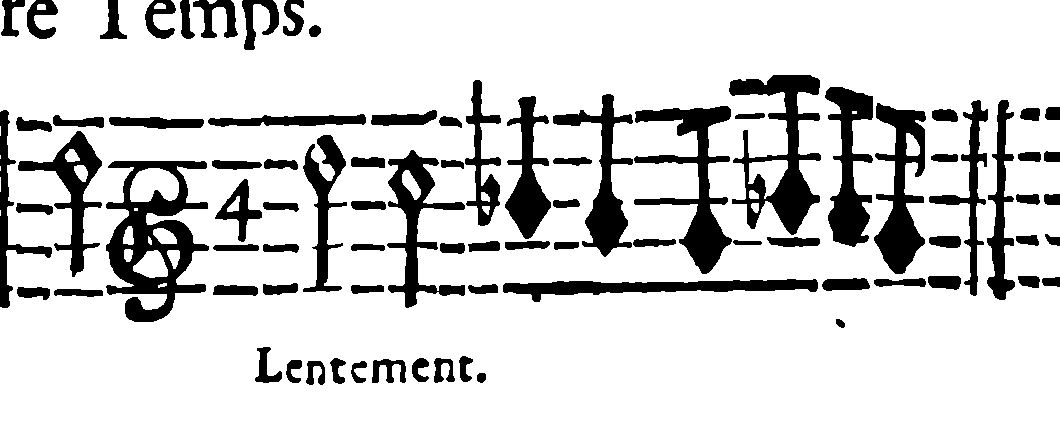
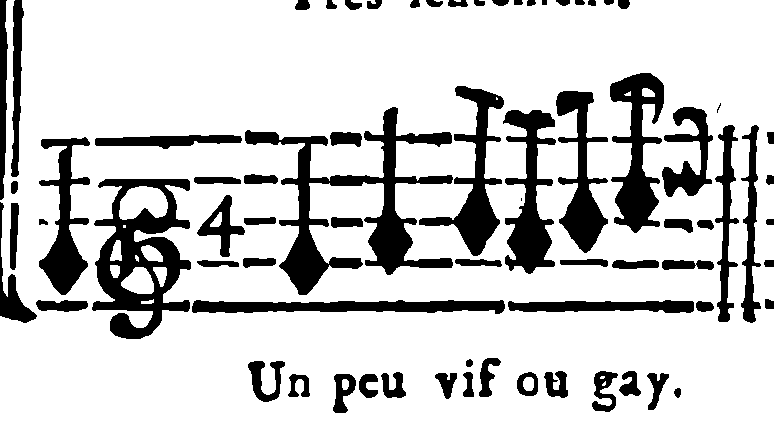
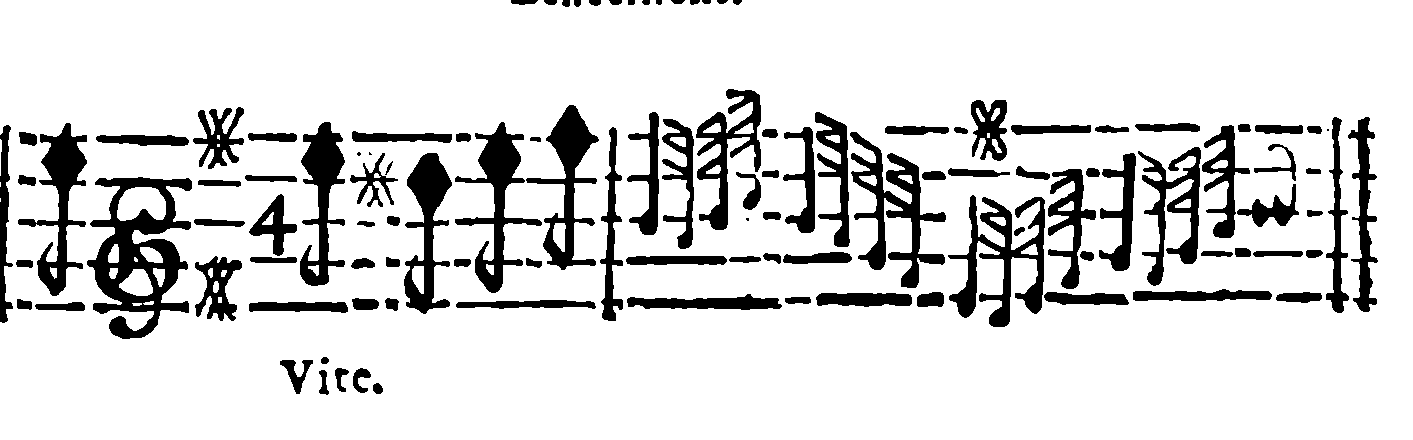
Two beats
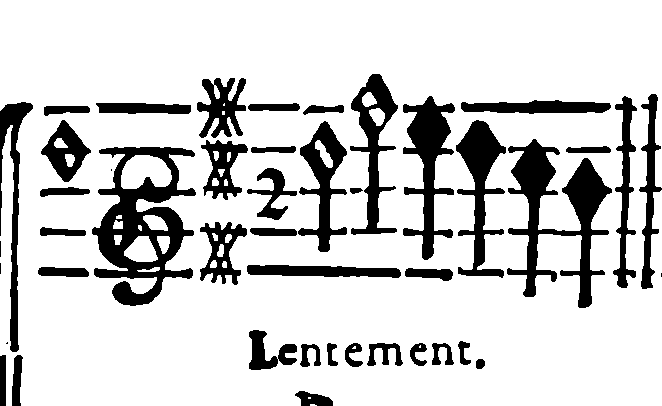
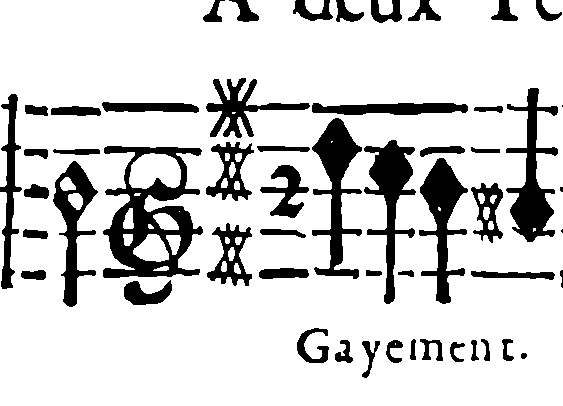
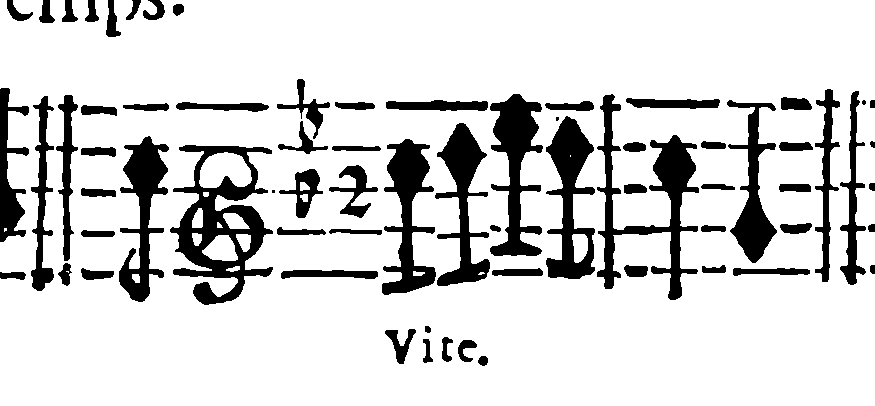
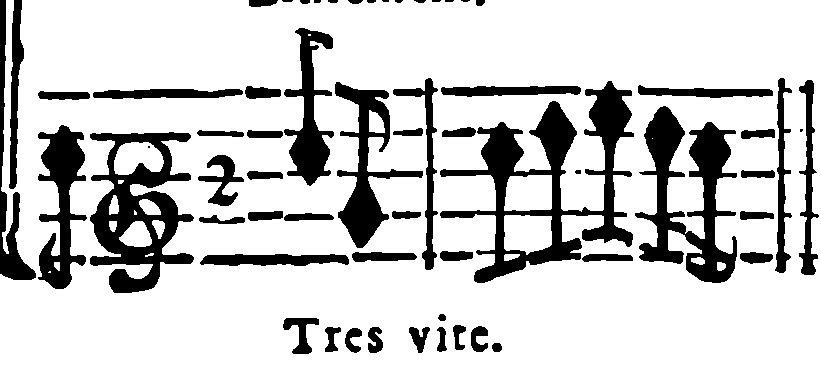
Three beats
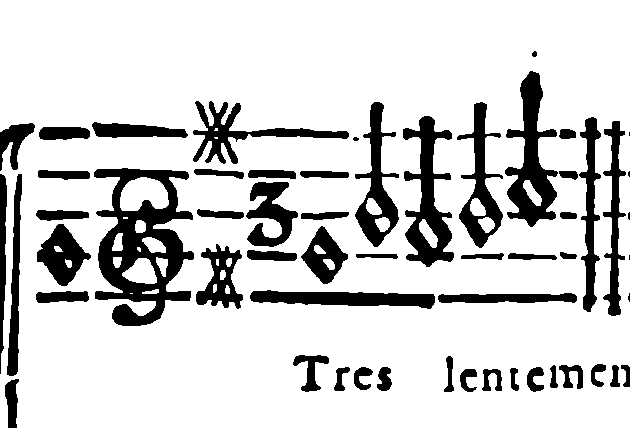
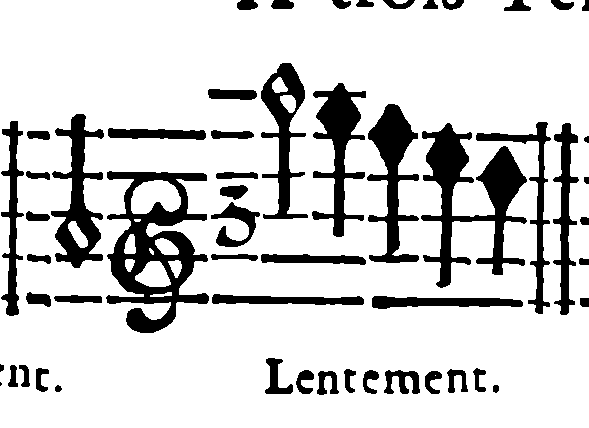
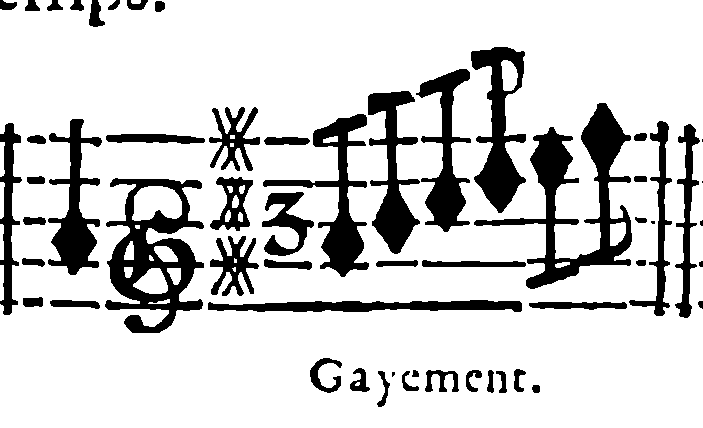
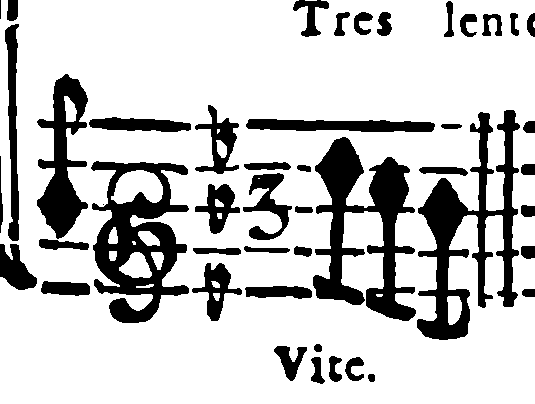
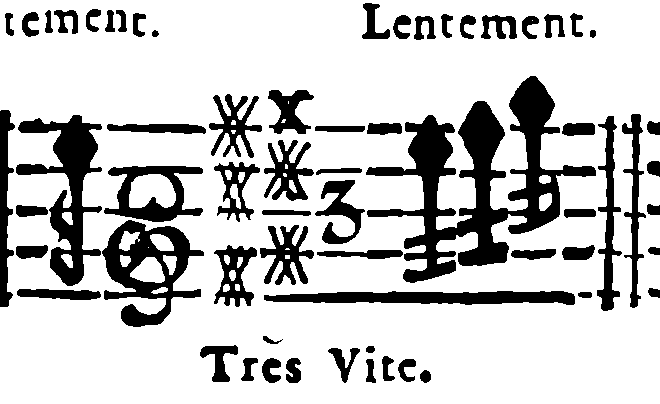
Words such as slowly or lively will be unnecessary, since the natural slowness or speed of the notes at the beginning already indicates this. But sadness and mournfulness naturally belong to slow movements; tenderness and grace to slow and cheerful movements; fury to very rapid movements, and so forth. Such expressive words may be added when required.
In the first four-beat measure, eight quarters, two halves, and one whole equal four whole notes. Placing the whole-note sign at the beginning, as proposed, avoids this calculation. The same applies to other movements where a quarter, half, or another note makes one beat.
Remember that a beat is ordinarily divided into no more than four parts. When a whole note is one beat, four quarters may fill it, but rarely eight eighths, although some may occur for the melody’s expression. Only in occasional passages can a beat divide into eight, and this division is conceived mentally. All the notes together equaling the beat value must pass within that beat in proportion to their values.
The faster the movement, the less the beat is subdivided.
To mark a meter with three equal notes in one beat, simply put before the clef a dotted note equal in value to those three notes.
Examples
Three beats
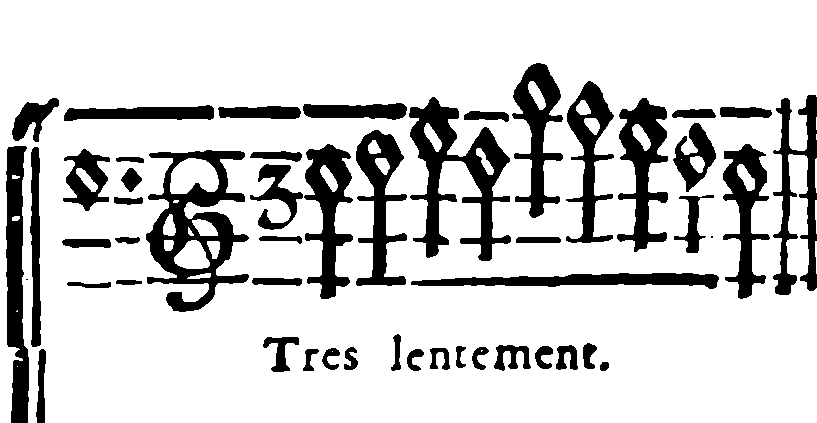
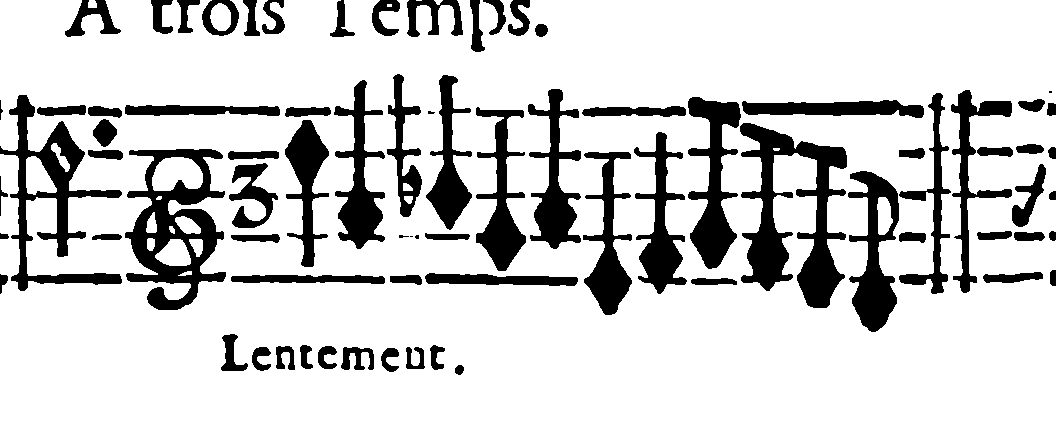
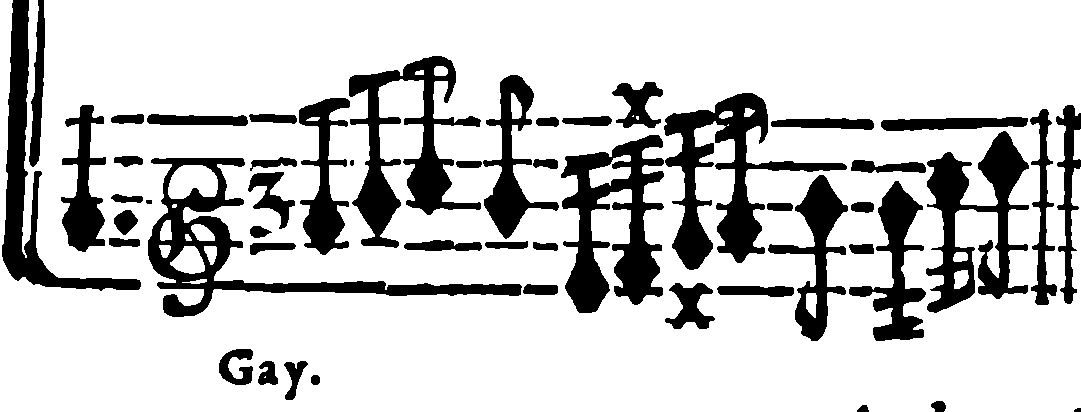
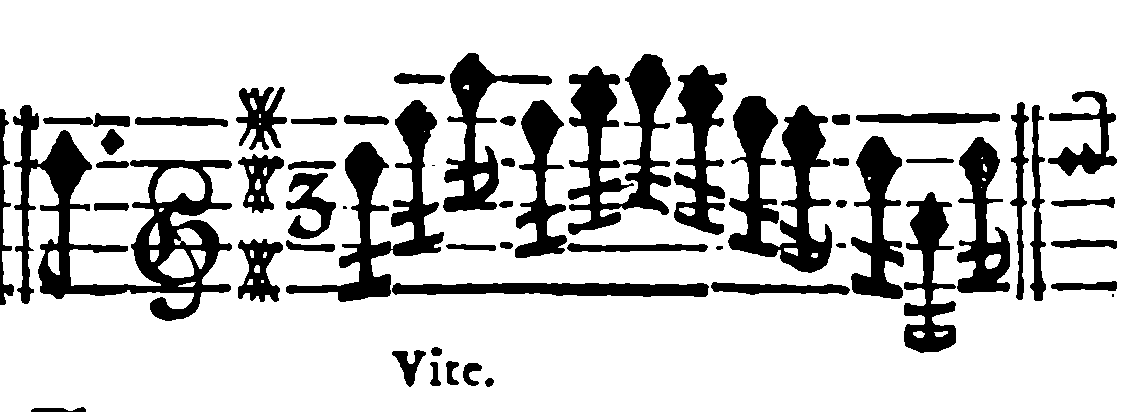
Two beats
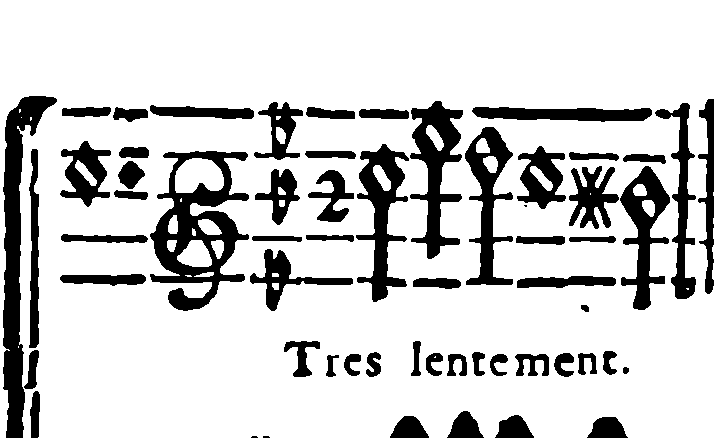
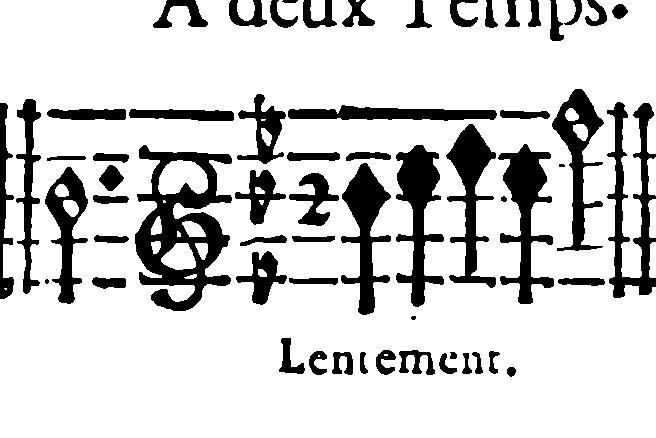
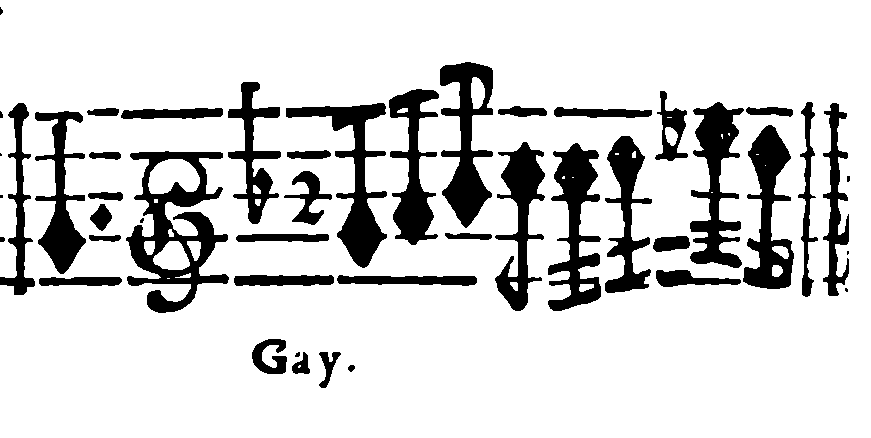
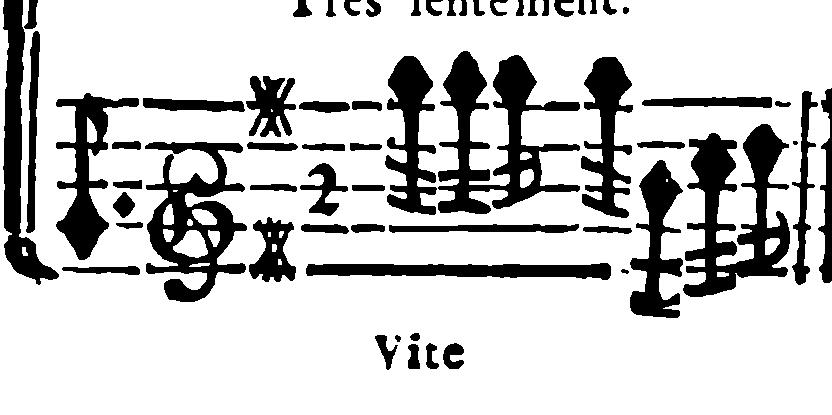
Four beats
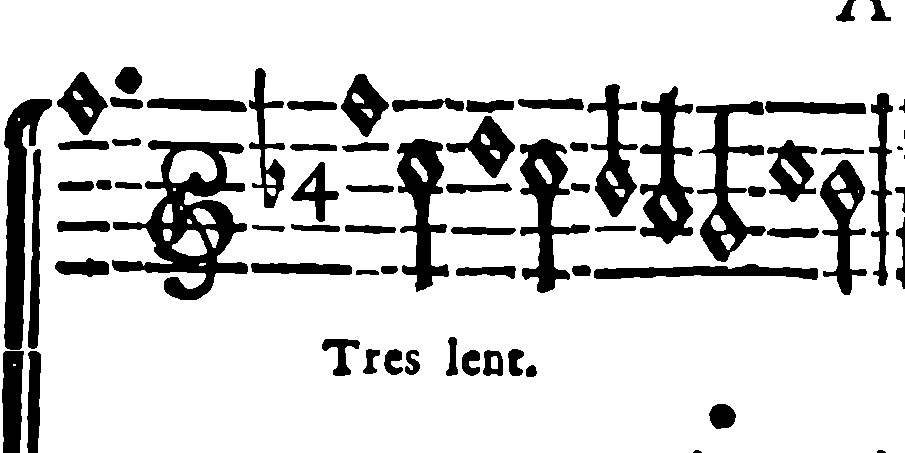
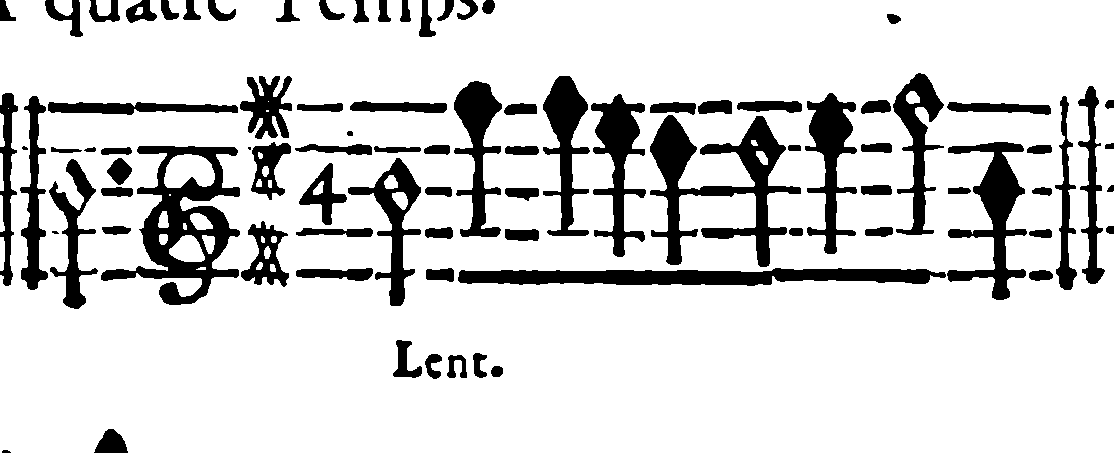
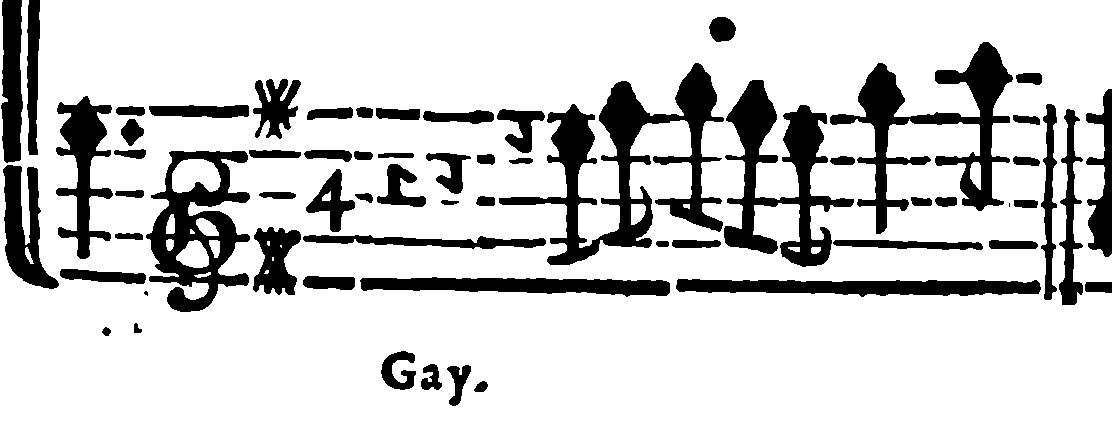
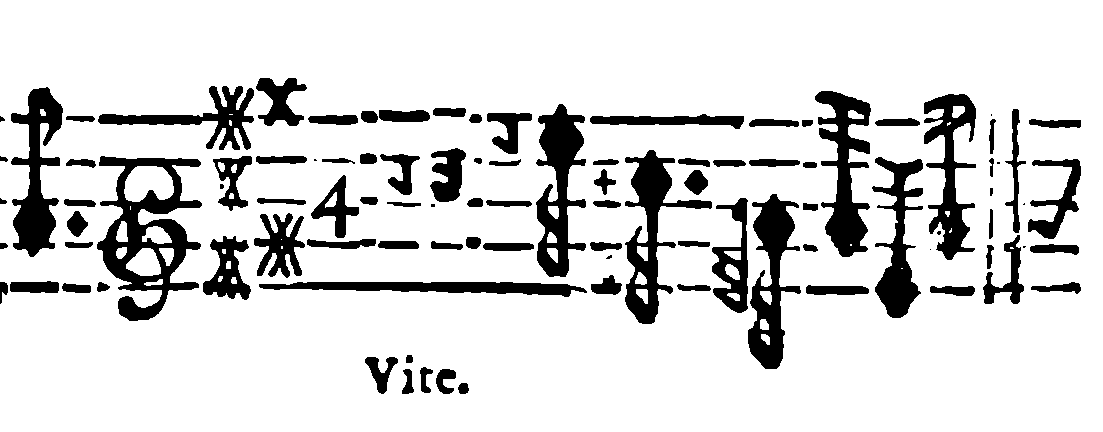
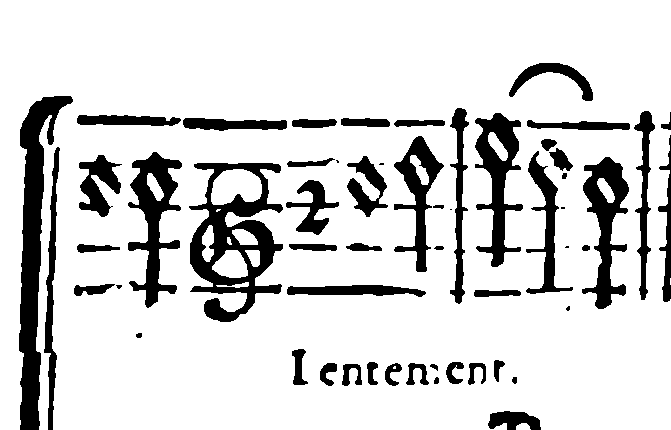
There are also movements with two, four, or even six unequal beats. They differ from the preceding ones only by dividing each beat in two, the first of the two always twice as long as the second. To distinguish such movements, mark the values of the first two beats of each measure with equivalent notes.
Examples
Two unequal beats
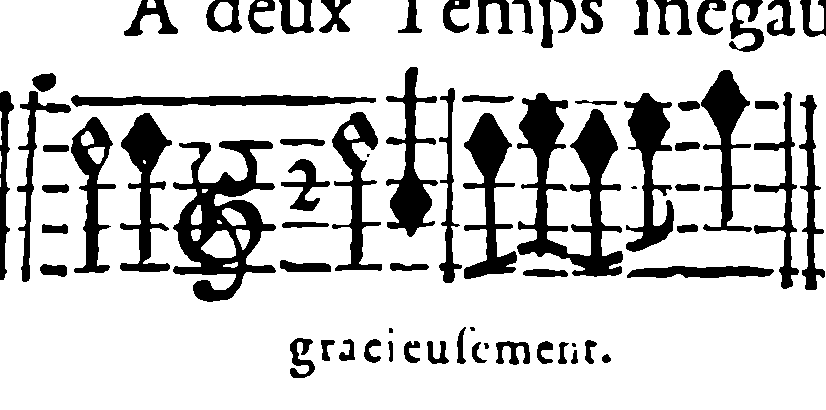
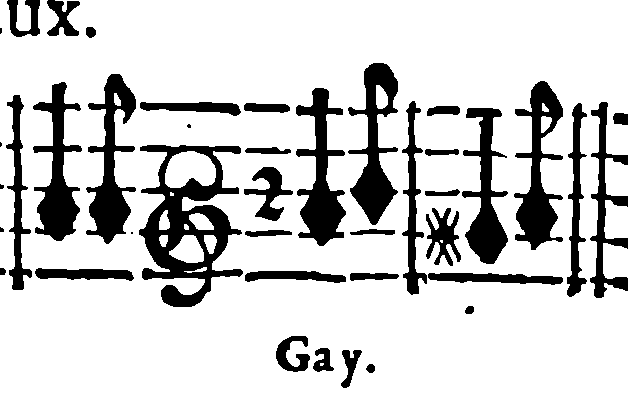
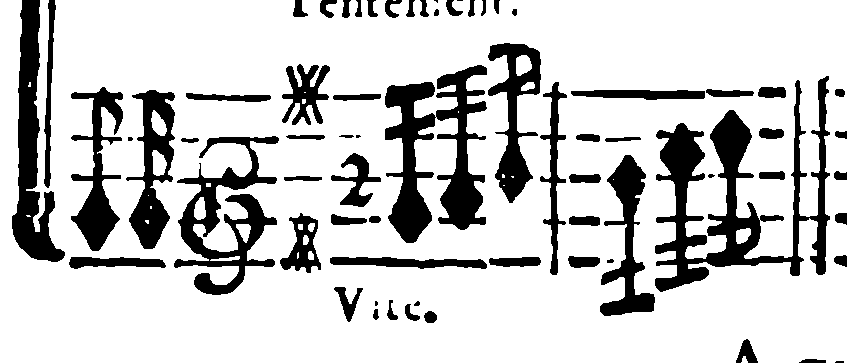
Four unequal beats
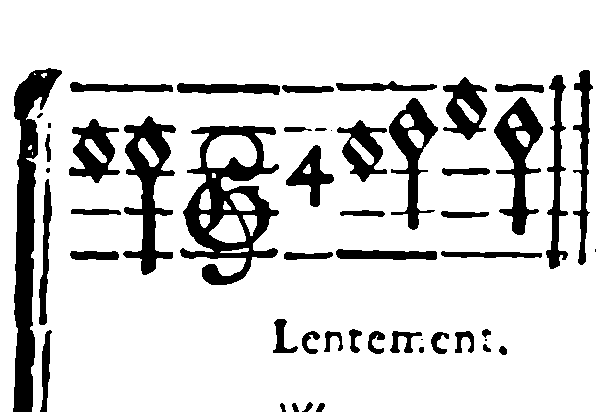
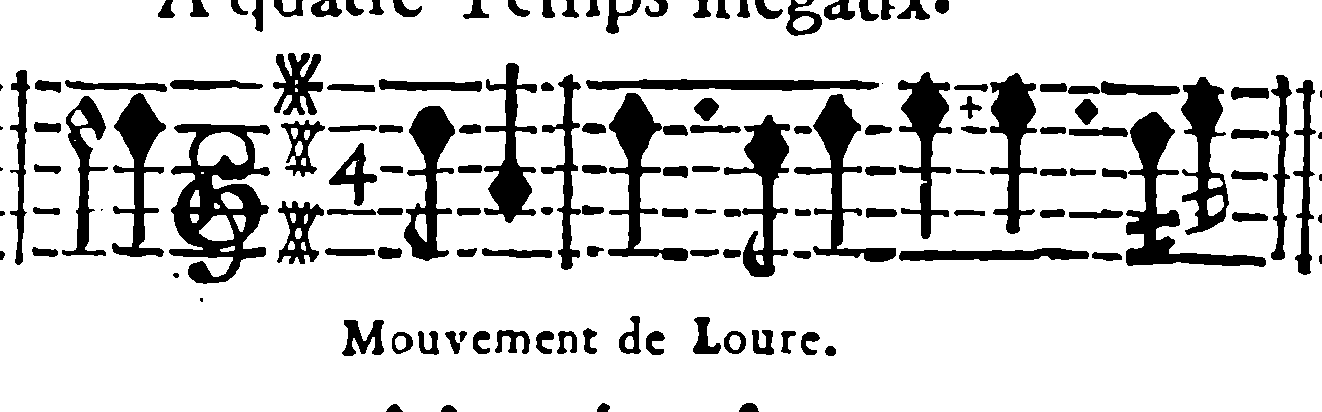
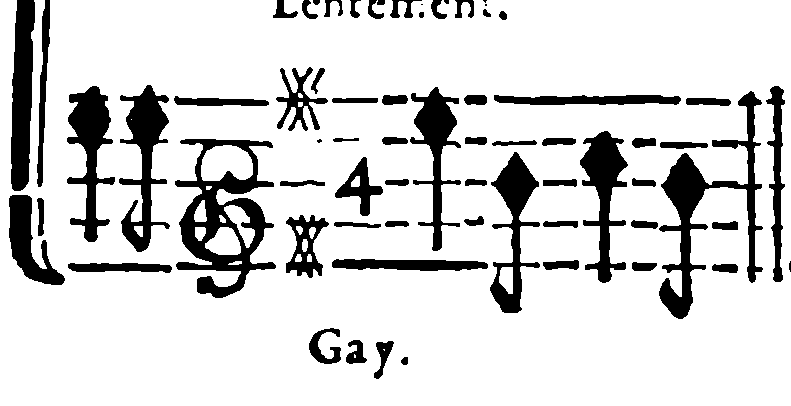
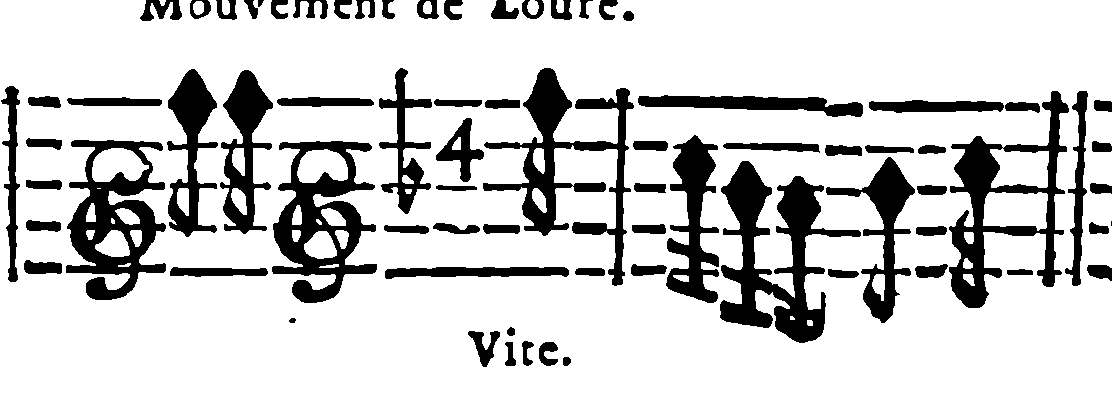
Six unequal beats
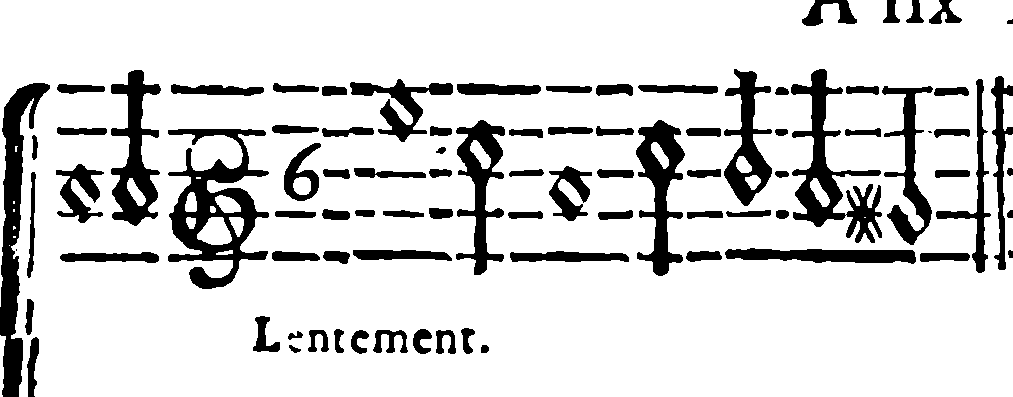
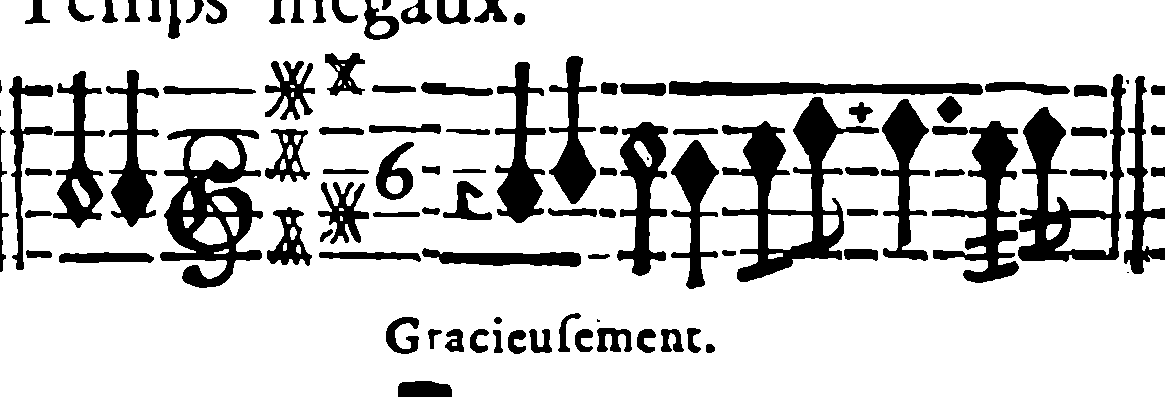
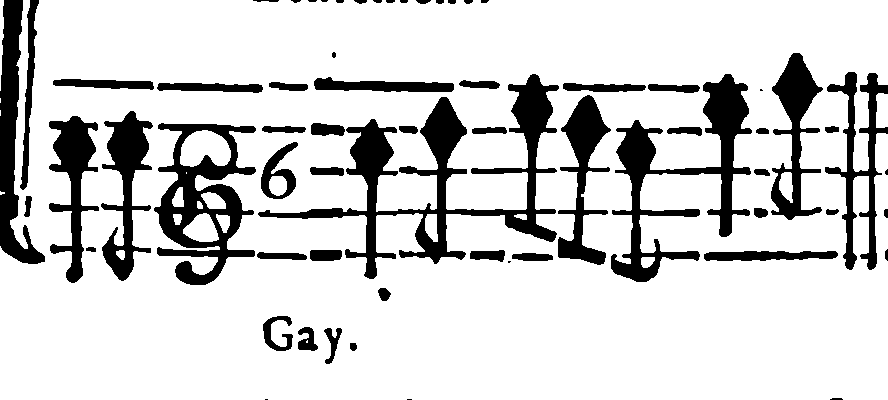
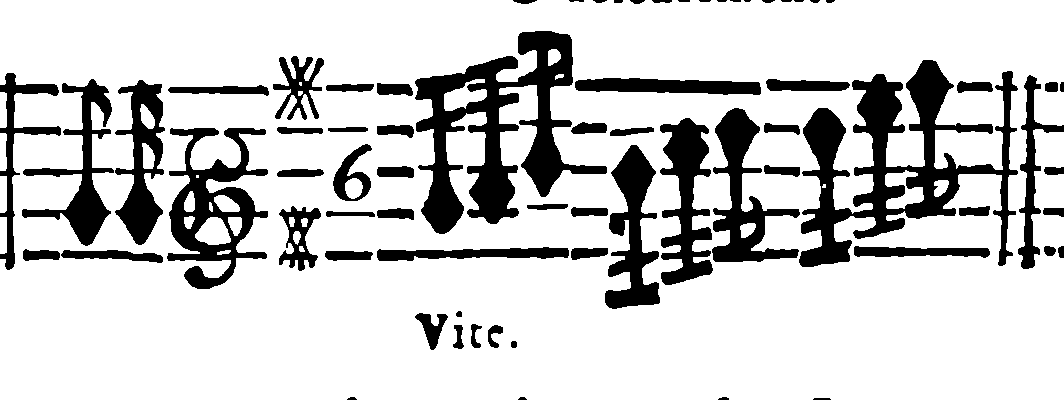
The habit of using the same numerals for unequal-beat movements and for movements containing three equal notes per beat makes them hard to distinguish and often confuses them. An air consequently does not always receive its proper movement. Unequal beats require a slight emphasis on the second, fourth, and sixth beats, introducing an indefinable grace into the first, third, and fifth. Their effect is very different from beating the same music in equal beats, although four unequal beats have the same arrangement as two beats containing three equal notes each. Likewise, six unequal beats correspond to three beats containing three equal notes each; and two unequal beats correspond to ordinary three-beat meter. Our different note signs at the beginning of each air make them easy to distinguish.
Six unequal beats are seldom used because they are difficult to conduct. Those wishing to use them—for they certainly suit particular expressions—may strike the first beat, lower the hand on the second with a wrist movement, lower it farther on the third with an arm movement, then raise the arm for the remaining beats as in four-beat meter.