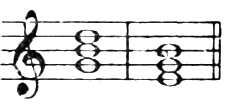
§ 58. — 1) By keys of the second class we mean those whose tonic chords are not found in the original key, but which nevertheless have at least one chord in common with it.
2) Every major or minor key has twelve keys of the second class.
Those of the second class for the key of C are:
D♭ – D – E♭ – E – g – A♭
A – B♭ – b♭ – B – b and c
Those of the second class for the key of A minor are:
B♭ – b♭ – B – b – c – c♯
D – f – f♯ – g – g♯ and A
3) The chords common to the two keys indicate the plan of the modulation; thus, to modulate from the key of C to the key of D, which have two chords in common:
In the first plan we have three keys succeeding one another by fifths, which makes the modulation monotonous; the second is therefore preferable, owing to the minor key that stands between the two major keys; moreover, its first modulating step would be a third upward and its second a second downward.
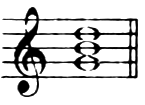
In other keys, for example in passing from the key of A minor to the key of C minor, the only common chord:
 Playable Books