Pyotr Ilyich Tchaikovsky · seção 36 de 36
Capítulo XXXIV. Cadências (fechamentos) Leia e ouça esta seção na edição reproduzível →
Tradução automática da leitura em inglês. Rascunho; ainda sem revisão por um falante nativo.
§ 139. Para concluir, completemos e sistematizemos nosso conhecimento das diferentes cadências, tratadas até agora de maneira fragmentária.
Fechamento completo (autêntico). Semicadência e cadência de engano.
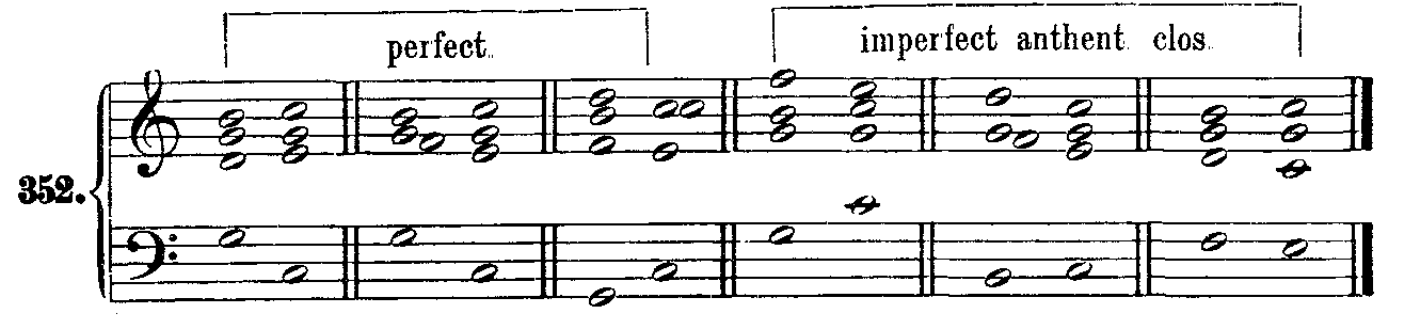
O fechamento completo consiste nas harmonias de dominante e tônica. Se ambos os acordes aparecem em estado fundamental e a tônica também em posição de oitava, a cadência chama-se perfeita; caso contrário, imperfeita.
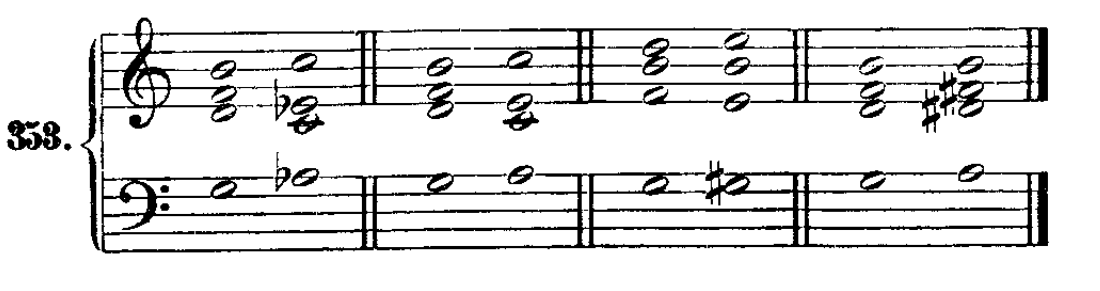
Fig. 367 · Reproduzir este exemplo no leitor ▶ Quando a fundamental da dominante, no baixo, resolve num grau diferente da tônica, temos uma cadência de engano.
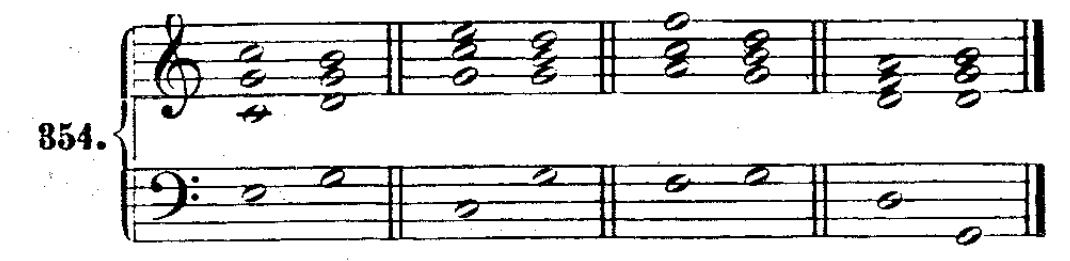
Fig. 368 · Reproduzir este exemplo no leitor ▶ A semicadência é um fechamento completo invertido: seu primeiro acorde é a tríade de tônica ou algum acorde do grupo da subdominante, seguido pela tríade de dominante.
Fig. 369 · Reproduzir este exemplo no leitor ▶ Além desses fechamentos, há o chamado fechamento plagal ou eclesiástico, mencionado num capítulo anterior.
Conhecimentos adicionais sobre cadências devem ser buscados nos tratados de forma musical.
← Capítulo XXXIII. Desvios das leis da harmonia Todas as seções Mais Playable Books Fenaroli, Partimenti Six books of partimenti, with playable basses, contrapuntal exercises, and bilingual rules. Fux, Gradus ad Parnassum Learn how independent voices work together, one species at a time. Goetschius, Exercises in Elementary Counterpoint Build independent melodies through graded exercises, with 471 recorded examples. Goetschius, Counterpoint Applied Study imitation, canon, and fugue with 393 recorded examples. Kitson, Counterpoint for Beginners Strict counterpoint in two and three parts, species by species, with every example playable. Prout, Analysis of J. S. Bach’s Forty-Eight Fugues Follow Prout through all 48 fugues of the Well-Tempered Clavier, every example playable. Rameau, Treatise on Harmony Explore the foundations of harmony, composition, and accompaniment. Rimsky-Korsakov, Practical Manual of Harmony The classic harmony course, newly translated from the 1910 French edition, with all 640 examples playable. Reger, Supplement to the Theory of Modulation Explore Reger’s modulation method with 100 analyses and 102 playable examples. Cutter, Harmonic Analysis Learn to name every chord and non-harmonic tone in real music, from Bach to Wagner, with the passages playable. Schoenberg, Theory of Harmony Read all 22 chapters, with the original German beside a new English translation. Rimsky-Korsakov, Principles of Orchestration Discover instrumental colors through scores and orchestral recordings. Forsyth, Orchestration A witty, thorough guide to every orchestral instrument, with the original pages. Forsyth, Choral Orchestration A whole Te Deum orchestrated bar by bar, with Forsyth’s reasons, the full score and the vocal score playable. Berlioz, Treatise on Instrumentation Berlioz’s treatise on the orchestra, revised by Richard Strauss, with the original pages. McKay, Creative Orchestration Ranges, transpositions, texture and balance, taught through projects, with the supplied examples played by orchestral samples. Sanganeria, Arrival Build jazz lines that land, with 30 original playable examples. Bona, Complete Method for Rhythmical Articulation Practice rhythm through 120 graded studies, with playable notation and original scans. Hanon, The Virtuoso-Pianist Practise all 60 exercises with playable notation, original scans and supplied Mutopia playback. Mathews, Standard Graded Course of Studies, Grade I A first year of piano: 136 short pieces by many composers, every one playable, with Mathews’s teaching notes. Goetschius, Lessons in Music Form Hear how figures become phrases, periods, rondos and sonata forms, with the printed examples beside their playable notation. ← Todos os Playable Books  Playable Books