 Playable Books
Hector Berlioz · section 13 of 67
The Pianoforte
Read and hear this section in the playable edition →
The pianoforte is an instrument with a keyboard and metal strings set in vibration by hammers. Its present range is six octaves and a fourth, frequently even seven octaves.* Its music is written simultane-
and even at the Opéra (the last place in the world where such liberties should be taken) venture to execute the mandolin part pizzicato on violins or on guitars. The tone of these instruments has by no means the peculiar delicacy of the mandolin; and Mozart knew what he was doing when he chose this particular instrument to accompany the amorous song of his hero.
ously in two clefs: the F-clef is used for the left hand, the G-clef for the right. Sometimes—according to the registers of passages assigned to both hands—two Fclefs or two G-clefs are used. ara |


The trill is possible on all degrees of the scale. Chords of four and even five notes can be played simultaneously or arpeggiated in any manner and with both hands; but the harmony should be as close
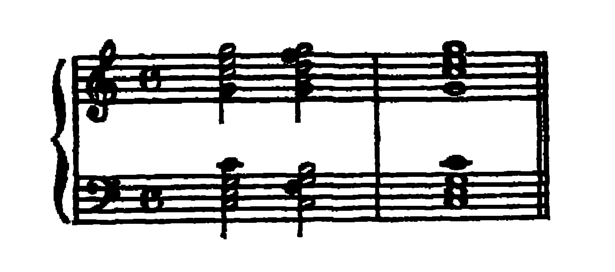
Chords embracing an interval of a tenth are pos sible, too; but then the third and even the octave
Example in four parts without pedal:
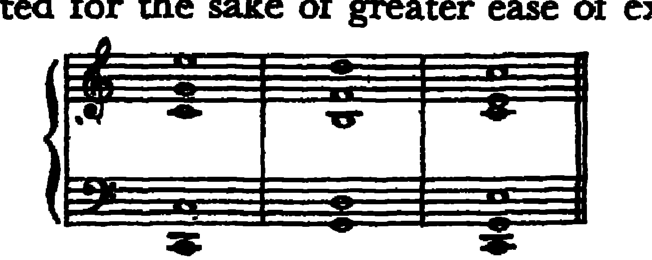
Feur and even five real voices may be written for the piancforte if care is taken to keep the outer parts in each hand within the space of an octave or at most a ninth. Otherwise the pedal has to be used. This raises the dampers and permits the player to prolong the tones without keeping the fingers on the keys, in which case one is free to place the voices even further apart. ‘

Example with pedal:

*Now 7% octaves (i.e. 88 notes)
The sign * (or similar) in the second example indicates that the pedal is to be released in order to restore the function of the dampers. Whenever possible, it is used when the harmony changes in order to prevent the continuation of the previous chord during the ensuing one. On account of this long prolongation of each tone, ap iaturas with accidentals and passing notes should be avoided as much as possible in the middle of the instrument while the pedal is being used; for these notes, sustained like all the others and thereby mixed with a harmony to
which they do not belong, produce excessive dissonances. Such melodic ornaments are possible only in the highest octaves of the keyboard, where the strings are very short and have relatively little resonance.
Modern Steinway Grand Pianos have a third pedal, which serves to prolong a single tone at will. This is very effective and may occasionally help the player in passages of several voice-parts. Sometimes the hands are made to cross, the left
hand passing over the right or vice versa:
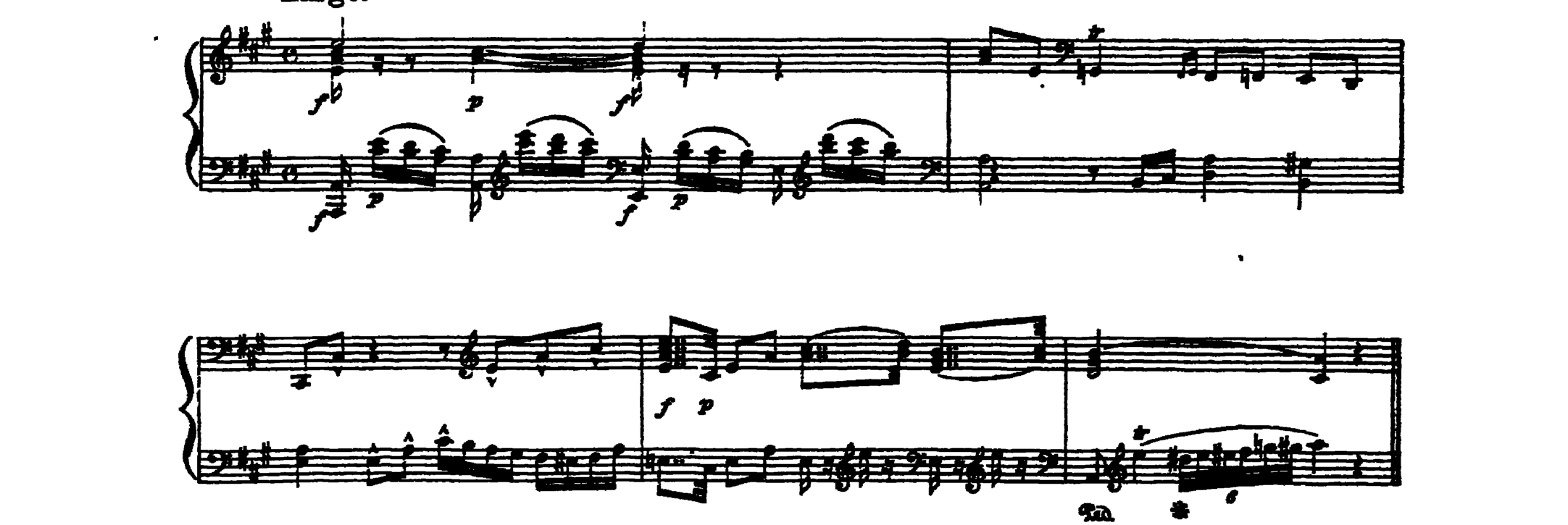
The number of such combinations among the manifold groups of tones playable on the pianoforte is very considerable. In fact, it would be impossible to mention them all here. Only by studying the compositions of great virtuosos, especially Liszt’s, can one form a clear idea of the progress made in the art of piano playing. The student will then perceive that the limits of what is attainable on this instrument are
still quite unknown, and that they are extended continuously through astonishing new exploits by performers. —
For the pianoforte, as for the harp, it is better in certain cases (for instance in arpeggios) not to place the two hands too near each other. A passage like the following would be rather inconvenient:
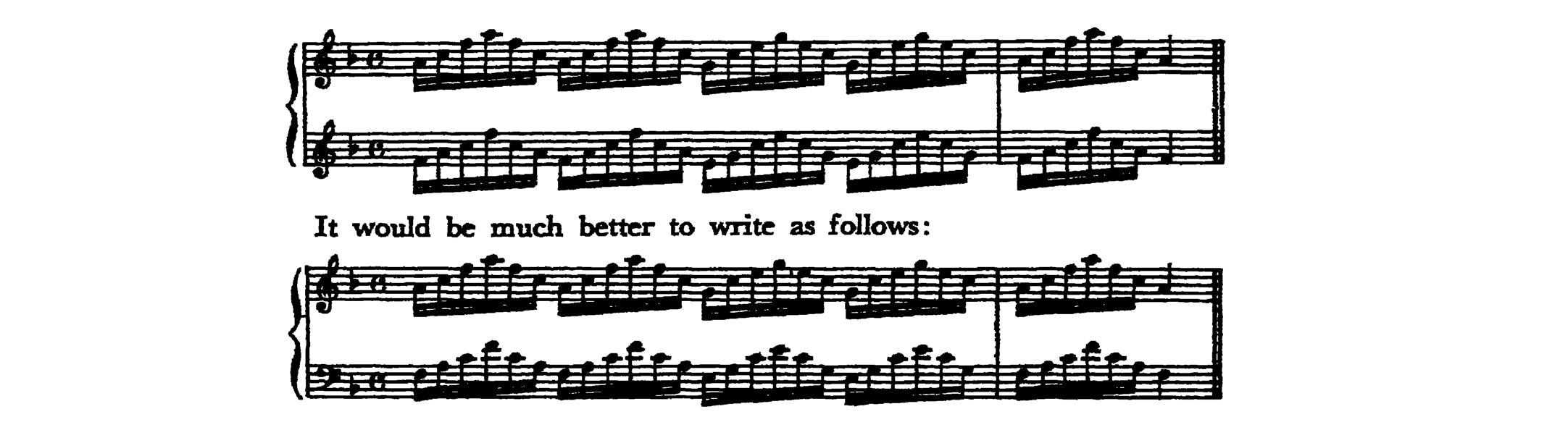
Diatonic and chromatic scales in thirds for both hands are, however, quite easy:


Such scales in thirds can also be executed by one hand alone, but they are difficult in a fast tempo. Moreover, in keys with few sharps or flats one may write for both hands consecutive sixth-chords consisting of three notes:
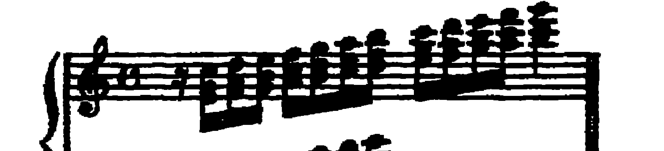
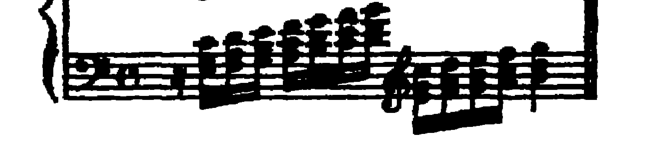
Thanks to the high degree of perfection attained by our skilled manufacturers, the pianoforte may now be considered from two viewpoints: either as an orchestral instrument or as a small orchestra complete in itself. Only once * has it been employed in the same fashion as the other instruments, so as to add its peculiar resources to the ensemble of the orchestra and to create effects which could not be attained in any other way.
*Cf. “L&lio” hy Berlioz, p. 157
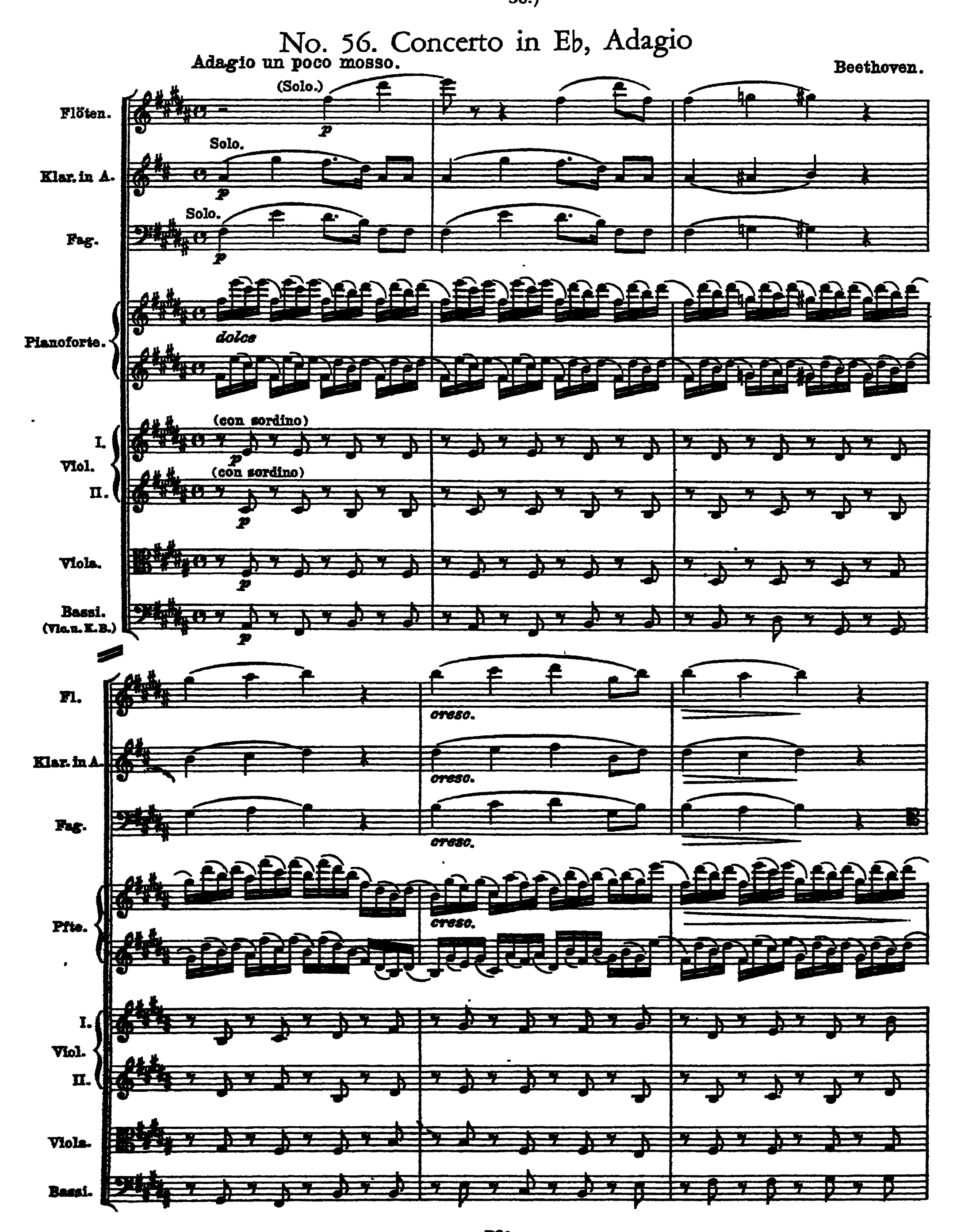
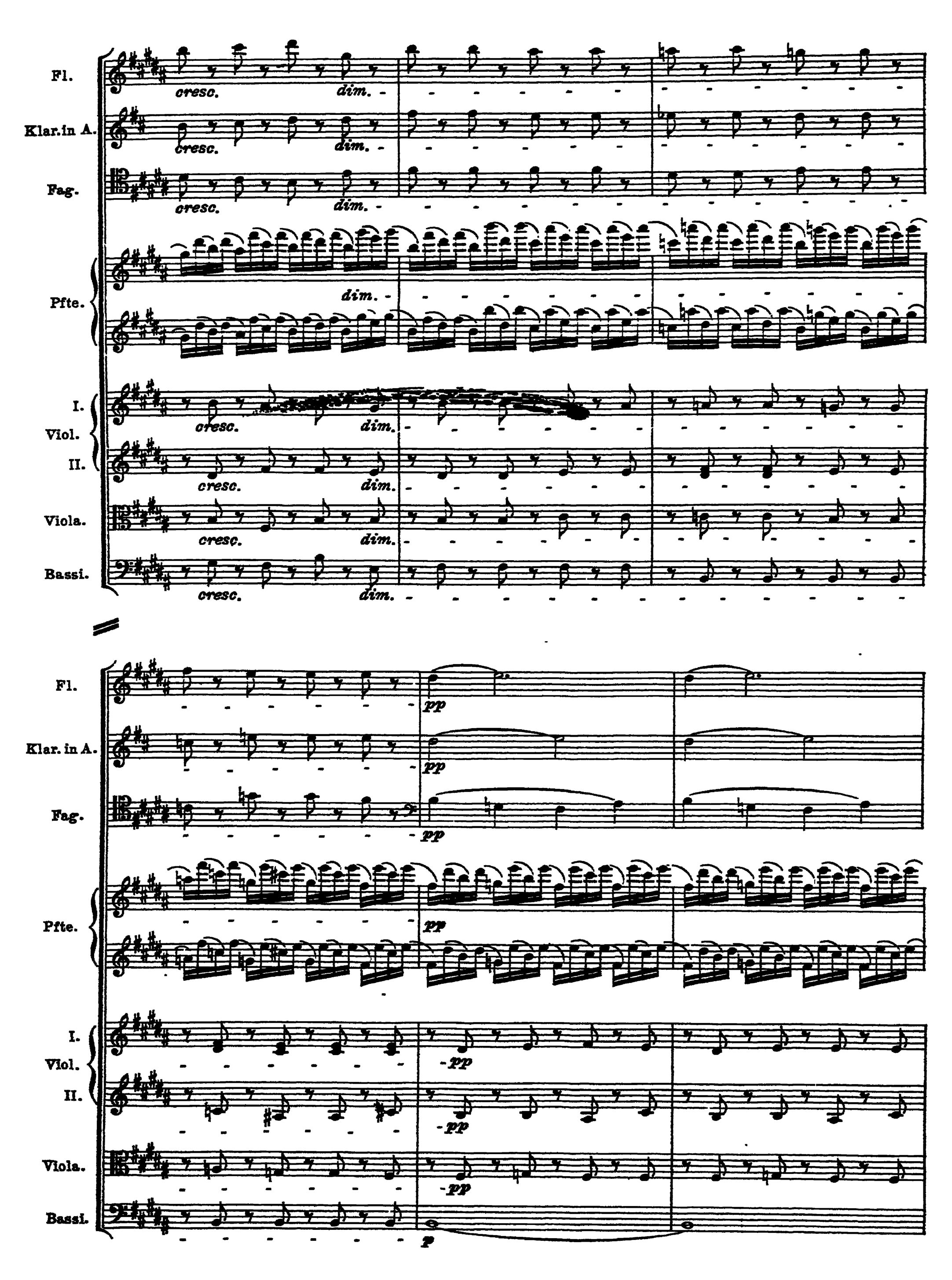
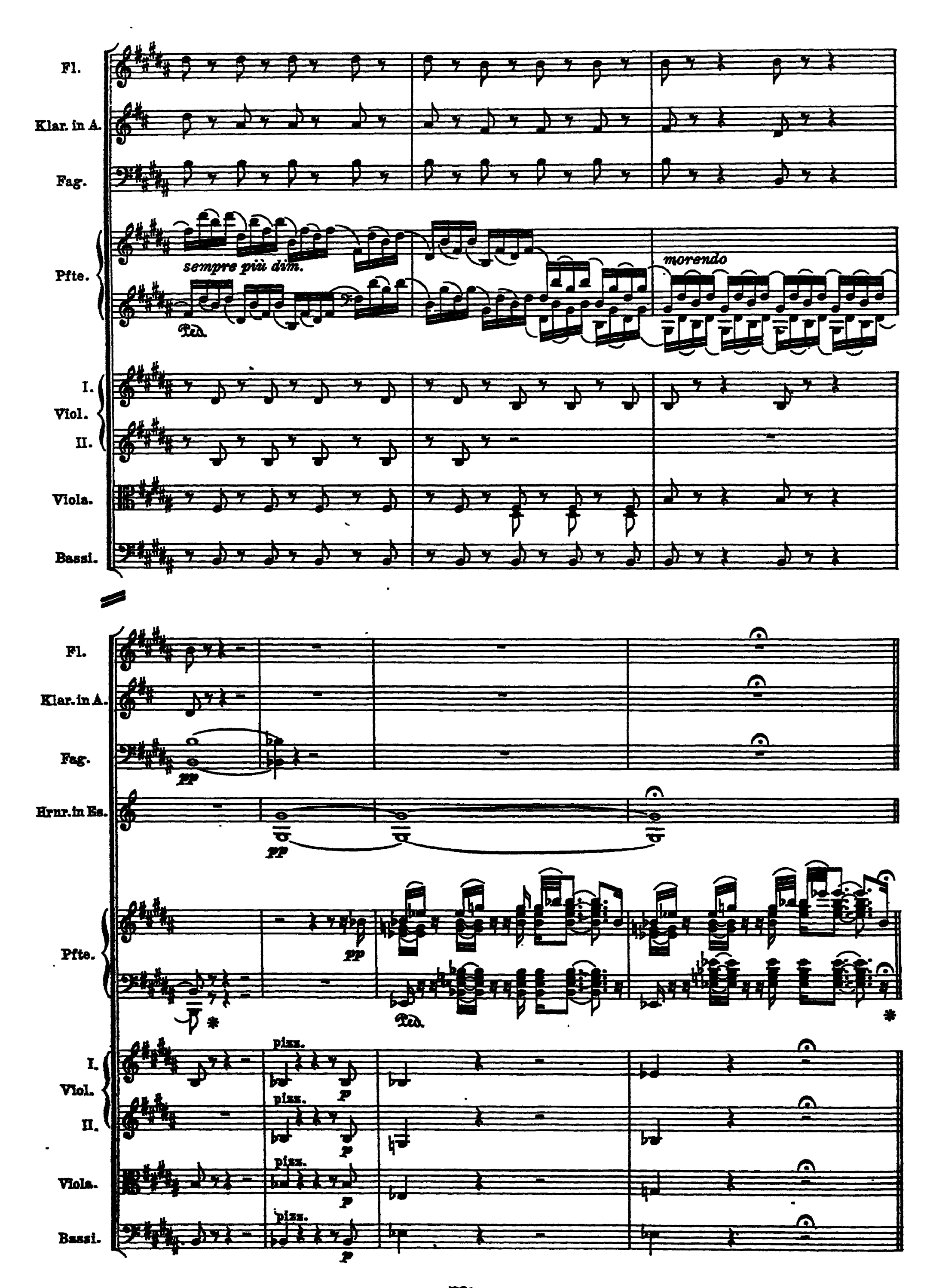
Certain passages in Beethoven’s concertos ought to have drawn the composers’ attention to this point long ago. They have surely admired the wonderful effect in Beethoven’s Concerto in Eb, produced by the slow chord figurations of both hands in the high
the piano, while the flute, clarinet and
bassoon play the melody over eighth-notes of the strings in contretemps. In such combination, the tone of the pianoforte has an alluring charm, it is full of calm of freshness—the very image of grace. (Example
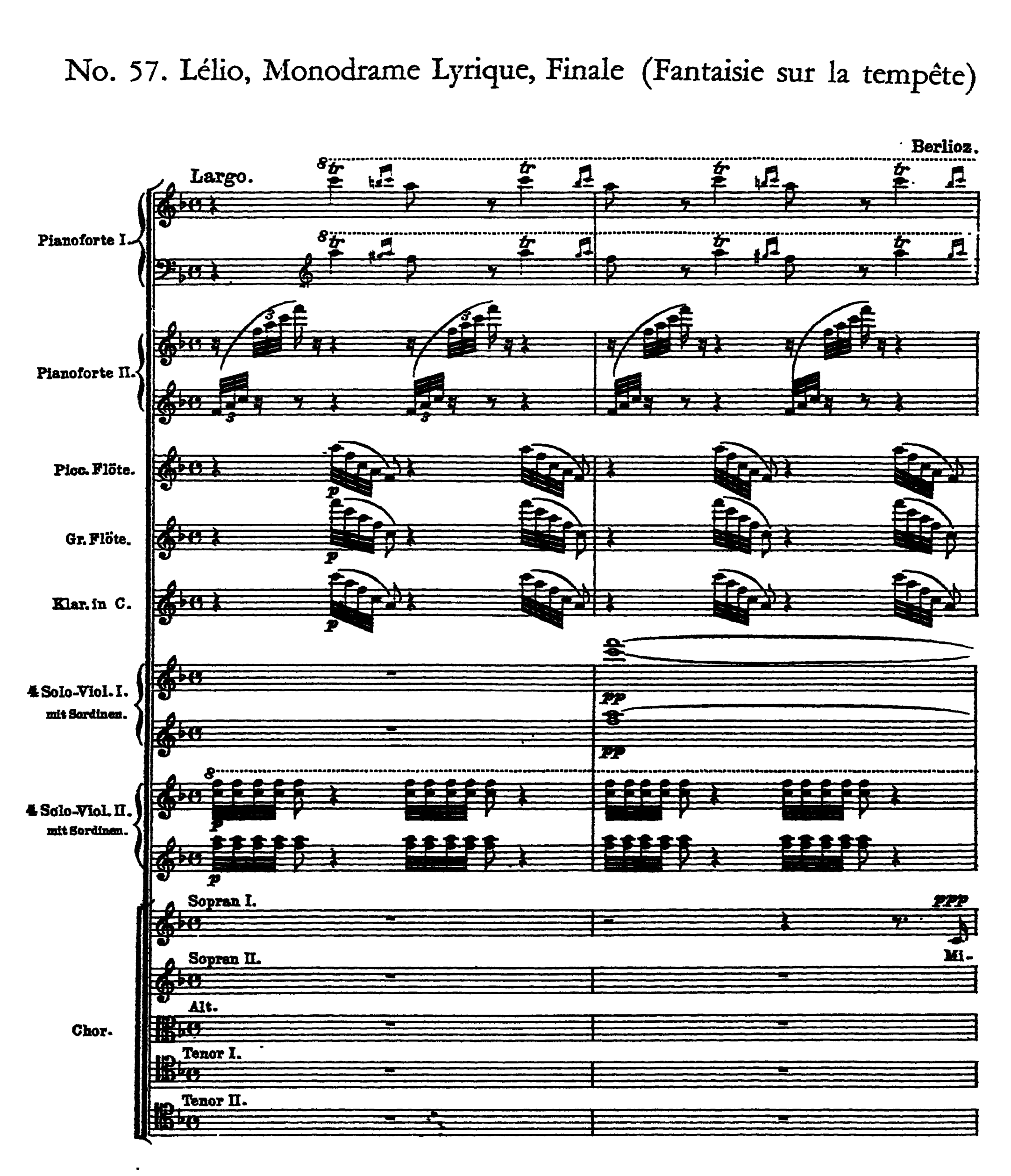
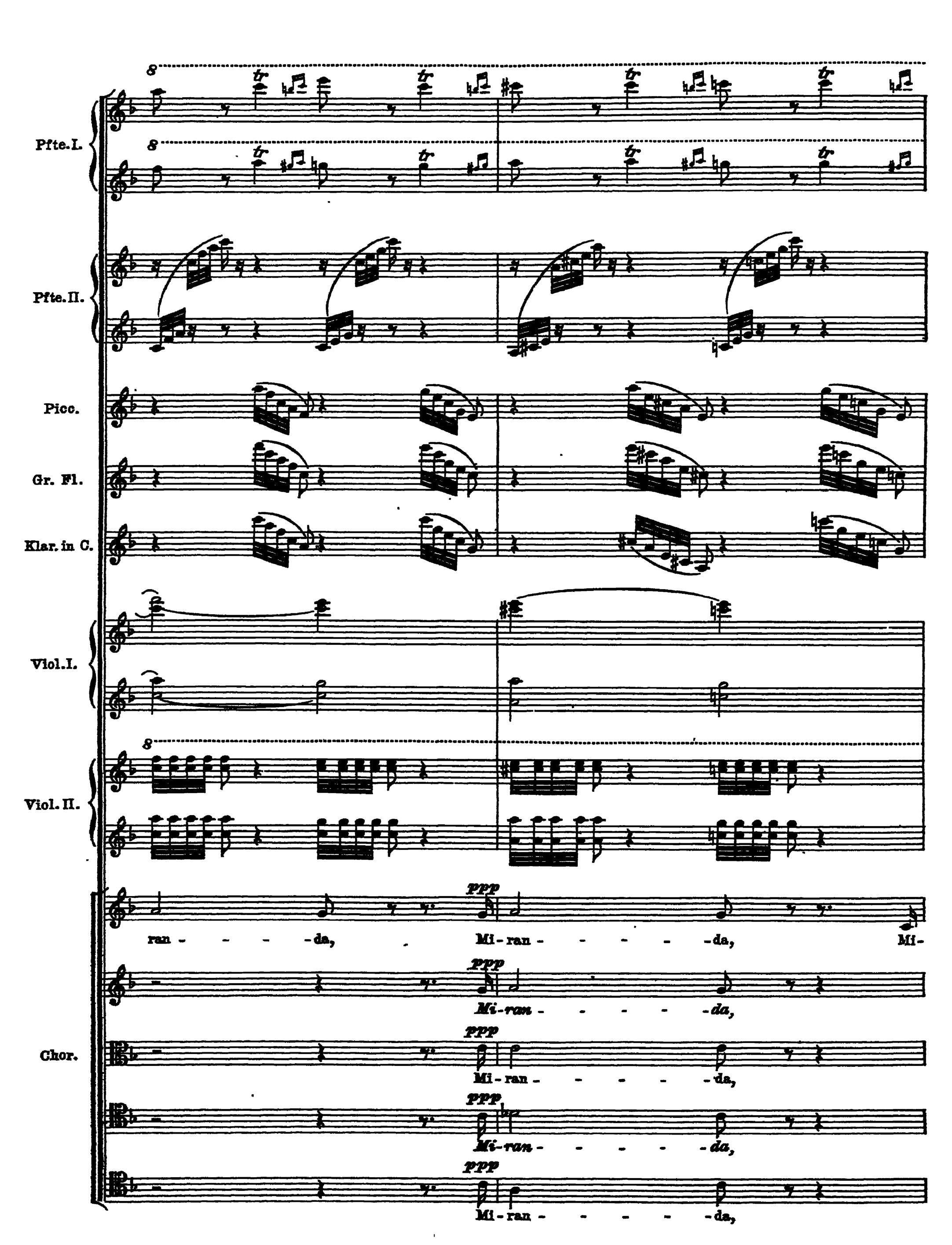
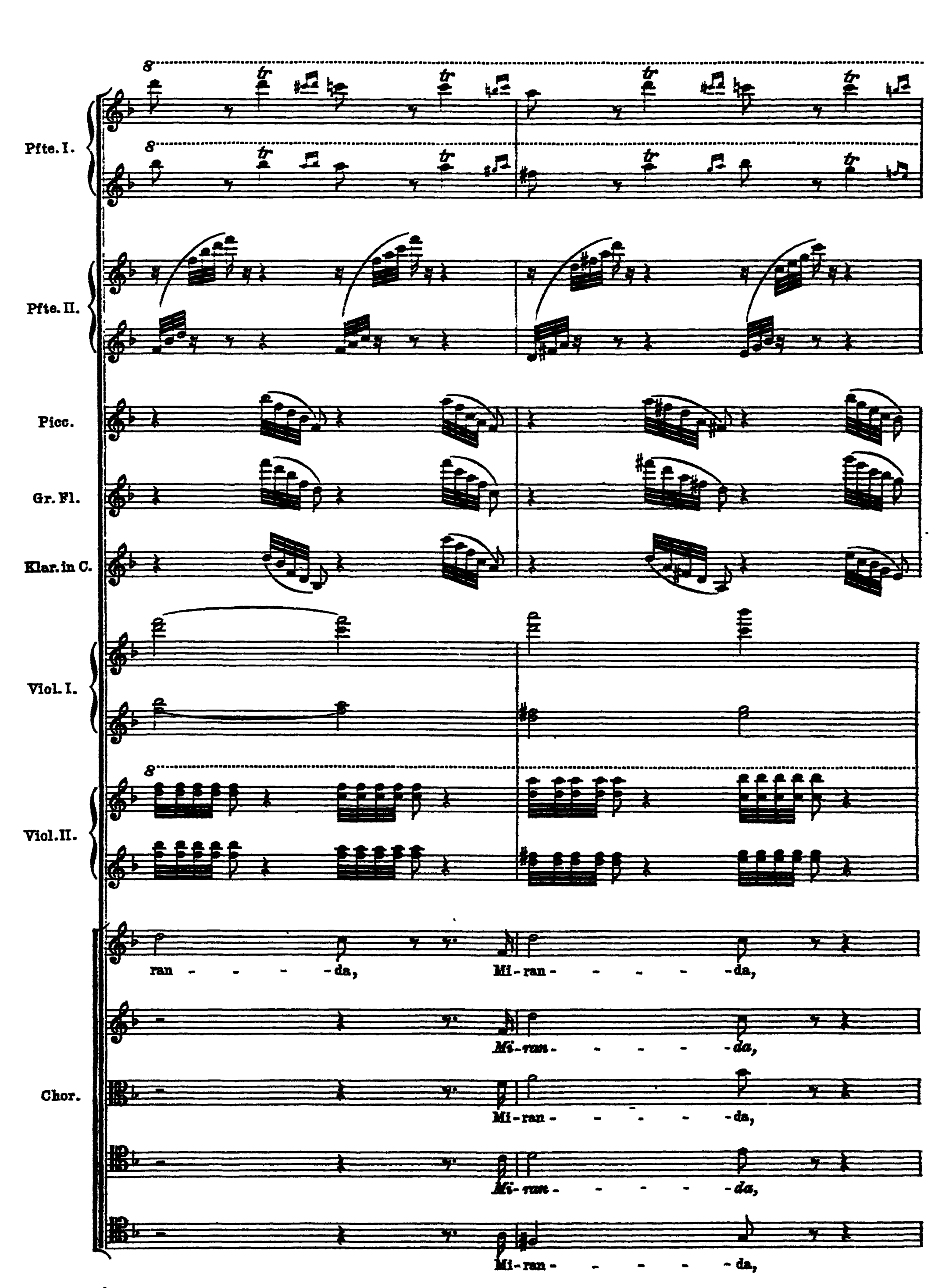
The employment of the pianoforte in the singular case mentioned above is entirely different. In a chorus of airy spirits. the author lets two pianos for four hands accompany the voices. The lower pair of hands executes a rapid. ascending arpeggio passage in triplets, which is answered by a descending three-part arpeggio of flutes and clarinets; the latter passage is
illuminated by a double-trill in thirds, executed by the other pair of hands on the higher piano. No other instrument could produce such a harmonious glimmering of tones, which the piano renders without difficulty. and which the sylph-like character of the piece requires. _Example 57.)
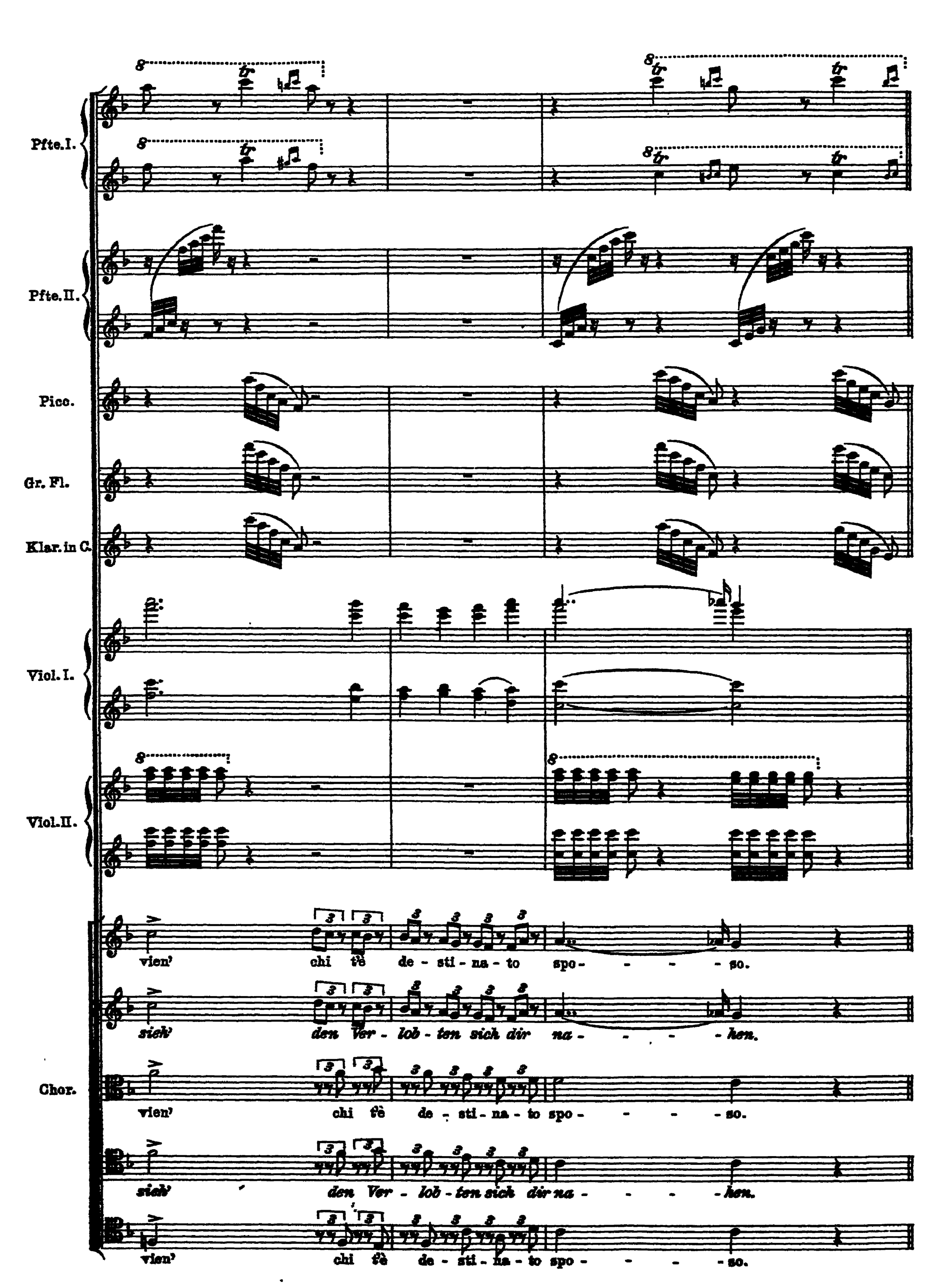
Whenever the piano is forced to go beyond its own tender effects and to compete with the power of the orchestra, it disappears completely. It must accompany or be accompanied, unless, like harps, it is emploved in large numbers. I would not be inclined to scorn such an arrangement; however, in view of the large space required, it would be difficult to place a dozen pianofortes in a moderately large orchestra.
Regarded as a small independent orchestra in itself, the pianoforte must have its own appropriate instrumentation, which is closely connected with the performing pianist’s art. On many occasions it is left to the player to bring out certain voices or to keep others in the background: to play a passage in the middle register with emphasis while giving lightness to the ornamental passages above and reducing the sonority of the basses. It is for him to decide where a change of fingers is indicated or where only the thumb should be used for a particular melody. In writing for his instrument, he knows when to employ close or open harmony; he understands the various degrees of distance between tones in arpeggios and the different kinds of sound resulting from them. Especially important is the judicious use of the pedals. Outstanding composers of pianoforte music have always indicated with the utmost care where the damper pedal is to be taken and released. Unfortunately, many virtuosos— and some of the most brilliant among them— wantonly disregard these pedaling marks and play almost continuously with raised dampers. They pay no attention to the prolongation of unrelated harmonies into one another and to the ugly discords caused thereby. This bad habit is really a deplorable abuse of an excellent device; the result is noise and confusion instead of harmony! This is only the natural consequence of that intolerable tendency of virtuosos—great and small, singers and instrumentalists—to put interest in their own personality in the foreground.
This reproach can now also be extended to a great number of conductors.