 Playable Books
Hector Berlioz · section 12 of 67
The Mandolin
Read and hear this section in the playable edition →
This instrument is almost forgotten nowadays, which is a pity. Despite its thin and nasal quality, its tone has something piquant and original about it and might be frequently used with good effect.
There are several kinds of mandolins. The one best known has four double strings—i.e., four times two strings in unison, tuned in fifths like those of the violin. It is written in the G-clef:
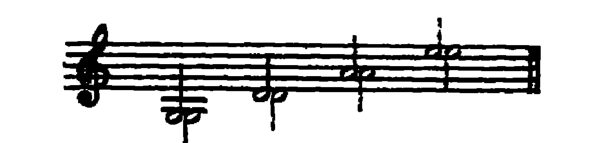
The two E-strings are of catgut; the A-strings, of steel; the D-strings, of brass; finally the G-strings, of catgut covered with silver wire.
The range of the mandolin is almost three octaves: Ineluding the chromatic intervals
It is an instrument better suited for melody than for harmony. Its strings are vibrated with a quill or plectrum held in the right hand of the player. They can produce four-part chords such as these:

if the plectrum is passed quickly across the four double strings; however, the effect of such groups of simultaneous tones is rather poor.
The mandolin shows its real character and effect only in such melodious accompaniments as Mozart wrote in the second act of “Don Giovanni” (Exam-
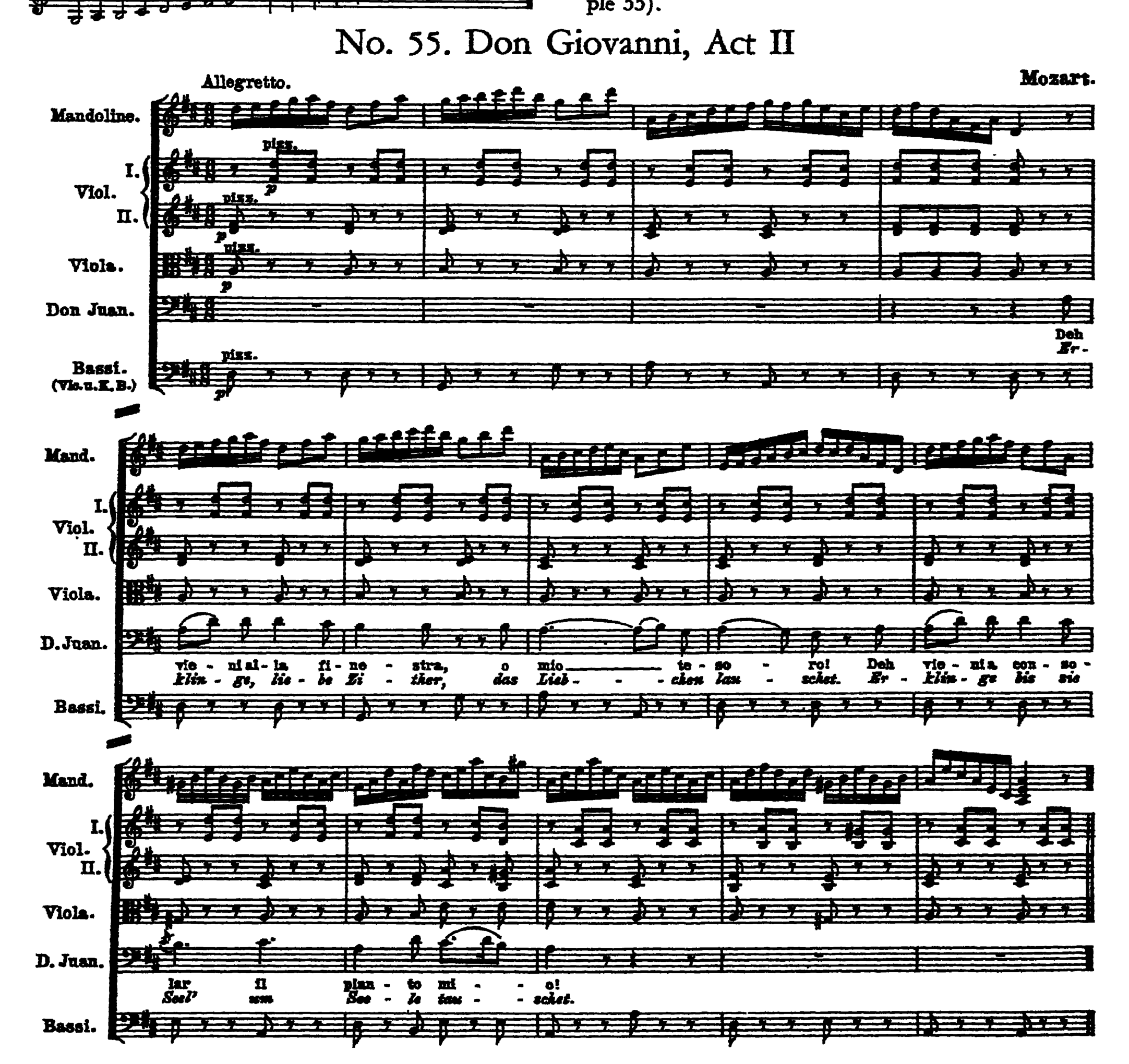
At present the mandolin is so completely neglected that in theaters where “Don Giovanni” is performed the execution of this serenade always presents difficulties. Although a guitar player or even a violinist could familiarize himself with the mandolin in a few days, so little respect is entertained for the ideas of the great masters whenever some old habit would have to be sacrificed, that people almost everywhere
Stringed Instruments With Keyboard