 Playable Books
Hector Berlioz · section 39 of 67
The Bass Tuba
Read and hear this section in the playable edition →This is a kind of bombardon, whose mechanism has been improved by Herr Wieprecht. director of all music bands of the Royal Prussian guard regiments. The bass tuba, which is now widely used in northern Germany. especially in Berlin, possesses important advantages over all other low wind instruments. Its tone. incomp:rably more noble than that of the ophicieides. bombardons and serpents, has something of the vibrant timbre of the trombones. It is less agile, but more powerful than the ophicleides, and its range extends lower than that of any other instrument in the orchestra, Its tube. like that of the bombardon, preduces the tones of the F-major chord; A. Sax now also makes bass tubas in F.), Notwithstanding this difference. they are ali treated in Germany as non-transposing instraments. The bass tub2 has five cylinders, and its range is four octaves. (These instruments have been introduced in France some years ago. where they are written as transposing instruments —like the horns and trumpets.)

(In France this scale would be written a third lower.)
With the aid of the cylinders a few notes can be added above and even beiow this scale. Extremely high tones are very risky and extremely low anes hardly distnguishable. The tones marked * A. B.C’ are clearly andible only if duubled in the higher octave by another bass tuha. which imparts more sorority to these tones. and is in turn simultaneously reinforced by them.
Of course, this instrument 's a» unsultcd to frills and rapid passages as the bumbardon. It can play certain broad and slowly moving melodies, The effect of a great member of ba~s tubas in a large military band is berond imagination, They sound like « combination of trombones and the organ.
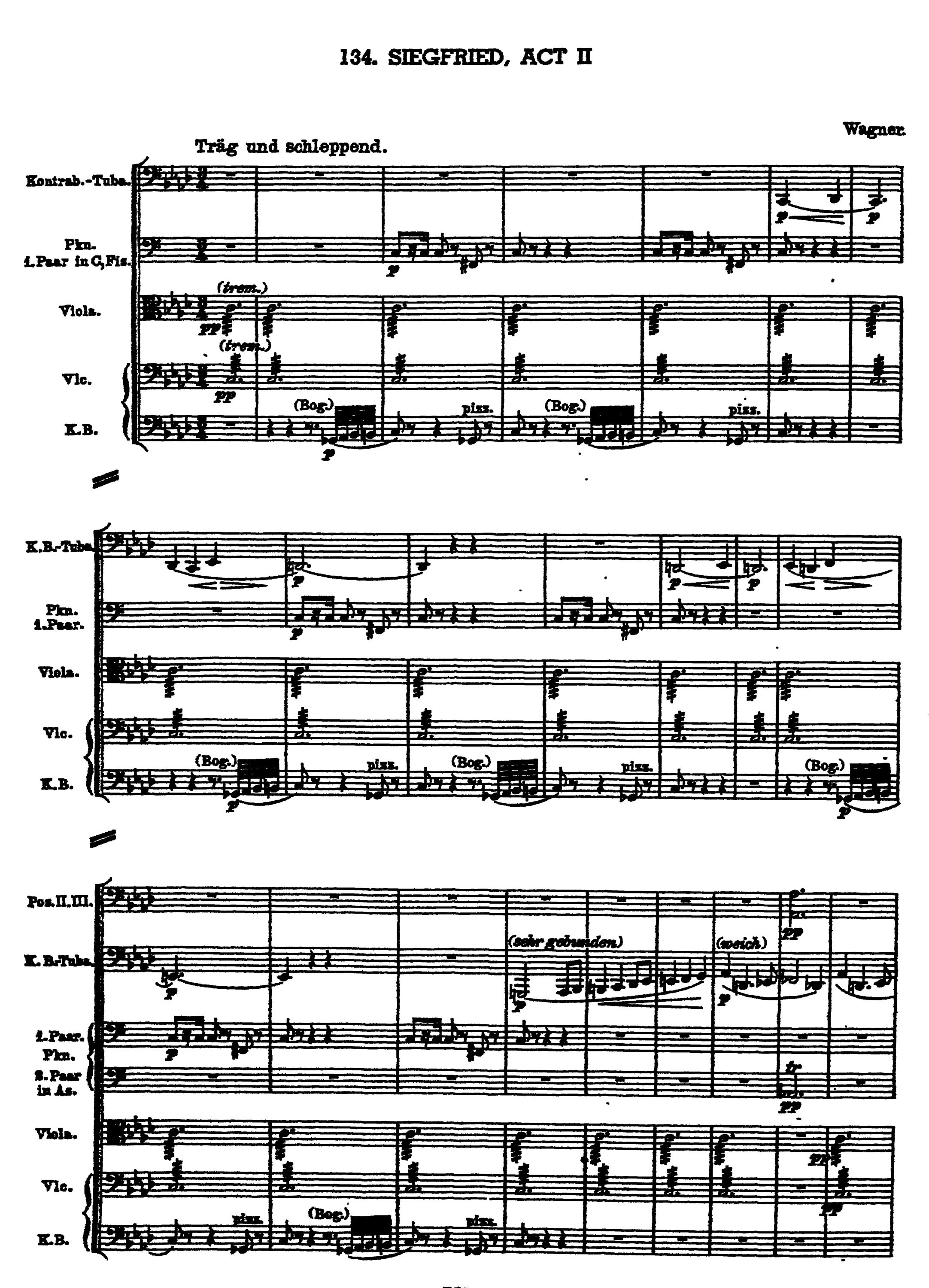
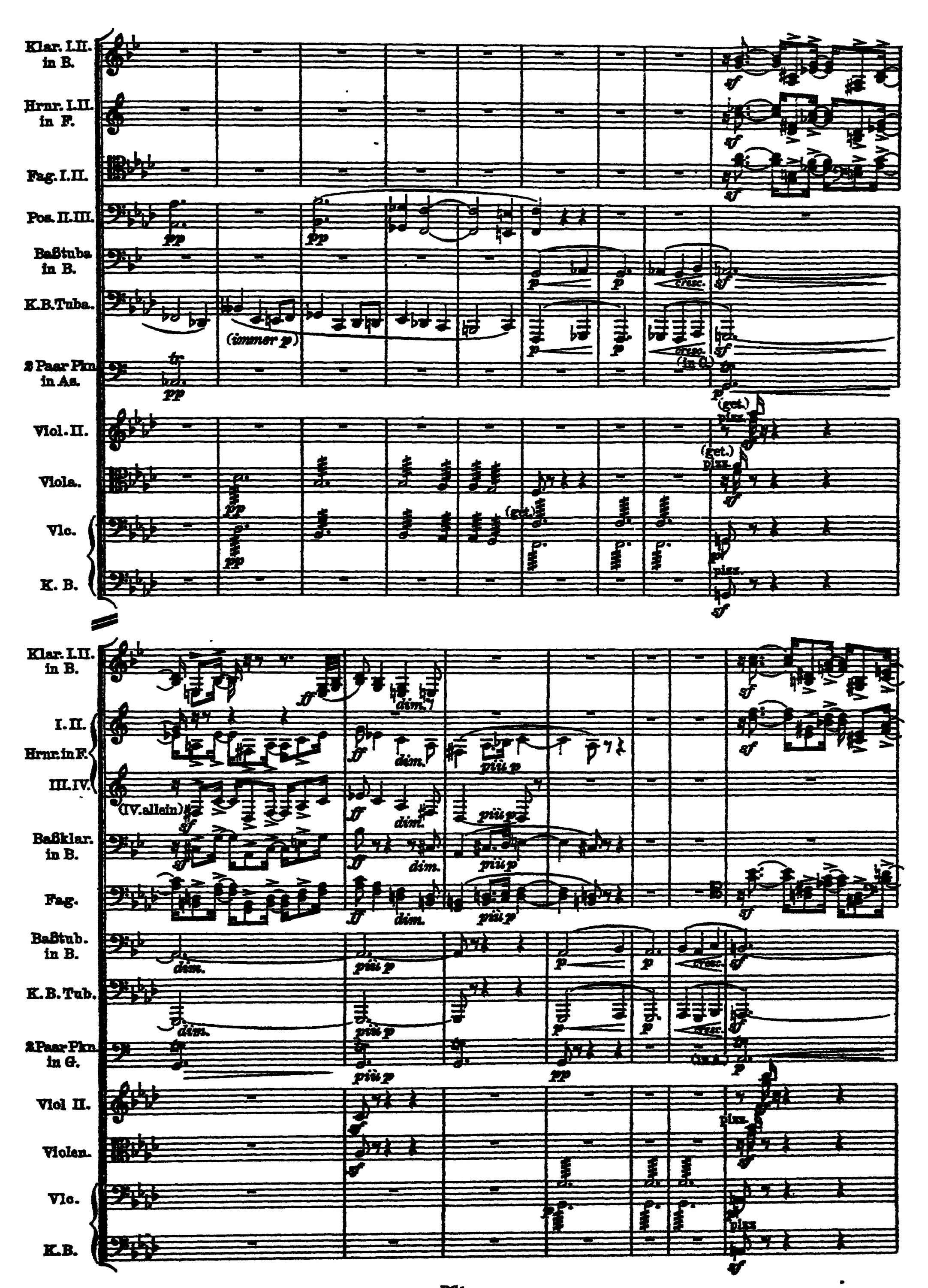
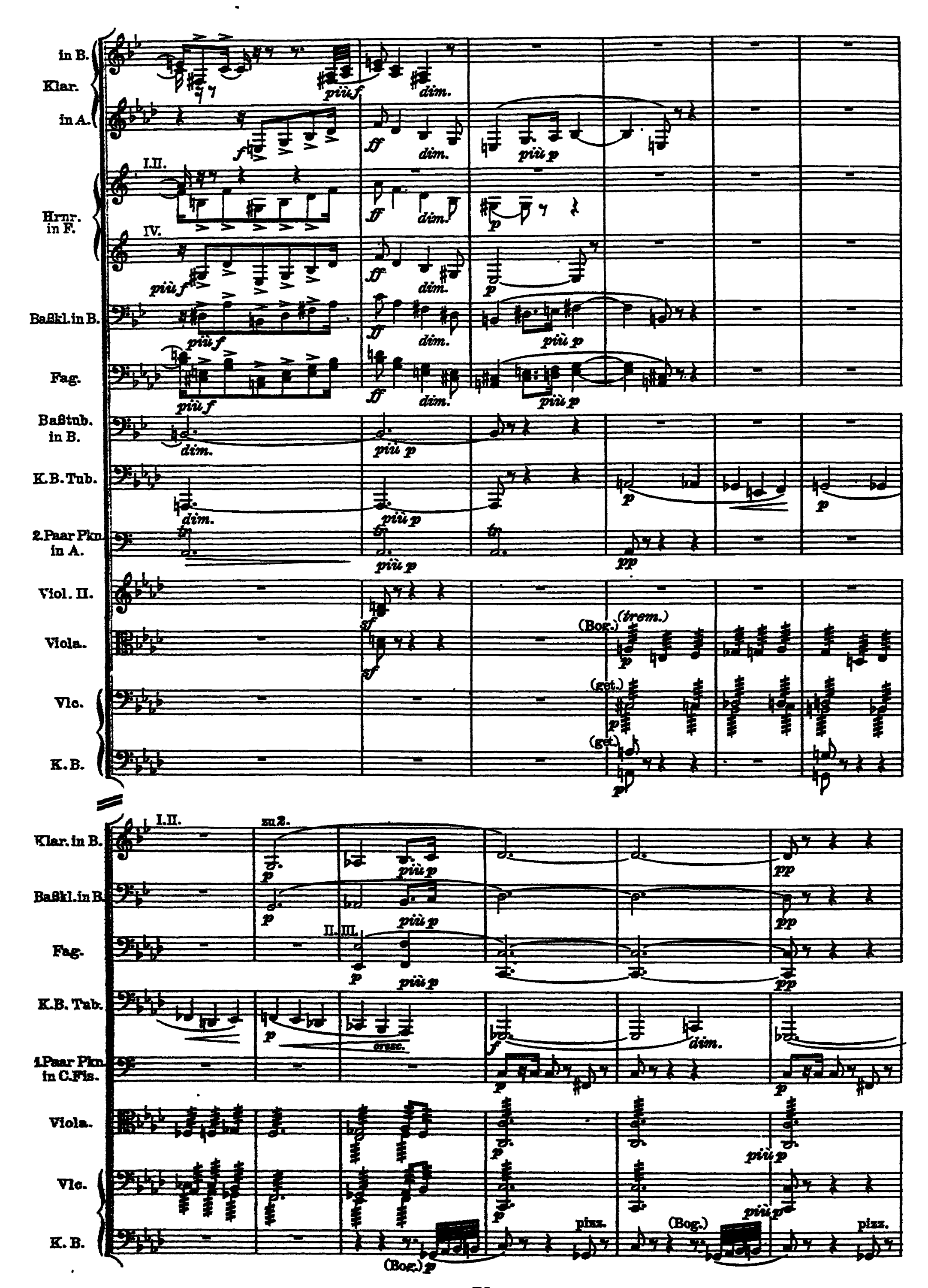
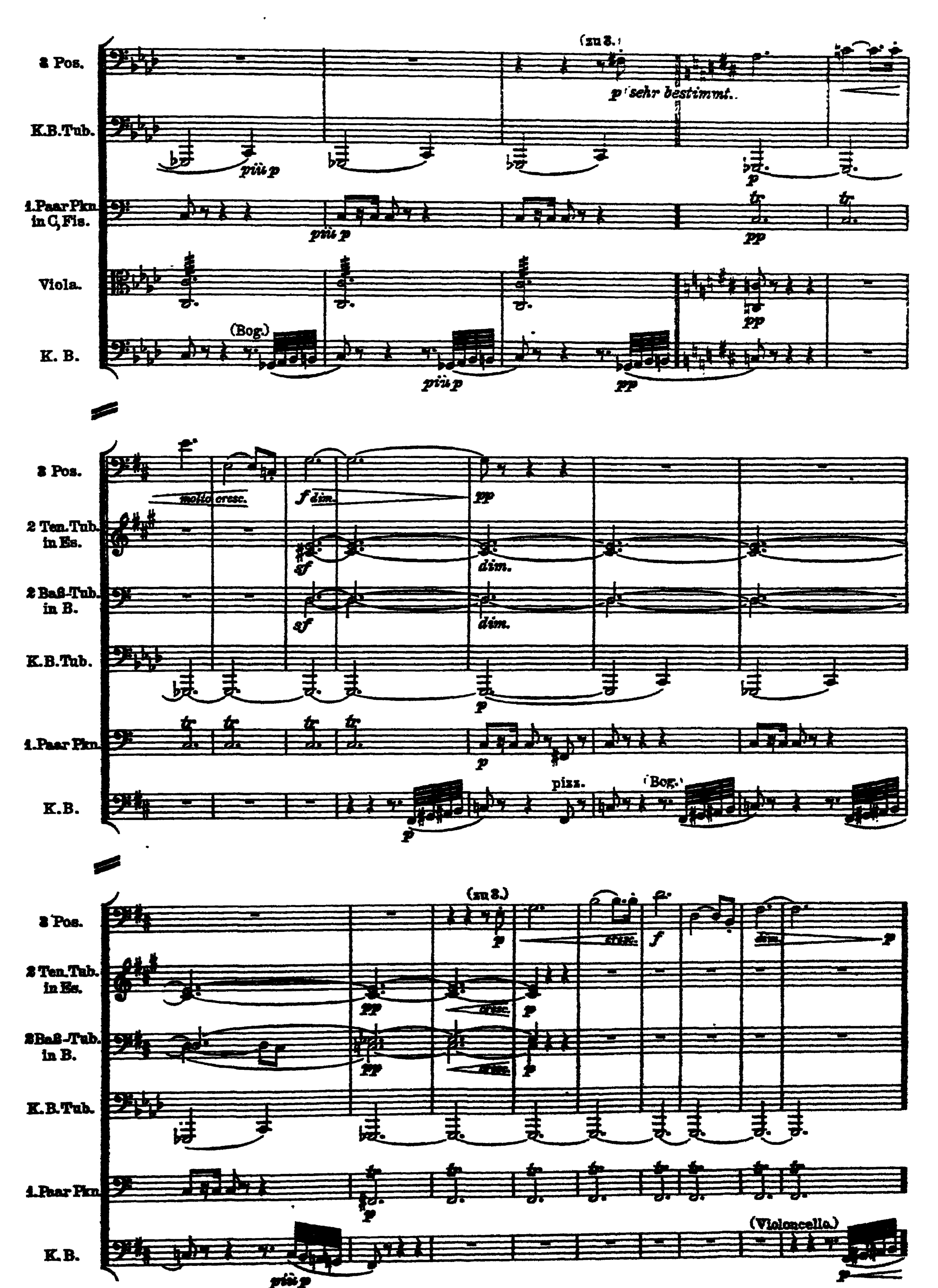
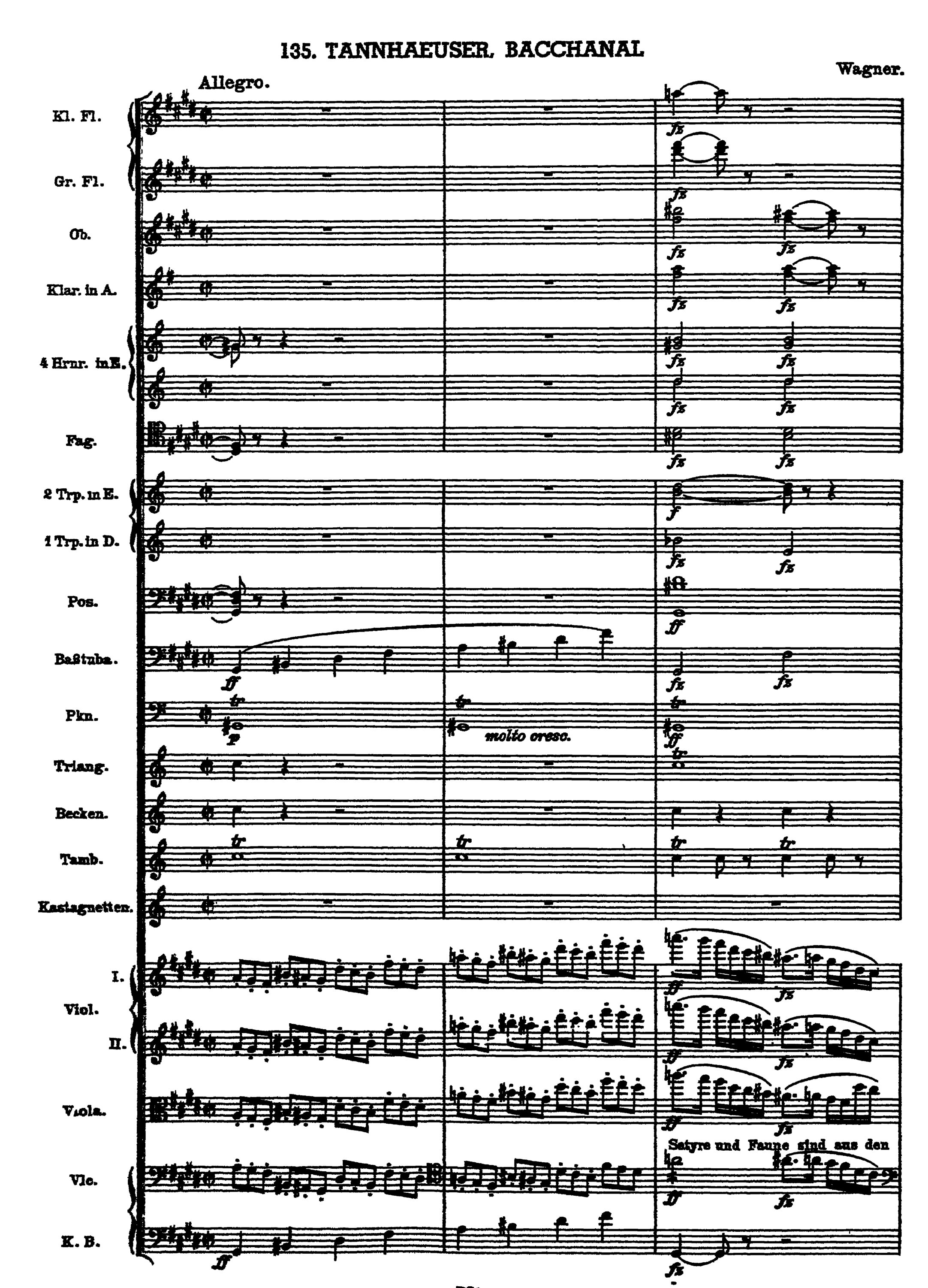
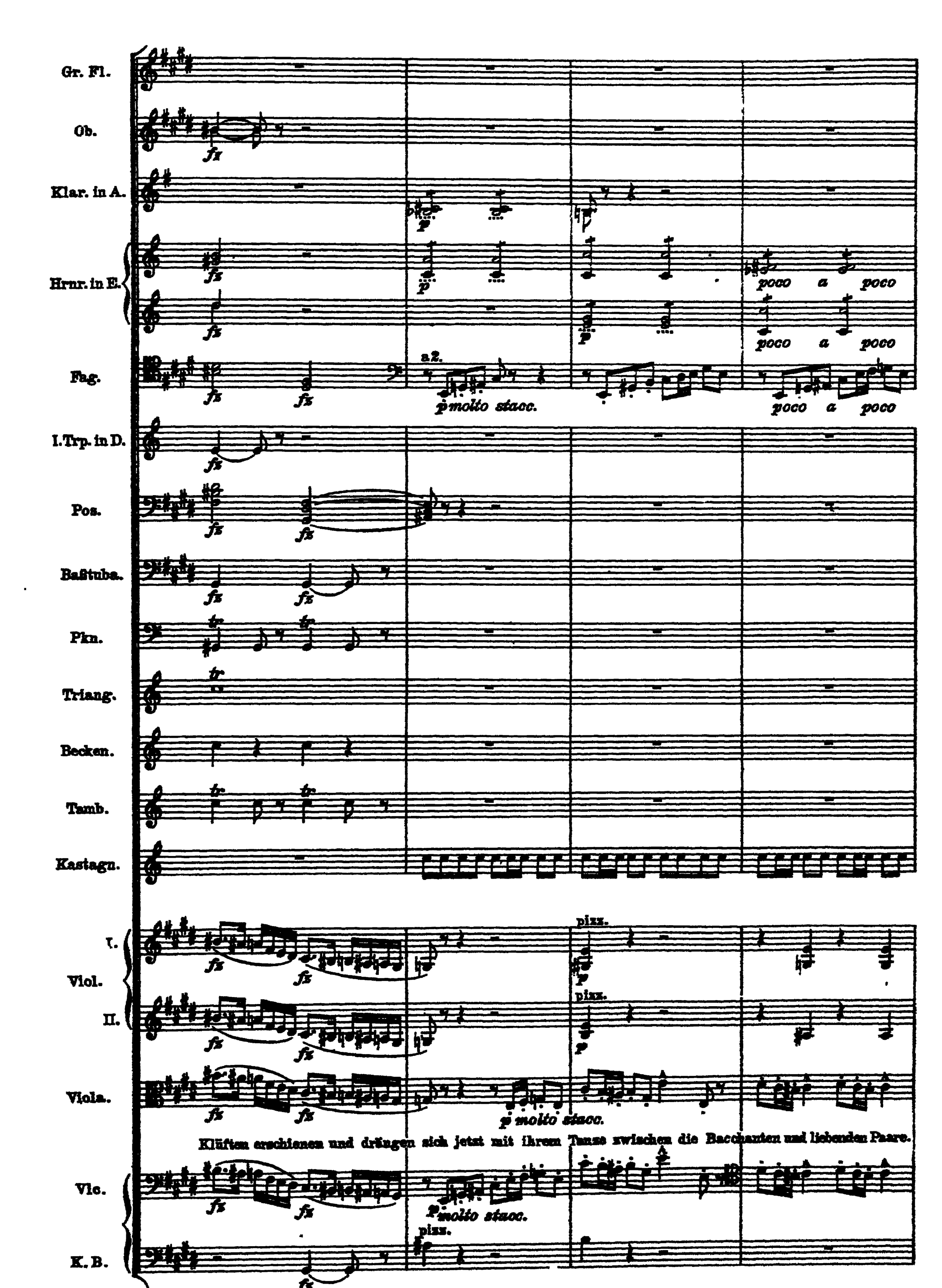
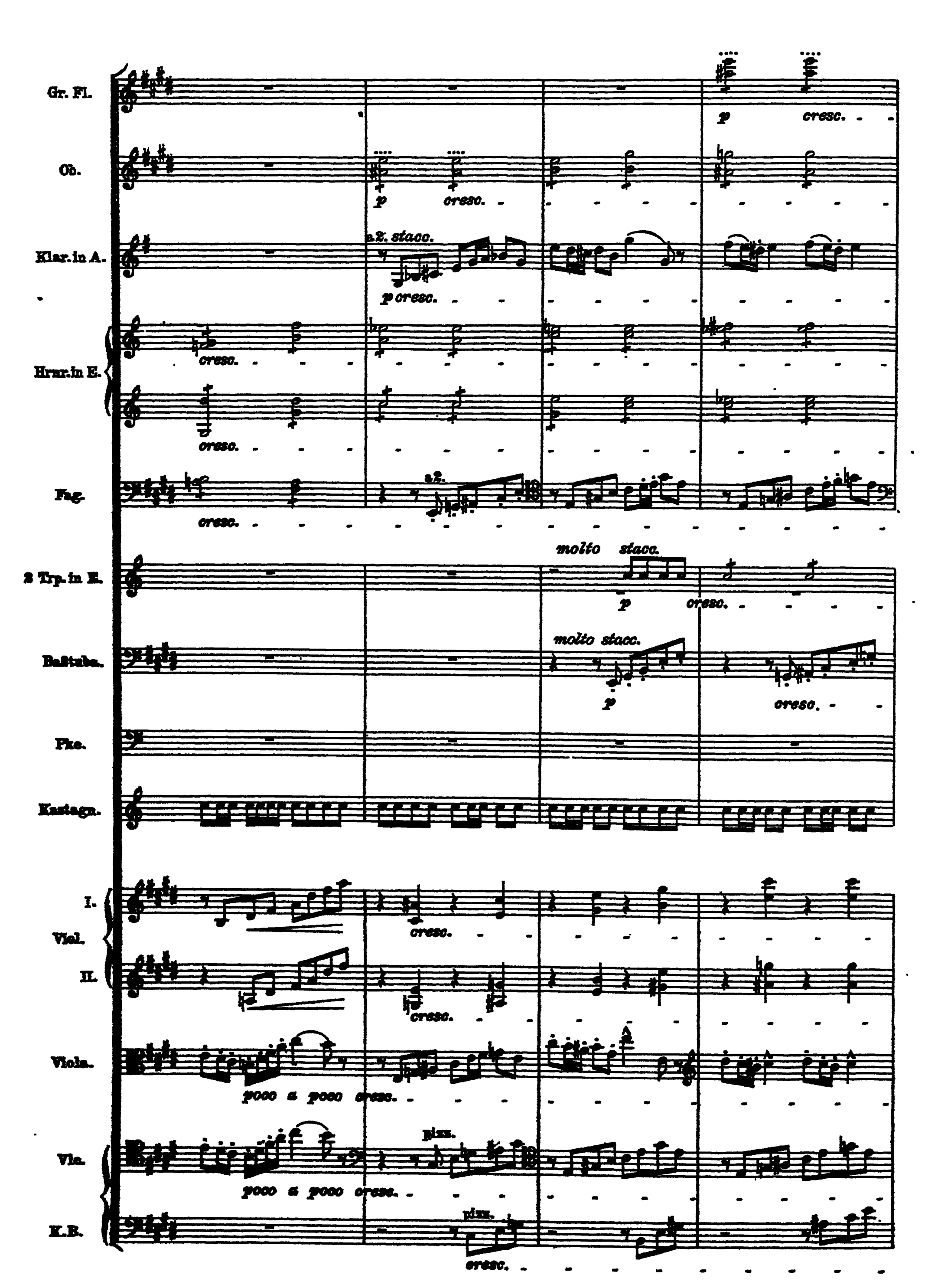
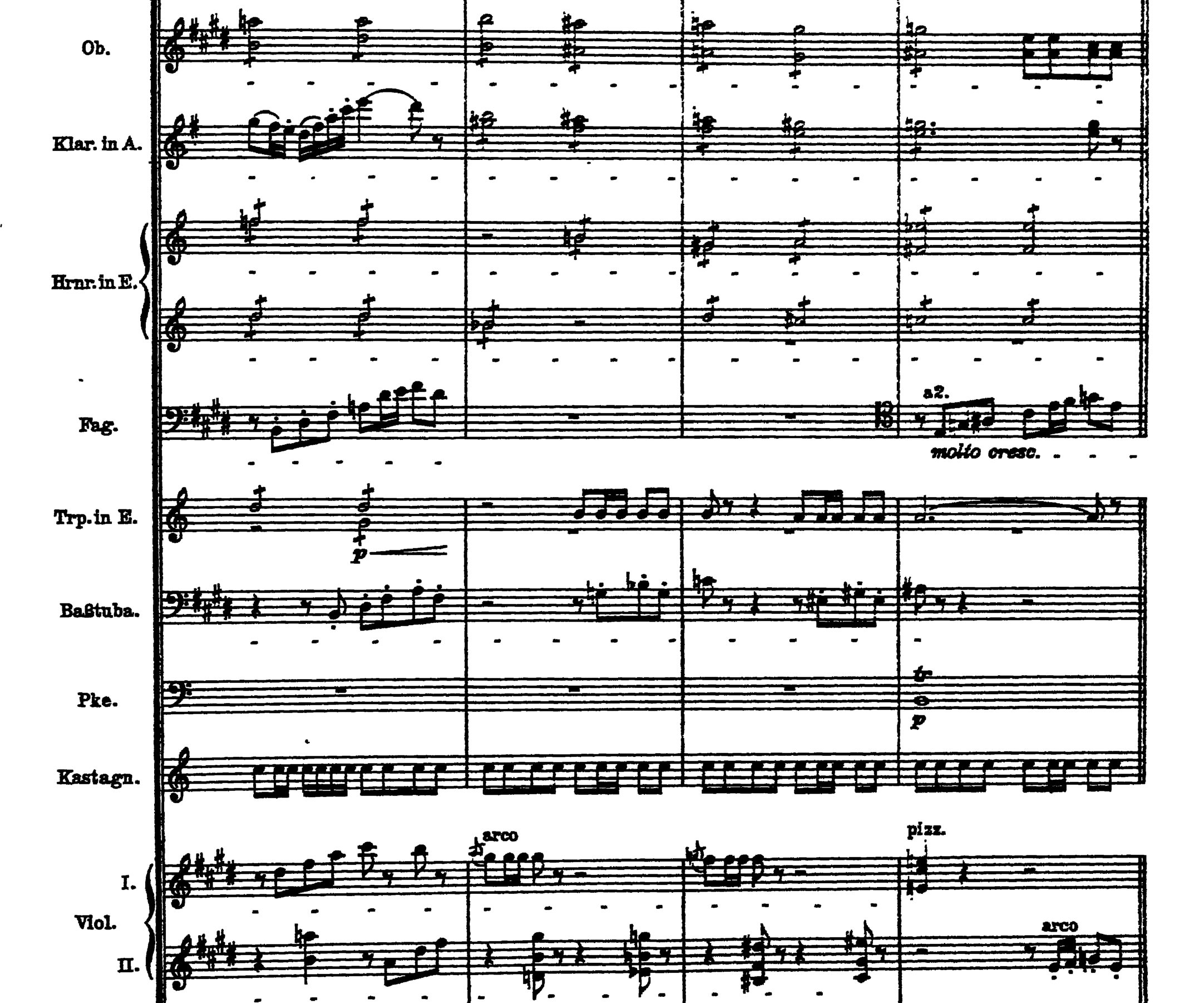
The bass tuba was used by Wagner particularly for nuble and gluomy melodies.““Eine Faust-Onverture. Example 188). the dowbdie-bass tuba with special success a5 bearer cf the Fafner motif in the second act of “Siegfried” ‘Example 184°. In the B-major middle theme of the “Tannhaeuser” overture. however, the bass tubs. reinforcing the doublebasses, is bearable only in large orchestras and if it is played not louder than mf. In the subsequently added bacchanal of the Venusberg scene, on the other hand, its expression of primitive sensuality kas a mar-
velous effect {Example 135°.
133. eine faust-ouverture

BaStuba. y = —H



sie vermehren durch ibre Jagd suf die Nymphen jie Verwirrung...

I myself have frequently written a single tenor ment, the euphonium {frequently used in military tuba in B® as the higher octave of the bass tube; but bands) is much better suited for this than the rougl performances have shown that, as & melodic instru- and clumsy Wagner tubes with their demonic tone.