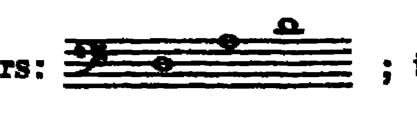
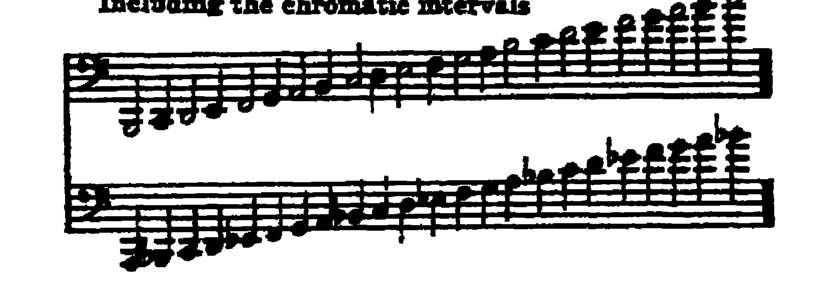
This is a wooden instrument covered with leather, with a mouthpiece. It has the same range as the bass ophicleide, bpt less agility, purity and sonority. Among its tones there are three which are more powerful than
to smooth down this disturbing unevenness as much as possible. The serpent is in B and must therefore be written a°tone higher than the actual pitch, like the ophicleide in BO.
The truly barbaric tone of this instrument would be much better suited for the bloody cult of the Druids than for that of the Catholic church, where it is still in use—as a monstrous symbol for the lack of understanding and the coarseness of taste and feeling which have governed the application of music in our churches since times immemorial, Only one case is to be excepted: masses for the dead, where the serpent serves to double the dreadful choir of the Dies Irae, Here its cold and awful blaring is doubtless appropriate; it even seems to assume a character of mournful poetry when accompanying this text, imbued with all the horrors of death and the revenge of an irate God. The instroment might also be used in secular compositions based on similar ideas; but its use must be limited to this purpose only. Moreover, its tone blends poorly with the other timbres of the orchestra and of voices. As the bass of a great mass of wind instruments it cannot match the bass tuba or even the ophicleide.
 Playable Books