 Playable Books
Hector Berlioz · section 49 of 67
The Cymbals
Read and hear this section in the playable edition →

The cymbals are combined very frequently with the bass drum, but—as stated above—they can be used just as well by themselves. Their shrill and tingling sound stands out in a full orchestra. Combined with the high tones of the piccolo and with the strokes of the ket-
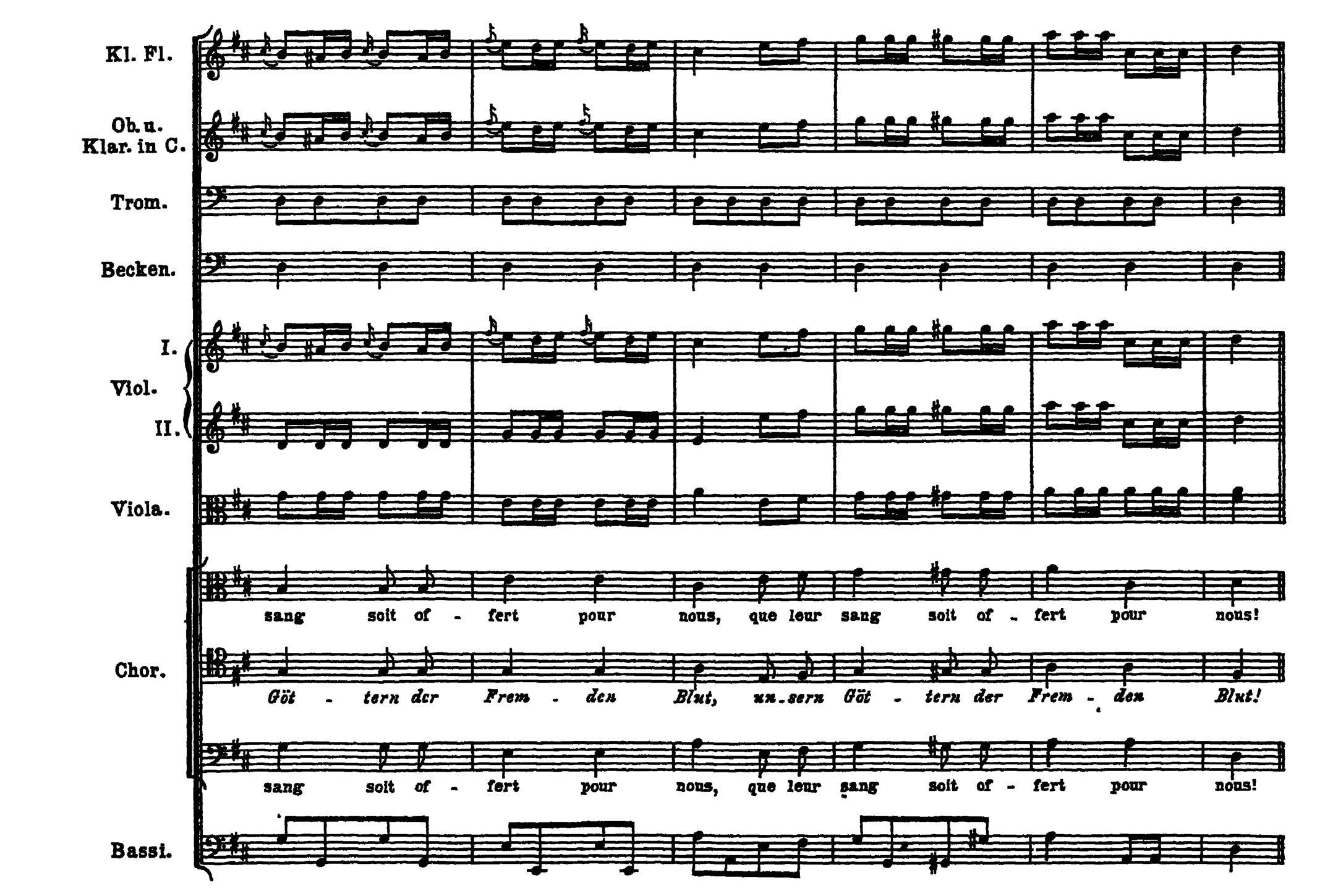
tledrum, it is particularly suited to scenes of unbridled wildness or to the extreme frenzy of a bacchanalian orgy. The finest effect ever produced on cymbals is to be found in the chorus of Scythians in Gluck’s “Iphigénie en Tauride” (Example 148).
148, iphigenie en tauride, act |
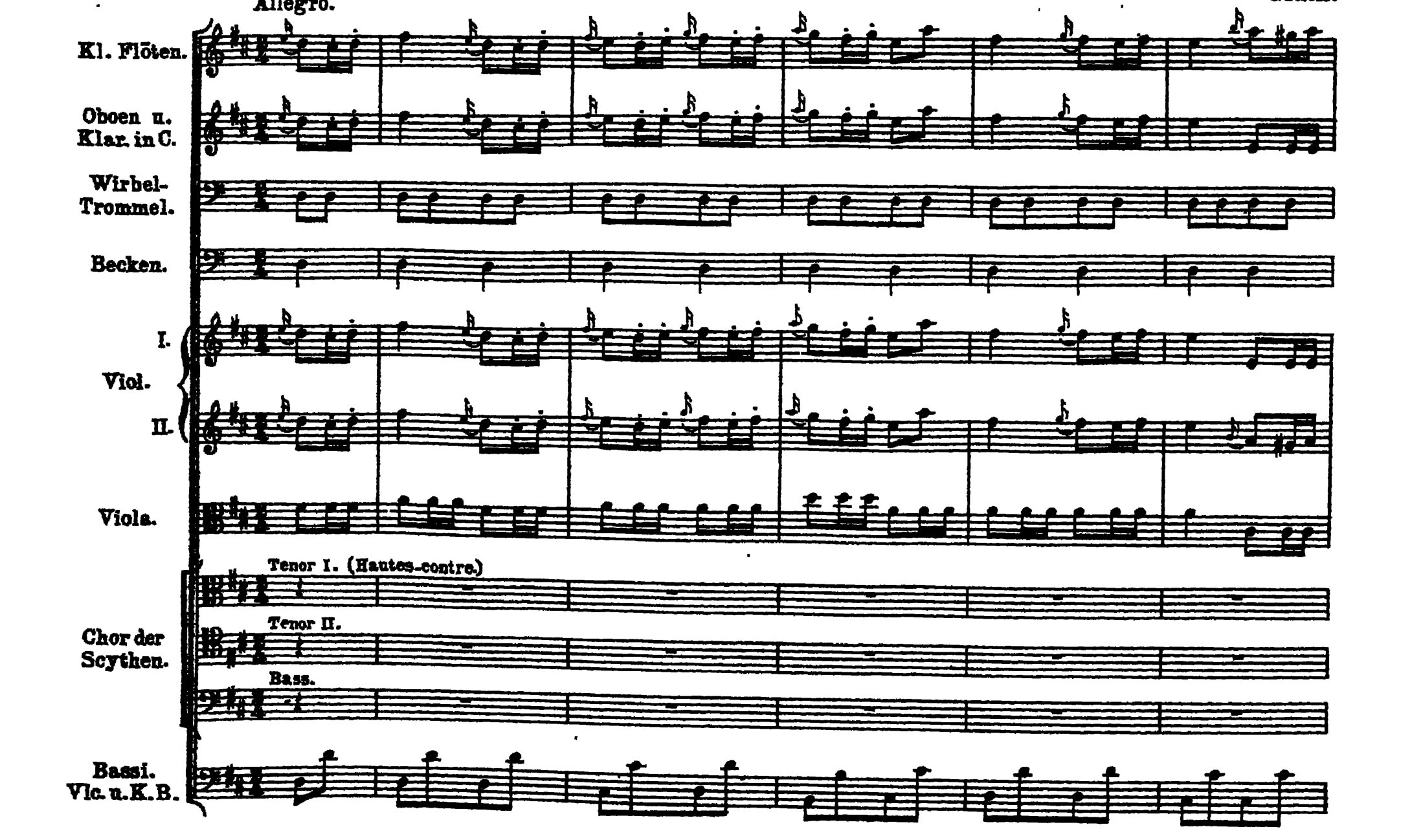
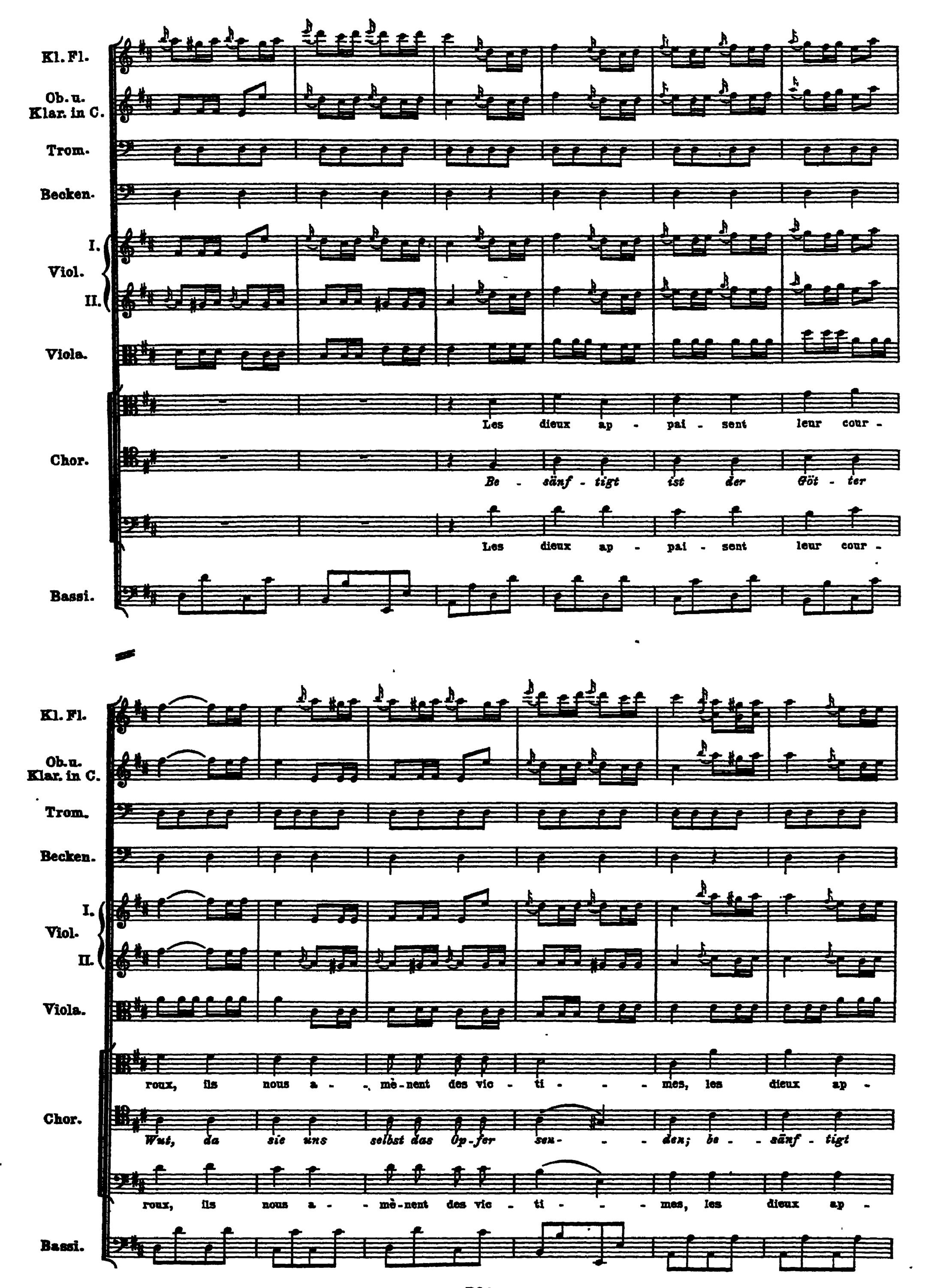
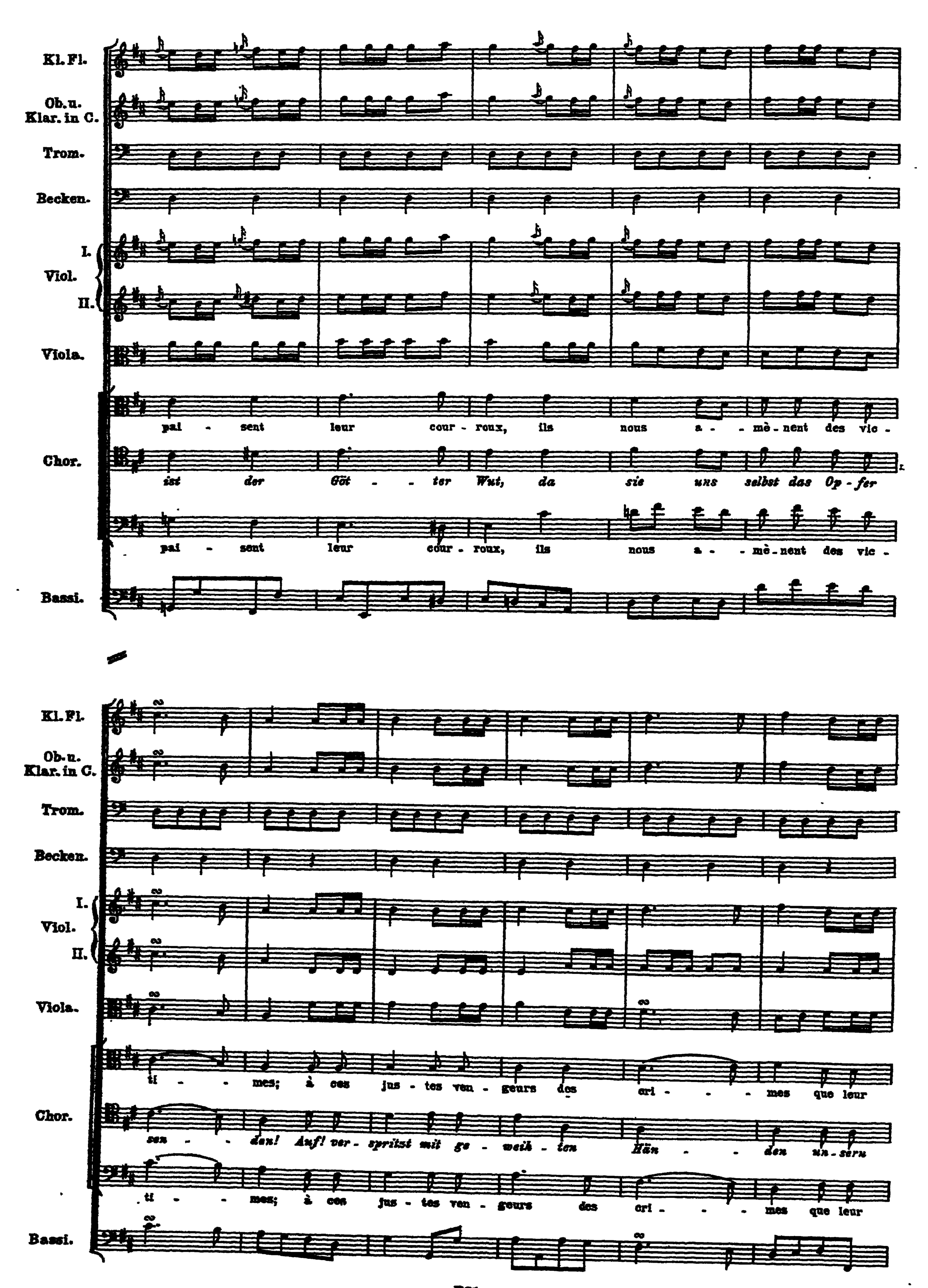
soit of - fert pour nous, que lew sang soit of. fert pour nous!
A wonderful, fantastic effect in “Rheingold” is the discreet symbolization of the gold by a pp roll on a freely suspended cymbal with a soft kettledrum stick. The cymbal stroke on the first chord of Liszt’s “Maszeppa”, similar to the crash of a whip, is of striking realism.
Vigorous and well-marked rhythms in a large choral piece or in an orgiastic dance gain greatly by the participation not of one pair of cymbals, but of four, six, ten and even more pairs of cymbals, according to the size of the concert hall and according to the number of other instruments and voices. The composer should always indicate the length of the cymbal sound exactly, if it is followed by a rest. If a prolonged sound is
desired, long and sustained notes must be written
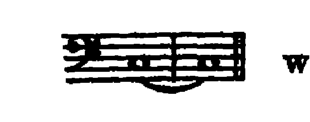
with the indication “vibrato”; in the op-
posite case one should write eighth or sixteenth notes
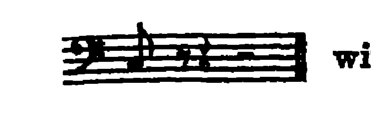
SS] with the word “secco”, The latter is
excuted by holding the cymbals against the player's chest immediately after the stroke. Sometimes a drumstick with a sponge end or a bassdrum stick is used to vibrate a cymbal suspended by its leather strap. This produces a long, vibrant and sinister sound whose effect, however, is not quite as formidable as that of a gong..