The triangle is frequently used just as poorly as the bass drum, the cymbals, the kettledrums, the trombones— in short, all the instruments that are loud and noisy. It is even more difficult to use it properly in the orchestra than the other instruments mentioned. Its metallic sound is appropriate in forte only for compositions of extremely
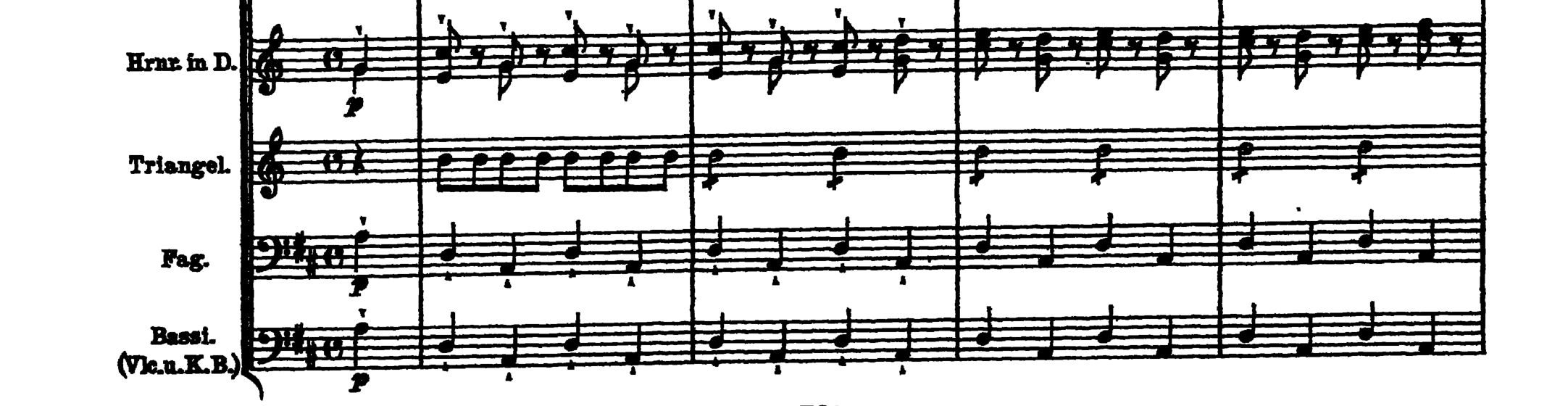
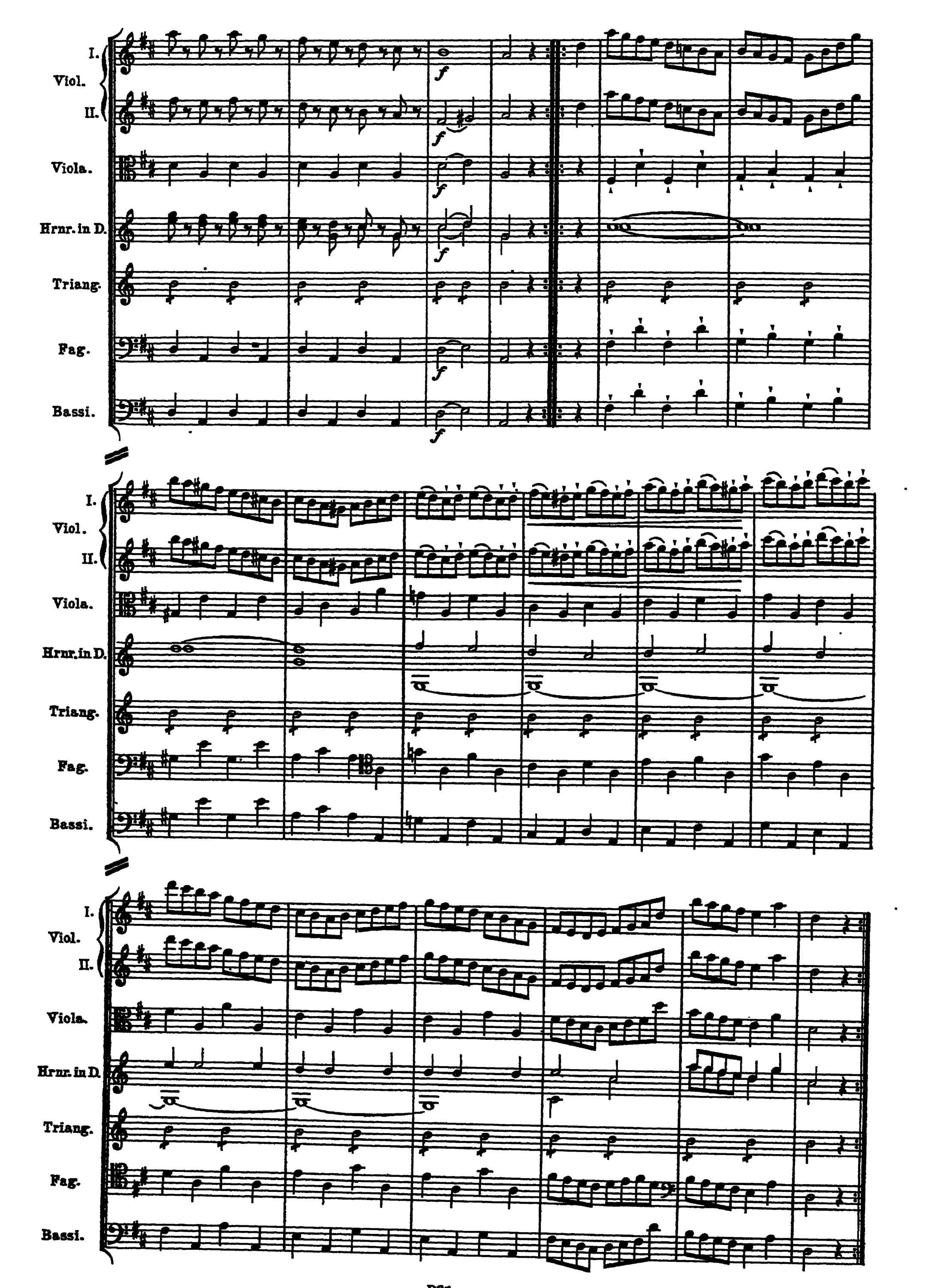
brilliant character, and in piano for those of a certain wild bizacreness. Weber used the triangle felicitously in the gypsy choruses of his “Preciosa”; Gluck was even more successful in his use of the instrument in the Dmajor part of his terrible dance of Scythians in the first act of “Iphigénie en Tauride” (Example 150).
As a magnificent example of the wise application of the triangle we mention again the single triangle stroke at the end of the second act of “Siegfried”;
its effect here is like that of a sun ray. Gustay Mahler, too, employs, all percussion instruments very ingeniously,
 Playable Books