Their tone is round, pure, full and completely even over the whole range of their scale. The different keys of the saxhorn proceed, as those of the cornet, downwards from the main instrument - the small, very high saxhorn in C, an octave higher than the cornet in C. In France it is customary to write all these instruments, as welt as the saxotrombas and saxtubas - the highest as well as the lowest - in the G-clef similary to the horns, with the sole difference that the actual sound of some very low Sax-instruments is not one octave lower than the note writen in the G-clef (as with the horn in low C), -but two octaves lower.
The small, very high saxhorn exists in two keys, C and Bd:
Actual sound of the small saxhorn in high C fh (That in Bb isa
The extremely low tones do not sound well, and the instrument should hardly be used below the low A. On the other hand, all the tones of the higher octave are very brilliant. pure and - in spite of their power - free of any sharpness. Moreover, the tone of the small saxhorn is so clear and penetrating that a single high saxhorn stands out distinctly from the midst of a considerable number of other wind instruments, The high saxhorn in B® is more frequent than the one in C. Although it is a tone lower thnn the latter, its two highest tones‘
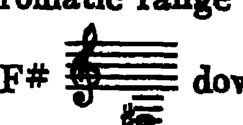
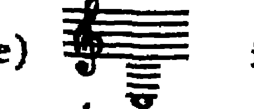
it cannot be used. It has been omitted in the following table. We must also mention that the chromatic range of
Incl. the Incl. the chrom. int, chrom. int. Soprano saxhorn = Alto saxhorn in Ed in Bb a fifth lower than the a fourth lower than fe preceding in BB ~ the preceding ba.
The baritone and bass saxhorns have the same upper range, but the tube of the baritone saxhorn is a little smaller. The bass saxhorn, which has almost always four cylinders. can reach the low tones more easily because of its wider tube.
 Playable Books