 Playable Books
Hector Berlioz · section 64 of 67
The Octobass
Read and hear this section in the playable edition →M. Villaume, a violin maker in Paris, whose excellent violins are much in demand, has enriched the family of stringed instruments by a beautiful and mighty member: the octobass.
This instrument is not, as many people believe, the lower octave of the double-bass, but that of the violoncello; it can reach only the third below the E of the four-stringed double-bass.
It has only three strings, tuned in the fifth and fourth:
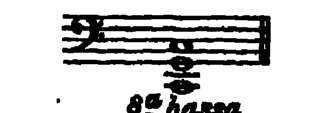
Since the fingers of the left hand are neither long nor strong enough to press down the strings (for the octobass is of colossal size), Villaume devised a system of movable keys which press the strings forcefully upon the frets placed on the neck of the instrument to produce whole tones and semitones. These keys are moved by levers which the left hand seizes and draws up and down behind the neck of the bass, and by seven other pedal
keys which are moved by the players foot.
Of course, the octobass cannot execute rapid successions of tones and must be given a separate part, differing in many aspects from that of the double-basses, Its range is only an octave and a fifth,
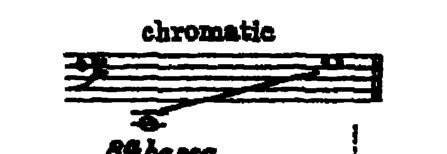
This instrument has tones of strange power and beauty, full and strong, without any roughness. It could produce extraordinary effects in a large orchestra. At least three should be available for music festivals if the number of instruments is greater than 150.
We shall not contest here the opinion of those who consider the new inventions of instrnyment makers harmful to musical art. These inventions exercise the same influence in their field as all other achievements of civilization. The fact that they can be and are frequently misused does not disprove their actual value.