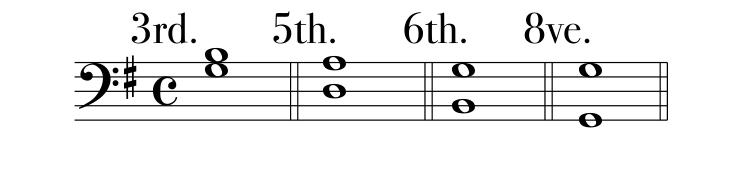
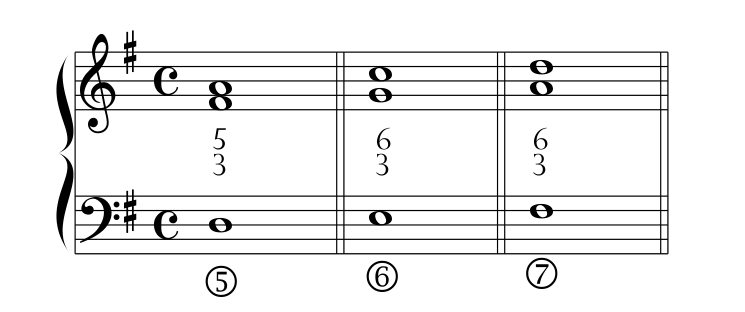
There are four [types of] consonances, namely the [intervals of a] 3rd, 5th, 6th, and 8ve.
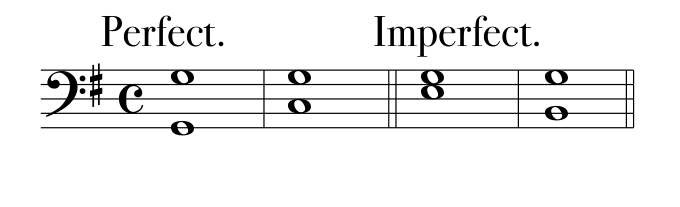
The said consonances group into two perfect ones and two imperfect ones. The perfect ones are the 8ve and 5th, which are said to be “perfect” because they are unchanging; The imperfect ones are the 3rd and 6th, which are called “imperfect” because they change [in different modes]. And these [consonances] are always harmonious.
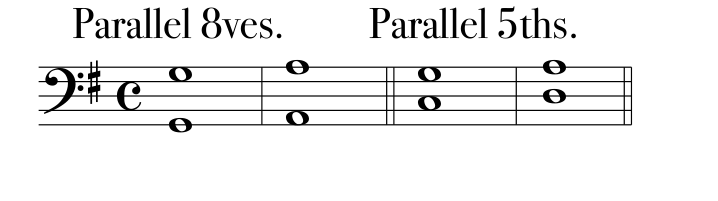
There is a prohibition against two octaves or two fifths moving in parallel because, due to their perfection, they create no variation in harmony, and these [perfect intervals] are the fundamental basses that rule the key.
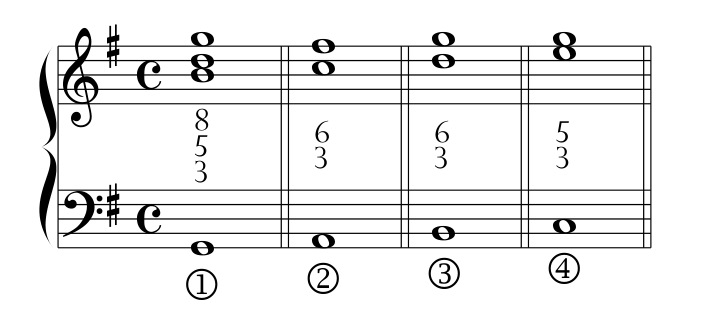
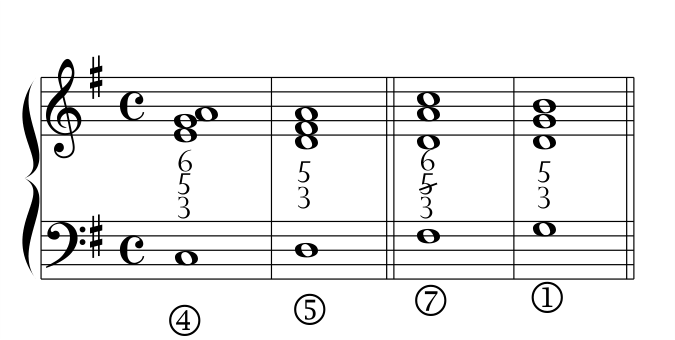
① [in the bass] takes the 3rd, 5th, and 8ve [as consonances above it].
Observe, however, that whenever the ④ ascends to the ⑤, it [④] can take the 6th in addition to the 3rd and 5th; and if the ⑦ should ascend to the octave ①, creating a semitone, it [⑦] can take the diminished 5th in addition to the 3rd and 6th.
 Playable Books