 Playable Books
Fedele Fenaroli · section 9 of 26
Concerning Scales
Read and hear this section in the playable edition →The scale is when the partimento ascends stepwise from the ① to the ⑧, and then descends stepwise from the ⑧ to the ①. This is called a complete scale.
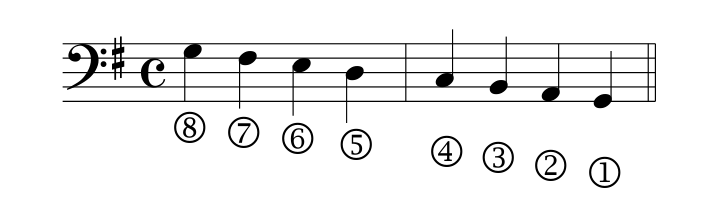
The following are the consonances that are given to the notes of the scale according to
the three positions.
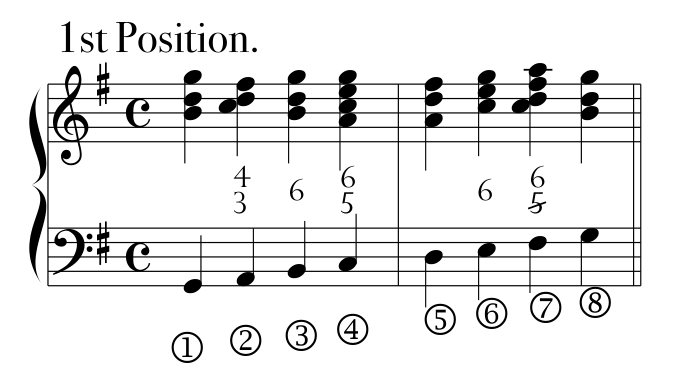
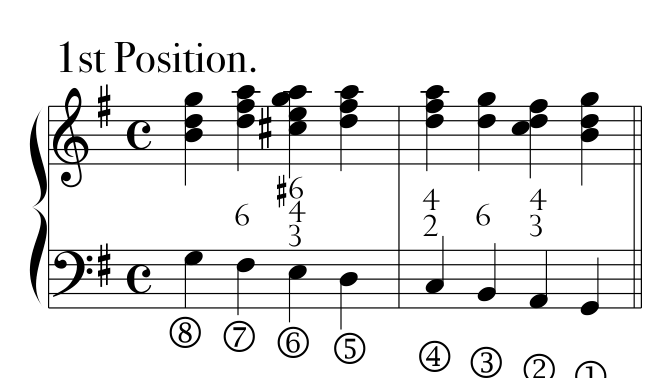
The Scale in First Position.
One gives a 3rd, 5th, and 8ve to ①, a 3rd, 4th, and major 6th to ②, an 8ve, 3rd, and 6th to ③, a 6th, 8ve, 3rd, and 5th to ④, a 5th, 8ve, and major 3rd to ⑤, a 6th, 8ve, and 3rd to ⑥, a diminished 5th, 6th, 8ve, and 3rd to ⑦, and a 3rd, 5th, and 8ve to ⑧. Then, in descending, one gives a 6th, 8ve, and 3rd to ⑦, a major 6th, 8ve, 3rd, and 4th to ⑥, an 8ve, major 3rd, and 5th to ⑤, a 2nd, augmented 4th, and 6th to ④, a 3rd and 6th to ③, a 3rd, 4th, and major 6th to ②, and finally a 3rd, 5th, and 8ve to ①.
Regarding the fingering of the right hand, this will [best] be taught in person by a learned maestro. Since keys in the major and minor modes require different arrangements of the fingers, the long and tedious explanations that would be required would likewise neccessarily confuse the mind of a beginner. Hence this task is remanded to the care and wisdom of maestros.
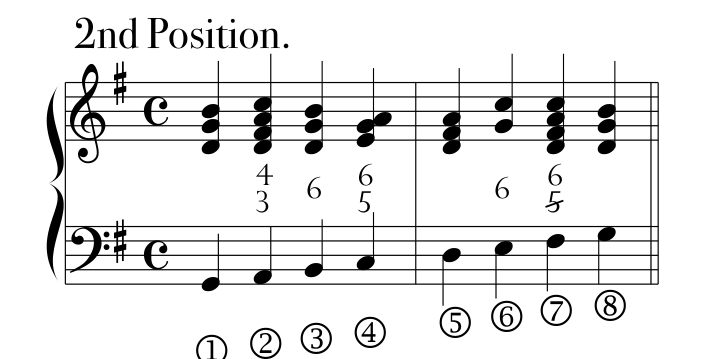
The Scale in Second Position.
One gives a 5th, 8ve, and 3rd to ②, a 4th, major 6th, 8ve, and 3rd to ②, a 3rd, 6th, and 8ve to ③, a 3rd, 5th, and 6th to ④, a 8ve, major 3rd, and 5th to ⑤, a 3rd and 6th to ⑥, a 6th, 8ve, 3rd, and 5th to ⑦, and a 5th, 8ve, and 3rd to ⑧. Then, in descending, one gives a 6th, 8ve, and 3rd to ⑦, a major 6th, 8ve, 3rd, and 4th to ⑥, an 8ve, major 3rd, and 5th to ⑤, a 2nd, augmented 4th, and 6th to ④, a 3rd, 6th, and 8ve to ③, a 4th, major 6th, 8ve, and 3rd to ②, and finally a 5th, 8ve, and 3rd to ①.
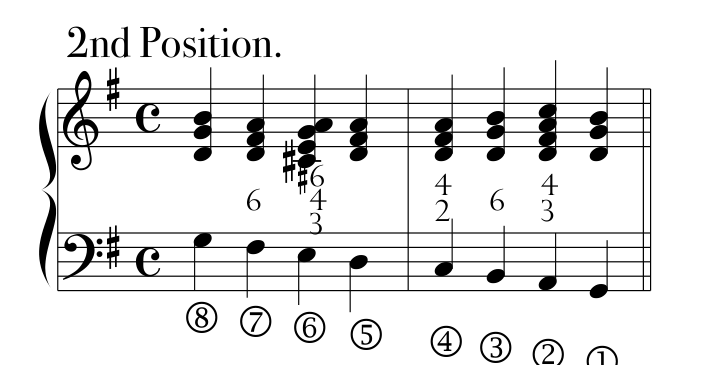
The Scale in Third Position.
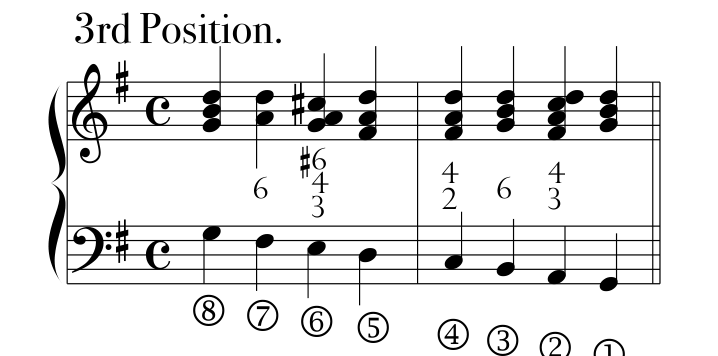
One gives an 8ve, 3rd, and 5th to ①, a major 6th, 8ve, 3rd, and 4th to ②, an 6th, 8ve, and 3rd to ③, a 5th, 6th, 8ve, and 3rd to ④, a major 3rd, 5th, 8ve to ⑤, a 3rd and
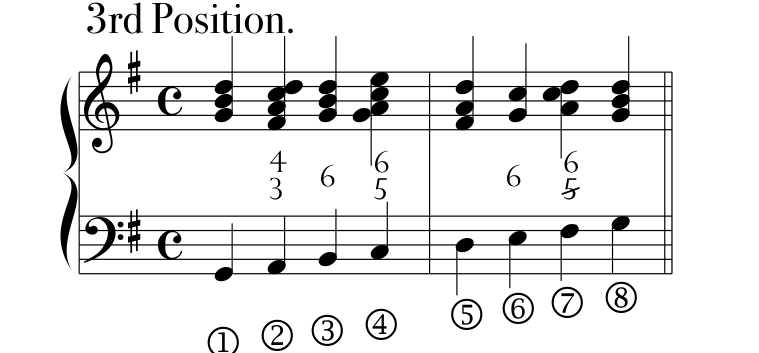
6th to ⑥, a 3rd, diminished 5th, and 6th to ⑦, and an 8ve, 3rd, and 5th to ⑧. Then, in descending, one gives a 3rd and 6th to ⑦, a 3rd, 4th, and major 6th to ⑥, a major 3rd, 5th, and 8ve to ⑤, an augmented 4th, 6th, and 2nd to ④, a 6th, 8ve, and 3rd to ③, a major 6th, 8ve, 3rd and 4th to ②, and finally a 8ve, 3rd, and 5th to ①.
The Minor Scale.
One also performs the minor scale in all three positions with the same hand positions. An exception is that one does not place the 8ve above ♭⑥ when it descends to ⑤. Instead one gives it only the augmented 6th, 3rd, and 4th.
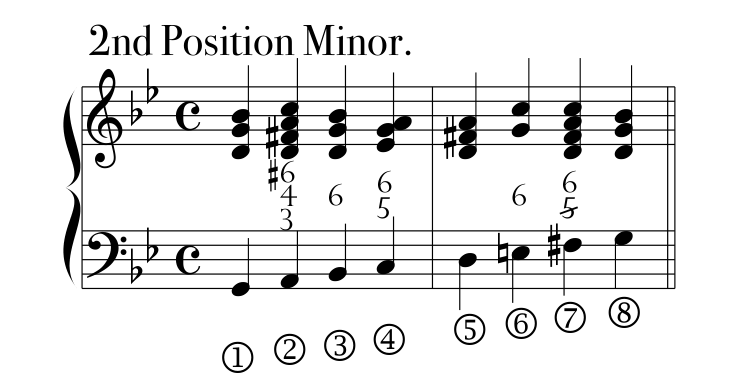
Observe that when the minor scale ascends, one makes the ⑥ major, and in descending one makes the ⑦ minor. This is all done to avoid the augmented second that occurs between the ♭⑥ and ♮⑦, the reason being that one recoils from the harshness of the sound caused by a [step larger than a whole tone].
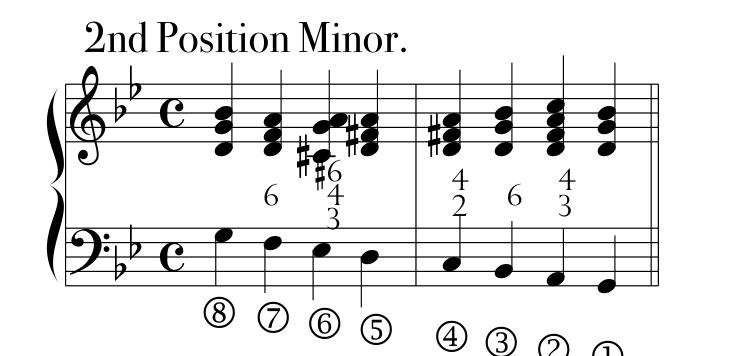
Also observe that one can place the 4th together with the minor 3rd and major 6th [above ②] in scalar passages, that is ascending from ① to ③, and descending from ③ m to ①. In other cases it [②] requires only the 3rd and major 6th.
For those who wish to learn quickly to play figured partimenti well, they should diligently study scales in all the keys and in all three positions.
Concerning Dissonances.
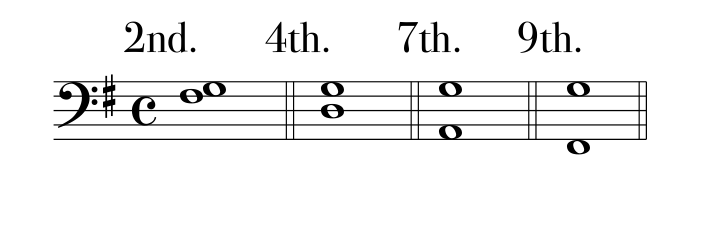
There are four [types of] dissonances, namely [the intervals of the] 2nd, 4th, 7th, and 9th. These were invented in order to render the consonances more beautiful. But note that the aforementioned dissonances cannot be used unless they are prepared by consonances and resolved to the same.
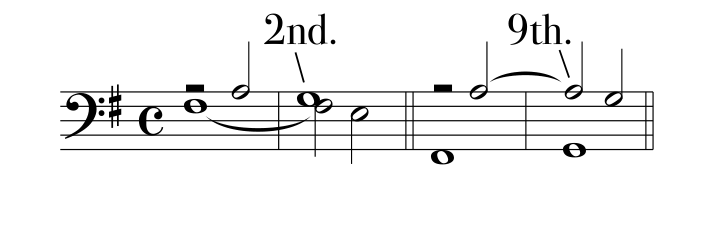
The difference between the 2nd and the 9th is that the second can be used without preparation, but the ninth must be prepared.
Concerning Dissonances,