 Playable Books
Fedele Fenaroli · section 11 of 26
or the Suspension of the Seventh
Read and hear this section in the playable edition →The seventh can be prepared by all four consonances, namely the 8ve, 3rd, 5th, and 6th.
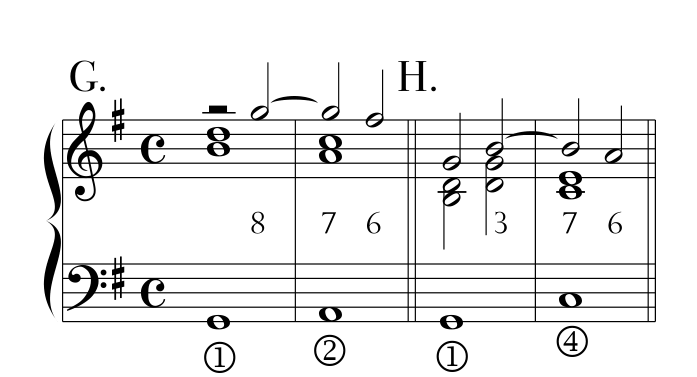
To prepare it by the 8ve, the partimento should rise a step, as from ① to ②. See letter G.
To prepare it by the 3rd, the partimento should rise a 4th or descend a 5th, as from ① to ④, or even from ⑥ to ②. See letter H.
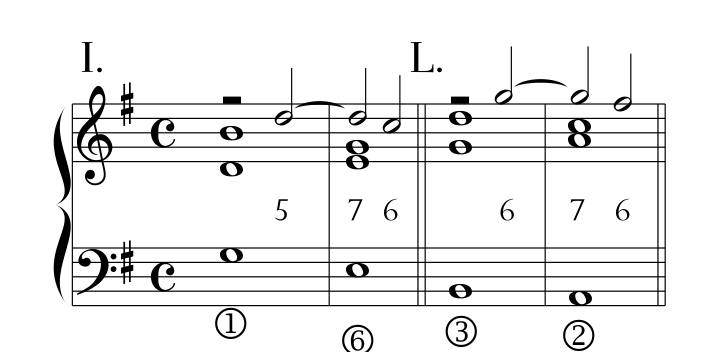
To prepare it by the 5th, the partimento should rise a 6th or descend a 3rd, as from ① to ⑥, or even from ④ to ②. See letter I.
To prepare it by the 6th, the partimento should descend a step, as from ③ to ②. See letter L.
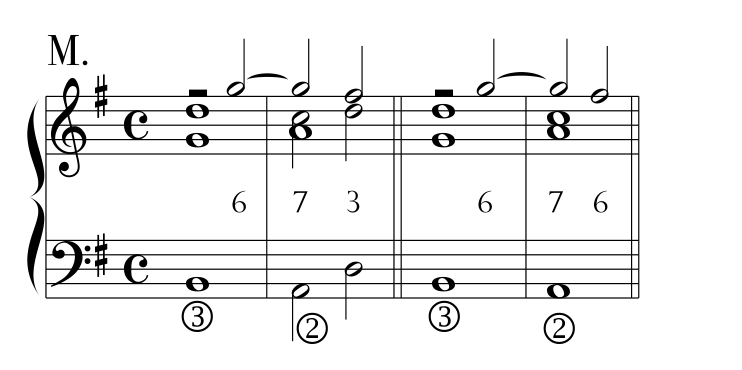
Observse that the 7th is always accompanied by the 3rd, and can resolve to a 3rd and 6th.
To resolve it to a 3rd, the partimento should rise a 4th or descend a 5th. See letter M.
To resolve it to a 6th, the partimento should stay put on the same note that had the tied 7th [above it].
Concerning the Suspension of the Ninth.
The 9th can be prepared by the 3rd and by the 5th.
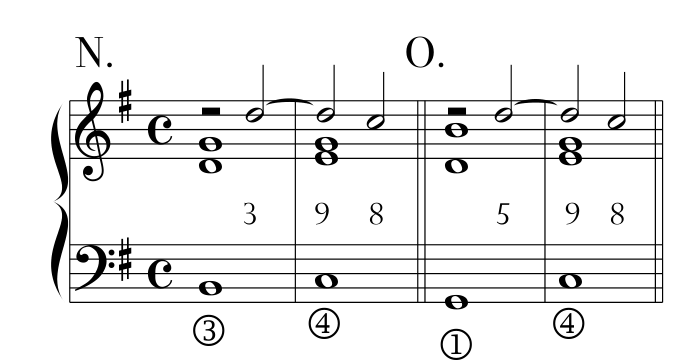
To prepare it by the 3rd, the partimento should rise a step, as from ① to ②, or from ③ to ④, or from ⑦ to ①. See letter N.
To prepare it by the 5th, the partimento
should rise a 4th or descend a 5th, as from ① passing to ④, or from ⑤ to ①. See letter O.
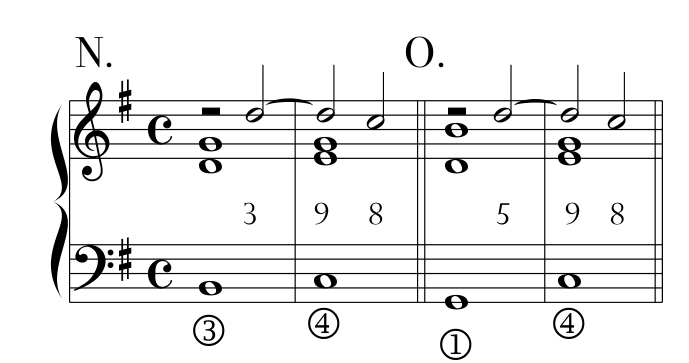
Observe that the aforementioned dissonance of a 9th is always accompanied by the 10th (the said 3rd) and by the 5th, when a movement of the bass by the same progression is not involved. This dissonance of a 9th can be resolved to an 8ve, 3rd, and 6th, depending on the various moves of the partimento.
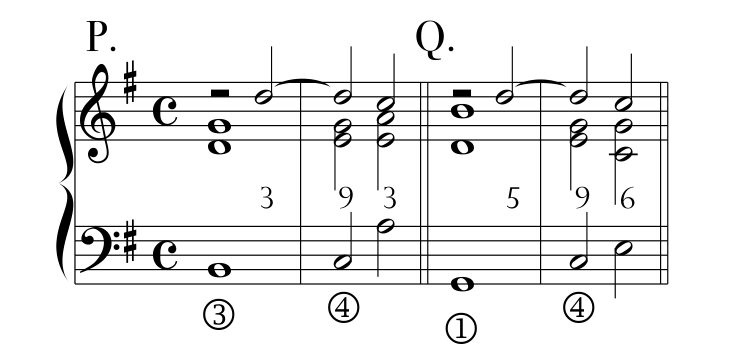
To resolve it to an 8ve, the partimento should remain fixed to the same note that had the tied 9th [above it. See letter O].
To resolve it to a 3rd, the partimento should descend a 3rd or rise a 6th. See letter P.
To resolve it to a 6th, the partimento should rise a 3rd or descend a 6th. See letter Q.
Concerning Suspensions of the Bass.
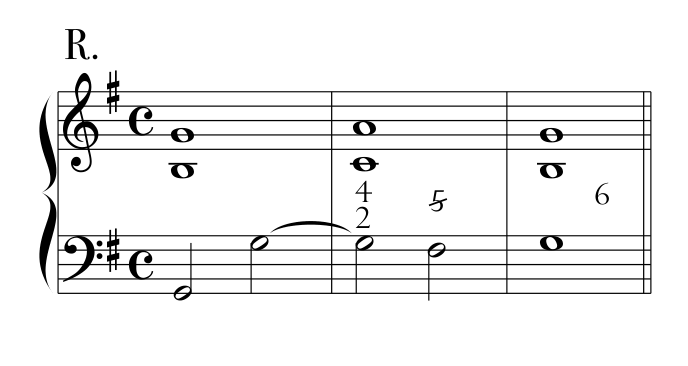
When the partimento is tied and then returns to the same tone, the suspended note of this partimento requires a major 2nd and a perfect 4th [above it]. Above the partimento’s subsequent note, which descends a semitone, the note that had been the 2nd above the tied partimento should remain as a 3rd. That note which had been the 4th above the tied partimento can also remain to form, as the partimento descends a semitone, the [relative] consonance of a diminished 5th. See letter R.
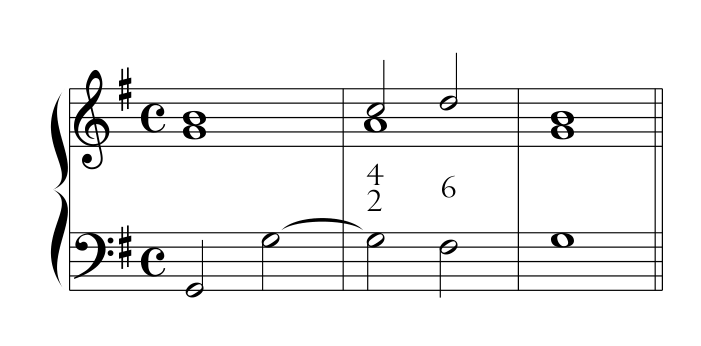
Observe that the same note of the accompaniment that was a 4th above the tied partimento, can rise one step to form the consonance of a 6th above the semitone descent from the tied note that follows in the partimento.
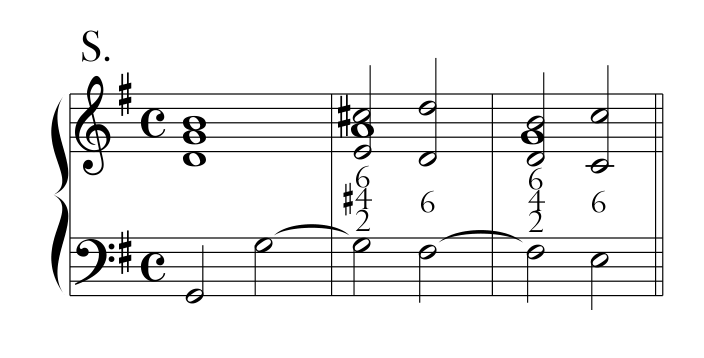
When the partimento is tied and does not return to the same tone, the suspended note of this partimento requires a major 2nd and an augmented 4th [above it]. And one can add a major sixth to this accompaniment. See letter S.
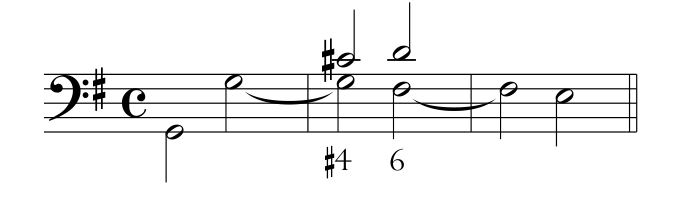
Note that the aforementioned augmented 4th should rise by a semitone to form the consonance of a 6th above the semitone descent from the tied note that follows in the partimento.
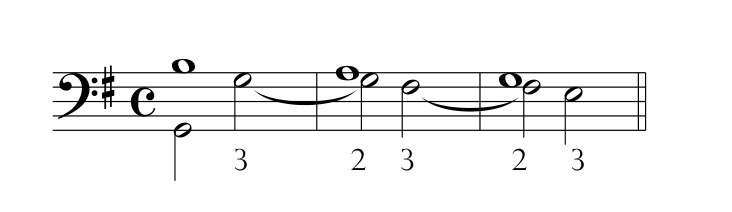
The note that had been the 2nd above the tied partimento will remain as a 3rd in the accompaniment of the next note of the partimento.
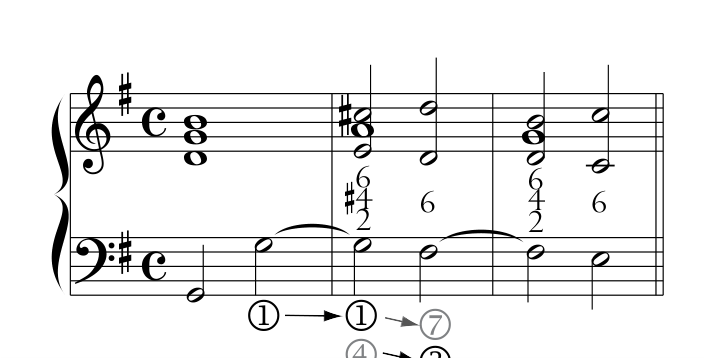
Observe that the suspensions involving the 2nd and the augmented 4th produce the effect of passing from the harmony of the former key to that of the key of its fifth, for example, from the key of G to D. Thus the note which follows the already mentioned tied note in the partimento, whenever it descends a step, is no longer considered as ⑦ of the [old] key but as ③ of the new key to which the harmony has passed.
Concerning the Moves of the Partimento.
When the partimento rises stepwise, it can accept various accompaniments.
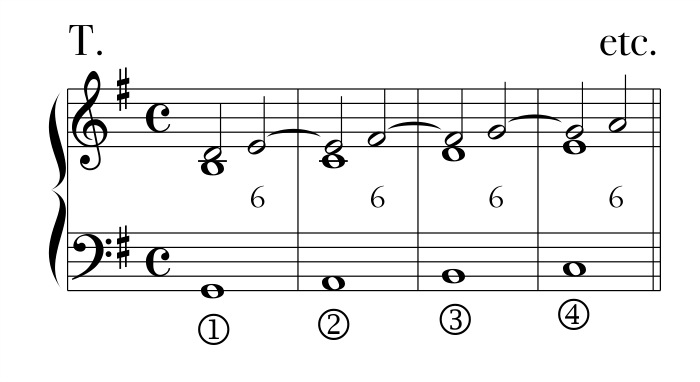
I. 5th that moves to a 6th. That is, after having set the 3rd and 5th above the ①, one can move the 5th to a 6th. After that, with the partimento rising a step, the 6th given to the previous note holds as 5th above the subsequent note. And it progresses like that as long as such [stepwise] movement continues, which can extend from ① all the way to ⑧. See letter T.
Observe that a 3rd should accompany every note of this partimento.
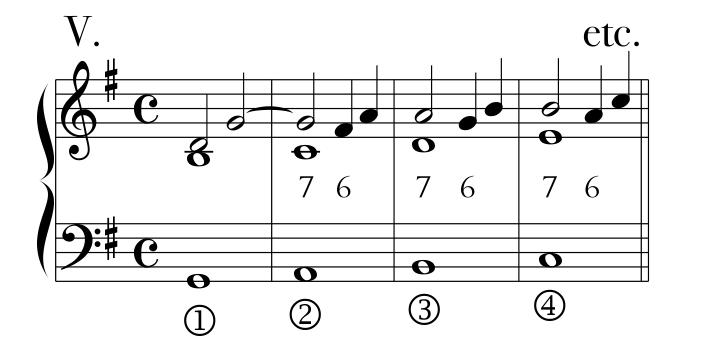
II. 7th that resolves to a 6th. That is, after having set the 8ve and 3rd above the ①, the partimento rises one step. Above that second note of the partimento, the 8ve of ① holds over as a 7th, after which it resolves to a 6th. Then it rises a 3rd to position itself on the 8ve of the second note. That done, the partimento again rises one step, and it progresses like
that as long as such [stepwise] movement continues, which can extend from ① all the way to ⑧, provided the mode is major. See letter V.
III. 9th, prepared by a 3rd, that resolves to the 8ve. That is, after having set the 3rd and 5th above the ①, the partimento rises one step. Above that second note of the partimento, the 3rd of ① holds over as a 9th, after which it resolves to an 8ve. Then it rises a 3rd to position itself on the 3rd of the second note. That done, the partimento again rises one step, and it progresses like that as long as such [stepwise] movement continues, which can extend from ① up to ⑤. See letter X.
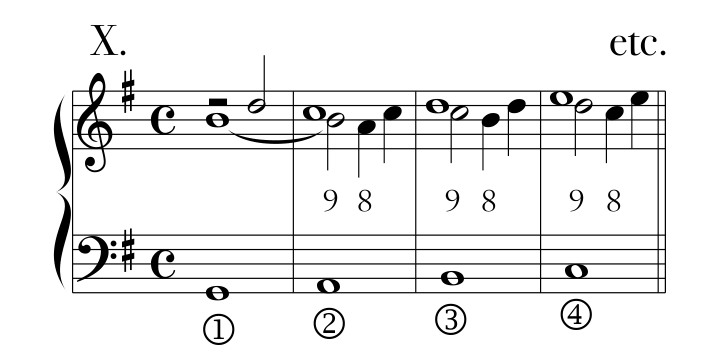
Note that the 9th takes the accompaniment of the 10th (called the 3rd).