As we now have our five broad decisions complete, it may be as well to write them down on a half-sheet of note-paper as a mental compass by which to steer our orchestral course. Here they are:
Bar Decision Bar 1 tutti Bar 5 brass alone Bar 10 add wood-wind Bar 12 add strings Bar 15, last beat strings (vlns. in octs.), wood-wind, horns
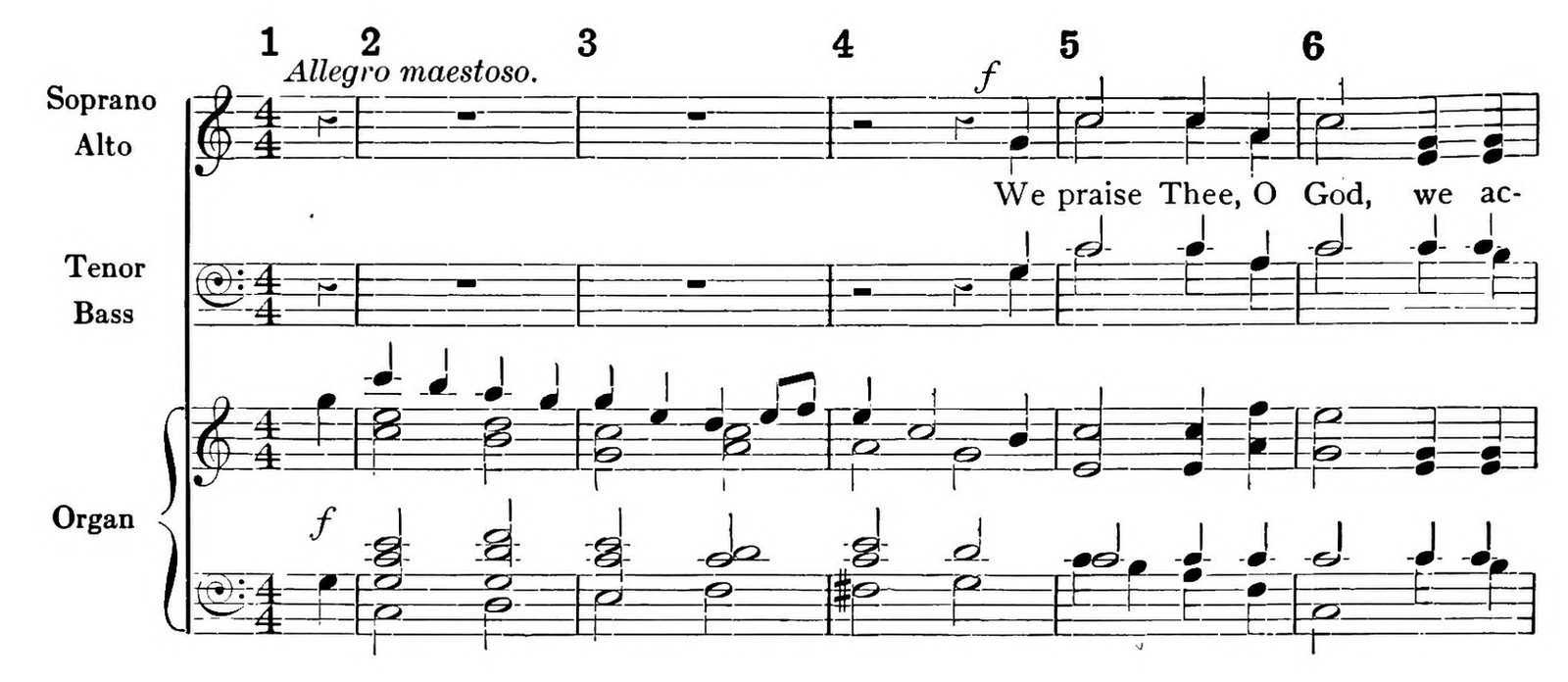
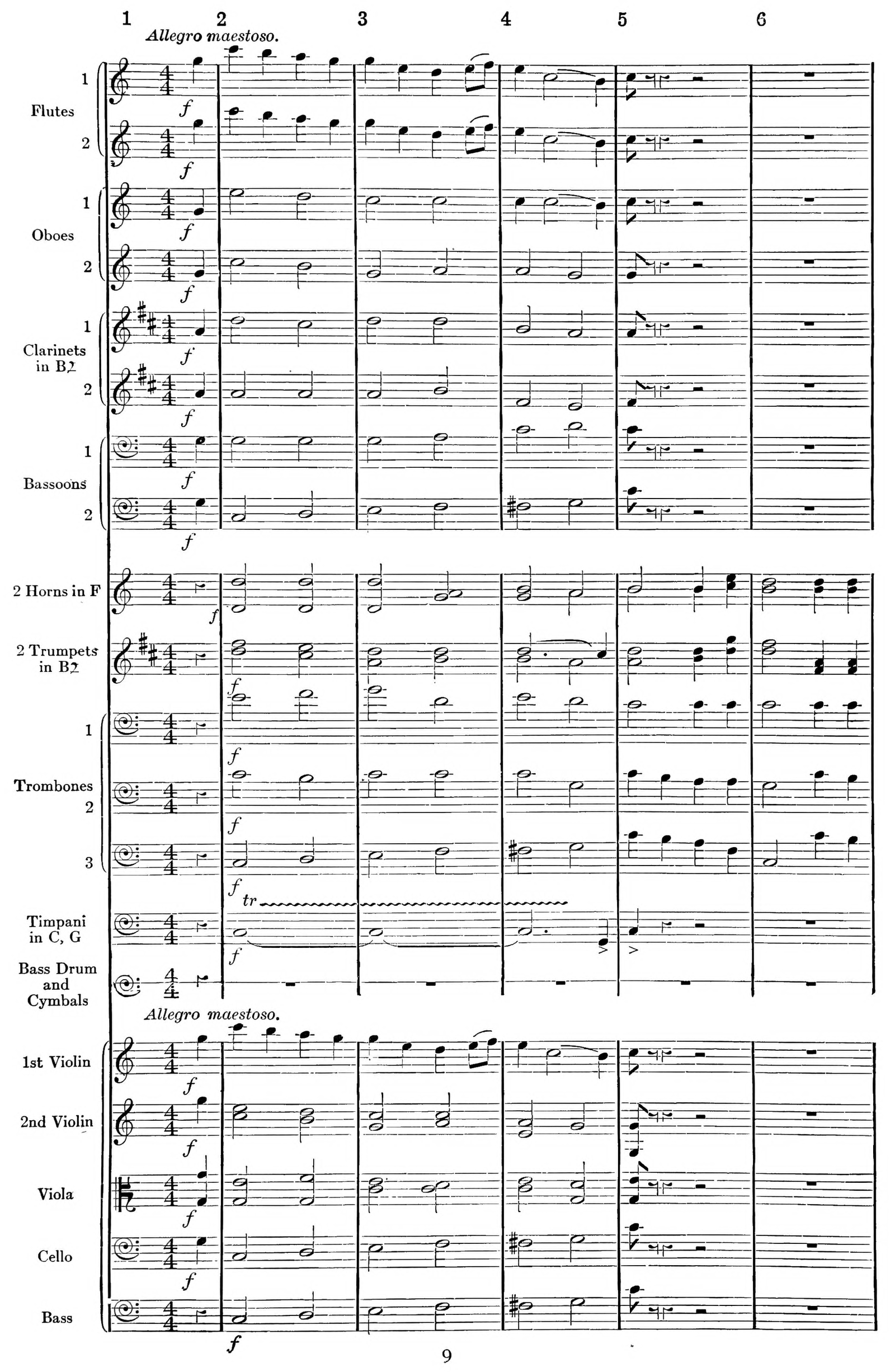
There is nothing much to be said about the scoring of the introduction. It is practically a transliteration of the written notes of the organ-part with the addition of a pedal C on the drums. The melody is in one octave only and is given to the first violins reinforced by the two flutes in unison. Had we not decided on the purely brass orchestration at bar 5, we should probably have used the two trumpets in unison to play this melody an octave below the first violins. But as it is, they are better playing harmony notes in these bars. I need not say that the “effect” in bar 5—the sudden cessation of everything but the brass—is totally spoilt orchestrally by the entry of the chorus. But from the vocal-instrumental point of view it is admirable. It gives us exactly the noble sonorous tone which will exalt this opening. From the technical side it is helped by the fact that the lower bass-octave is present in bars 2, 3, 4 on the double-basses, but ceases on the down-beat of bar 5.
 Playable Books