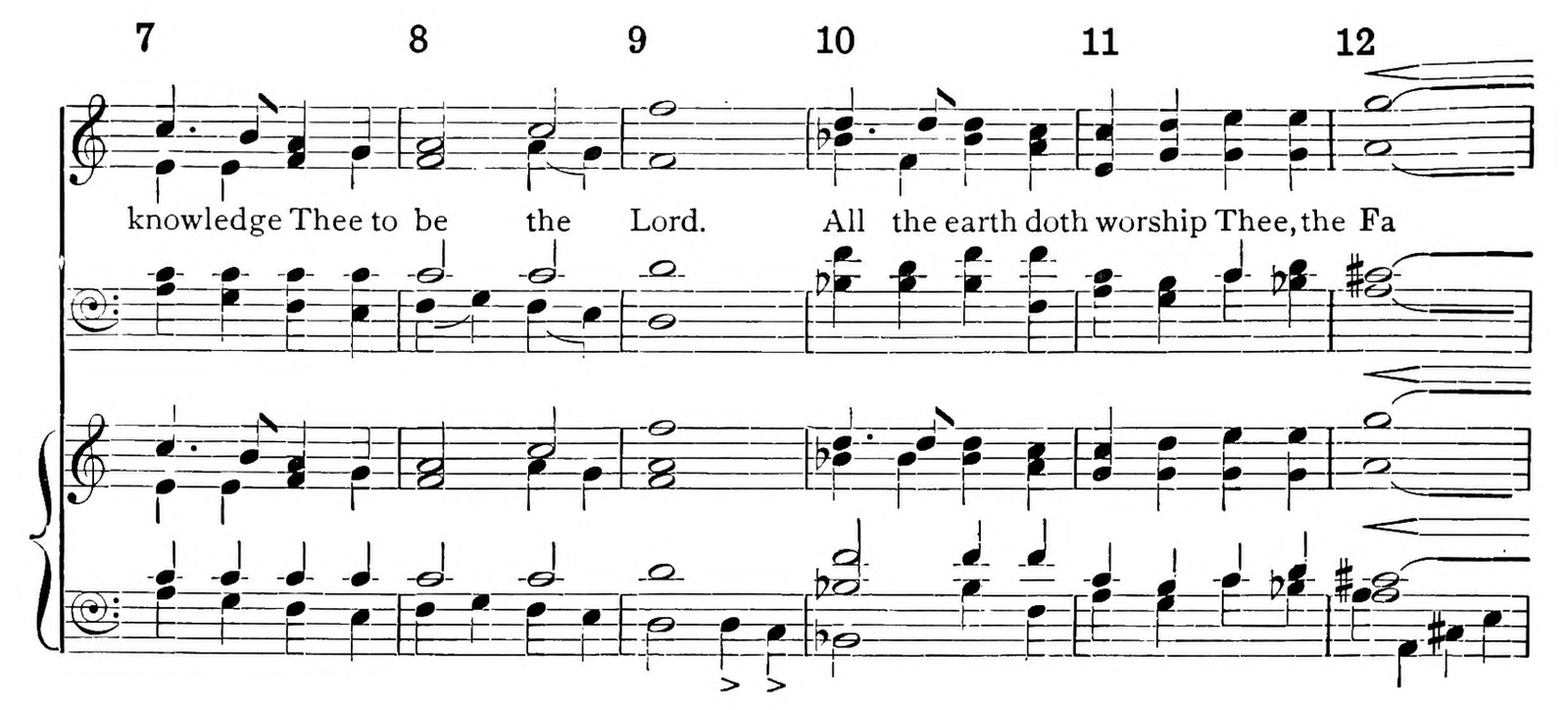
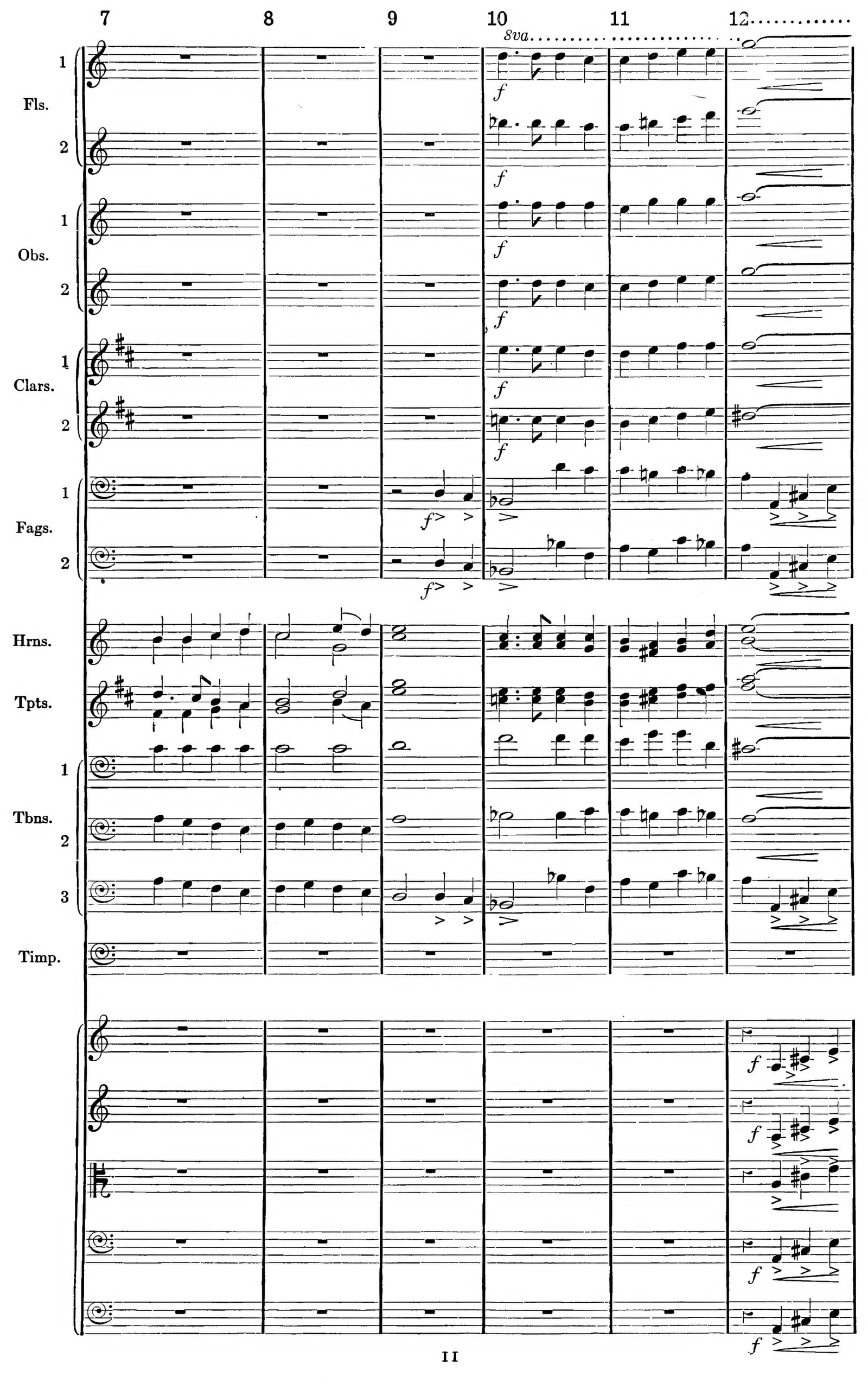
The wood-wind, when it re-enters at bar 10, is kept up reasonably high—high enough, that is to say, to add something at any rate in the way of point and brightness to the ensemble, but not so high as to sound shrieky. A more effective opening for the bassoons in bar 9 would be made by writing their first three notes one octave lower. These bottom notes on the bassoon—especially the low B-flat—have immense strength. But here they would merely fog our orchestral scheme, which is to add as much as possible upwards, and not to write anything below the third trombone octave. A word will be said presently as to the actual notes which have been added in bar 10. To the ear, filled as it is with the mass of sound from the chorus and the brass, they will not “tell” at all distinctly. Still, if they are not strong enough to throw a ray of sunlight, they will at any rate add a splash of gilt to our orchestra.
The re-entry of the strings in bar 12 does not call for much comment. But notice exactly how it is managed. In the first place, all the strings are used. In the second place, they are in a three-octave unison, marcato, and helped a good deal by the two bassoons and the third trombone, which play in unison with the cellos. After four notes they change from unison to ordinary four-part harmony. Of course if this entry had been scored only in the pedal-octave, it would have lacked power and distinction.
 Playable Books