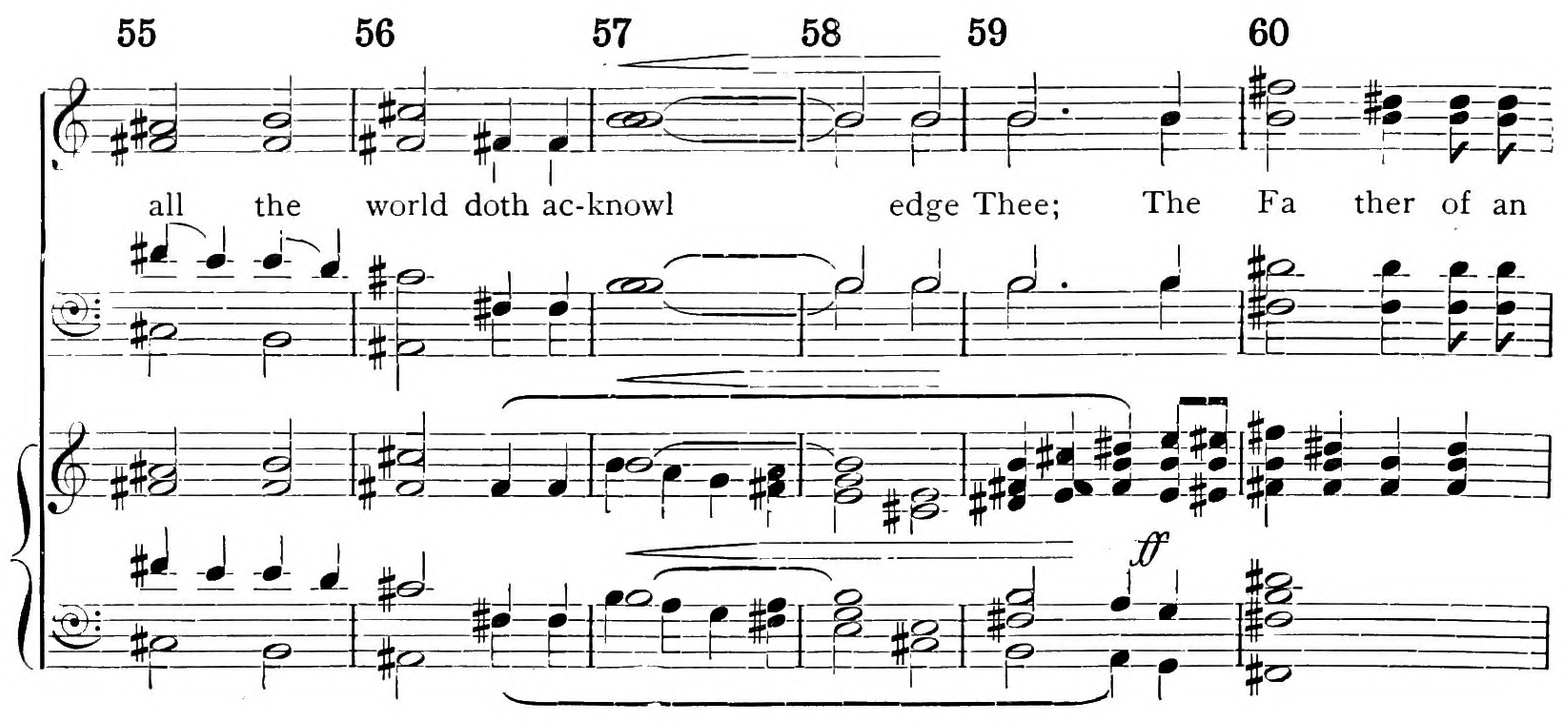
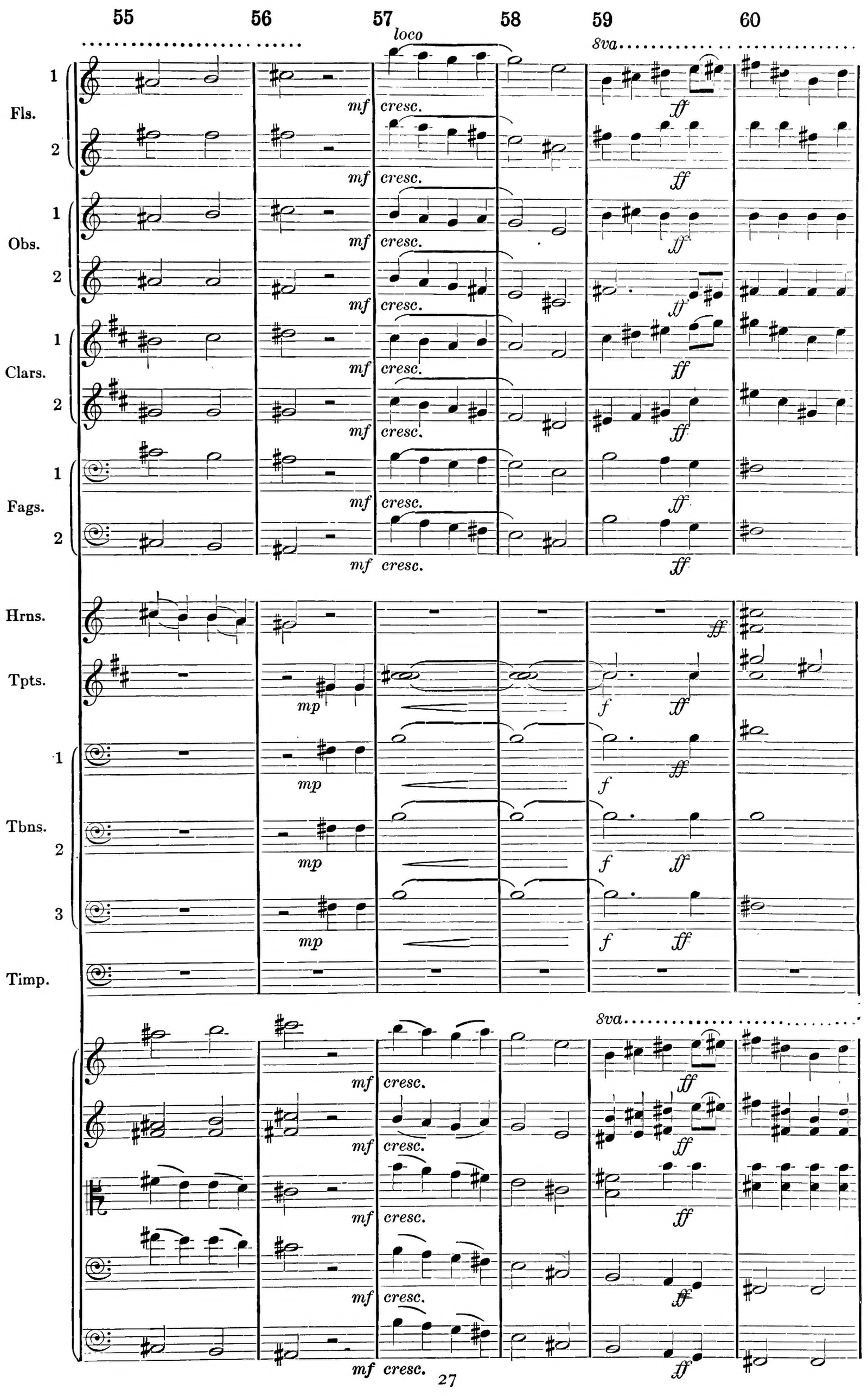
The treatment of the crescendo beginning on the second half of bar 56 is worth a moment's study. Observe the chief points. In the first place the choral parts—practically the long held B—are reduplicated by the heavy brass in two octaves only, while the moving part is given to wood-wind and strings in four octaves. Next, the brass is dropped right down to mp and the rest of the orchestra to mf, so as to make sure of the glare when we come to the high-light at the end of bar 59. We need now have no fear of top G-sharps for the first trumpet. In fact the object for the next eight bars is to keep the brass up as much as possible. The remainder of the scoring in this passage is too obvious to call for any further comment. As often occurs elsewhere, the “setting” of its first bar (60) stereotypes the instrumentation till the next change of mood.
Notice here particularly the effect of the unison crescendo of the five heavy brass instruments through bars 56 to 59, as contrasted with the fortissimo brass harmony from bar 60 onwards. The brass-scheme here of course merely follows out the choral-scheme. But the way in which it is done will repay a little attention.
In the first place, note the omission of the horns from the crescendo bars. If they had been used, they would have had to be written in unison with the trombones, not with the trumpets. And as they would have added little weight in that octave, we take the opportunity of giving them a few bars rest.
In the second place, note carefully from bar 60 onwards the notes that have been added in the heavy brass—notes, that is to say, that are not in the chorus, such as the second trombone part.
In the third place, note that the first trumpet follows the vocal line throughout; but, with the rest of the brass, does not reproduce the actual syllabic inflexions of the chorus.
 Playable Books