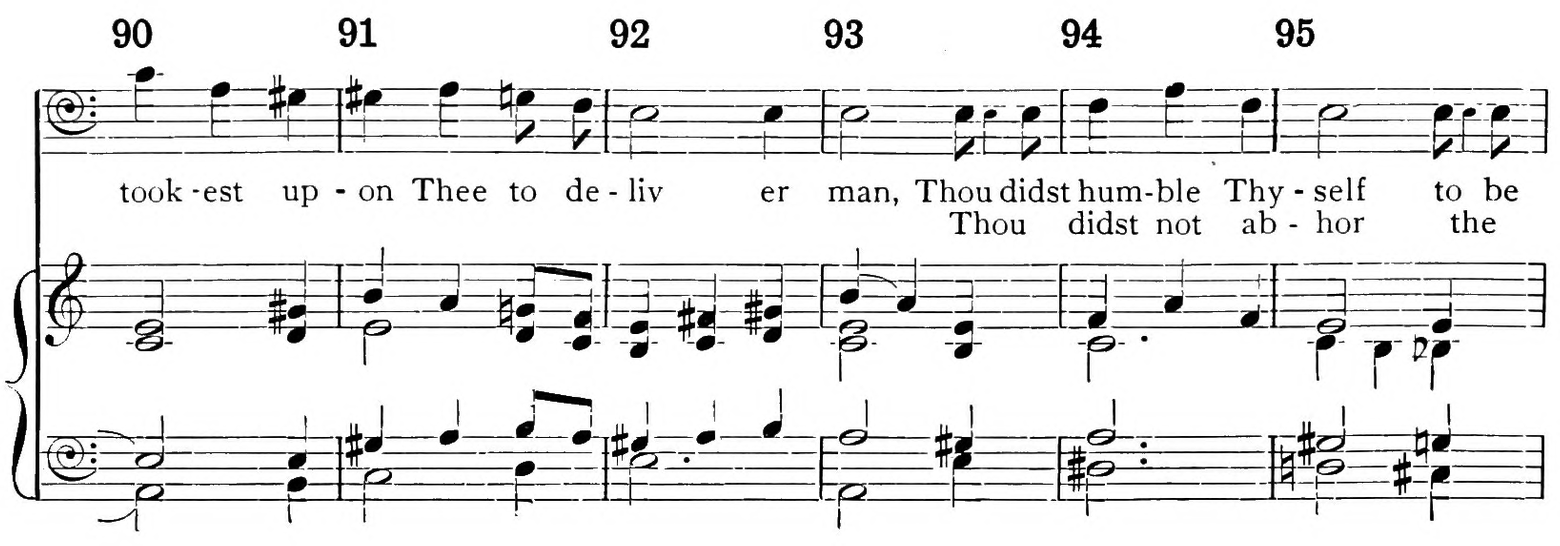
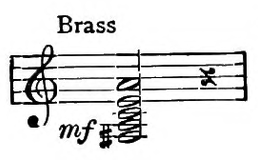
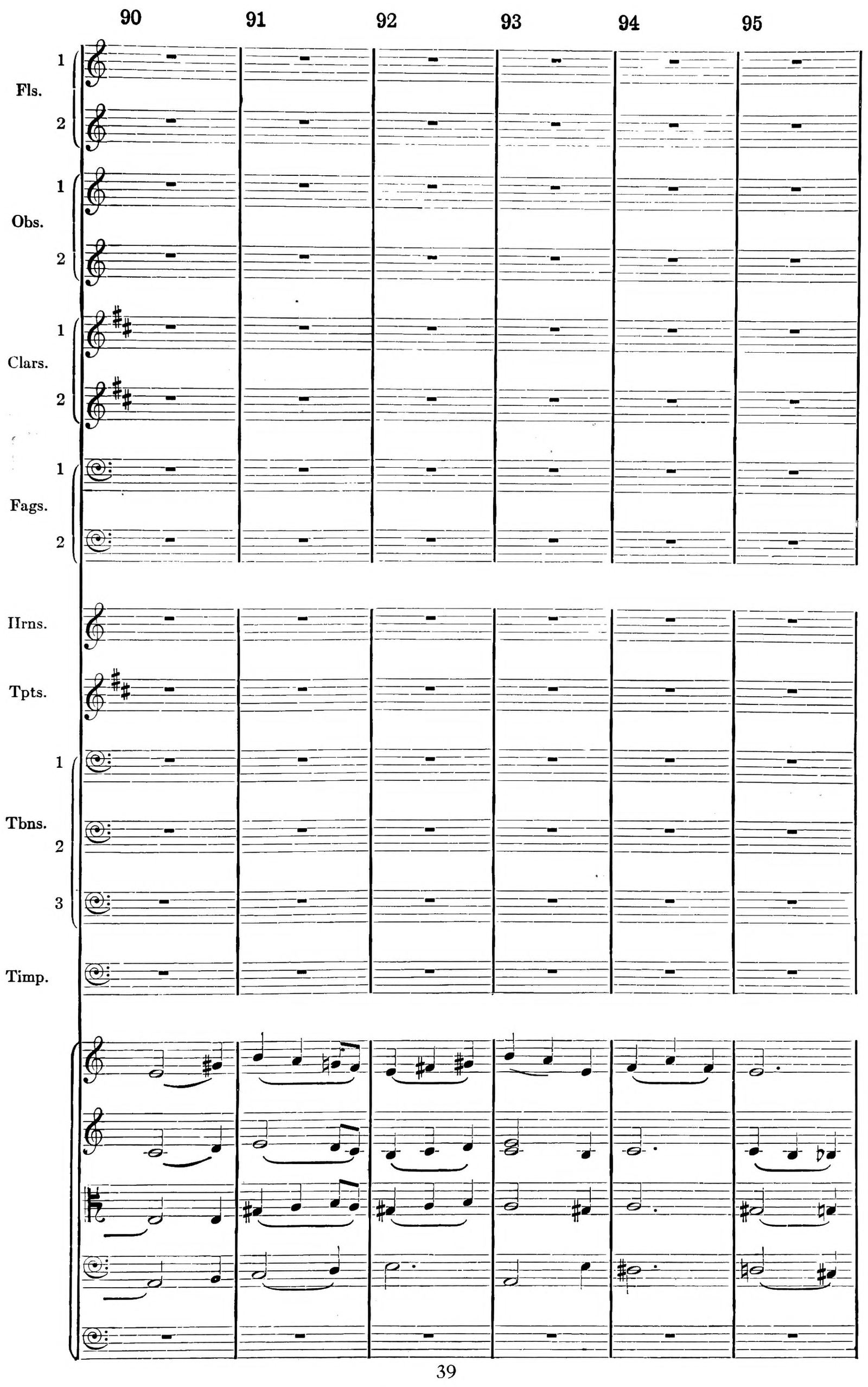
No one, I presume, will quarrel with the scoring of bars 89 to 97. The voice-part is marked “solo” simply. And therefore it is not quite clear whether a solo for a single voice or for the choral basses is intended. The doubt will scarcely affect our judgment. Looking ahead we see four-part chorus mf in front of us at bar 97; then comes a general feeling of crescendo and forward movement, leading up to a streak of sound (bar 106) with an ad lib. top A for the sopranos. The experienced orchestrator might even write-in his streak of brass lightning on this bar without further thought:
These general considerations would make the choice of strings for bars 89 to 97 inevitable. But, apart from them, the literary subject and its musical treatment call for the utmost delicacy and sweetness in the orchestra. So we make it string-quartet, carefully slurring the phrases to insure a maximum of smoothness in the ensemble. The basses are omitted. They might be used. And, if so, would play the written notes of the cello-part, sounding an octave lower. There is a temptation here to write them a pizz part, while the cellos are playing legato with the bow. It would undoubtedly be effective. But on the whole the solemnity of the subject seems to indicate that we can do without them, whether pizz or arco. The mingled smoothness and austerity of the cello G-string will give us all that we need here.
 Playable Books