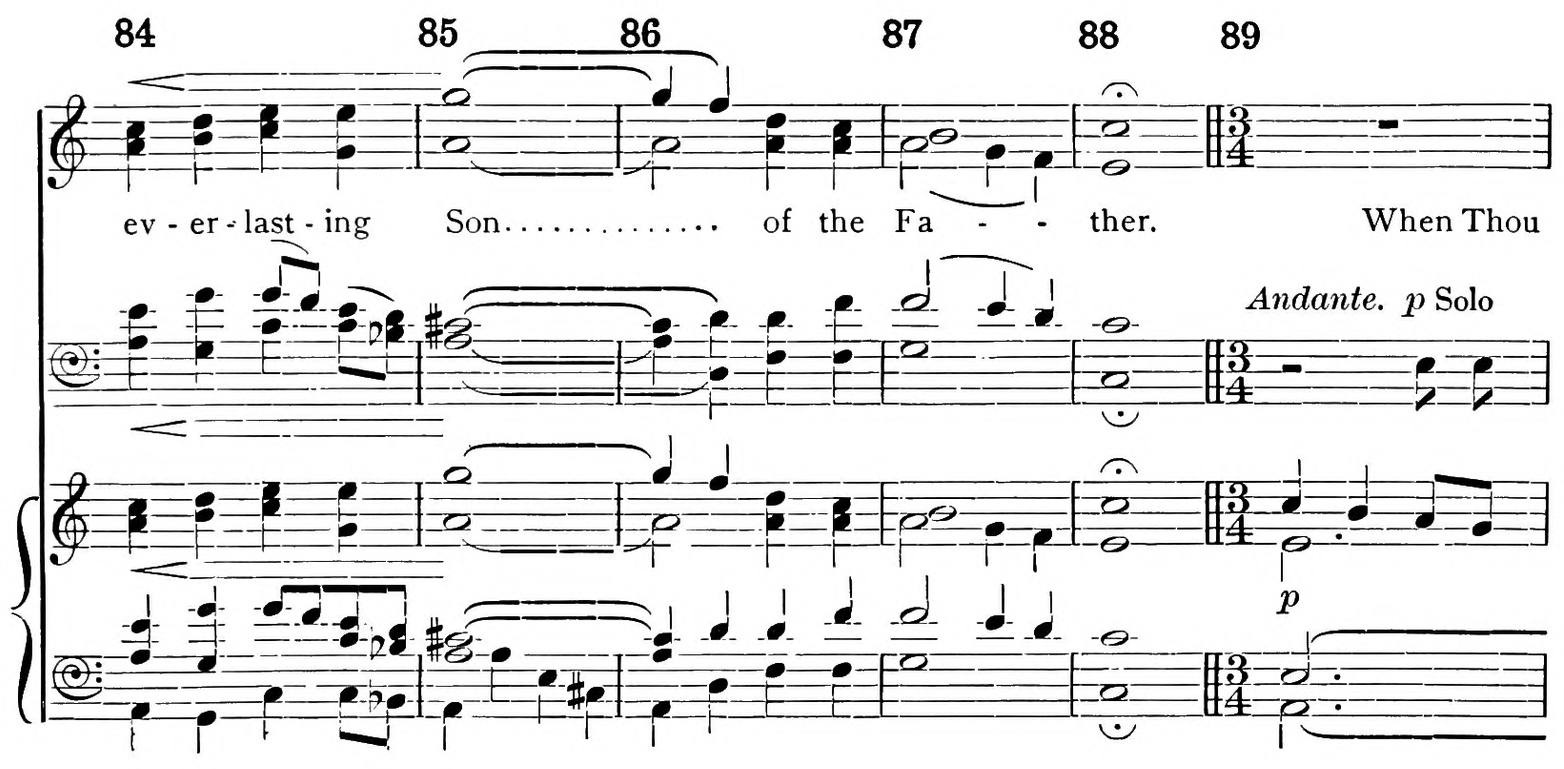
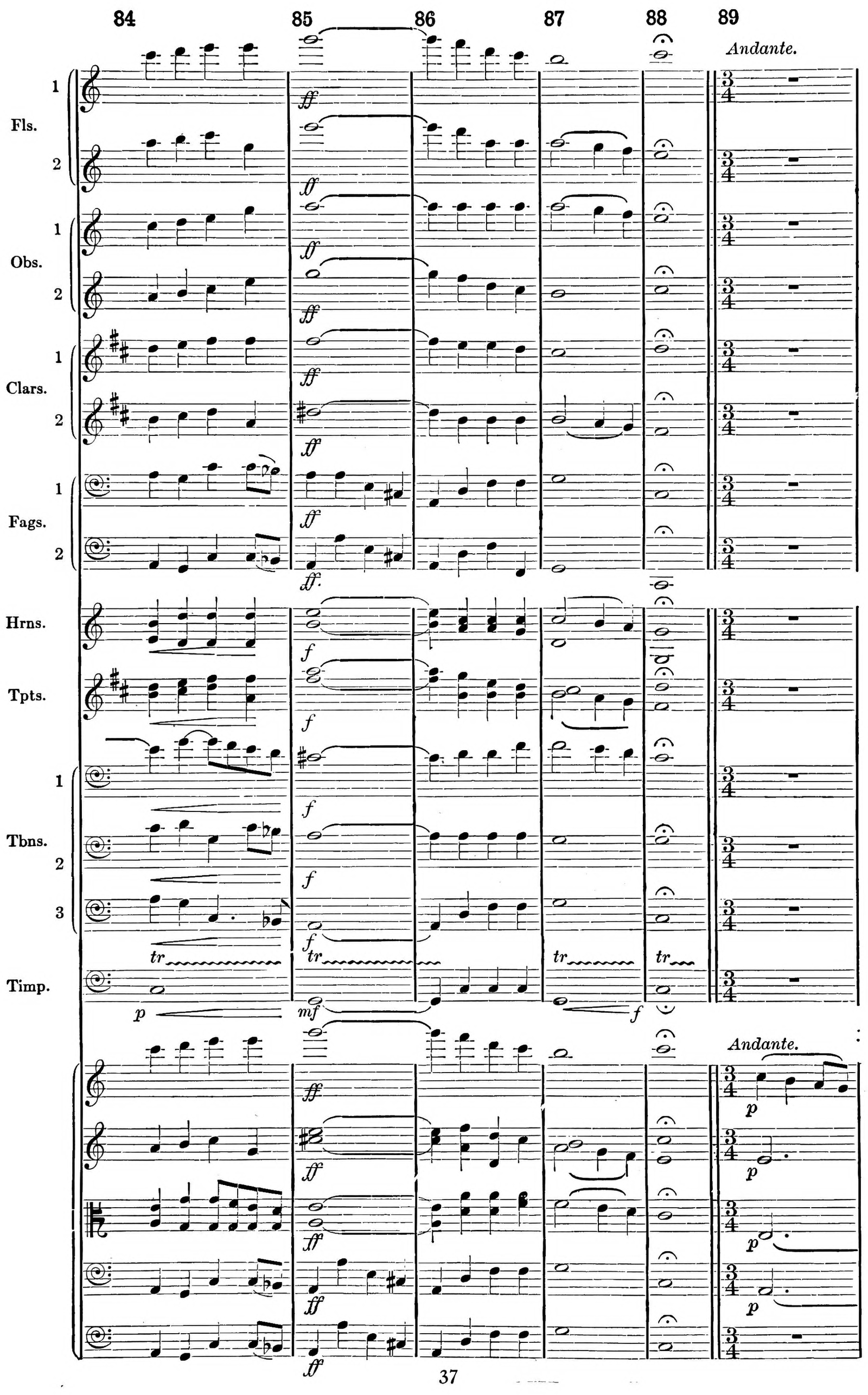
It is hoped that the reader will appreciate the logic of the last few paragraphs. They regard the orchestration from the viewpoint, not of variety, but of balance of instrumental design. Variety, however, is one of the objects of orchestration. In the old-style scoring this was applied rigidly to variety in the treatment of the same music, when it appeared more than once in a symphonic work. A tune, when it first put its nose above ground, would find the oboe waiting to snap it up. Later on the violins would pounce down on it. And a surprising degree of merit was attached to this sort of orchestral chivy-chasing; quite regardless of the fact that, if the musical mood was the same, one or other of the two instrumentations was the better.
Nowadays less merit is allowed to these simple acts of substitution. The virtue of making the right choice in the first instance is still as much a virtue as ever it was. But the modern call for orchestral variety is directed in a larger way to securing differences of colour and mass in order to emphasize differences in the musical material. This is less attainable in choral orchestration than in symphonic. But if it is to be attained, the music must be looked at with a wide perspective; instruments that do not help the passage under consideration must be rigorously excluded, even though “good parts” might easily be provided for them; and a fair amount of subsidiary writing must be undertaken. One may add that this presumes an efficient modern technique on the part of the players, and—not less important—considerable earnestness in carrying out the composer's intentions.
 Playable Books