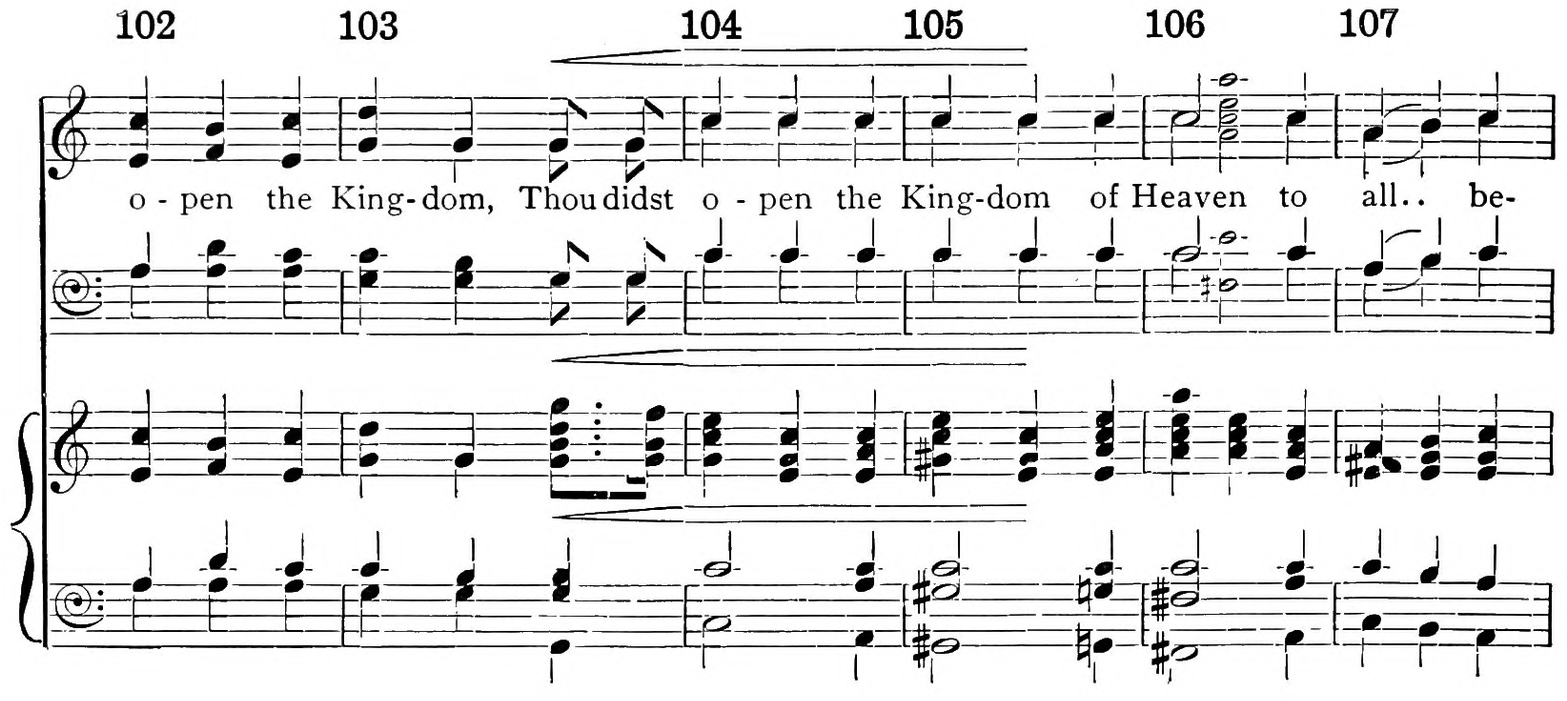
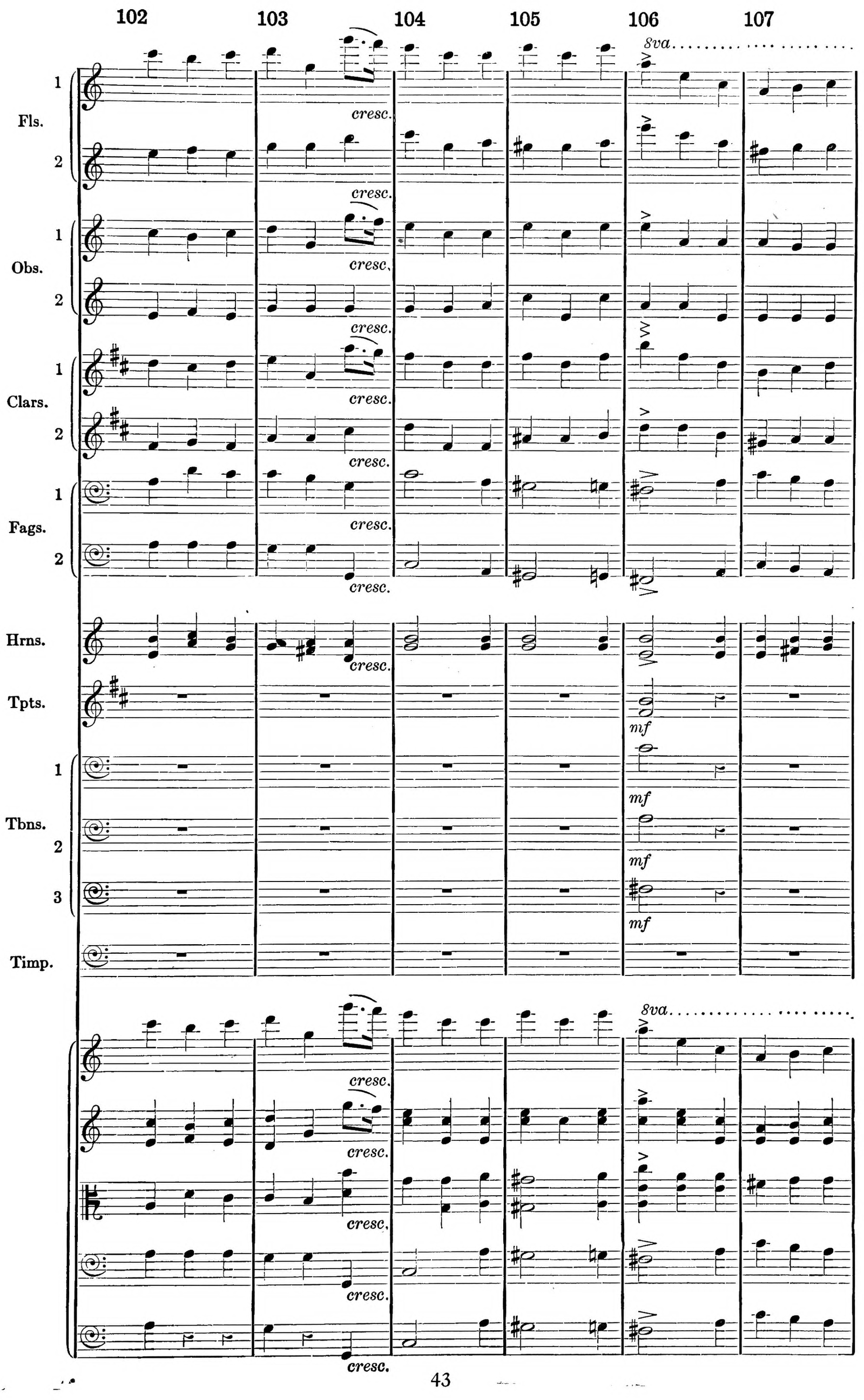
Note here in the bars that follow (102 to 109) one small point of orchestral routine. When the first and second violins are playing in octaves it is always possible to make the latter lead, so to speak, a double life, playing the melodic line as the upper part of their chords and a second (harmonic) line as the lower. Even in the very flat and sharp keys one can generally write easy double-stopping for them, especially if one is always alive to the fact that the viola can often help the second violin out with notes that the latter's compass or technique puts out of his reach—and vice versa. The effect of internal stringharmony, where there is no melodic intention, is precisely the same to the ear, however the notes are obtained. In pure four-part writing it is, of course, neither desirable nor necessary. But elsewhere—as, for example, in the bars that we are considering—it is common; so much so that one may say that in orchestral circles the double life is quite respectable.
 Playable Books