Cecil Forsyth · section 35 of 39
[Bars 186–191] Read and hear this section in the playable edition →
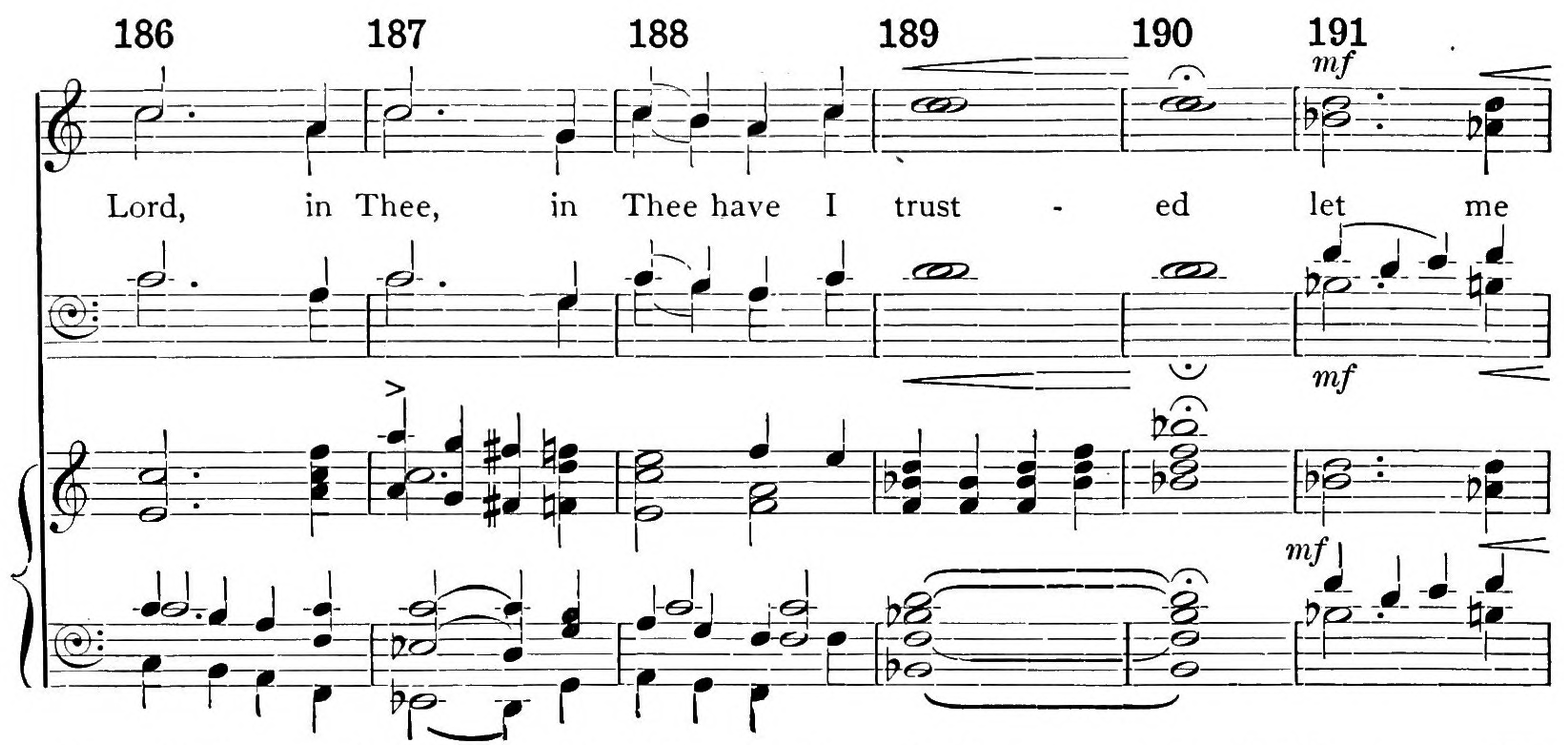
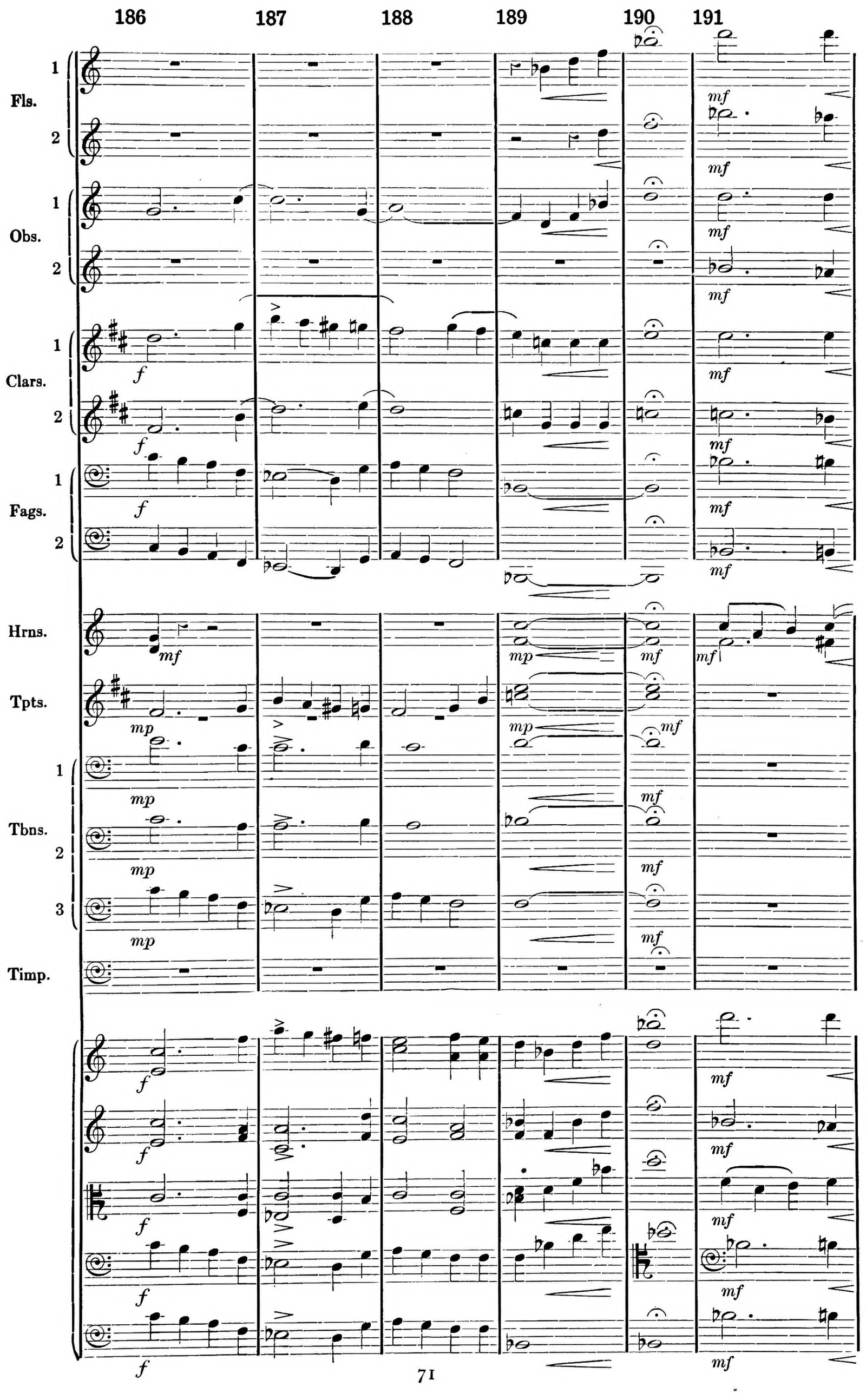
Fig. 72 · Play this example in the reader ▶ Very little remains to be said with regard to the last moments of this score. The orchestral difficulty is that it dies in two ways; first of all p at bar 196, and then ff from bar 197 to bar 212. In its first version we cannot very well let its life flicker out without some orchestral consolation—especially as we have a direction “Gt. p molto cresc” in bar 185. On the other hand too much consolation may mean disappointment when the Festival Ending begins. What is the least required of us by dignity and friendship in these trying circumstances? I should say mp brass at bar 186 with a crescendo to mf five bars later; bar 190 to be the only big spread chord; then a drop back in the next bar to an orchestral mf without heavy brass; the last cadence to be helped out with pp trombones—no trumpets.
Fig. 73 · Play this example in the reader ▶ ← [Bars 180–185] All sections [Bars 192–196] → More Playable Books Berlioz, Treatise on Instrumentation Berlioz’s treatise on the orchestra, revised by Richard Strauss, with the original pages. Fux, Gradus ad Parnassum Learn how independent voices work together, one species at a time. Goetschius, Exercises in Elementary Counterpoint Build independent melodies through graded exercises, with 471 recorded examples. Goetschius, Counterpoint Applied Study imitation, canon, and fugue with 393 recorded examples. Kitson, Counterpoint for Beginners Strict counterpoint in two and three parts, species by species, with every example playable. Prout, Analysis of J. S. Bach’s Forty-Eight Fugues Follow Prout through all 48 fugues of the Well-Tempered Clavier, every example playable. Rameau, Treatise on Harmony Explore the foundations of harmony, composition, and accompaniment. Rimsky-Korsakov, Practical Manual of Harmony The classic harmony course, newly translated from the 1910 French edition, with all 640 examples playable. Tchaikovsky, Guide to the Practical Study of Harmony Tchaikovsky’s Moscow Conservatory harmony course, with playable examples. Fenaroli, Partimenti Six books of partimenti, with playable basses, contrapuntal exercises, and bilingual rules. Reger, Supplement to the Theory of Modulation Explore Reger’s modulation method with 100 analyses and 102 playable examples. Cutter, Harmonic Analysis Learn to name every chord and non-harmonic tone in real music, from Bach to Wagner, with the passages playable. Schoenberg, Theory of Harmony Read all 22 chapters, with the original German beside a new English translation. Rimsky-Korsakov, Principles of Orchestration Discover instrumental colors through scores and orchestral recordings. Forsyth, Orchestration A witty, thorough guide to every orchestral instrument, with the original pages. McKay, Creative Orchestration Ranges, transpositions, texture and balance, taught through projects, with the supplied examples played by orchestral samples. Sanganeria, Arrival Build jazz lines that land, with 30 original playable examples. Bona, Complete Method for Rhythmical Articulation Practice rhythm through 120 graded studies, with playable notation and original scans. Hanon, The Virtuoso-Pianist Practise all 60 exercises with playable notation, original scans and supplied Mutopia playback. Mathews, Standard Graded Course of Studies, Grade I A first year of piano: 136 short pieces by many composers, every one playable, with Mathews’s teaching notes. Goetschius, Lessons in Music Form Hear how figures become phrases, periods, rondos and sonata forms, with the printed examples beside their playable notation. ← All Playable Books  Playable Books