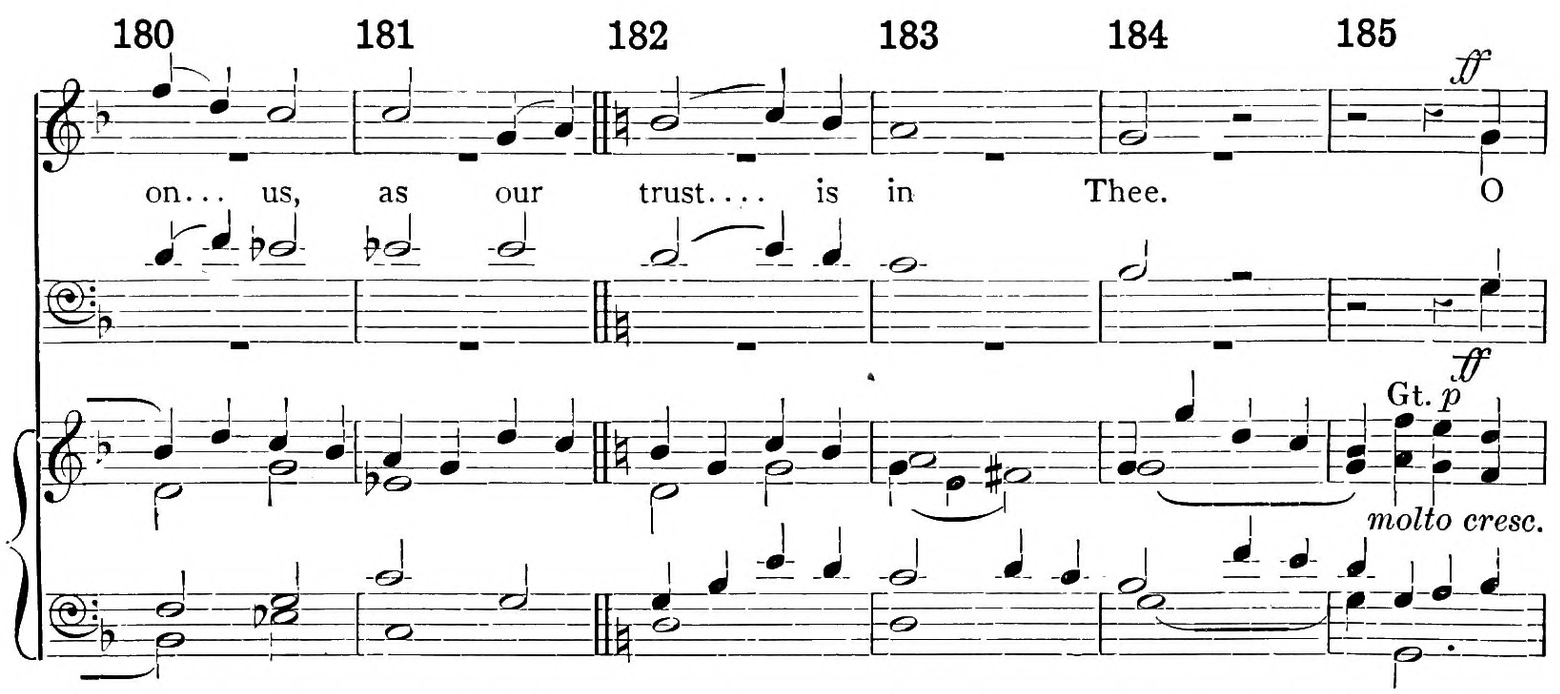
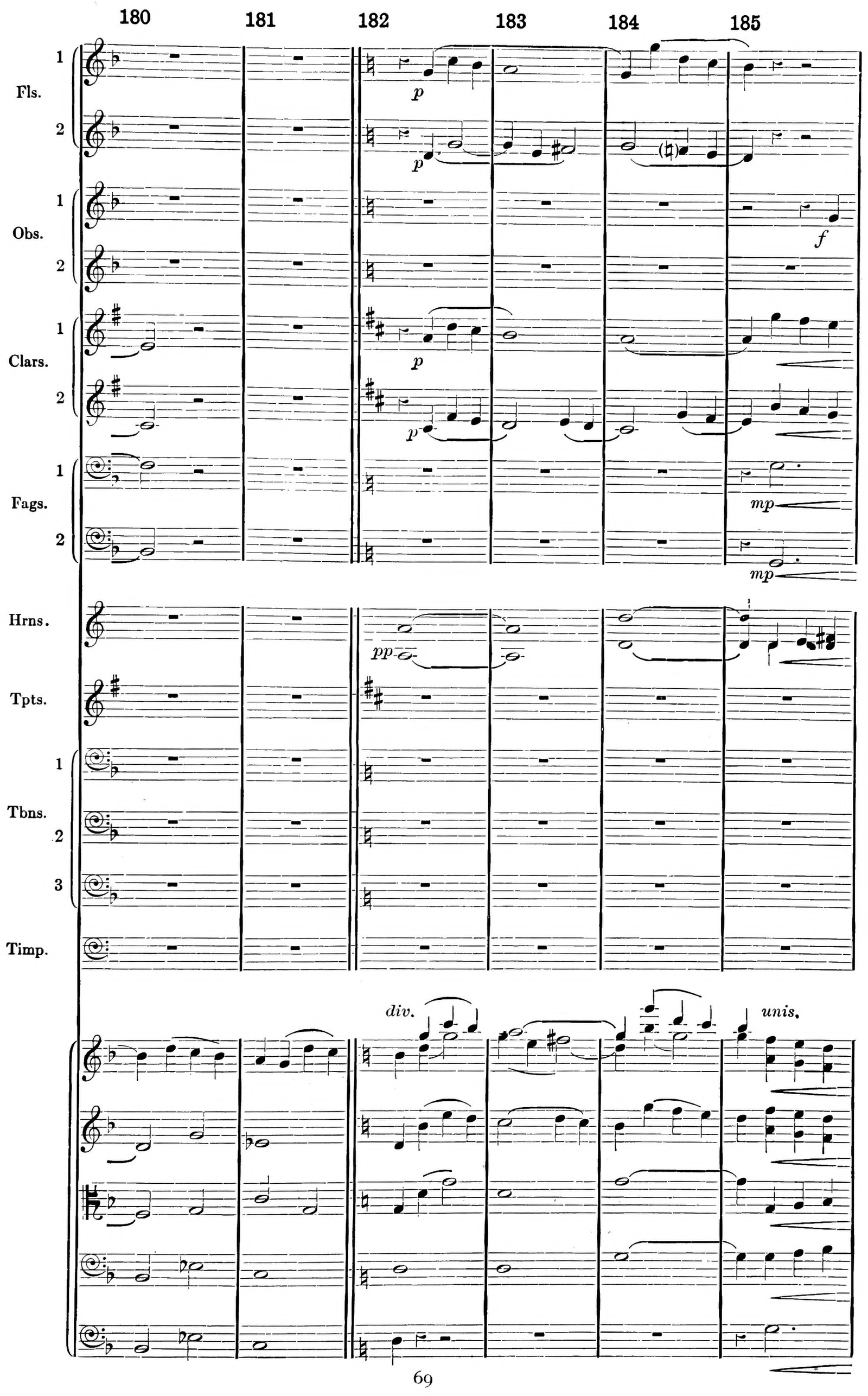
At the double-bar (182), however, the text, the change of key, and the character of the music give us an opportunity of doing something very nice in the orchestra. Our object is, of course, to enforce the words “our trust is in Thee” with a tone-colour that is placid, but yet has something of celestial aspiration in it. In order to secure this effect we omit the oboes, bassoons, and basses from the ensemble. We then put the violins (in three parts) into the upper octave; while the gap between them and the cellos is filled by a suboctave-reduplication of the violins on flutes and clarinets. The orchestra is marked p, but the horn-octaves that bind the whole thing together are marked pp. The reader should observe exactly what notes have been written in the wood-wind parts here. That is important; as the “doublings”, here and elsewhere, have by no means been left to chance. The effect of this little passage is quite beautiful.
 Playable Books