Playable Books
Cecil Forsyth · section 2 of 60
List of instruments
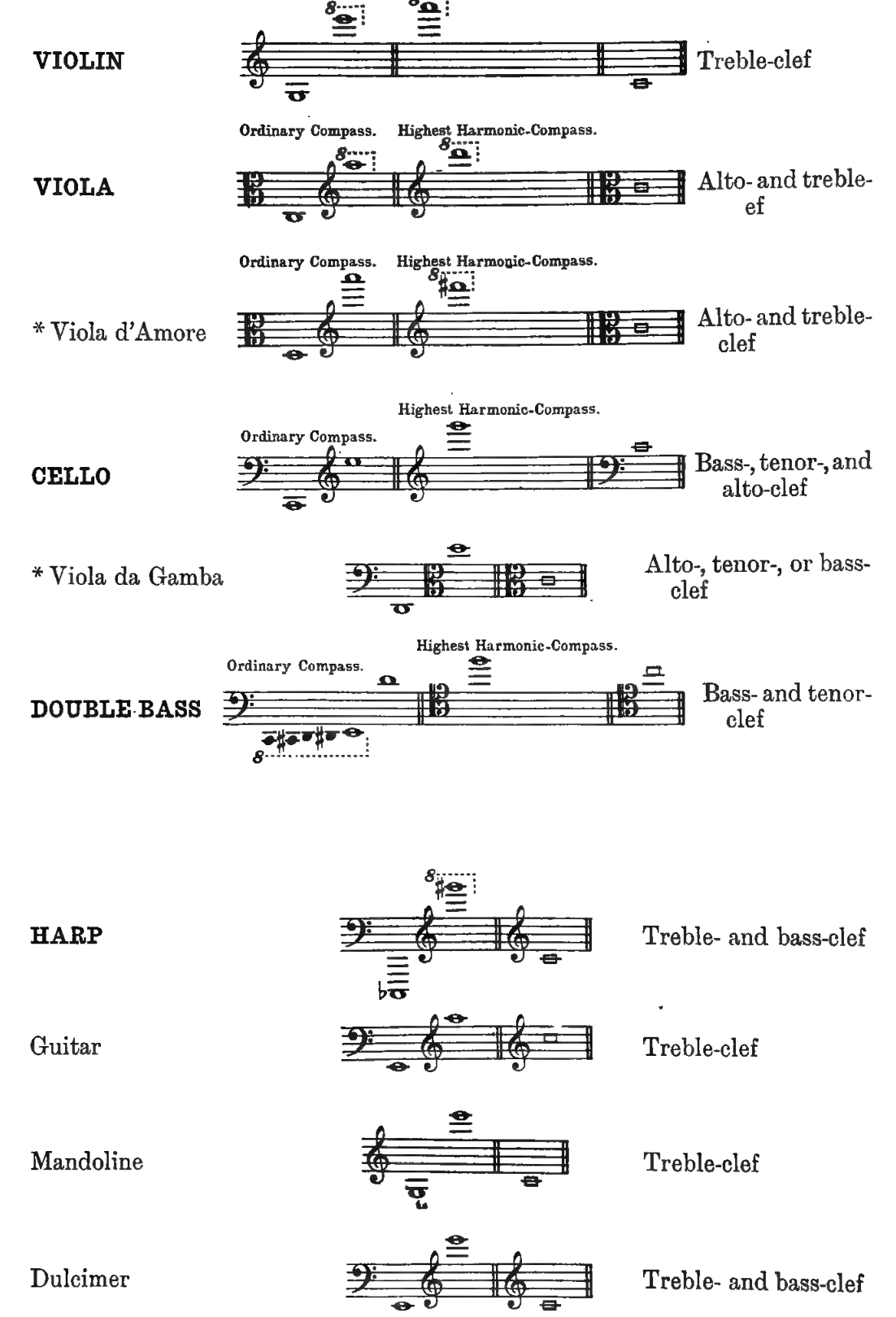
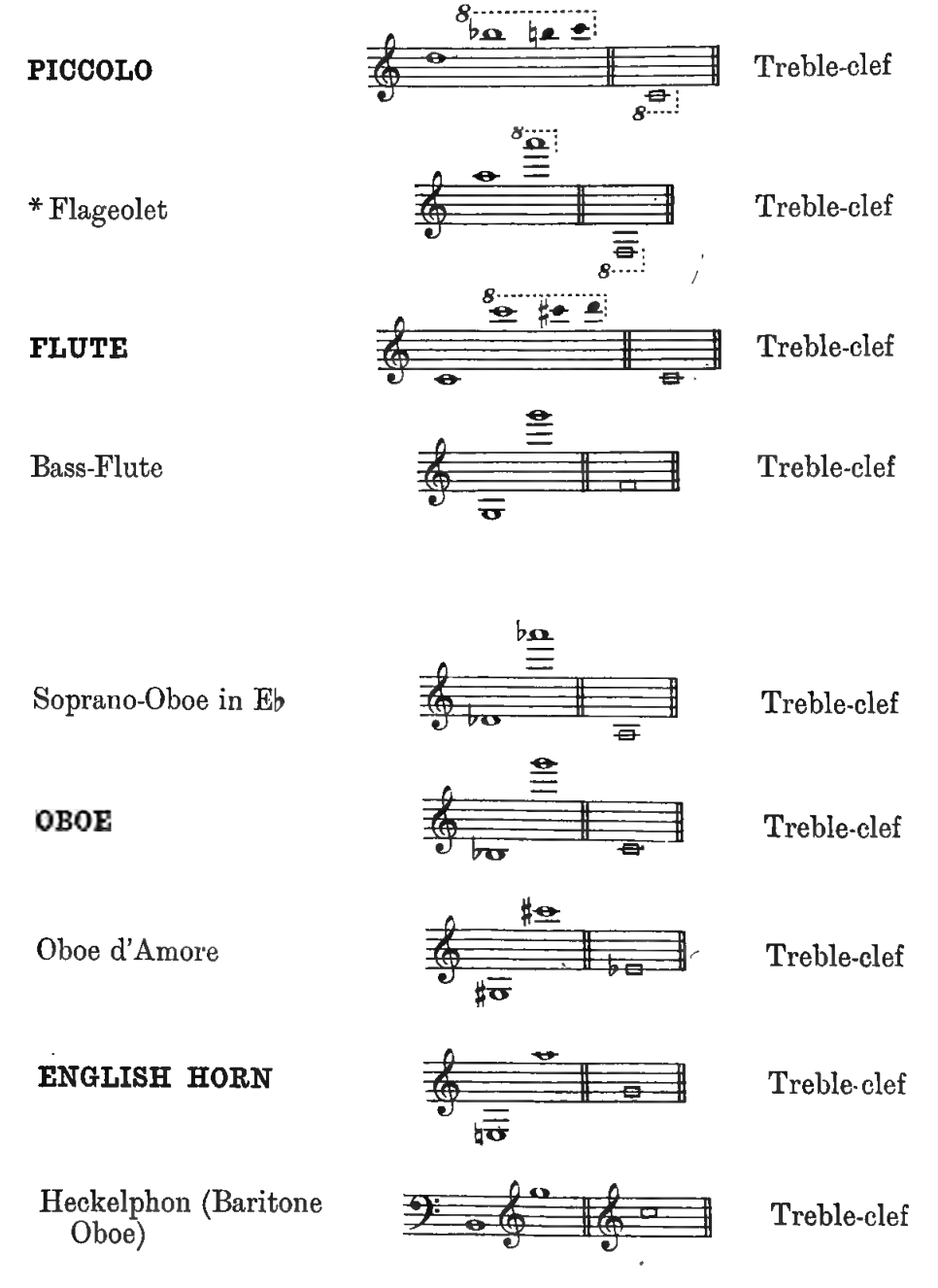
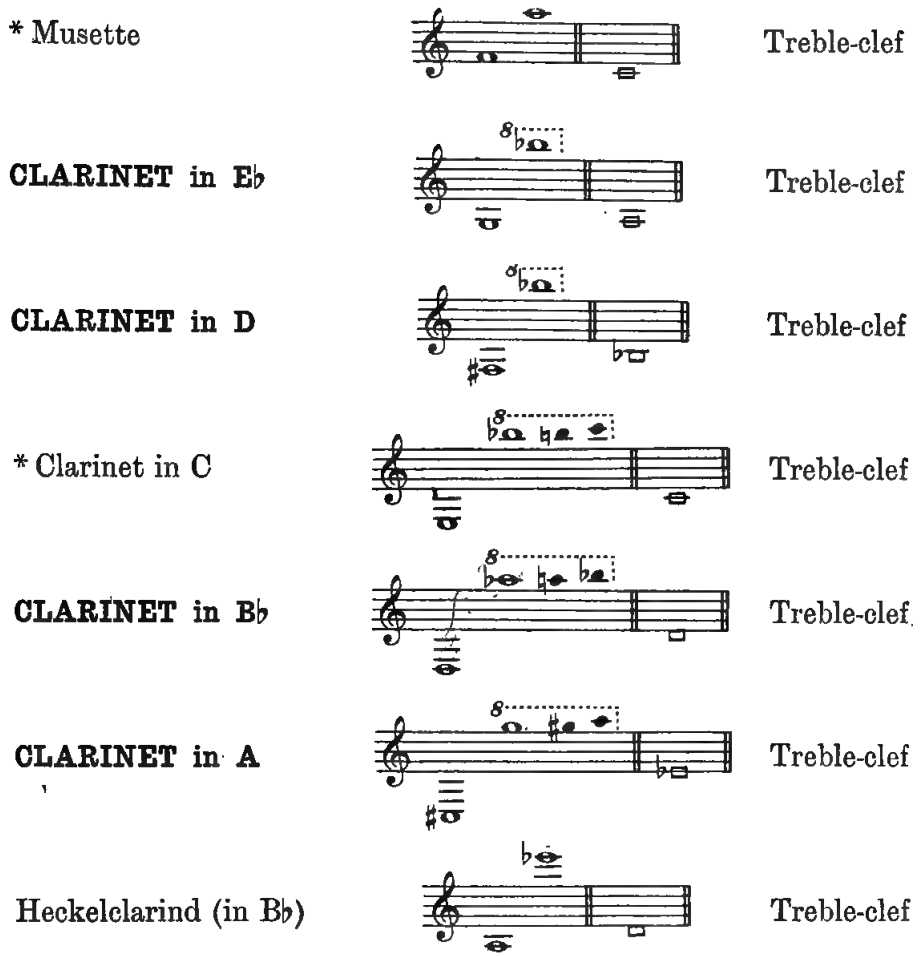
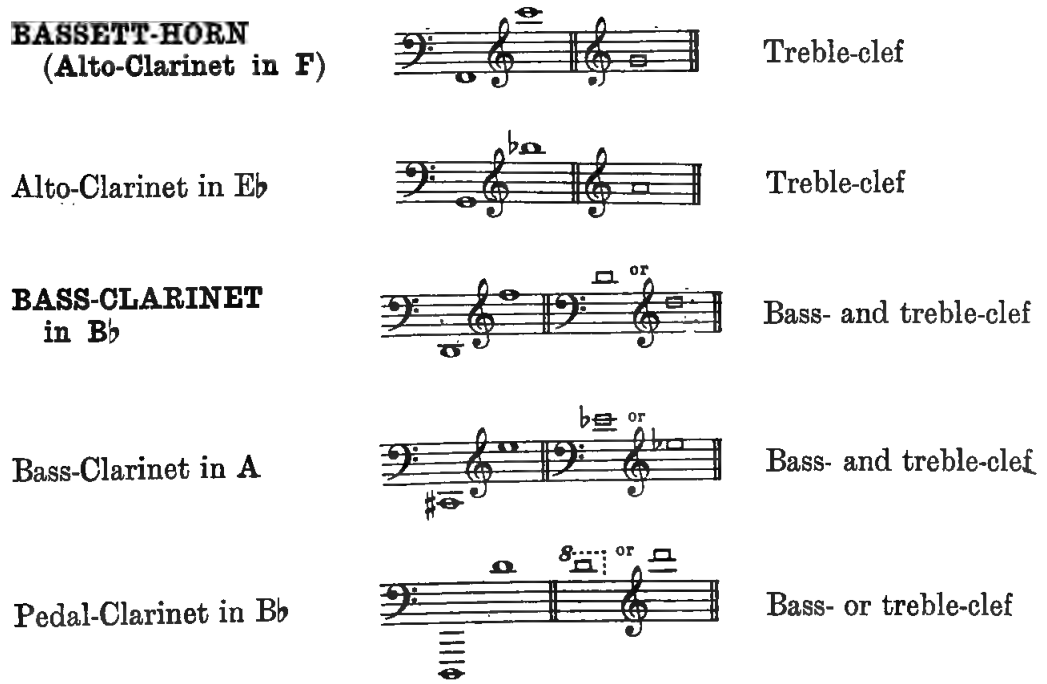
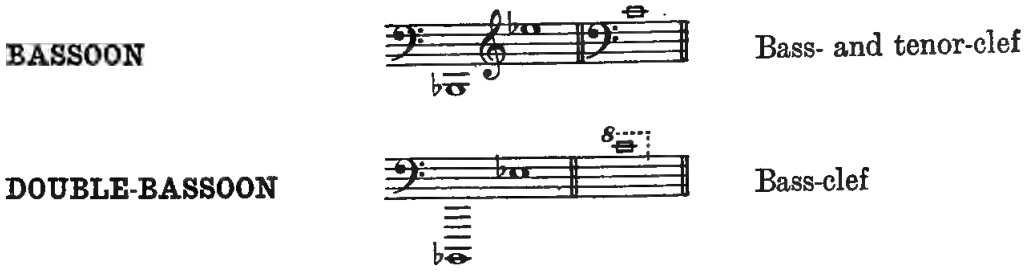
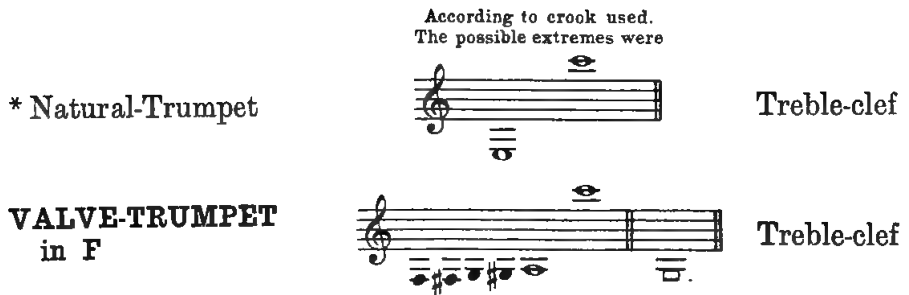
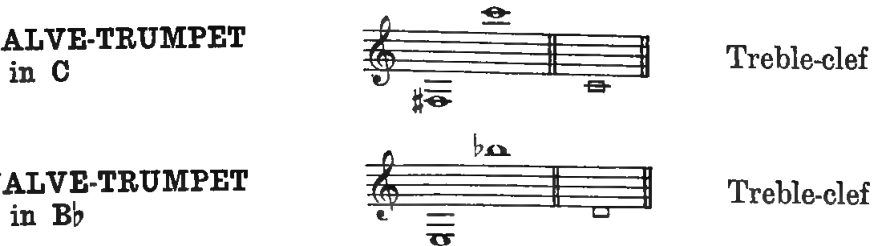
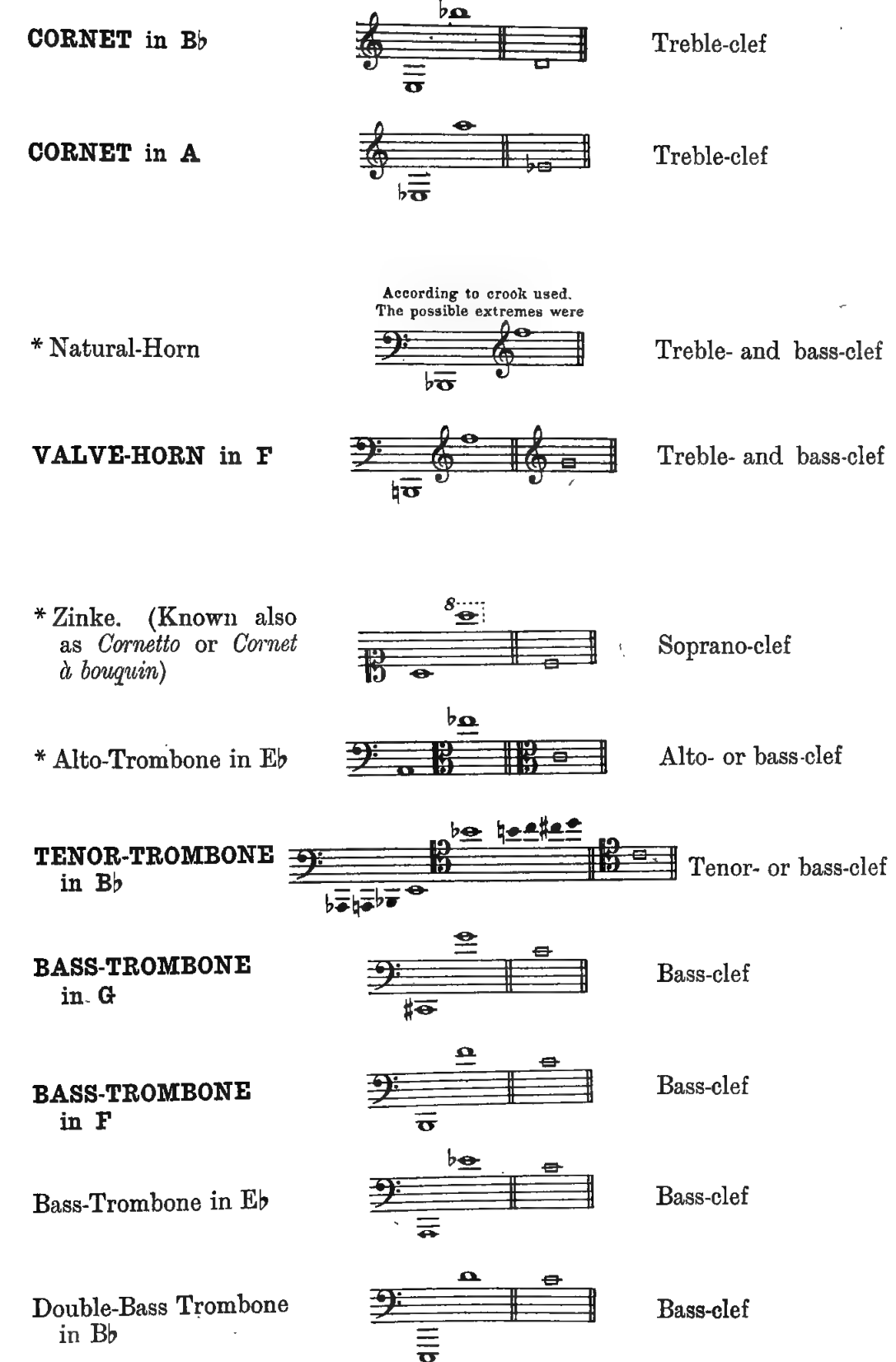
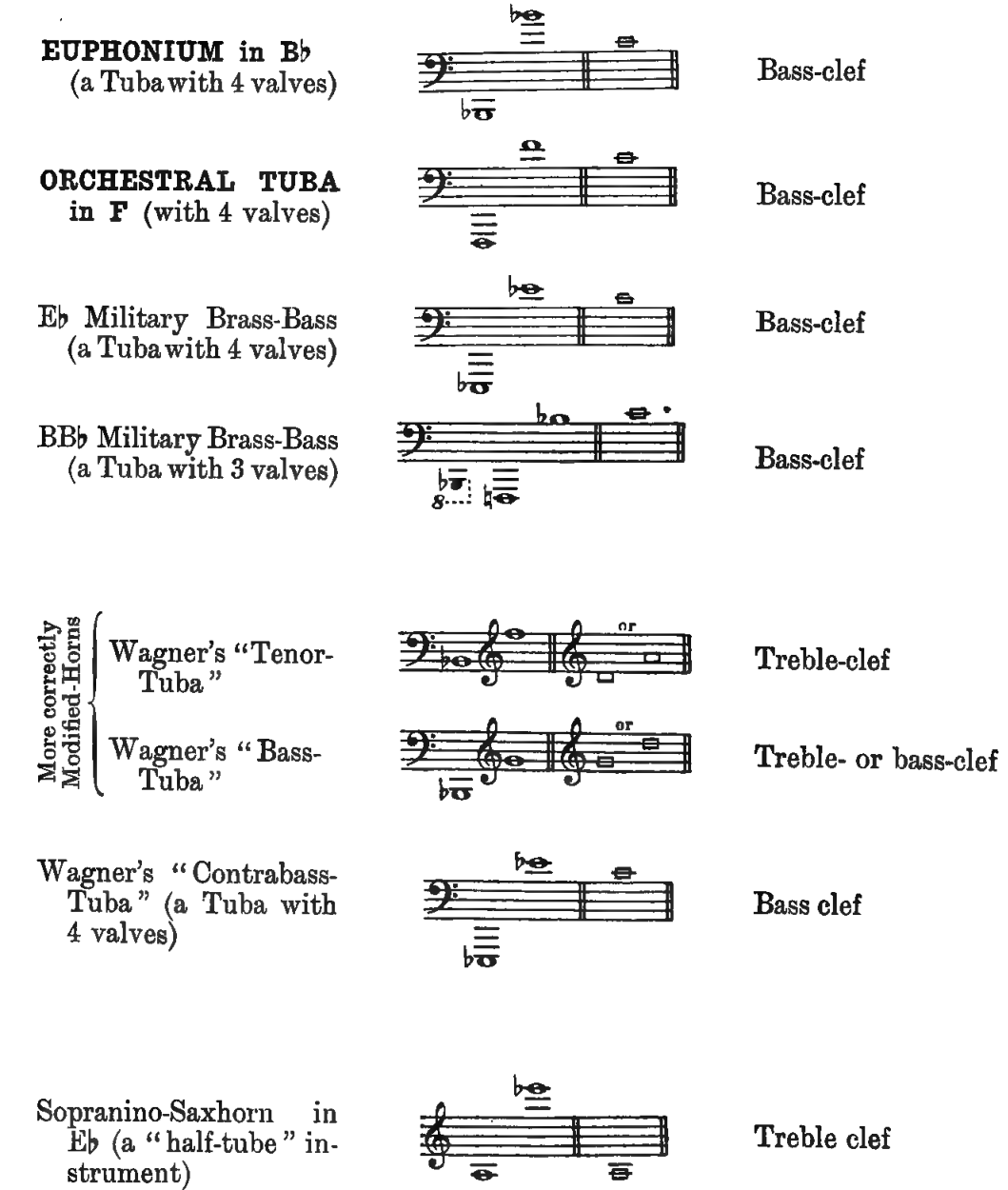
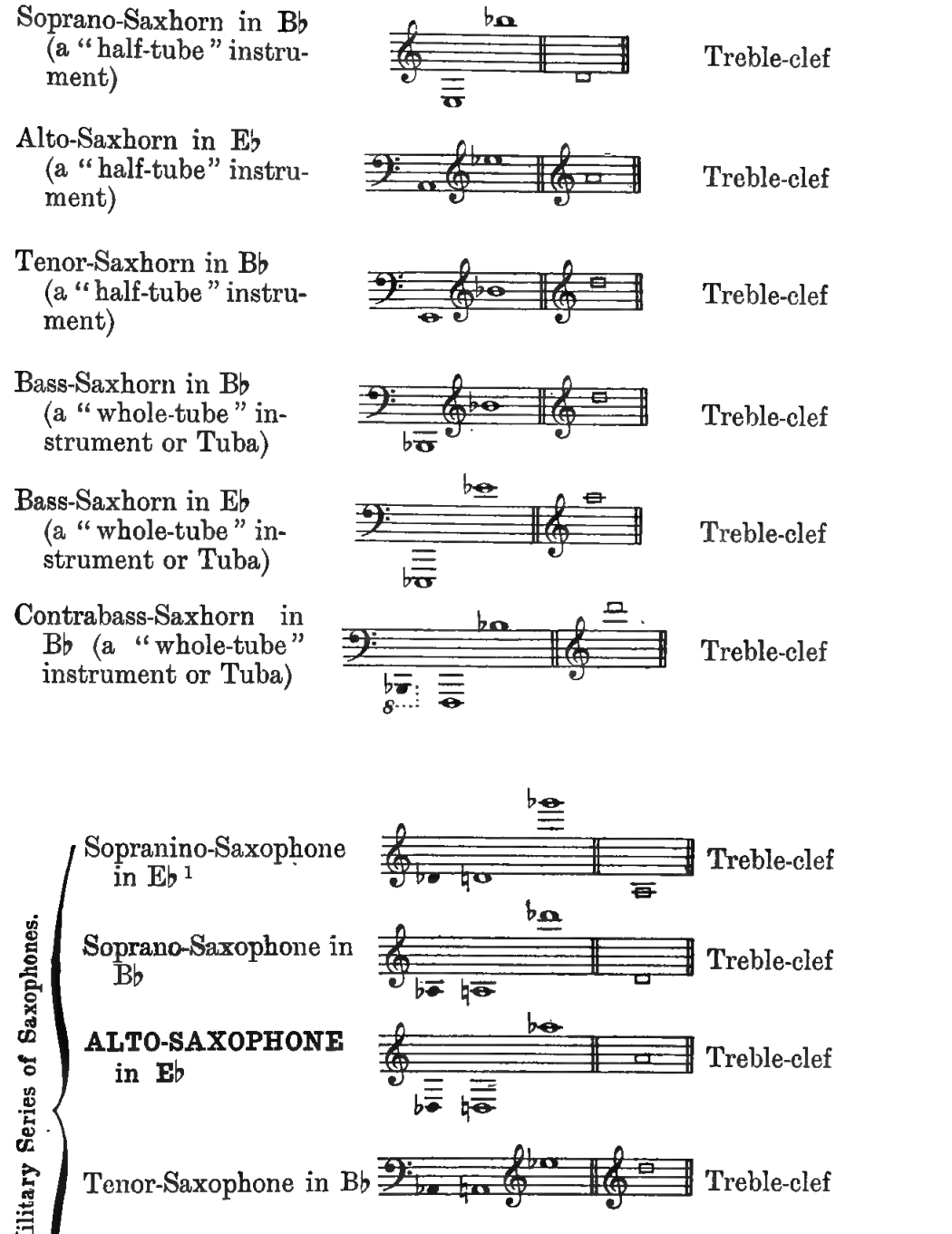
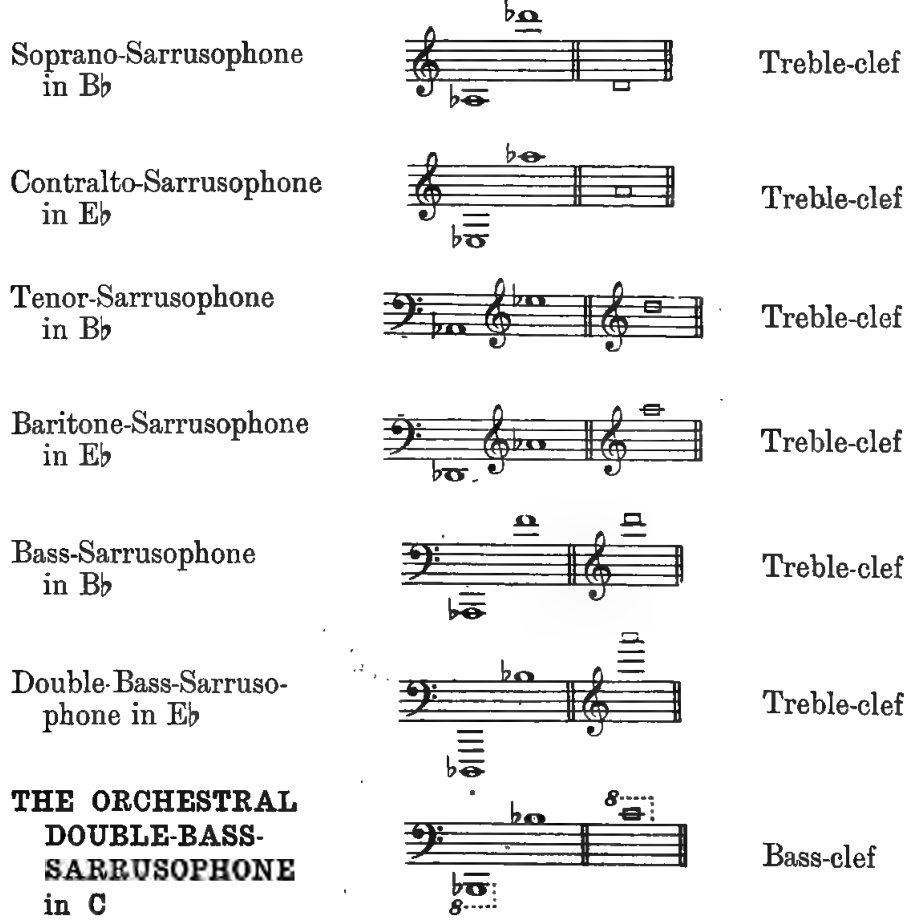
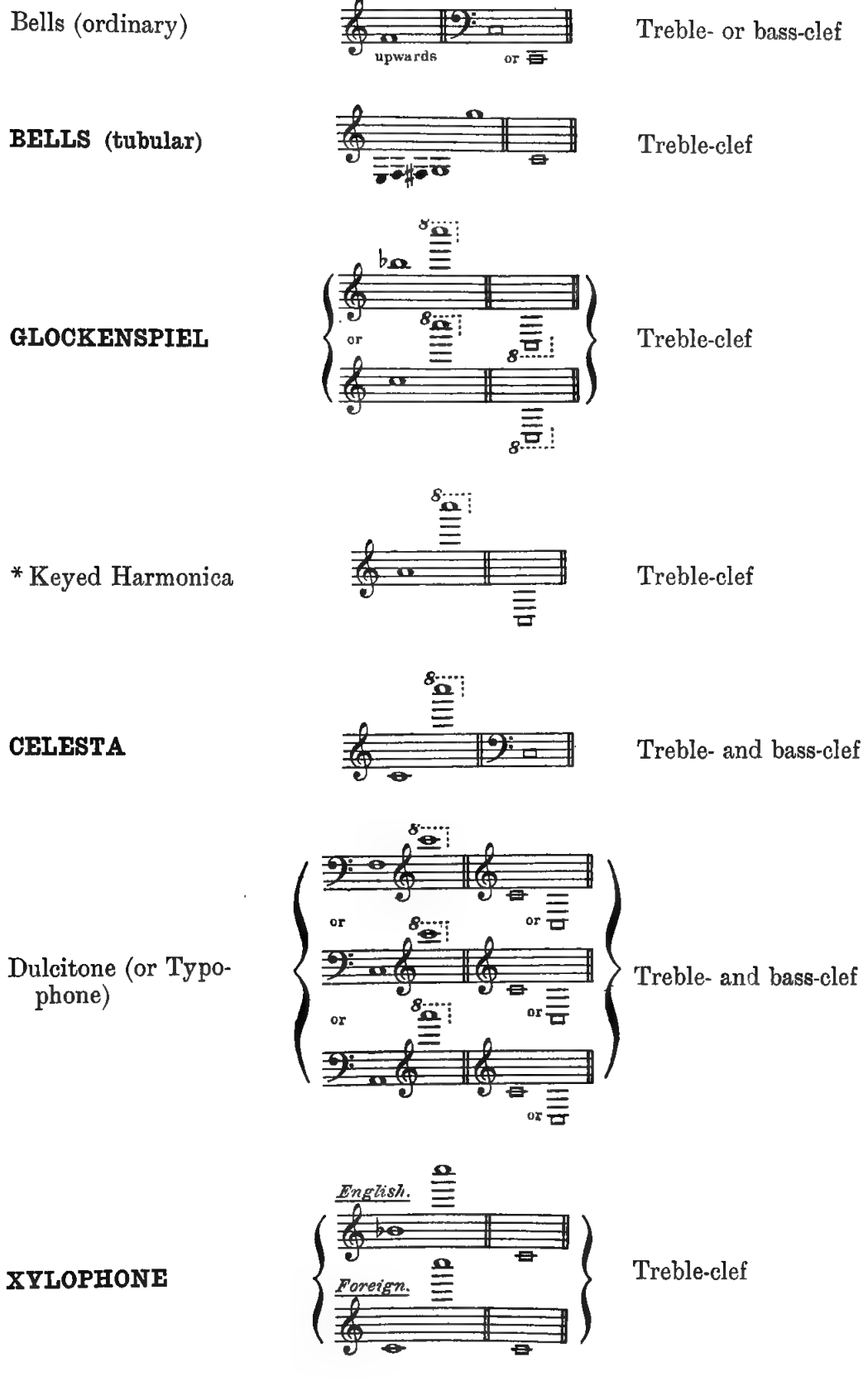
Read and hear this section in the playable edition →THe following list is printed here for convenience of reference. The names of the more commonly used instruments are shown in heavy black type. Obsolete instruments' are starred thus,-
The two semibreve-notes after each instrument give its upwardand downward compass in actual sounds? Extreme notes are shown in crotchet-heads.
The square note that follows the two compass-notes is the note which we should have to write it we wished the instrument to produce
the sound middle-C—

It therefore indicates at a glance whether the instrument is a "transposing" or a "non-transposing" instrument and, in the former case, what the transposition 1s. Thus the square note
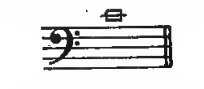
appears opposite BASSOON, and shows that if we want the Bassoon to sound middle-C we must actually write that note. In other words, it is a non-transposing instrument. On the other hand, the square note
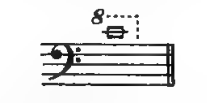
appears opposite DOUBLE-BASSOON, and shows that if we want that instrument to sound middle-C we must write a note one octave above that sound. In other words it is a transposing instrument, and it sounds an octave lower than its written part.
It is important to notice that the square note is only a symbol which gives the student a ready means of seeing the transposition, that is to say, the method of writing for each instrument. It has nothing to do
1 Only recently-obsolete instruments, such as the student may possibly come upon in Full Scores, are marshalled above. Schalmeys, Pommers, Bombards, Curtals, Dulcians, Rebees, Fipple-flutes, Cromornes, and all the rest of the mediæval musical brigade are held in reserve.
2 This method of defining the compass of transposing-instruments an actual sounds is Throughout the rest of the book the method of mentioning only the written notes of the transposing-instruments is adopted. The transposition into actual sound is always understood. This is the plan customary with all orchestral and military-band musicians.
with the instrument's compass. The actual sound, middle-C, may or may not exist on the instrument. That can be found out from the two compass-notes.
In the right-hand column the clefs proper to each instrument are given. For fuller information as to their use and as to the extreme compass-notes the student is referred to the technical details under each instrumental heading.
Compass and transposition clee or clees. (if any) instrument
98007 Bass- and tenor-clef
* Tenoroon
Bass-clef
*Serpent
Treble-clef
Cuckoo Instrument
Valve-trumpet
Treble-clef
in A
7618 Treble and bassolet
Bass-Trumpet in C

be tastes
Valve-trombone
| Tenor- or bassclef
in Bb (with Seven In-
dependent Cylinders)
The Military Series of Saxophones.
Baritone saxophone in fa l treblecte
ba
Treble-clef
Bass-Saxophone in Bb
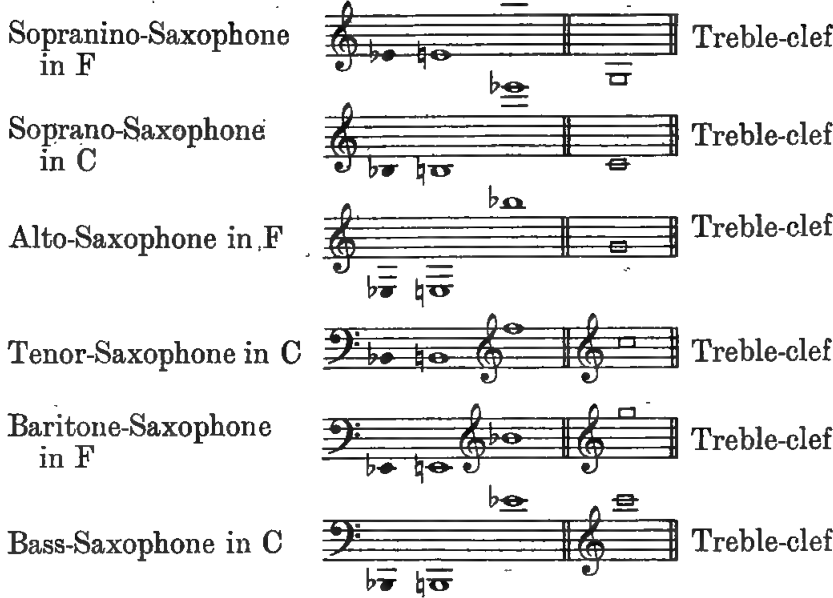
The (continental) Orchestral Series of Saxophones.
Tenor-Saxophone in O Die to B
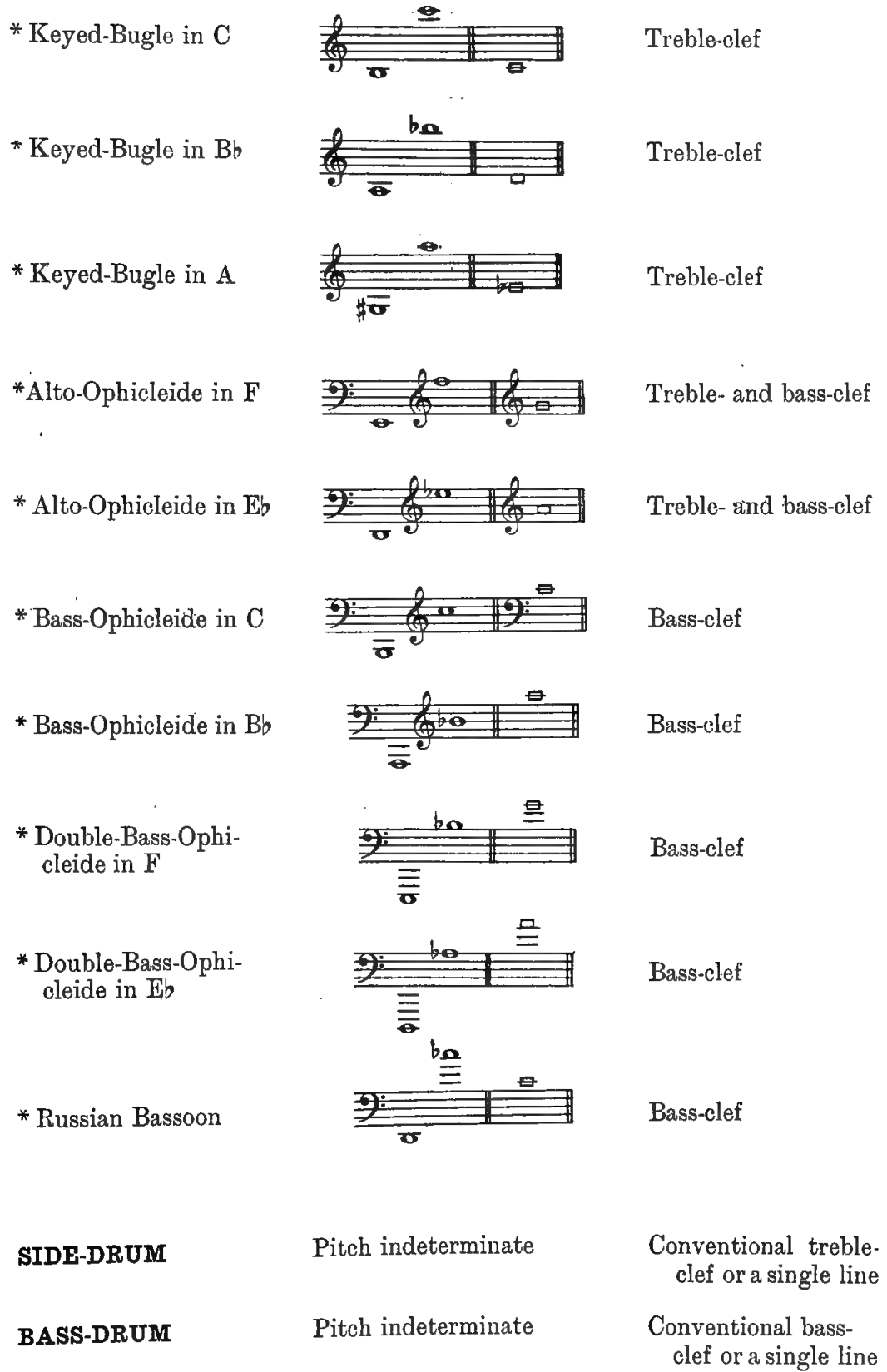
Conventional bass-
Pitch indeterminate
Tenor-Drum
clef or a single line
Tabor
Conventional treble-
Pitch indeterminate
clef or a single line
Conventional treble-
Pitch indeterminate
Tambourine
clef or a single line
Triangle
Pitch indeterminate
Conventional trebleclef or a single line
Conventional bass-
Pitch indeterminate
Cymbals
clef or a single line

Conventional bass-
Gong
Pitch indeterminate
clef or a single line
Castanets
Pitch indeterminate
Conventional trebleclef or a single line
Rattle
Pitch indeterminate
Conventional trebleclef or a single line
Pitch indeterminate, but with Conventional bass-
Wind-Machine
clef or a single line some variation possible
Anvils
Pitch generally indeterminate, Treble- or bass-clef or a single line but see page 40.
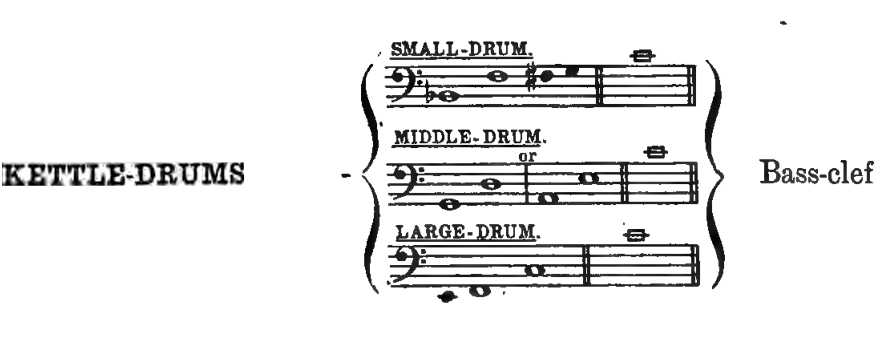
Ordinary Compass. Highest Harmonic-Compass.