Playable Books
W. S. B. Mathews · section 15 of 24
A Study in Syncopation
Read and hear this section in the playable edition →An easy manner of arriving at the exact time values in this exercise is to count six. Then later what we want is the feeling of syncopation, as we have it when we count four. Each quarter in the right hand part begins upon a half beat and continues past the pulse. Syncopation means cutting into the natural accent of the measure, or disarranging it, as in this instance, where the right plays wilfully and not in accord with the left hand.
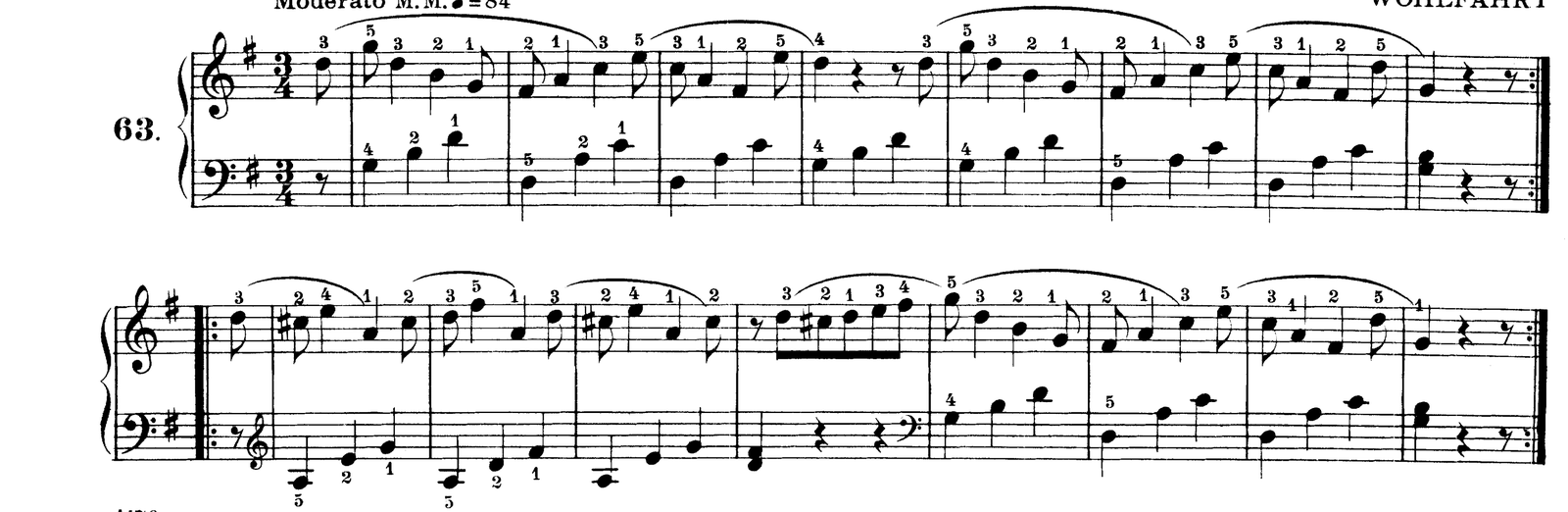
Not only the chords in this piece are to be played rather massively, but also the running notes of the left hand are to be made rather ponderous. The chords are played with arm touch; as also the repeated quarters in the second period, in the bass. The dot and slur over the quarters indicate that the tones should be individualized, made rather weighty.
An Ode to Harmony
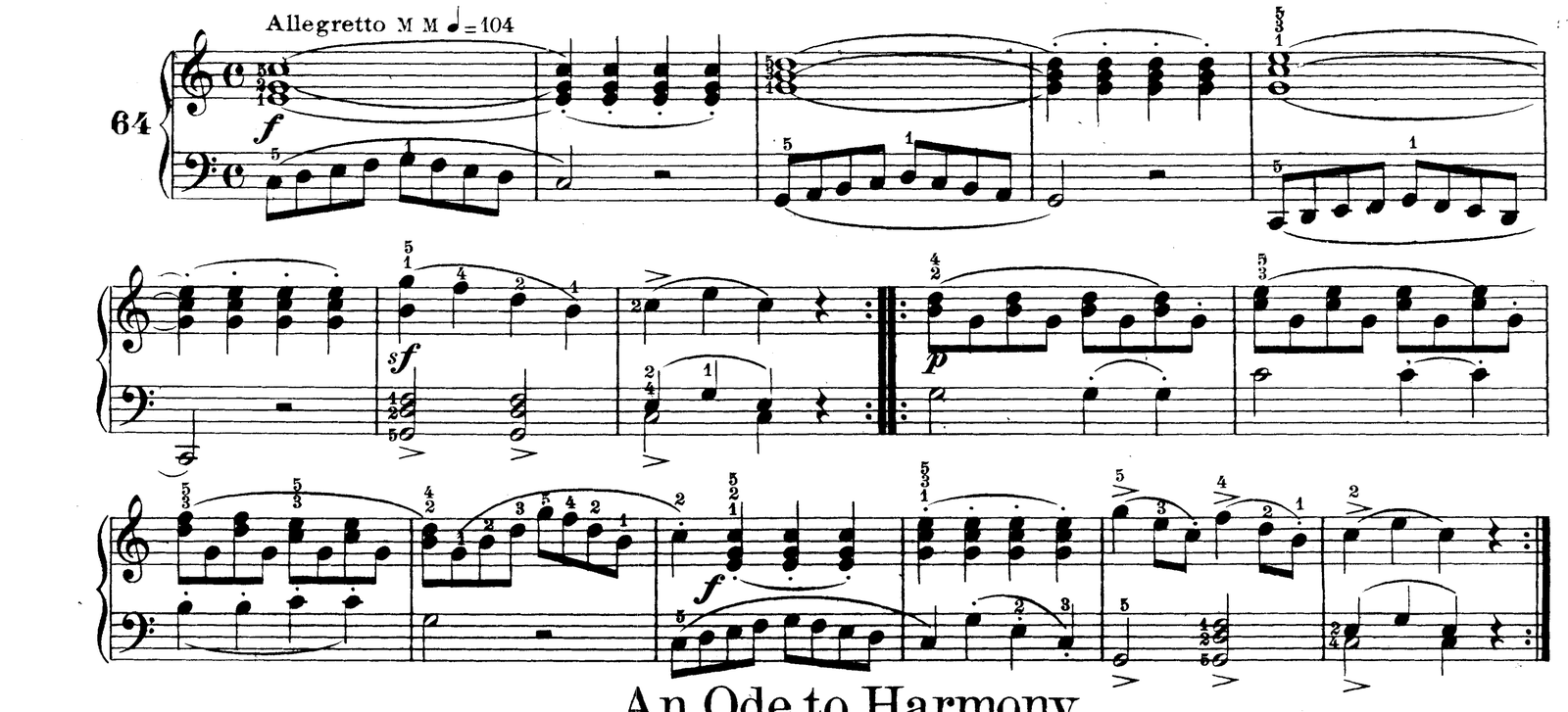
The chords in this piece are to be carefully voiced, so that all tones of the chord are nearly equal in power, but the melody tone slightly brought out. In m.6 be careful that the A in the right hand is not loud; the melody here is soprano and must be made to sing. Play the chords with arm touch.
The Excursion
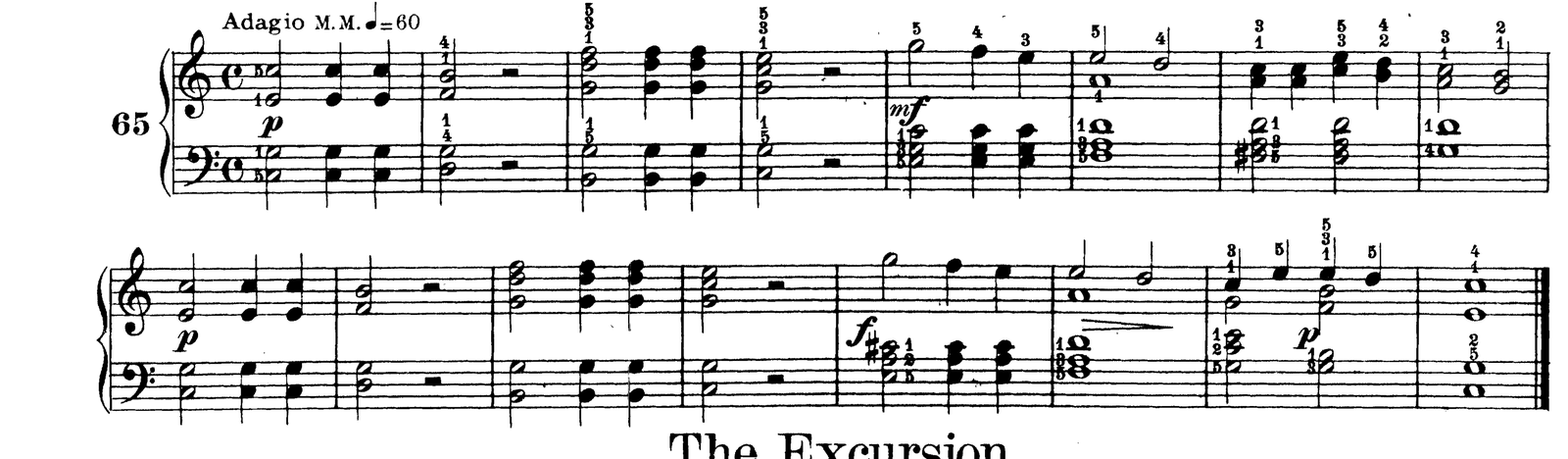
A very pleasing composition for exhibition purposes. To this end it will be necessary to study it very carefully, mastering in particular all those digressions which it makes momentarily out of the key, as in mm.4,7,8—, each of which must be learned perfectly.
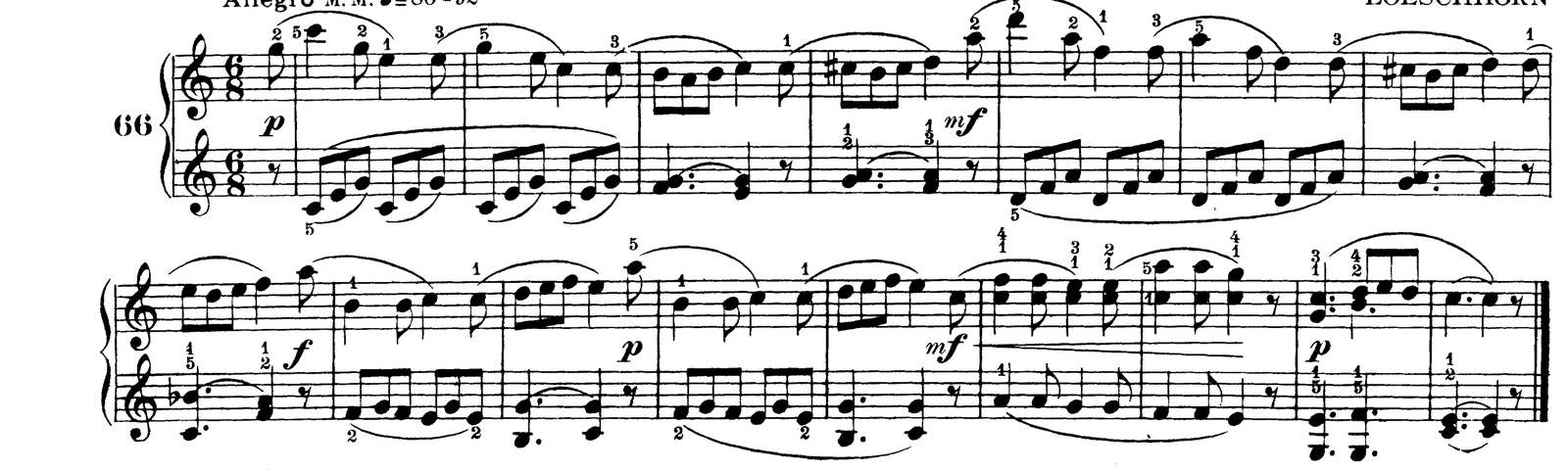
Inasmuch as all the brilliant running work in piano music is founded upon scales or chords, it is necessary to devote a good deal of time to mastering these keyboard tracks thoroughly. At the same time this brilliant running work is a pleasure in and of itself. Hence the use of this and several later studies.
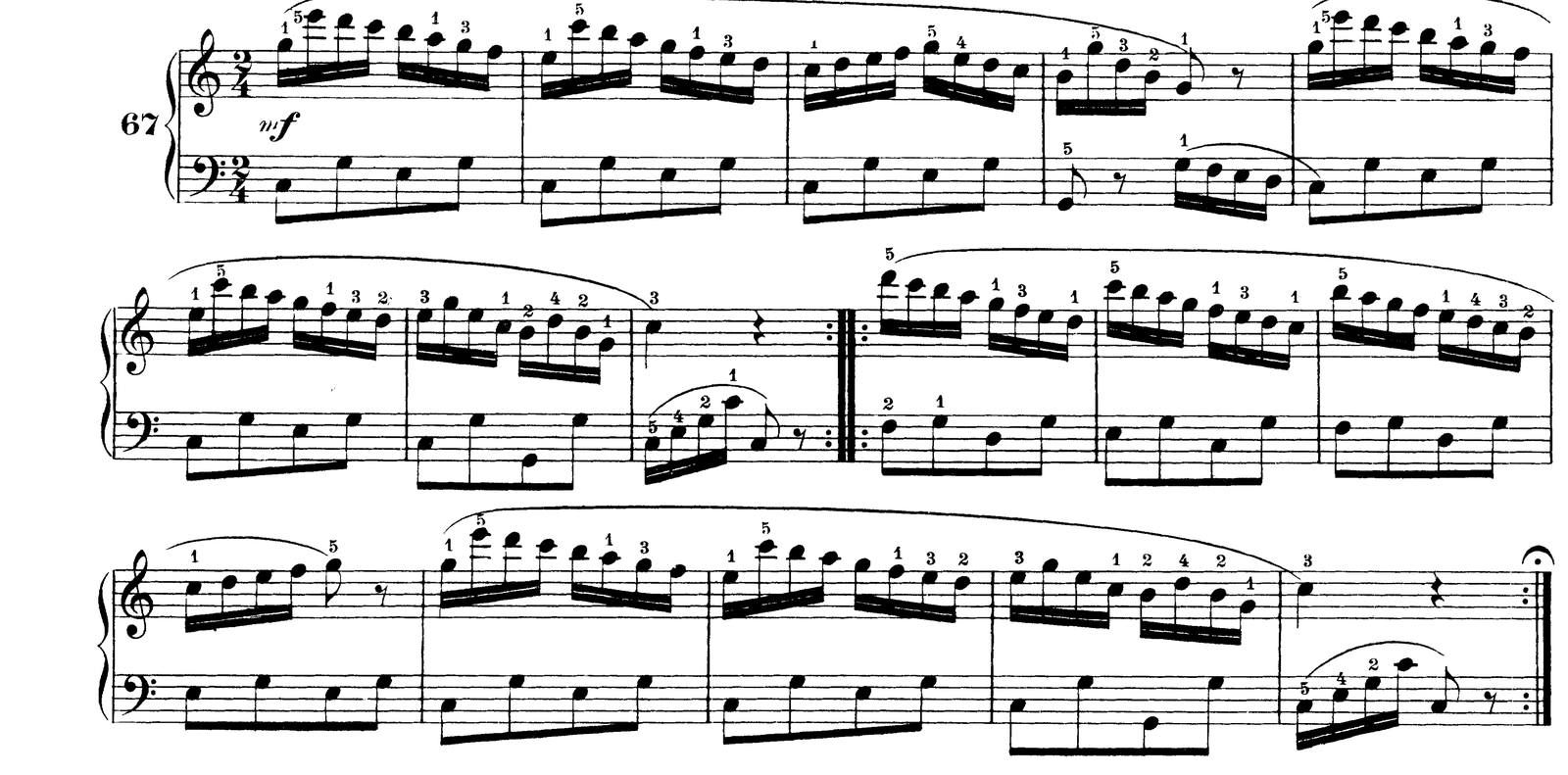
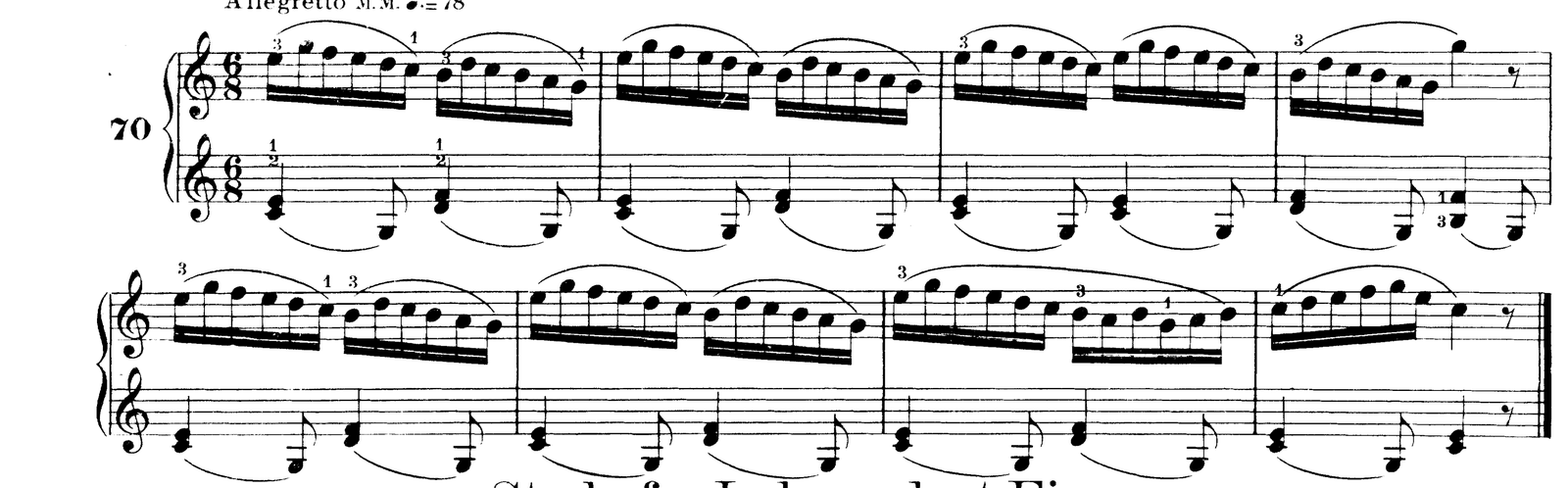
The running work free, even and sure. The chords firm, musical and especially the long tones well sustained. The chords marked with dots over them are simply individualized. Arm touch is sufficient, finger elastic being unnecessary. The soprano voice should slightly preponderate.
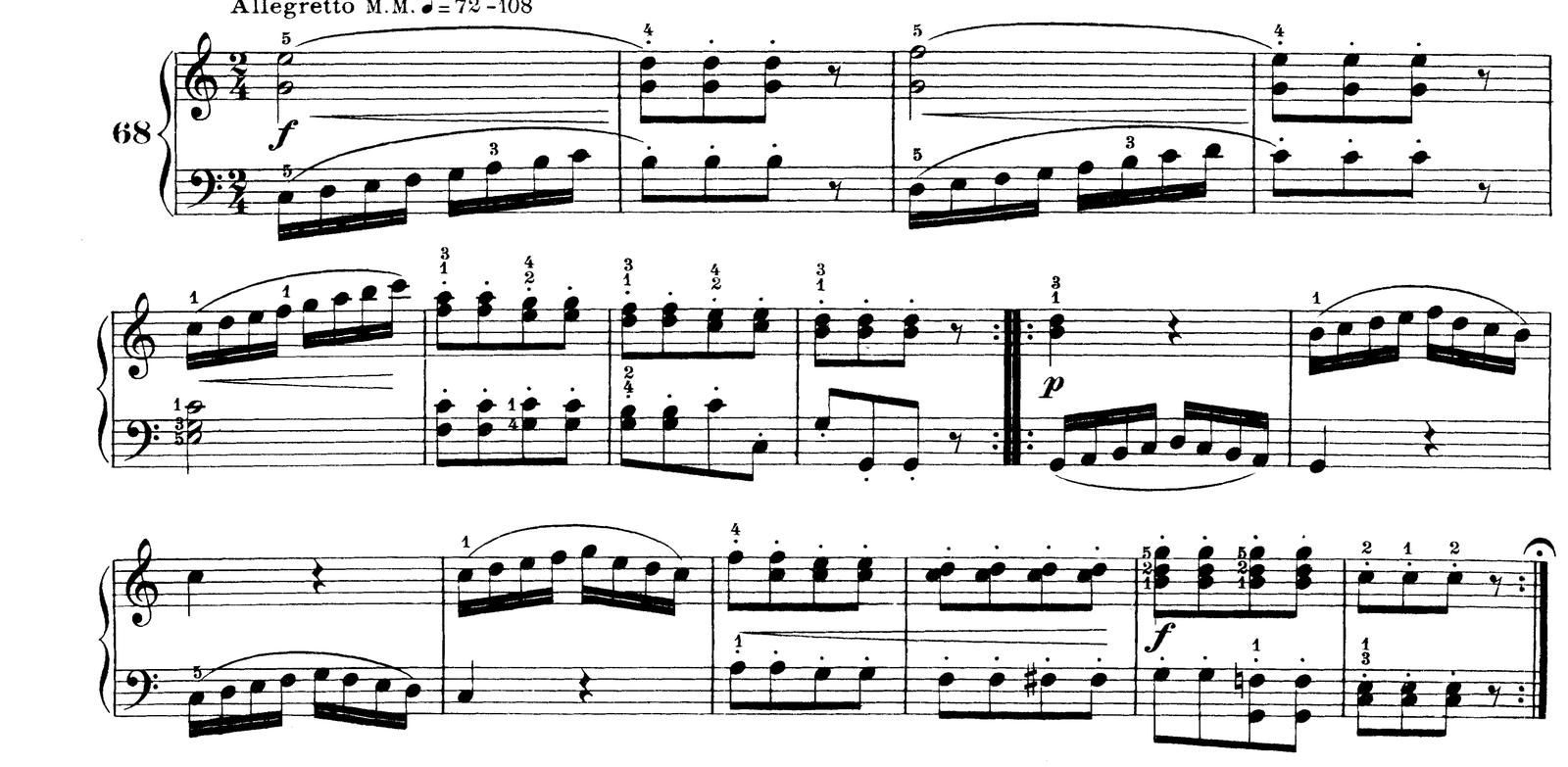
The running work light and pearly. The quarter notes of the melody fuller, and the accented tone properly resolved into the next tone, diminuendo.
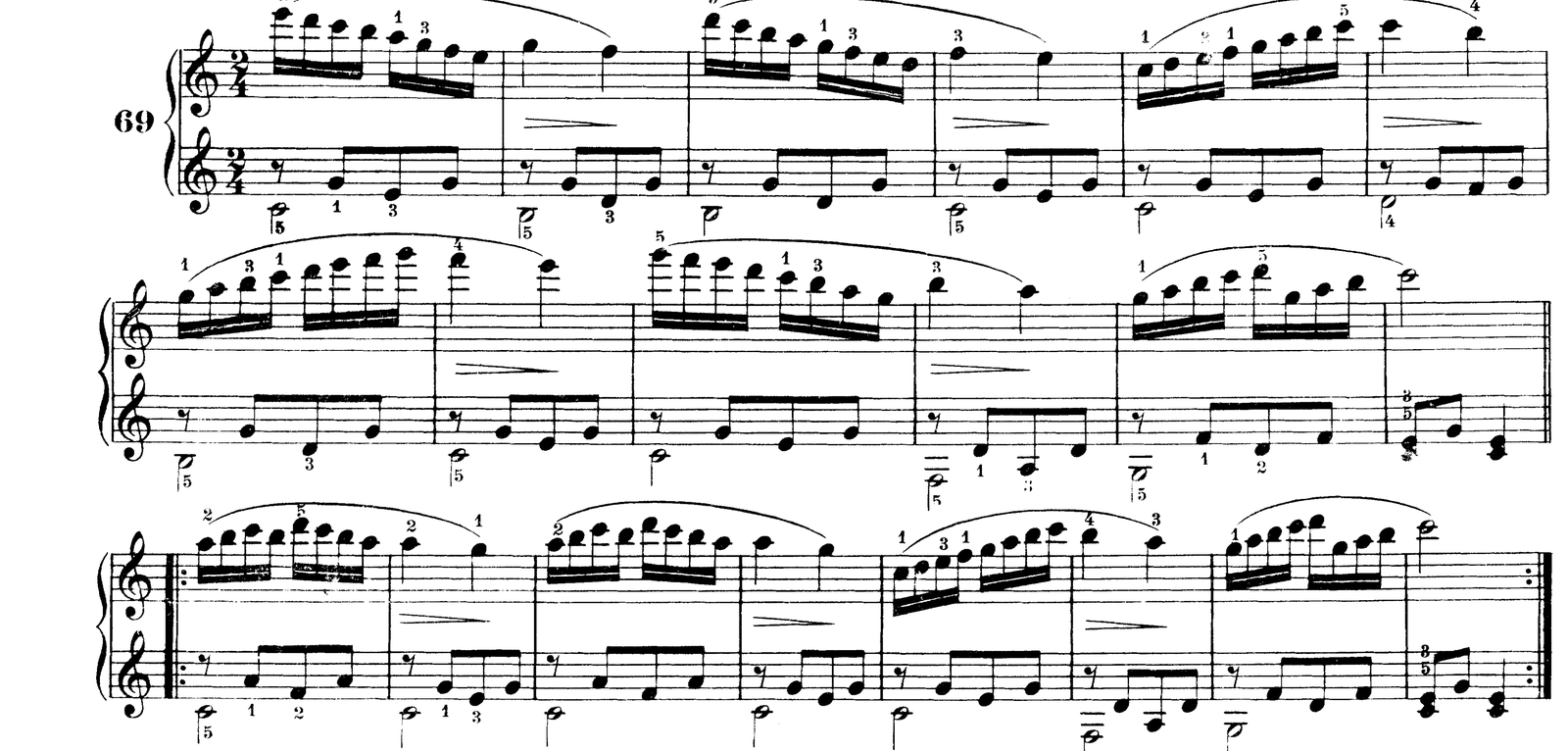
No.70 may be taken as a study in even running notes or as a study in speed. The hand must be quiet, the tones connected, and the movement not too rapid. The main difficulty is to extend the fingers and begin the new measure without any perceptible break between that and the one before.
The tied notes are sounded but once, but the key is held down en - tirely through the exercise. Practice at first with each hand alone , to get a correct position and an easy movement of the active fingers. Later play both hands together. The same fingers on both hands play
Study for Independent Fingers

together. The form at b) applies the same principle to the thumb, which holds while the other fingers move. Be very careful not to bear down hard on the keys, because to do this inevitably stiffens the wrist
A valuable study in reading the higher staff positions in the left hand. The movement goes on in half pulses, each hand alternately Take care that the second tone of the group of three which occurs so often in the right hand, has the accent, and not the first tone of
Ring Around a Rosy. A Play Time
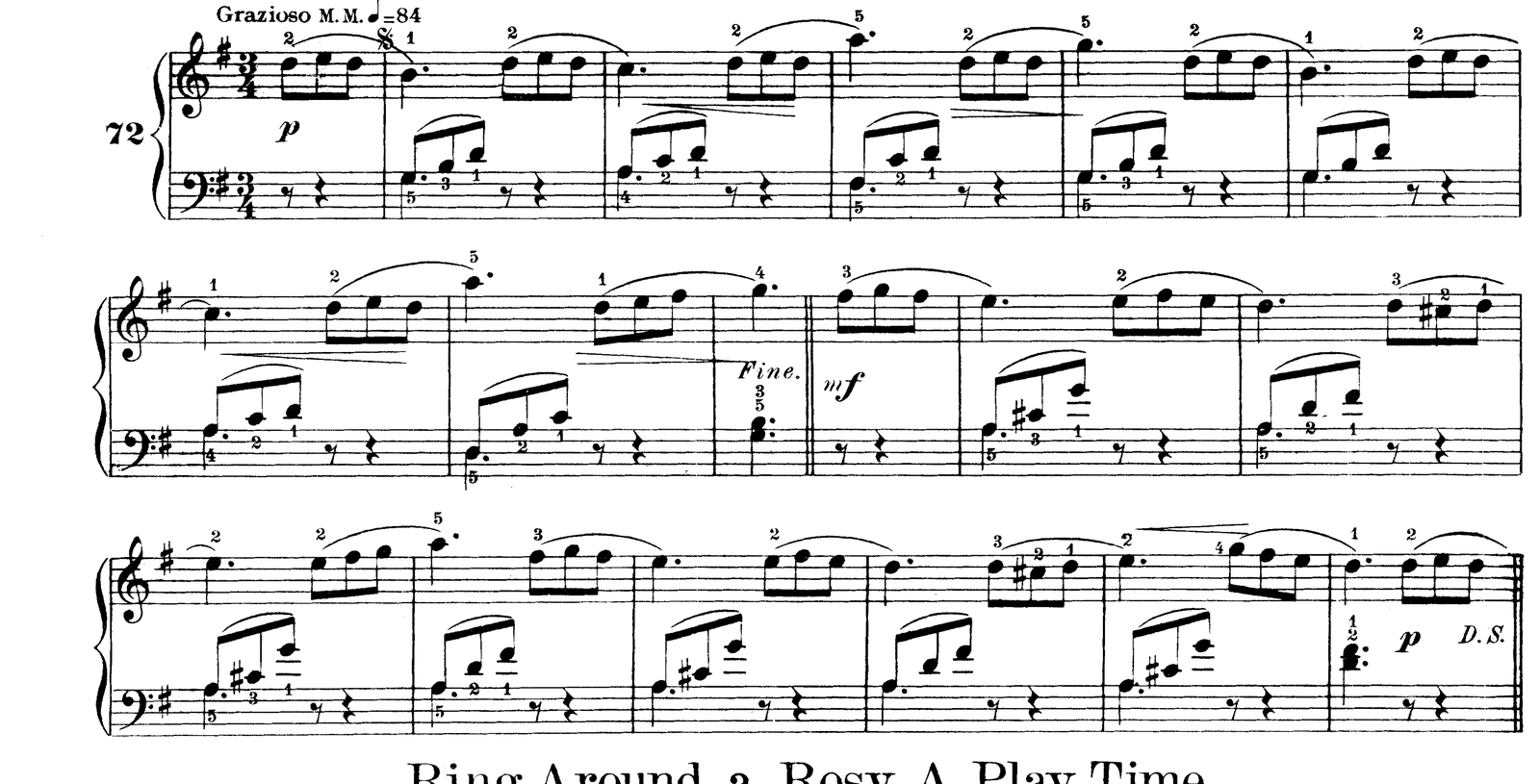
the group. The words “dal segno” mean “from the sign”, and denote that when you reach that point you go back to the sign and play through from there, closing at the word “Fine”.
A very pleasing story in which the strangest occurrences are mentioned in the second part (line 2). To be played jollily and with spirit.
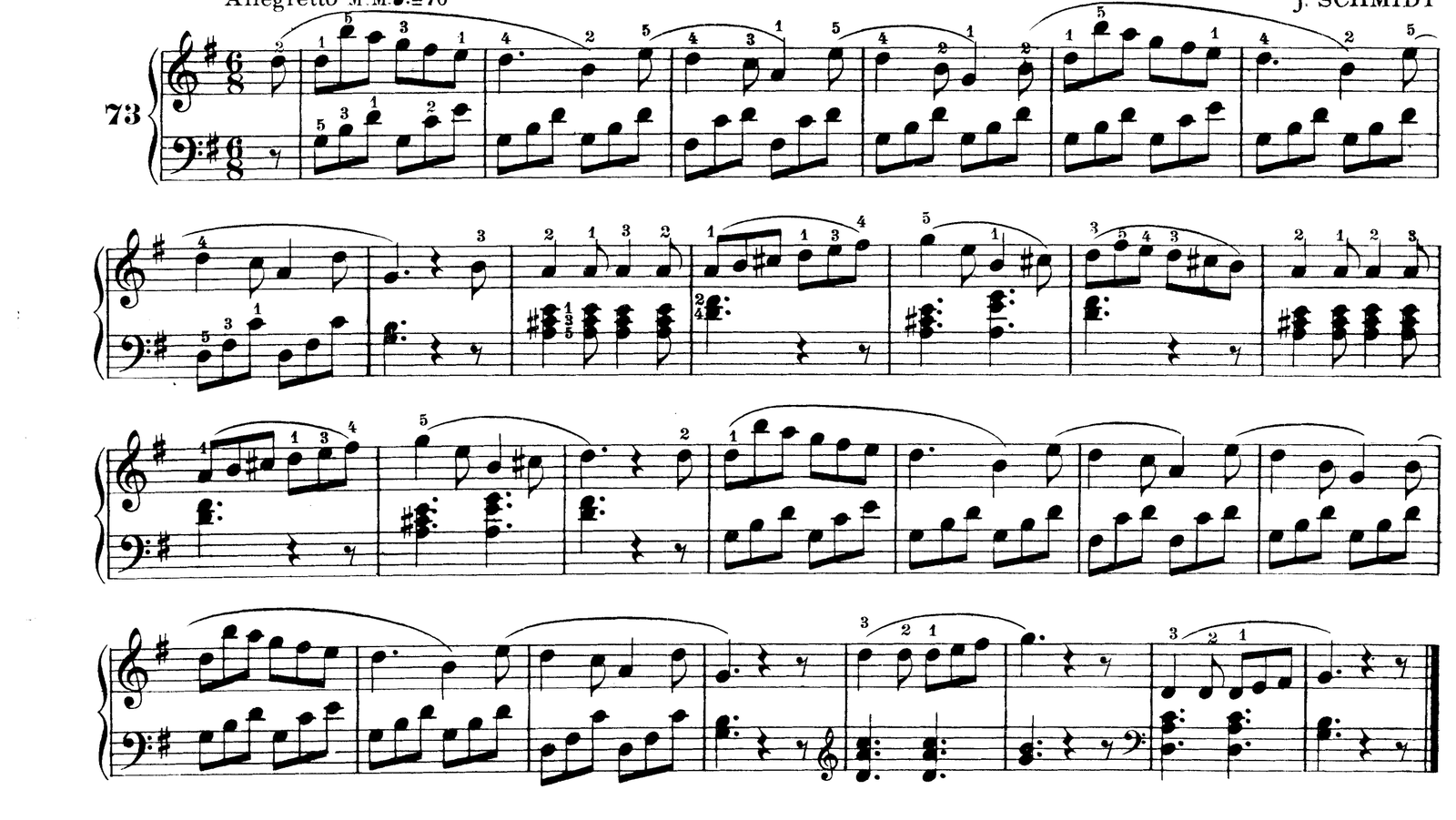
The two chords in the second and fourth measures, and elsewhere in this study, must be so managed that their relation to the rhythmic idea of the right hand will be brought out. The full phrase includes three beats of the second measure; the right hand has “one”, the left hand puts in “two” and “three.” Hence the touch should be rather clear and vital.
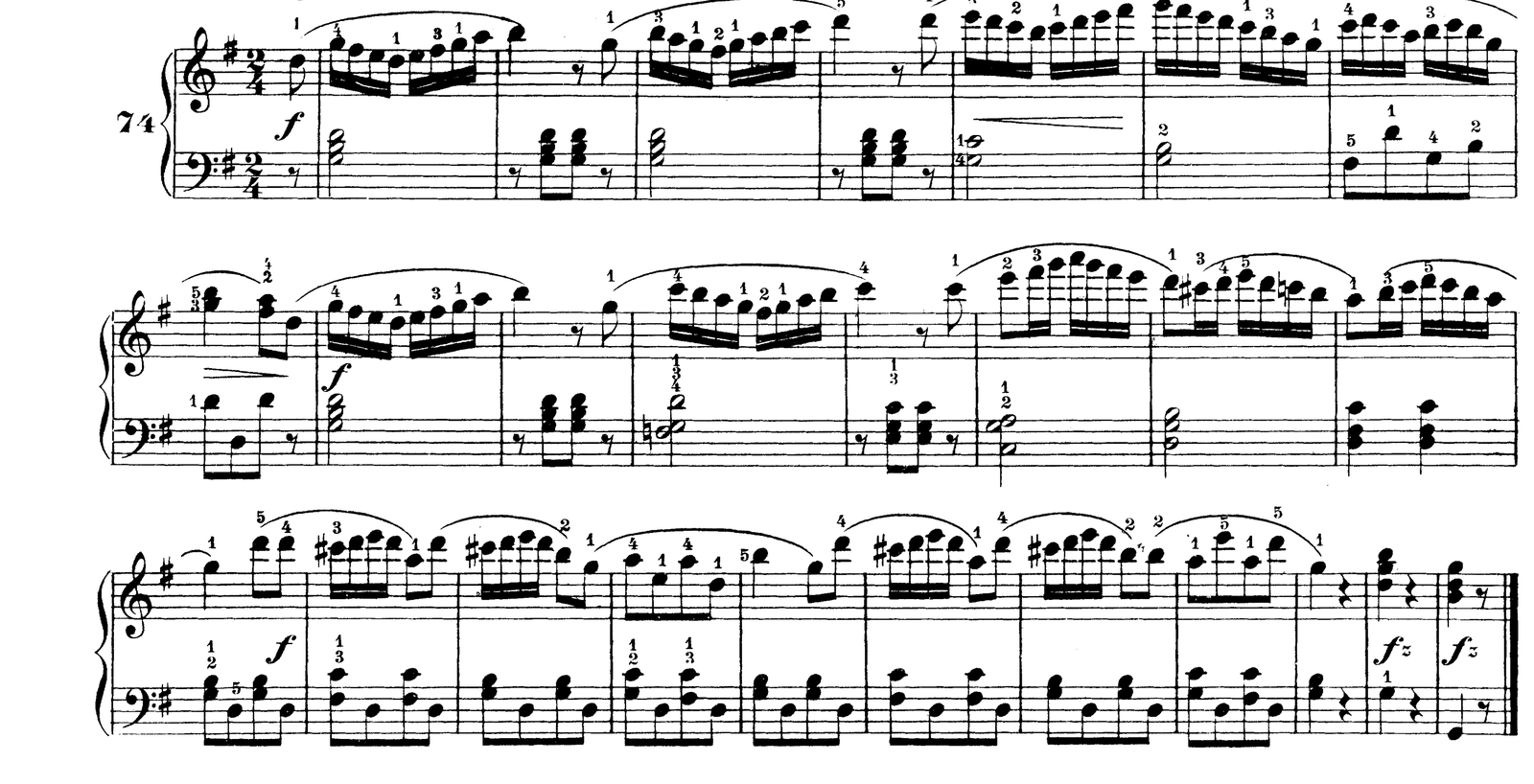
In the first two lines of this little poem in tones, the narration is rather quiet; just at the end, however, things quicken up and there is a very lively time in the last line, which must also be repeated. The first part a bit sentimentally; the second part rollicking.
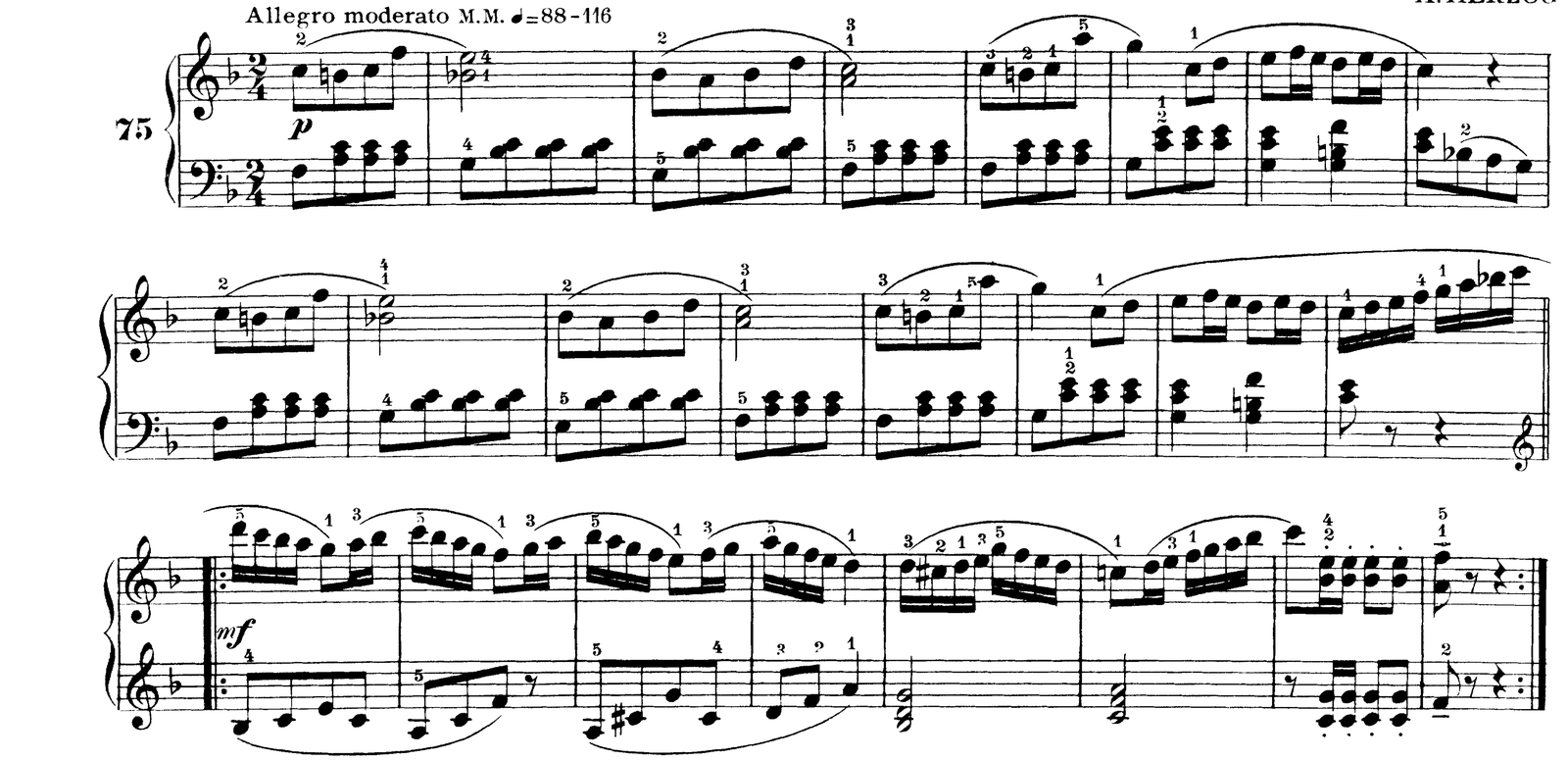
The primo part in this duet will require quite a bit of practice before the two hands will play these scale passages smoothly enough and fast enough for the effect. The sixteenths should not be heavy but light and tripping.