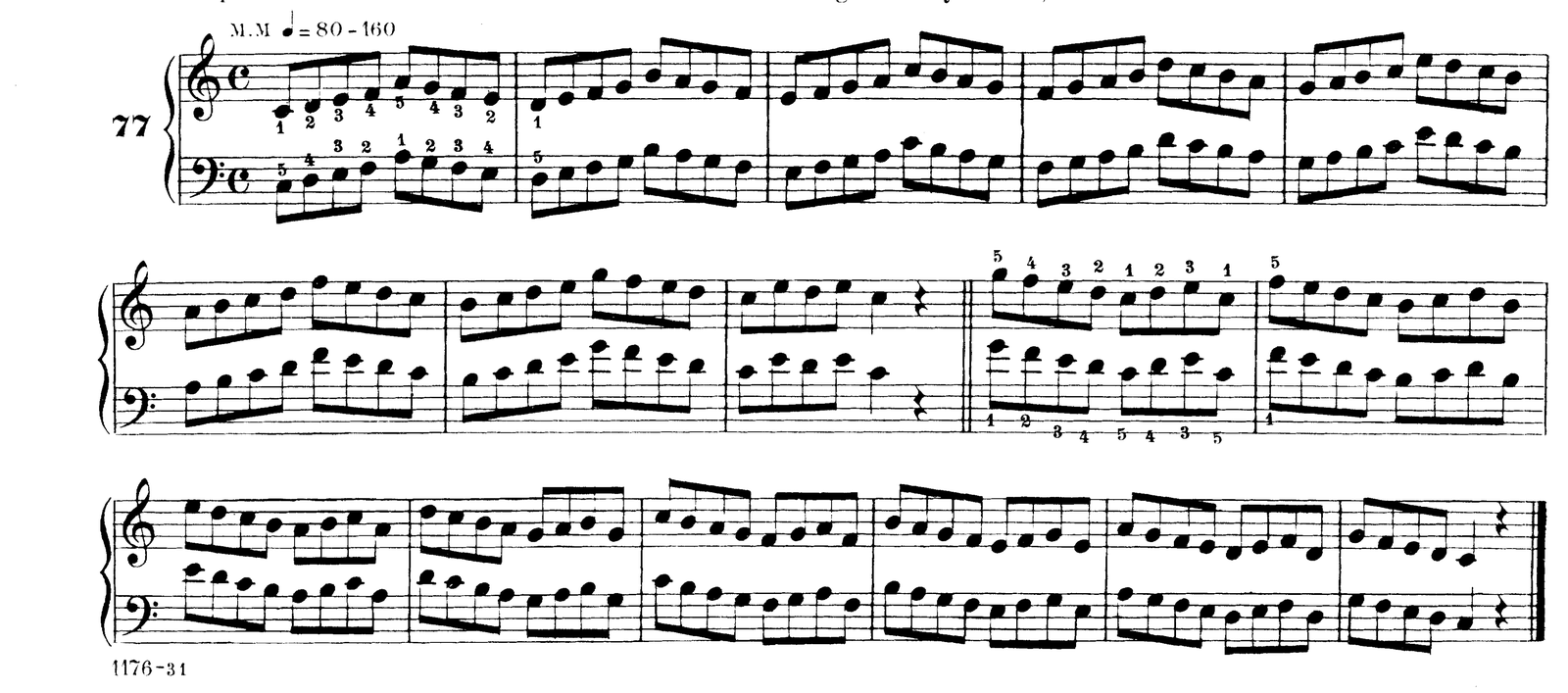
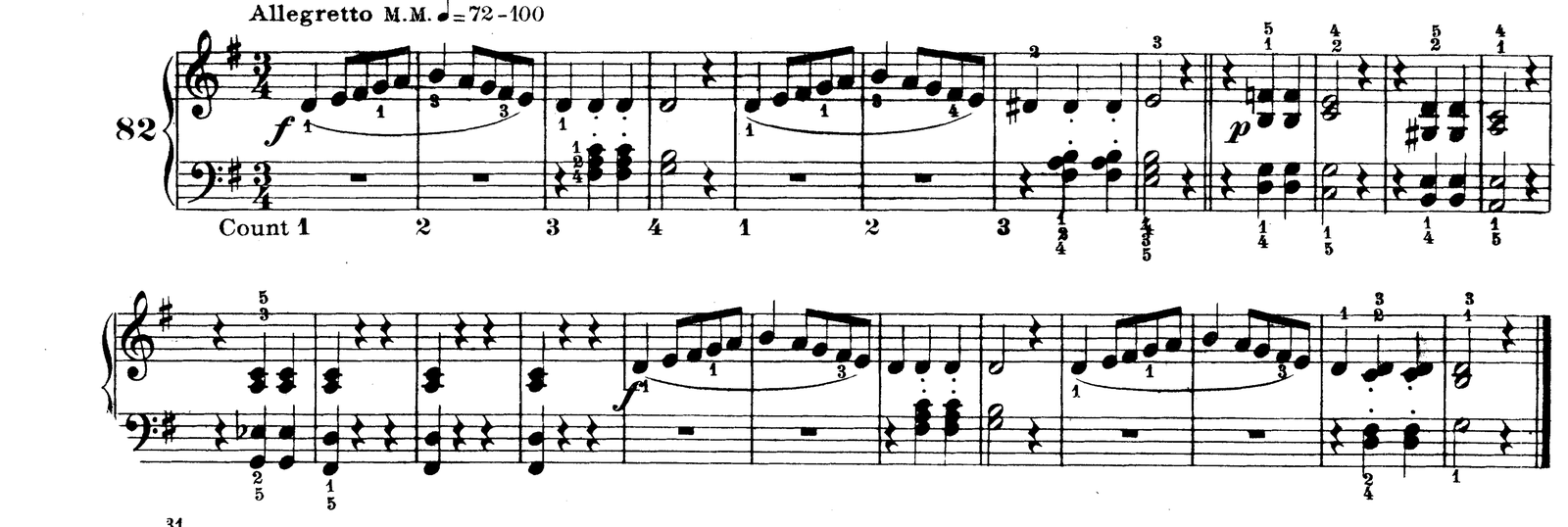
In the five finger forms here following, the hand extends between the fourth note and the fifth, and in this way ascends the keyboard at the rate of one key for each time through the form; each measure of the music being the same figure repeated. In coming down a contraction takes place between the measures. The idea is to make the running work very smooth, even and certain.
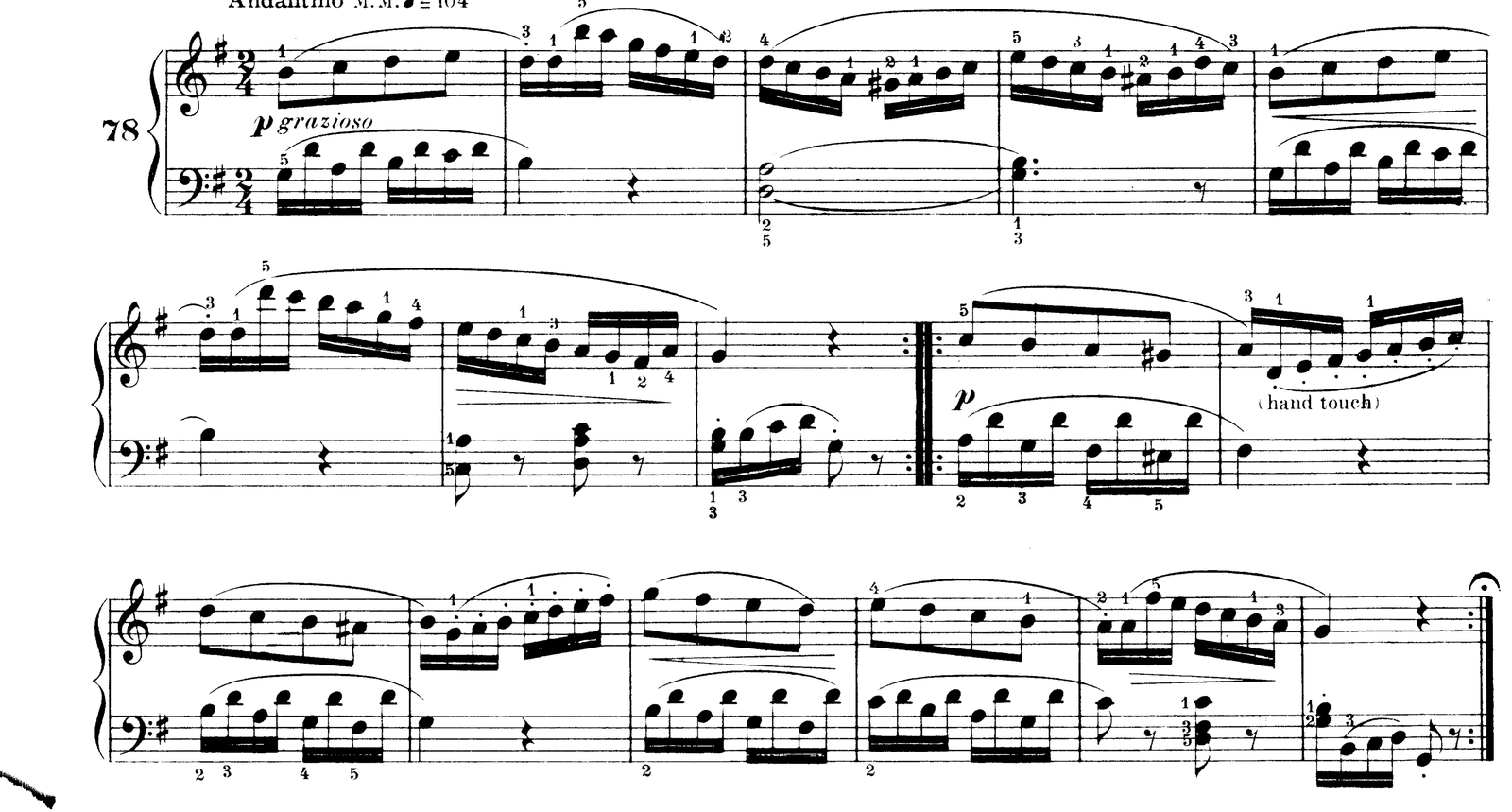
Quick, spirited, lively. Keep the movement up to its indicated speed. Work out any position that troubles you and then get it into its place so that nobody would dream that it is difficult to do.
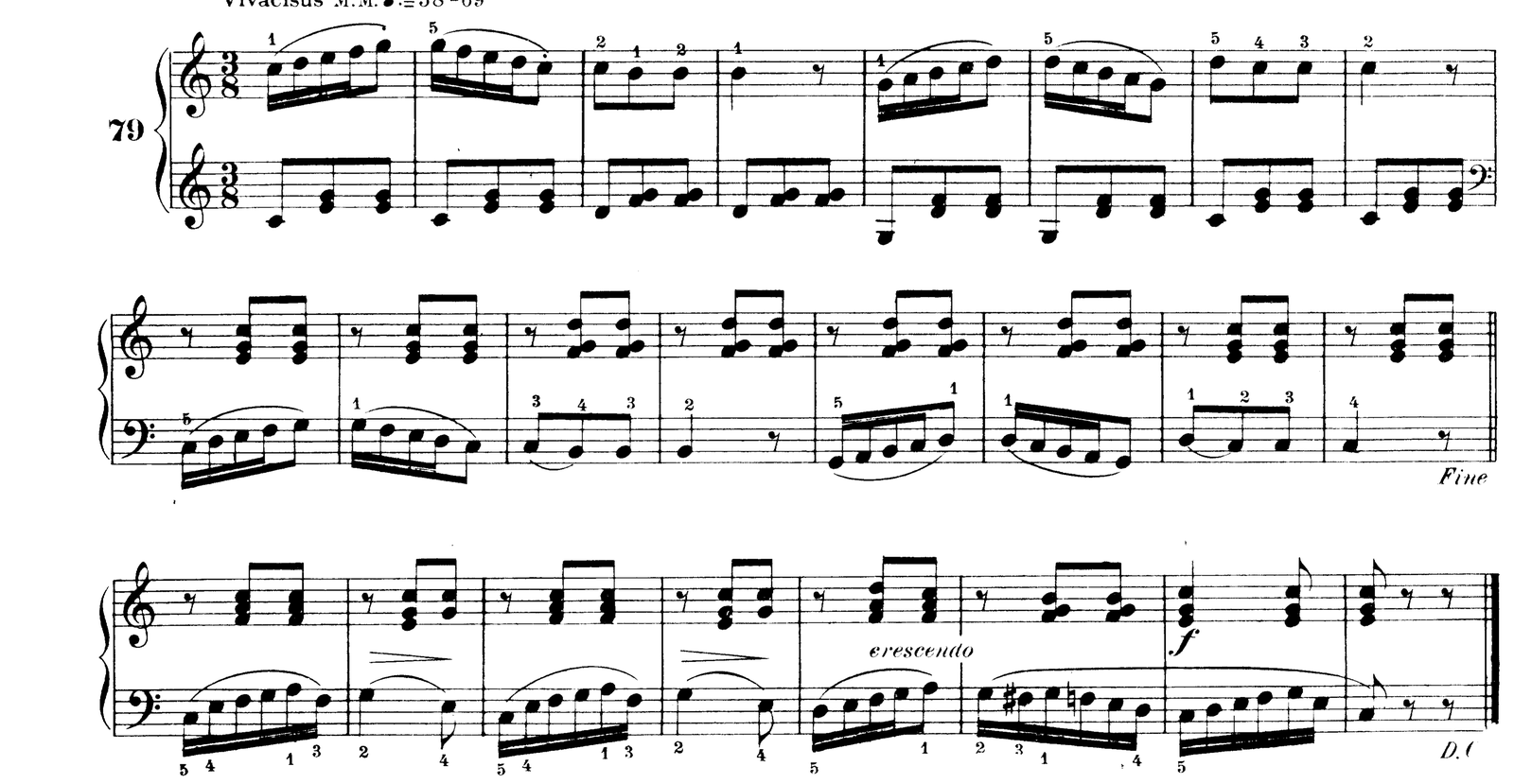
The rests in the first line must be scrupulously observed. Care must be taken that the pupil realizes the rhythm as going on during the rests, no less than during the tones themselves. In order to assist this feeling, after the piece has been studied, require the counting to be in the lar - ger rhythm, counting four, one to each measure. Thus each line of the music will consist of two of these “collective” measures.
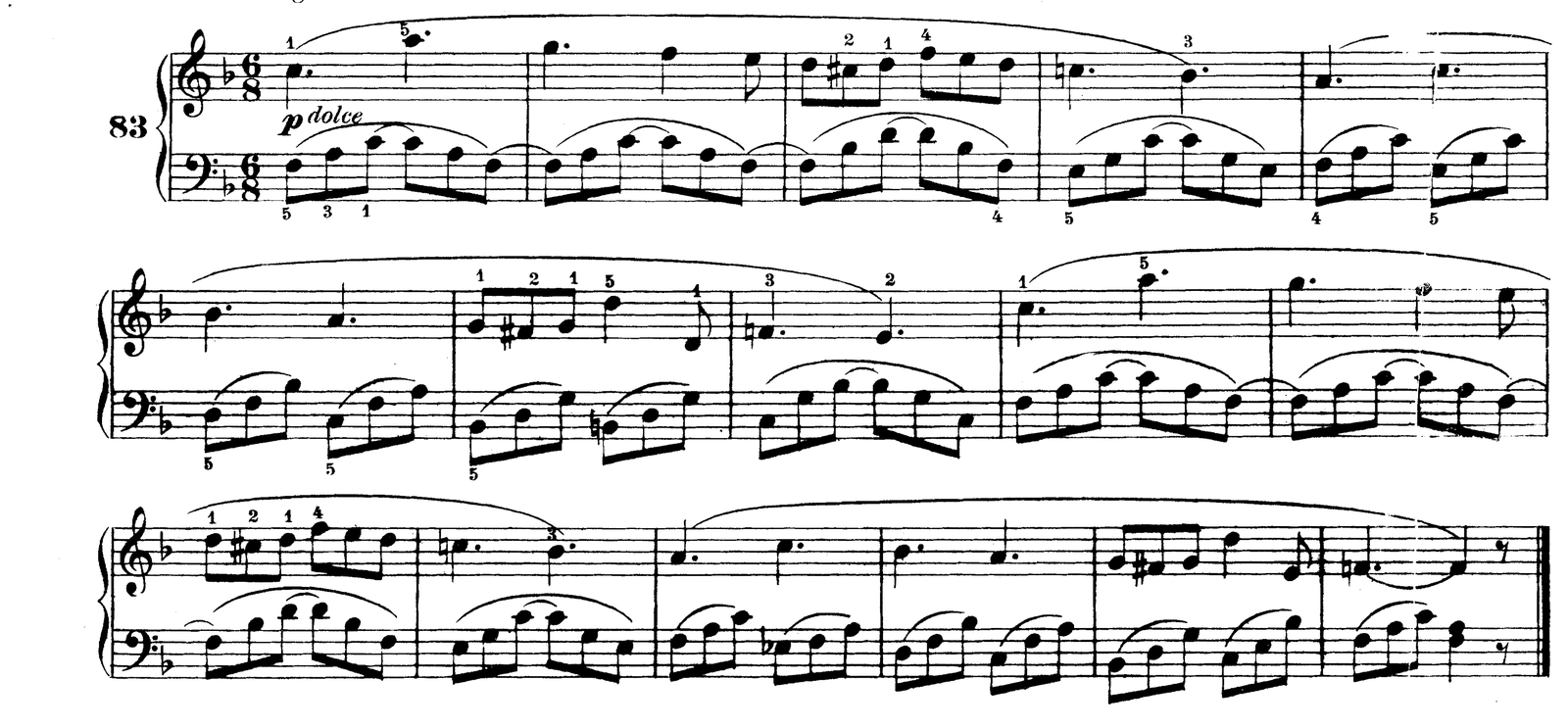
A beautiful slumber song, in which the longer tones must sing out softly and fully, while the eighths of the accompaniment carry on the rhythm. Be sure and hold out the tied note in the left hand part, but it is not necessary to accent it. The different chords positions and the succession of positions in the second line will require considerable practice independently of the right hand. Very sweetly, simply and reposefully.
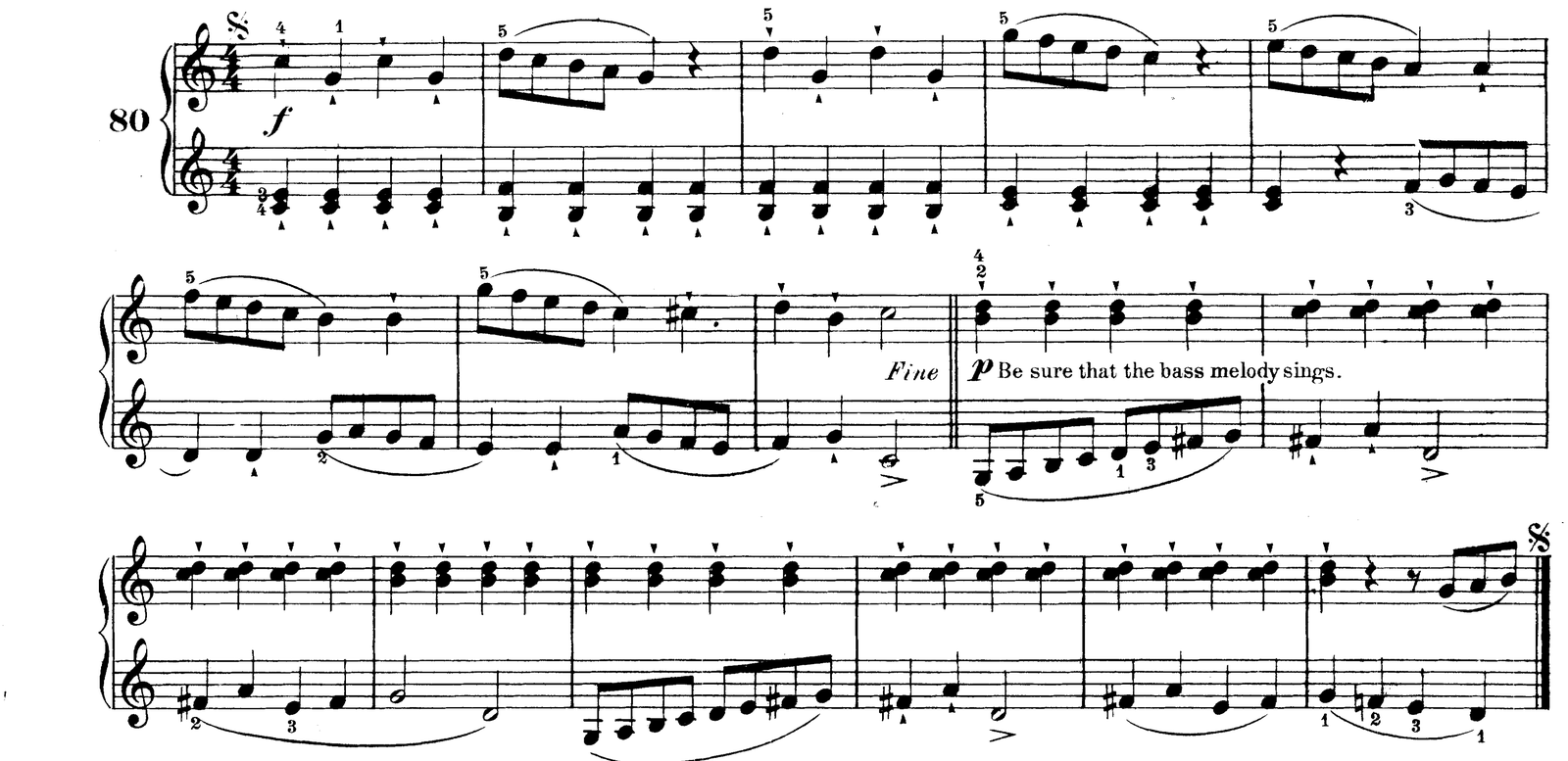
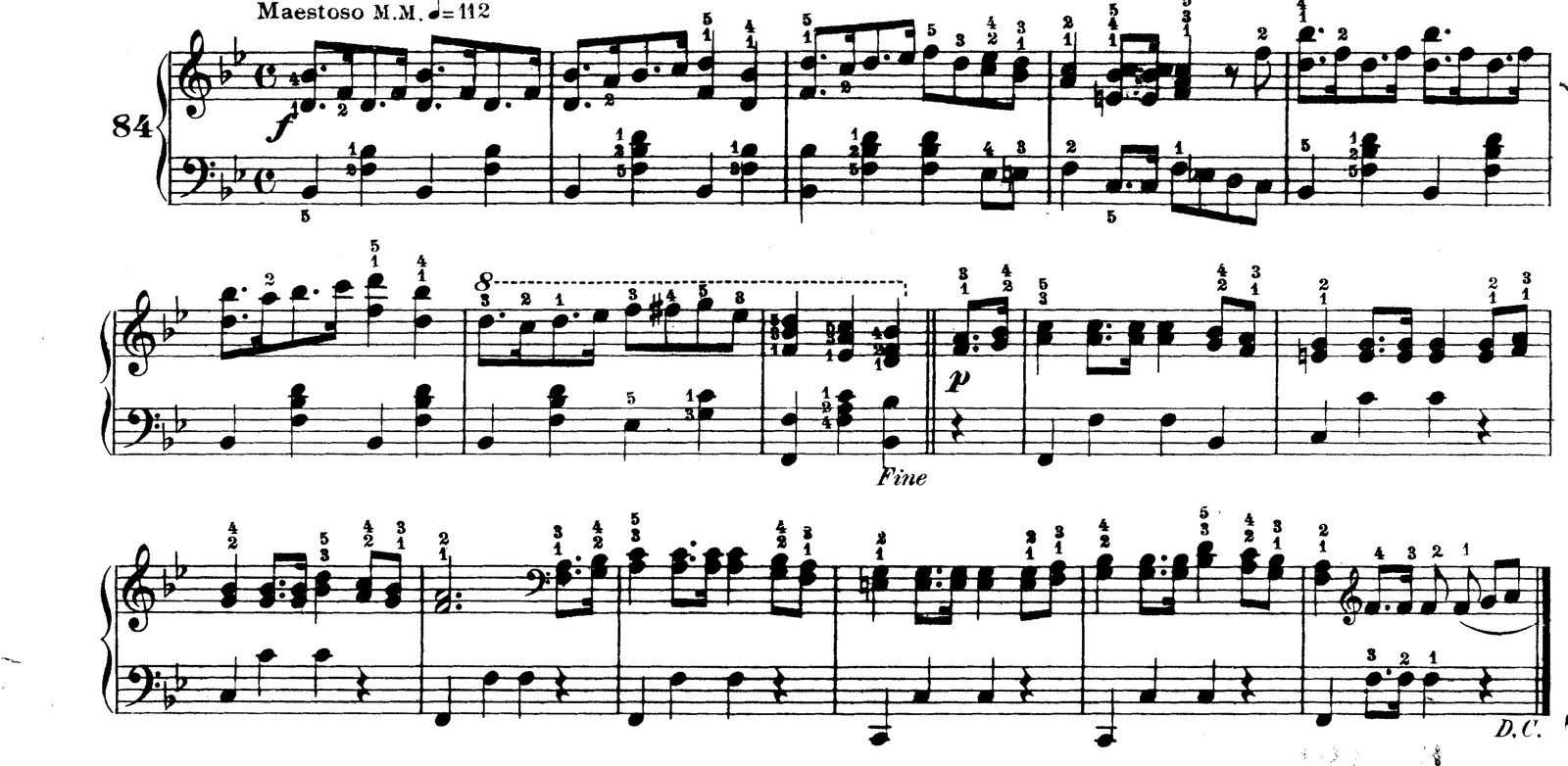
In this pompous march it is necessary to have a firm and martial touch, as if one were a complete brass band. Make the dotted notes to feel like quarters, while the sixteenth passes quickly and lightly to the next tone. An excellent study in brilliant and effective playing.
 Playable Books