 Playable Books
George Frederick McKay · section 35 of 111
Chordal texture
Read and hear this section in the playable edition →Chordal texture is the opposite of monophonic texture. Monophonic texture results from a concentrated horizontal emphasis. Chordal texture results from a concentrated vertical emphasis. The unity of the monophonic texture is a focus of musical action into line. The unity of the chordal texture is a focus of musical action into blocks of sound. These blocks of sound have two continuing characteristics: (1) harmonic impact, and (2) similar rhythm in the several voices. Note these characteristics in the example below:

This miraculously simple theme, from Beethoven's Symphony No. 7, has a certain restricted and hymn-like motion that is natural to the chordal texture. However, chordal texture has other more active possibilities and most of these will come into action because of the need of the extremely compact unity of the chordal texture to be balanced by variety. This variety can be supplied by the rhythmic content. Observe the four examples below, which illustrate types of rhythm: (a) active rhythm; (b) varied phrase pattern; (c) groups with similar rhythm; and (d) groups with dissimilar rhythm.

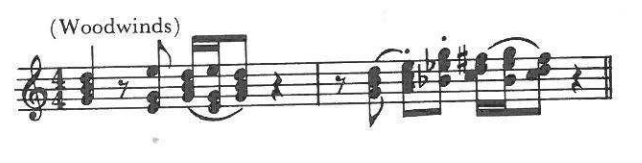
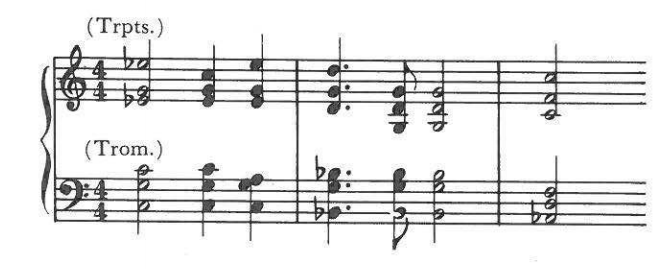
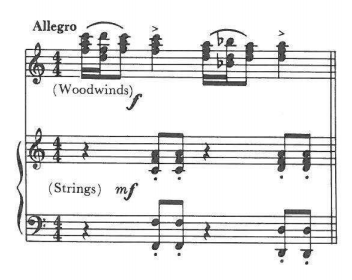
Any number of groups may be added together if each has its own harmonic completeness and if together they have an effective rhythmic co-ordination. Because of their somewhat limited ranges, trumpets and horns will often be in close harmony, depending upon the expressive intensity needed.
As long as the very strongly unifying force of the chordal texture is in action almost any spacing or pitch emphasis will have some special flavor or interest. Spacing, choice of register, and the amount of doubling of the third are almost entirely matters of personal preference, although a certain consistency in part writing will be desirable as in previous harmony exercises. In this next example the third has been included in each choir. Since each choir is harmonically consistent and complete, the sound is effective.
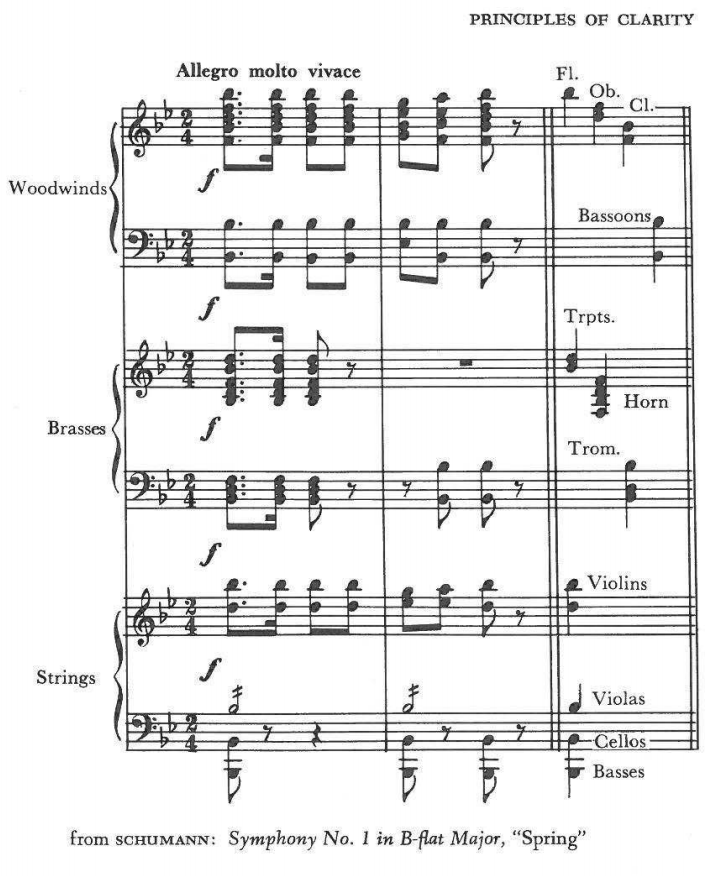
Sibelius features low string harmony in order to let the woodwinds through. Brahms often seems to prefer a certain close harmonic concentration in the mellow middle register (bassoons, clarinets, violas), with the upper and lower parts of the texture open. Berlioz seems fond of a concentrated high-sounding harmony, with the middle of the range open. Beethoven
likes his woodwinds harmonically rich, but keeps the strings and brass consistently open in sound. What type of spacing do you prefer?