 Playable Books
George Frederick McKay · section 42 of 111
Project 6
Read and hear this section in the playable edition →In preparing for experimentation with polythematic texture it is helpful to practice invention of motival ideas for each of the
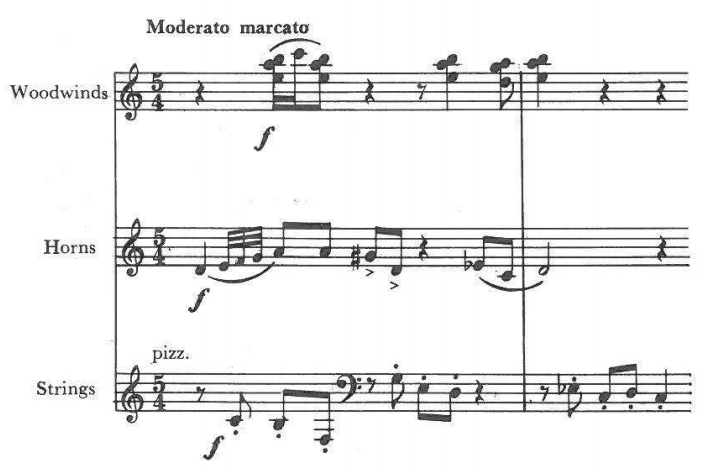
separate instruments of the orchestra. Each instrument has potentialities for characteristic motion that are individual to it alone, and which can be produced only by its particular playing techniques. The scores of Stravinsky, Debussy, Rimsky-Korsakov and Berlioz are outstanding for their exemplification of the musical interest that can naturally result when the instruments are set into motion by designs that make the most of idiomatic potentialities. The scores of Stravinsky are particularly inventive in this direction and should be studied for the stimulating examples they afford.
After preliminary exercise in the invention of idiomatic motives and designs for each instrument, try combining some of them into polythematic textures. Or, after you have become interested in some particular motival effect, search mentally for another that will add contrast and supplementary strength to it.
Keep in mind that both motival tangibility and motival contrast are essential to the polythematic textural values. Paradoxically, successful unity and variety both result from such definiteness within contrast. For architectural contrast, pit stac-
from RUBBRA: Symphony No. 5 (Lengnick) — PLATE V. POLYTHEMATIC TEXTURE [Plate withheld from the public edition: the excerpt is still in copyright.]
cato against legato, angle against curve, smooth motion against angular or disjointed motion, etc. Usually a contrast of basic pace between the opposing motives is desirable. A rapid and agitated motion should ordinarily be contrasted by one that is more moderate and slow.
In the Tchaikovsky example on page 61, a slight amount of accompanimental material was also added. If such accompanimental or sustaining material is included it must be kept particularly slight in motival content, lest it spoil the impact of the polythematism, which ordinarily has the most strength and clarity when limited to two strong motival elements.