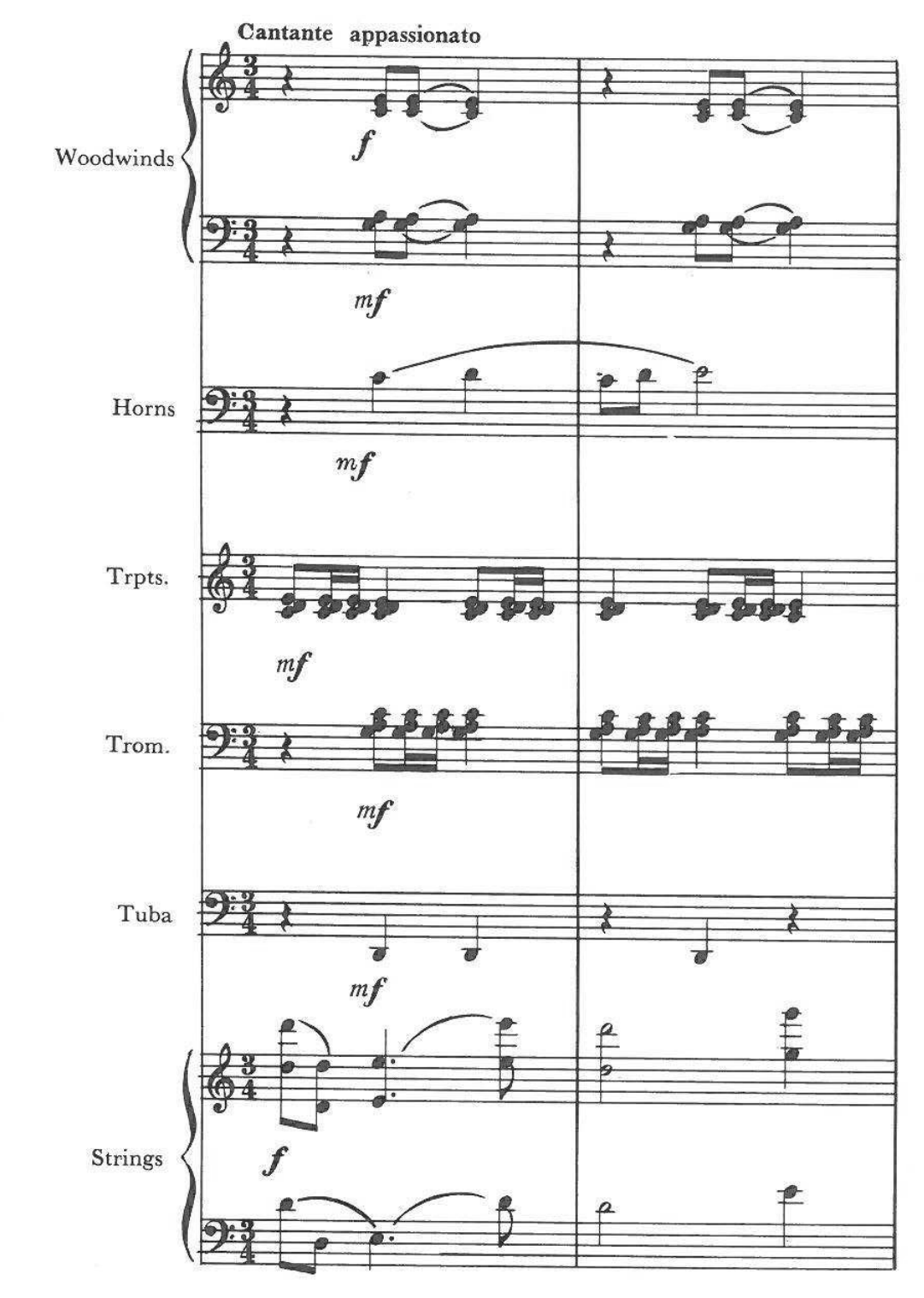
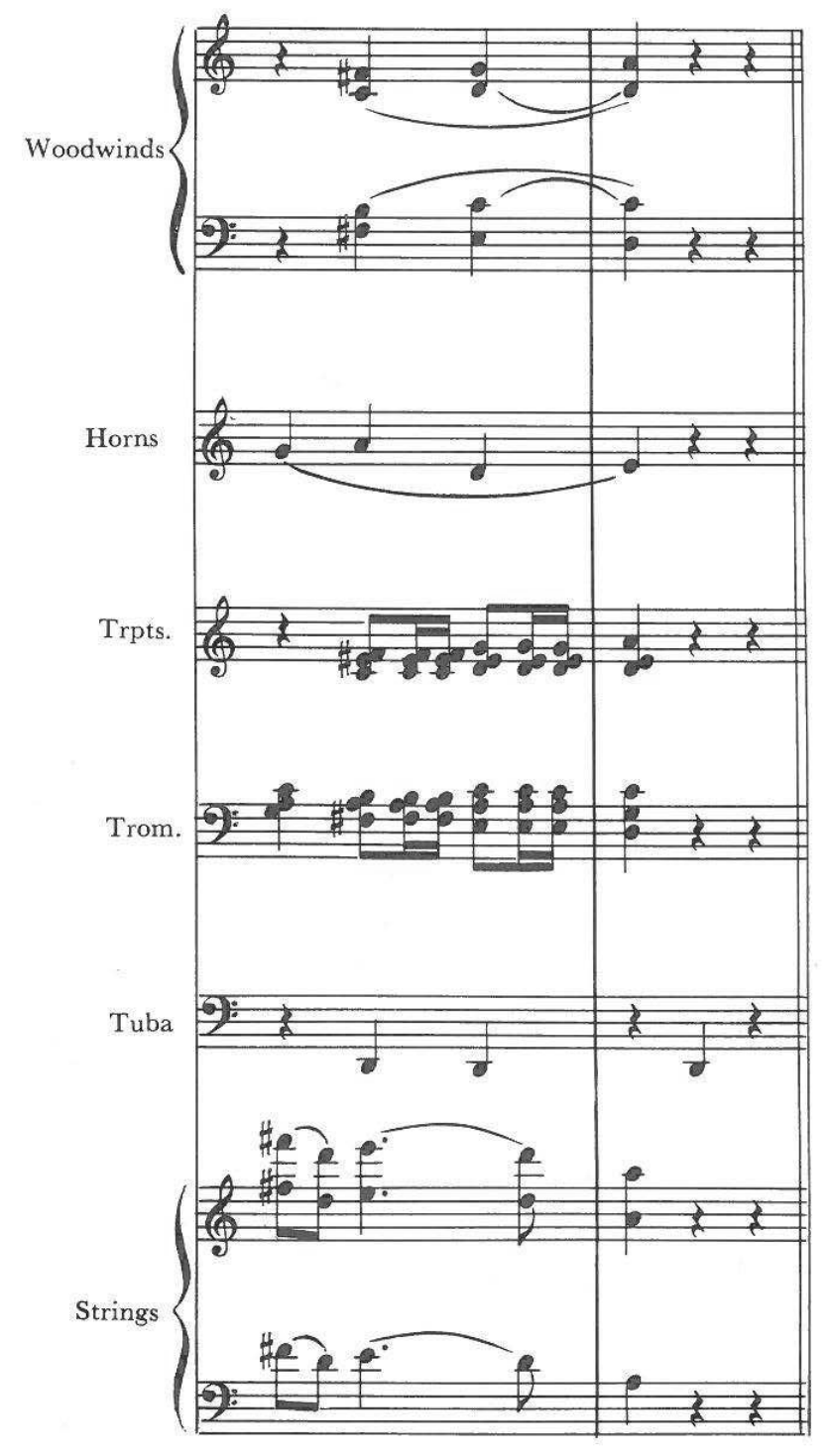
With the previous analyses in mind, plan some balances of melodic components which will fulfill the conditions necessary for clarity. On a page of reduced scoring, write first a principal
melodic component; then add a secondary component; finally, fill in a third musical element that makes only slight melodic demand (material that is sustaining or accompanimental in type).
This maintenance of balance of melodic components is a most important technique. If the study of orchestration had to be limited to only one guiding principle, limitation of melodic components might well be the best choice. Once the orchestrator has created the main melodic component and has added to it a secondary component, the essence of orchestration is in being. Further elaboration will usually be a mere filling in of decorative and supporting elements. Design of supporting elements and matters of pitch locale and tonal color are subject to freedom of choice and may be varied as personal preference indicates.
But the need to achieve clarity through limitation of melodic components is fundamental to all orchestration.
Just as in life one cannot flout the laws of nature and physical health, so no real clarity is possible in orchestration without the limitation of the number of melodic components.
Study the works of some of the master composers (the three excerpts which follow are fine examples) and observe that, however complex the orchestral page may become, there will seldom be more than two melodic components used at any given time.
 Playable Books