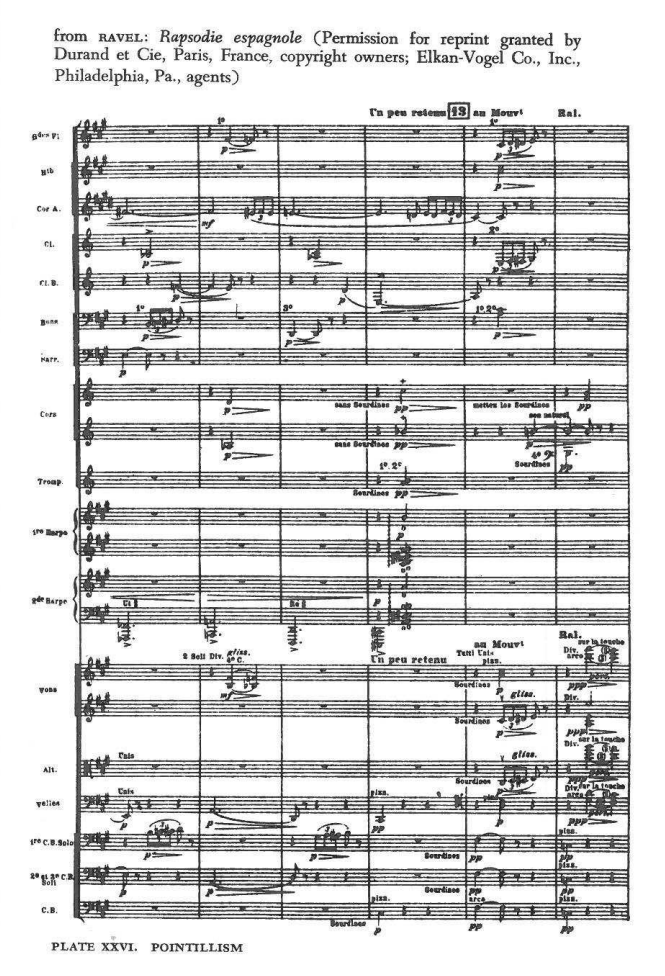
There has already been a discussion of mixture by doubling (p. 118). Mixture without doubling has a significantly different, more rarefied sound which results from clear points of tone color sounding simultaneously in separate designs and pitch locales. Theoretically, all the basic tonal ingredients, if heard in a maximum combination, should produce a blend which is uniquely rich and full.
There are eight basic tonal ingredients. An objectively calculated total mixture would include the following types:
The most complete small instrumental group would, therefore, include one player for each of the above timbres.
Through small combinations, which can include unusual bell-tone and plectrum instruments such as vibraphone and guitar, certain orchestrators — following in the footsteps of Webern — seem to be striving toward an ideal of total mixture. The smallness of the groups used ensures vividness, while the addition of unusual instruments adds vigor and allure through variety and contrast.
All eight basic ingredients will not necessarily be present in the instrumentation of such small groups, but the tendency is toward completeness through the use of the contrast potentialities latent in the eight basic categories. How complete would a combination of xylophone, harpsichord, flute, viola, snare drum and contralto voice be? How complete would a combination of accordion, guitar, trombone and double bass be? Try to think of several such ensemble combinations with relative completeness of mixture in mind.
 Playable Books