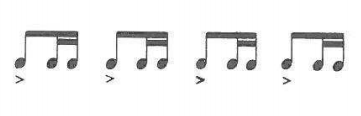
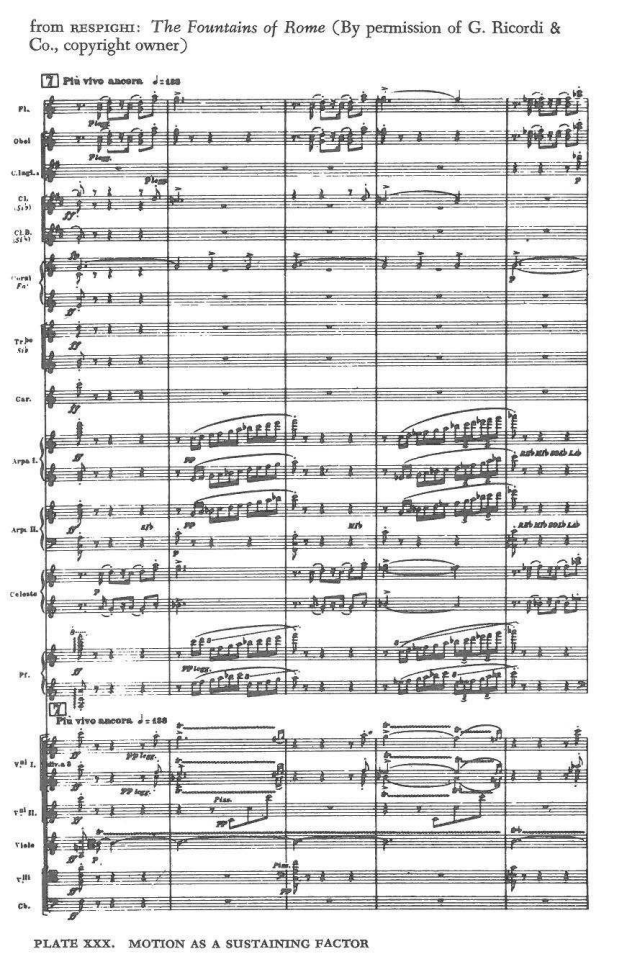
Because of its aural vividness, the pulsating timbre of a percussive element can supply a stabilizing effect. The striking sound and penetrating force of percussion rhythm so engages the attention and so definitely — and almost hypnotically — fills up the sound space that everything else seems almost incidental. If a drum beat such as the following is begun,
even random shouts and noises, if added, seem to merge into meaning, through the unifying power and dominating energy and impact of such a motor pedal (rhythmic ostinato).
Primitive peoples knew about this principle, and used drums in this way as a strong unifying force. “Jazz” musicians understand its power, and use percussion as a foundation for improvisatory freedom. Much tonal interest results from the variety of timbre made possible by the unifying percussive background.
 Playable Books