 Playable Books
Max Reger · section 4 of 7
From a-minor
Read and hear this section in the playable edition →47) e-minor
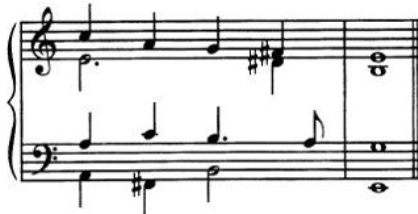
Tonic a-minor, which can be immediately used, as it is at the same time the sub-dominant of e-minor. (Cadence!)

48) b-minor
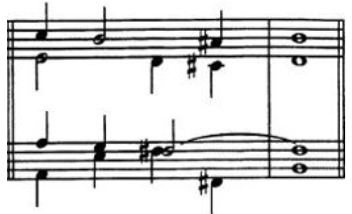
Tonic a-minor, minor-dominant e-minor, which e-minor is used, as it is also the sub-dominant of b-minor. (Cadence!)

49) f♯-minor
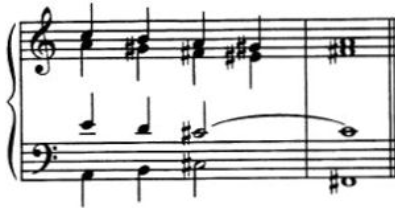
Tonic a-minor; 1st inversion (chord of the sixth) of the diminished triad (g♯ b d) (aVII); translate this chord of the sixth (b d g♯), to f♯II (diminished triad g♯ b d [1st inversion] [in f♯-minor] on the 2nd degree). (Cadence!)

50) c♯-minor
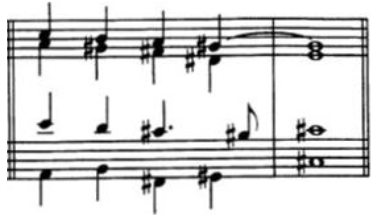
Tonic a-minor; 1st inversion (chord of the sixth) of the diminished triad (g♯ b d) (aVII); use this chord of the sixth, which is also f♯II (1st inversion!); tonic f♯-minor; use this f♯-minor, which is at the same time the sub-dominant of c♯-minor. (Cadence!)

51) g♯-minor
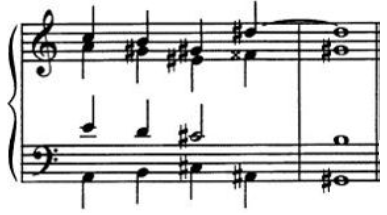
Tonic a-minor; translate the chord of the sixth (b d g♯) (aVII) f♯II; dominant (C♯-major) of f♯-minor; use this C♯-major, which is at the same time the chord of the Dorian sixth (c♯ e♯ g♯) in g♯-minor; dominant (D♯-major) of g♯-minor; tonic g♯-minor. (Notice that the Dorian sixth must always go to the leading tone!)

52) d♯-minor
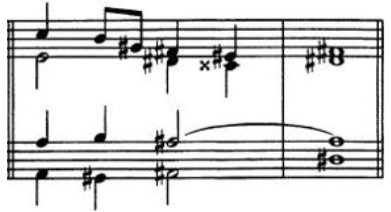
Tonic a-minor; dominant E-major; (1st inversion); use this chord of the sixth (g♯ b e), which is at the same time the chord of the Neapolitan sixth in d♯-minor. (Cadence!)

53) a♯-minor
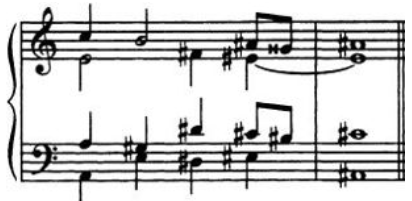
Tonic a-minor; dominant E-major; 2nd super-dominant B-major (1st inversion); use this chord of the sixth (d♯ f♯ b), which is also the chord of the Neapolitan sixth in a♯-minor. (Cadence!)

54) e♯-minor
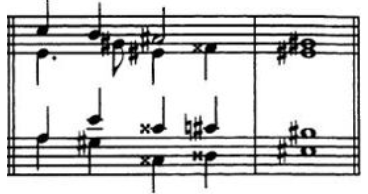
Tonic a-minor; dominant E-major (1st inversion); use this chord of the sixth (g♯ b e), which is at the same time the chord of the Neapolitan sixth in d♯-minor; dominant (A♯-major) of d♯-minor; use this triad (a♯ c𝄪 e♯), which is also the chord of the Dorian sixth in e♯-minor; dominant (B♯-major) of e♯-minor; the chord of the seventh (diminished) on the 7th degree in e♯-minor is used; tonic e♯-minor.
NB. The diminished chord of the seventh (in minor on the seventh degree) always takes the place of the dominant!

55) d-minor
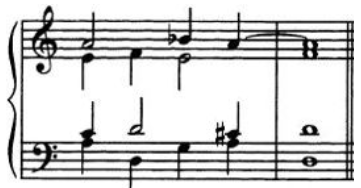
Tonic a-minor; sub-dominant d-minor; use this d-minor, as the tonic in d-minor. (Cadence!)

56) g-minor
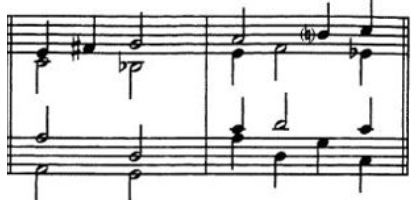
Tonic a-minor; use this a-minor (a c e), which is at the same time the chord of the Dorian sixth in g-minor; the dominant of g-minor (replaced by the 1st inversion of the diminished triad on the 7th degree in g-minor, i. e. a c f♯); tonic g-minor.

57) c-minor
Tonic a-minor; sub-dominant d-minor; use this d-minor (d f a), which is at the same time the chord of the Dorian sixth in c-minor; dominant (G-major), tonic c-minor.

58) f-minor
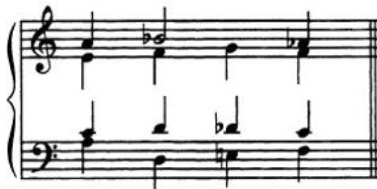
Tonic a-minor; chord of the Neapolitan sixth (d f b♭) in a-minor; use this chord of the sixth (d f b♭), which is at the same time the chord of the Dorian sixth in f-minor; dominant of f-minor (replaced by the diminished chord of the seventh on the 7th degree (e g b♭ d♭) of f-minor).

59) b♭-minor
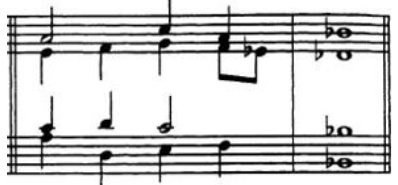
Tonic a-minor; sub-dominant d-minor; relative to the tonic (C-major) of a-minor; use this C-major, which is also the 2nd super-dominant of b♭-minor; dominant (F-major) (with seventh e♭) of b♭-minor.

60) e♭-minor
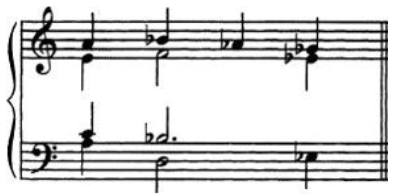
Tonic a-minor; chord of the Neapolitan sixth (d f b♭) in a-minor; use this chord of the sixth (d f b♭), which is at the same time the 1st inversion of the dominant (B♭-major) of e♭-minor (with seventh; chord of the six-five).

61) a♭-minor
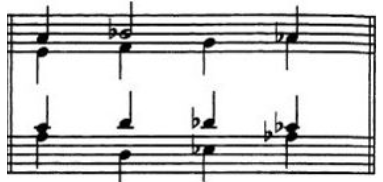
Tonic a-minor; chord of the Neapolitan sixth (d f b♭) in a-minor; use this chord of the sixth, (d f b♭), which is at the same time the 1st inversion of the 2nd super-dominant (B♭-major) of a♭-minor; dominant (with 7♭) (E♭-major) of a♭-minor.

62) d♭-minor
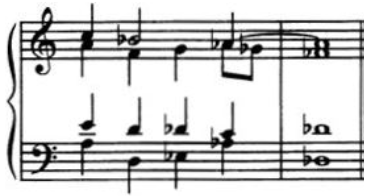
Tonic a-minor; chord of the Neapolitan sixth (d f b♭) in a-minor; use this chord of the sixth (d f b♭), which is at the same time the 1st inversion of the 2nd super-dominant (B♭-major) of A♭-major; dominant (E♭-major with 7♭) of A♭-major; tonic A♭-major; use this A♭-major, which is at the same time the dominant (with 7♭) of d♭-minor.

63) g♭-minor
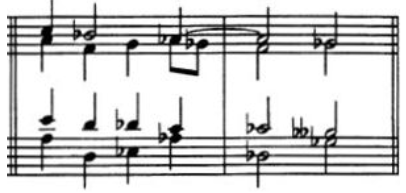
As in Nr. 62; use this A♭-major, which is at the same time the dominant of D♭-major; use this D♭-major (with 7♭), which is at the same time the dominant of g♭-minor.

64) c♭-minor
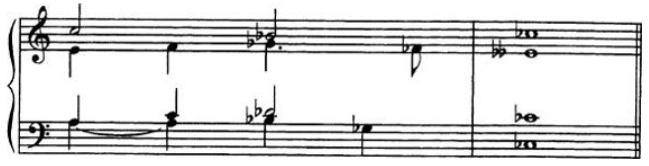
Tonic a-minor; relative (F-major) to the sub-dominant (d-minor) of a-minor; chord of the Neapolitan sixth (b♭ d♭ g♭) in F-major; use this chord of the sixth (b♭ d♭ g♭), which is at the same time the 1st inversion of the dominant (G♭-major) of c♭-minor; dominant (G♭-major with 7♭) of c♭-minor; tonic c♭-minor. (See Nr. 65.)

65) f♭-minor
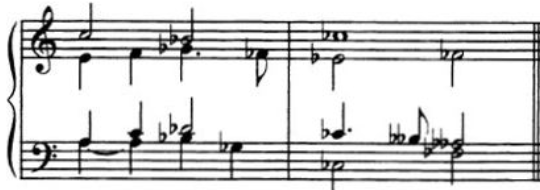
Tonic a-minor; relative (F-major) to the sub-dominant (d-minor) of a-minor; use this F-major as tonic. (Also in Nr. 64 at the same place); chord of the Neapolitan sixth (b♭ d♭ g♭) in F-major; use this chord of the sixth (b♭ d♭ g♭), which is at the same time the 1st inversion of the dominant (G♭-major) of C♭-major; tonic C♭-major (with 7♭♭), which C♭-major is at the same time the dominant (with 7♭♭) of f♭-minor.

66) C-major
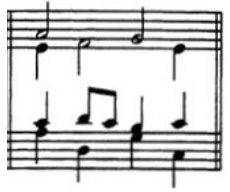
Tonic a-minor; sub-dominant (d-minor); use this d-minor, which is relative to the sub-dominant (F-major) of C-major. (Cadence!)

67) G-major
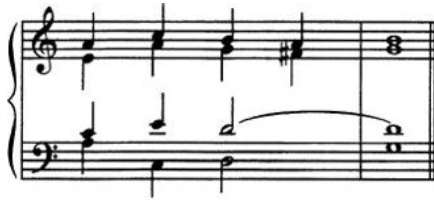
Tonic a-minor; use this a-minor, which is relative to the sub-dominant (C-major) of G-major. (Cadence!)

68) D-major
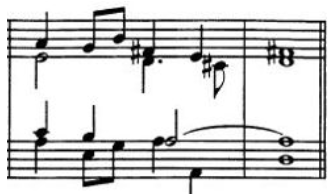
Tonic a-minor; minor dominant (e-minor) of a-minor; use this e-minor, which is relative to the sub-dominant of D-major. (Cadence!)

69) A-major
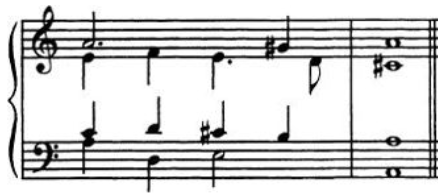
Tonic a-minor; sub-dominant (d-minor) of a-minor; use this d-minor, which is at the same time minor sub-dominant in A-major. (Cadence!)

70) E-major
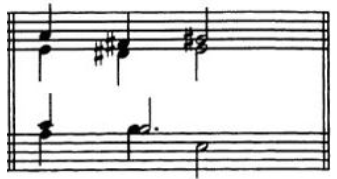
Tonic a-minor; use this a-minor, which is at the same time minor sub-dominant in E-major. (Cadence!)

71) B-major
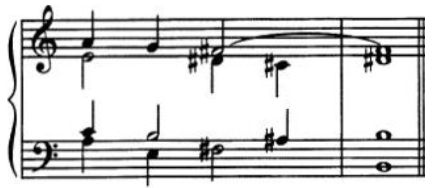
Tonic a-minor; minor dominant (e-minor) of a-minor; use this e-minor, which is at the same time minor sub-dominant in B-major. (Cadence!)

72) F♯-major
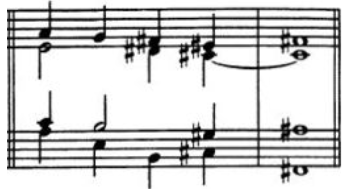
Tonic a-minor; minor dominant (e-minor) of a-minor; use this e-minor, which is at the same time minor sub-dominant in B-major; tonic B-major; use this B-major, which is at the same time sub-dominant in F♯-major. (Cadence!)

Do not forget that upon the entrance of the new major-tonic, its scale is understood.
73) C♯-major
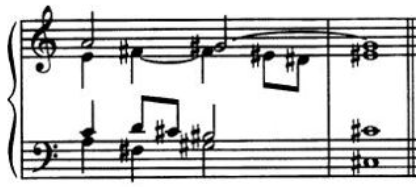
Tonic a-minor; chord of the Dorian sixth (f♯ a d) in a-minor; use this chord of the sixth (f♯ a d), which is at the same time chord of the Neapolitan sixth in C♯-major. (Cadence!)
NB. Notice the leading of the bass from f♯ to g♯! (The Dorian sixth requires to be led upwards!)

74) G♯-major
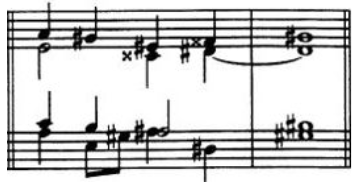
Tonic a-minor; dominant E-major; use the 1st inversion of this E-major (the chord of the sixth g♯ b e), which is at the same time the chord of the Neapolitan sixth in D♯-major; dominant (A♯-major) of D♯-major; tonic D♯-major, is at the same time dominant in G♯-major.

75) D♯-major
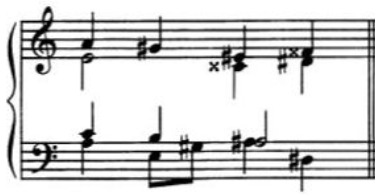
Tonic a-minor; dominant E-major; use the 1st inversion of this E-major (chord of the sixth g♯ b e), which is at the same time the chord of the Neapolitan sixth in D♯-major; dominant (A♯-major) of D♯-major; tonic D♯-major.

76) A♯-major
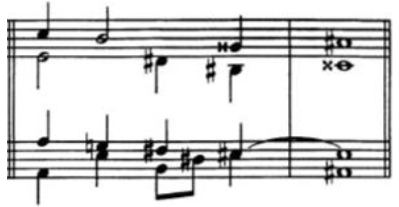
Tonic a-minor; minor dominant (e-minor) of a-minor; use this e-minor, which is at the same time the minor sub-dominant of B-major; tonic B-major; use the 1st inversion of this B-major (the chord of the sixth d♯ f♯ b), which is at the same time the chord of the Neapolitan sixth in A♯-major. (Cadence!)

77) E♯-major
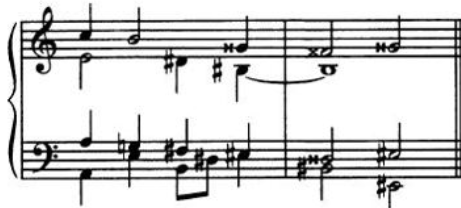
Tonic a-minor; minor dominant (e-minor) of a-minor; use this e-minor, which is at the same time minor sub-dominant in B-major; use the 1st inversion of this B-major (chord of the sixth d♯ f♯ b), which is at the same time the chord of the Neapolitan sixth in A♯-major; dominant (E♯-major) of A♯-major; use this E♯-major as tonic, dominant (B♯-major) of E♯-major; tonic E♯-major.

78) F-major
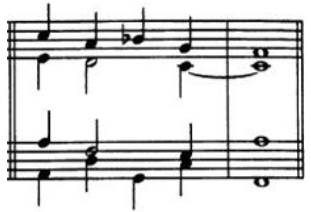
Tonic a-minor; sub-dominant (d-minor) of a-minor; use this d-minor, which is relative to F-major. (Cadence!)

79) B♭-major
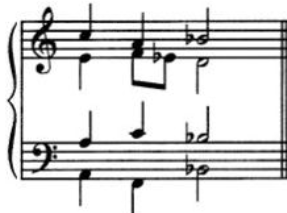
Tonic a-minor; relative (F-major) to the sub-dominant (d-minor) of a-minor; use this F-major (with 7♭), which is at the same time the dominant of B♭-major.

80) E♭-major
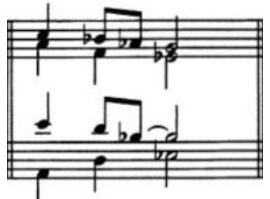
Tonic a-minor; chord of the Neapolitan sixth (d f b♭) in a-minor; use this chord of the sixth (d f b♭), which is at the same time the 1st inversion of the dominant (B♭-major) of E♭-major.

81) A♭-major
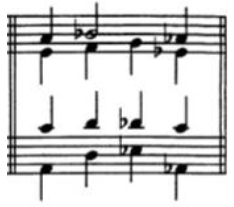
Tonic a-minor; chord of the Neapolitan sixth (d f b♭) in a-minor; use this chord of the sixth (d f b♭), which is at the same time the 1st inversion of the 2nd super-dominant (B♭-major) of A♭-major; dominant (E♭-major [with 7♭]) of A♭-major; tonic A♭-major.

82) D♭-major
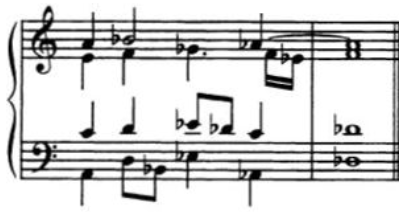
Tonic a-minor; chord of the Neapolitan sixth (d f b♭) in a-minor; use this chord of the sixth (d f b♭), which is at the same time the 1st inversion of the dominant (B♭-major) of e♭-minor; use this e♭-minor, which is relative to the sub-dominant (G♭-major) of D♭-major. (Cadence!)

83) G♭-major
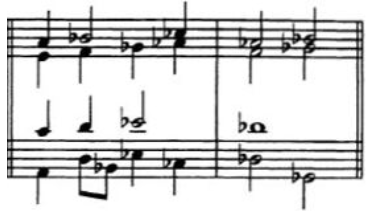
Tonic a-minor; chord of the Neapolitan sixth (d f b♭) in a-minor; use this chord of the sixth, which is at the same time the 1st inversion of the dominant (B♭-major) of e♭-minor; use this e♭-minor, which is relative to the tonic of G♭-major. (Cadence!)

84) C♭-major
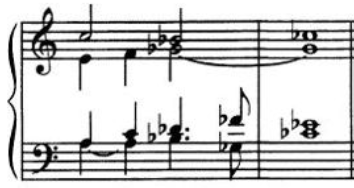
Tonic a-minor; relative (F-major) to the sub-dominant (d-minor) of a-minor; use this F-major as tonic; chord of the Neapolitan sixth (b♭ d♭ g♭) in F-major; use this chord of the sixth (b♭ d♭ g♭), which is at the same time the 1st inversion of the dominant (G♭-major) of C♭-major; tonic C♭-major.

85) F♭-major
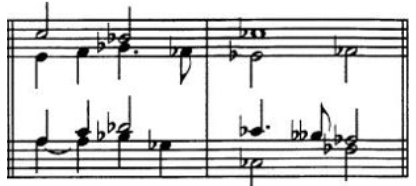
Tonic a-minor; relative (F-major) to the sub-dominant (d-minor) of a-minor; chord of the Neapolitan sixth (b♭ d♭ g♭) in F-major, taken as the tonic; use this chord of the sixth (b♭ d♭ g♭), which is at the same time 1st inversion of the 2nd super-dominant (G♭-major) of F♭-major; dominant (C♭-major); tonic F♭-major.
