 Playable Books
Max Reger · section 3 of 7
From C♯-major
Read and hear this section in the playable edition →42) E♭-major (e♭-minor)
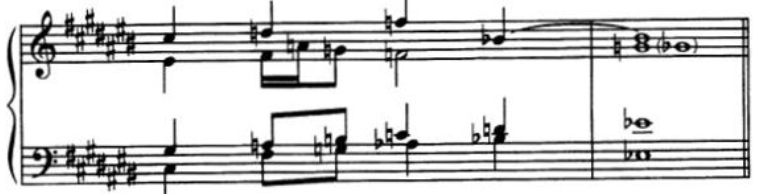
Tonic C♯-major; chord of the Neapolitan sixth (f♯ a d) in C♯-major; use this chord of the sixth, which is at the same time the 1st inversion of D-major, the 2nd super-dominant of c-minor; dominant (G-major) of c-minor; sub-dominant (f-minor) of c-minor; use this f-minor, which is also relative to the sub-dominant (A♭-major) of E♭-major. (Cadence!)
NB. To modulate to e♭-minor, use the f-minor (f a♭ c), which is also the chord of the Dorian sixth in e♭-minor; dominant (B♭-major) of e♭-minor. (Cadence!)

43) A♭-major (a♭-minor)
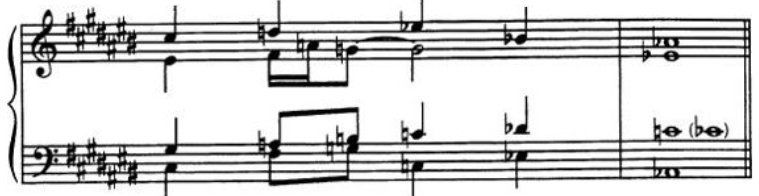
Tonic C♯-major; chord of the Neapolitan sixth (f♯ a d) in C♯-major; use this chord of the sixth, which is at the same time the 1st inversion of D-major, the 2nd super-dominant of c-minor; dominant (G-major), tonic (c-minor) of c-minor; use this c-minor, as it is also relative to the dominant (E♭-major) of A♭-major (or a♭-minor); tonic A♭-major (or a♭-minor).

44) D♭-major (d♭-minor)
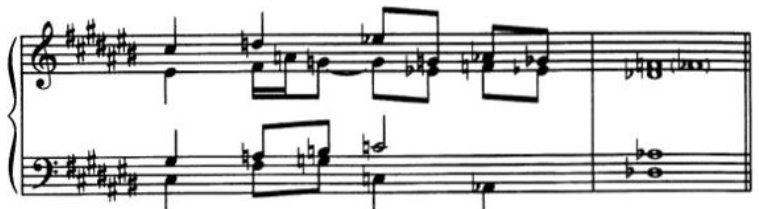
Tonic C♯-major; chord of the Neapolitan sixth (f♯ a d) in C♯-major; use this chord of the sixth (f♯ a d), which is at the same time 2nd super-dominant in c-minor (1st inversion of this 2nd super-dominant); dominant (G-major), tonic (c-minor) of c-minor; sub-dominant (f-minor) of c-minor, which f-minor is used, as it is also relative to the dominant (A♭-major) of D♭-major (d♭-minor); dominant (A♭-major) of D♭-major (d♭-minor); tonic D♭-major (d♭-minor).

45) G♭-major (g♭-minor)
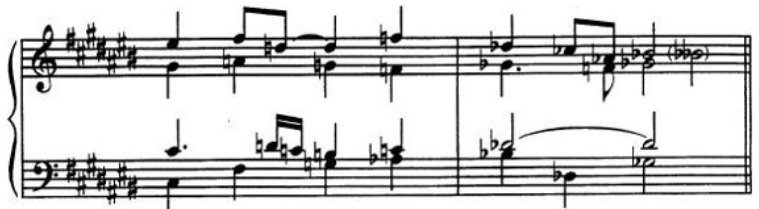
Tonic C♯-major; chord of the Neapolitan sixth (f♯ a d) in C♯-major; use this chord of the sixth, which is at the same time the 2nd super-dominant (1st inversion of this 2nd super-dominant) of c-minor; dominant (G-major), sub-dominant (f-minor) of c-minor; use this f-minor, which is also relative to the dominant (A♭-major) of D♭-major; sub-dominant (G♭-major) of D♭-major; use the tonic with 7♭ (D♭-major), which is at the same time dominant in G♭-major (g♭-minor).


46) C♭-major (c♭-minor)
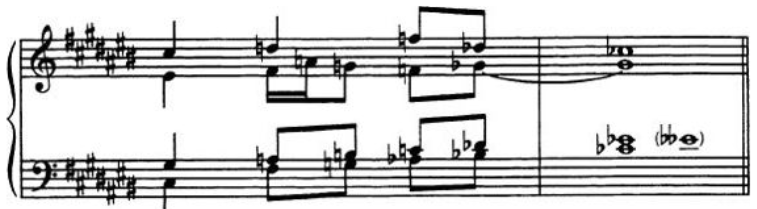
Tonic C♯-major; chord of the Neapolitan sixth (f♯ a d) in C♯-major; use this chord of the sixth (f♯ a d), which is also the 2nd super-dominant (1st inversion) of c-minor; sub-dominant (f-minor) of c-minor; use this f-minor, which is at the same time relative to the dominant (A♭-major) of D♭-major; sub-dominant (G♭-major) of D♭-major; use this G♭-major, which is also the dominant of C♭-major (c♭-minor).
NB. The modulations in Nr. 43, 44, 45, 46 to a♭-, d♭-, g♭- and c♭-minor are less recommendable, for in these, the major third of the finally reached tonic, seems more natural. (In Nr. 42, however, the Dorian sixth c, in e♭-minor, is quite natural and also correctly used for the modulation.)
