Nikolai Rimsky-Korsakov · seção 56 de 96
Modulação cromática Leia e ouça esta seção na edição reproduzível →
Tradução automática da leitura em inglês. Rascunho; ainda sem revisão por um falante nativo.
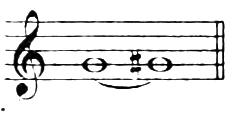
§ 54. — A modulação cromática baseia-se no seguinte:
O acorde de transição pelo qual se realiza a modulação, pertencente a um modo natural e imediatamente alterado pela nota característica (**) dos modos harmônicos, conduz assim aos acordes da nova tonalidade.
O movimento cromático ascendente resultante:
Fig. 219 · Ver no leitor modula à tonalidade menor; é representado pelos acordes do quinto e sétimo graus.
Para a modulação cromática, são indispensáveis intervalos melódicos fáceis de entoar com afinação e notas comuns.
(O movimento cromático conta como nota comum.)
Durante o movimento cromático ascendente, o baixo deve proceder por movimento diatônico descendente por graus conjuntos ou por movimento cromático ascendente; mas não deve permanecer no mesmo lugar nem retornar à nota do acorde anterior.
← Falsas relações Todas as seções INFLUÊNCIA DO ACORDE ARTIFICIAL do IV grau da escala menor melódica → Mais Playable Books Tchaikovsky, Guide to the Practical Study of Harmony Tchaikovsky’s Moscow Conservatory harmony course, with playable examples. Fux, Gradus ad Parnassum Learn how independent voices work together, one species at a time. Goetschius, Exercises in Elementary Counterpoint Build independent melodies through graded exercises, with 471 recorded examples. Goetschius, Counterpoint Applied Study imitation, canon, and fugue with 393 recorded examples. Kitson, Counterpoint for Beginners Strict counterpoint in two and three parts, species by species, with every example playable. Prout, Analysis of J. S. Bach’s Forty-Eight Fugues Follow Prout through all 48 fugues of the Well-Tempered Clavier, every example playable. Rameau, Treatise on Harmony Explore the foundations of harmony, composition, and accompaniment. Fenaroli, Partimenti Six books of partimenti, with playable basses, contrapuntal exercises, and bilingual rules. Reger, Supplement to the Theory of Modulation Explore Reger’s modulation method with 100 analyses and 102 playable examples. Cutter, Harmonic Analysis Learn to name every chord and non-harmonic tone in real music, from Bach to Wagner, with the passages playable. Schoenberg, Theory of Harmony Read all 22 chapters, with the original German beside a new English translation. Rimsky-Korsakov, Principles of Orchestration Discover instrumental colors through scores and orchestral recordings. Forsyth, Orchestration A witty, thorough guide to every orchestral instrument, with the original pages. Forsyth, Choral Orchestration A whole Te Deum orchestrated bar by bar, with Forsyth’s reasons, the full score and the vocal score playable. Berlioz, Treatise on Instrumentation Berlioz’s treatise on the orchestra, revised by Richard Strauss, with the original pages. McKay, Creative Orchestration Ranges, transpositions, texture and balance, taught through projects, with the supplied examples played by orchestral samples. Sanganeria, Arrival Build jazz lines that land, with 30 original playable examples. Bona, Complete Method for Rhythmical Articulation Practice rhythm through 120 graded studies, with playable notation and original scans. Hanon, The Virtuoso-Pianist Practise all 60 exercises with playable notation, original scans and supplied Mutopia playback. Mathews, Standard Graded Course of Studies, Grade I A first year of piano: 136 short pieces by many composers, every one playable, with Mathews’s teaching notes. Goetschius, Lessons in Music Form Hear how figures become phrases, periods, rondos and sonata forms, with the printed examples beside their playable notation. ← Todos os Playable Books  Playable Books