Nikolai Rimsky-Korsakov · section 11 of 96
Melodic Position of Triads
Read and hear this section in the playable edition →
§ 10. 1) When a triad is set in four parts, the root should preferably be doubled. At the start of these studies this doubling is used exclusively.
2) Triads can be in close or open spacing.
In close spacing the three upper parts lie a third or a fourth apart:
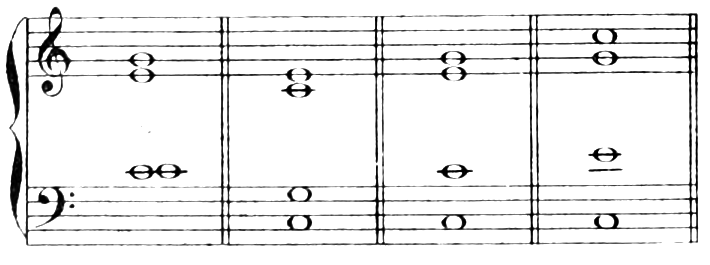 Fig. 51 · See it in the reader
In open spacing the three upper parts lie a fifth or a sixth apart:
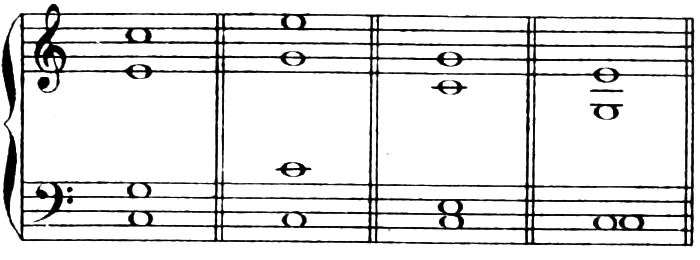 Fig. 52 · See it in the reader
3) Depending on which note is in the upper part, a triad can appear in the following melodic positions:
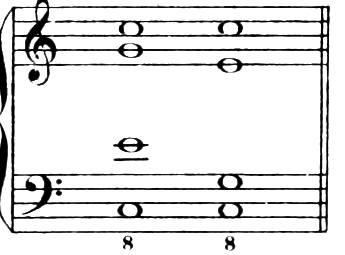 Fig. 53 · See it in the reader
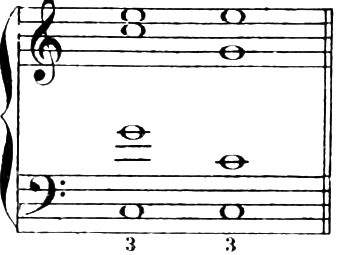 Fig. 54 · See it in the reader
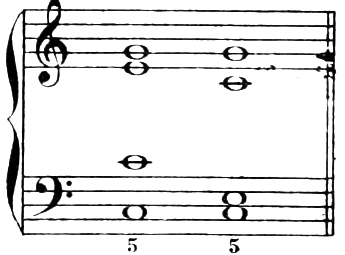 Fig. 55 · See it in the reader
4) A triad may move freely from close to open spacing and back, and may change its melodic position:
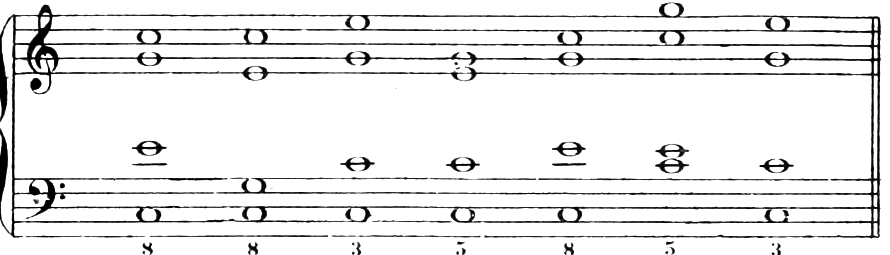 Fig. 56 · See it in the reader
 Playable Books