Nikolai Rimsky-Korsakov · section 42 of 100
Distribution of notes in chords Read and hear this section in the playable edition →
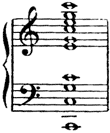
The normal order of sounds or the natural harmonic scale:
Fig. 44 · See it in the reader may serve as a guide to the orchestral arrangement of chords. It will be seen that the widely-spaced intervals lie in the lower part of the scale, gradually becoming closer as the upper register is approached:
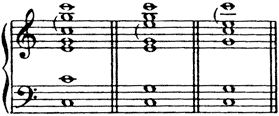
Fig. 45 · See it in the reader The bass should rarely lie at a greater distance than an octave from the part directly above it (tenor harmony). It is necessary to make sure that the harmonic notes are not lacking in the upper parts:
To be avoided: |
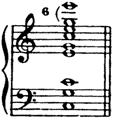
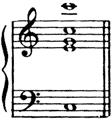
Fig. 46 · See it in the reader The use of sixths in the upper parts, and the practice of doubling the upper note in octaves are sometimes effective methods:
|
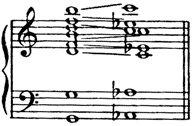
Fig. 47 · See it in the reader Fig. 48 · See it in the reader When correct progression increases the distance between the top and bottom notes of the upper parts, this does not matter:
Good: |
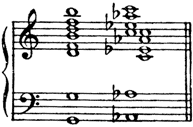
Fig. 49 · See it in the reader But it would be distinctly bad to fill in the second chord thus:
Not good: |
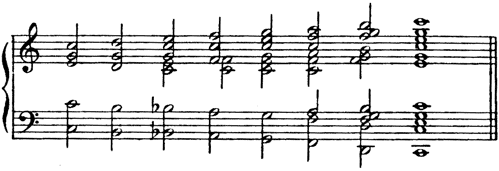
Fig. 50 · See it in the reader Hence it follows that the distribution of intermediate parts is a question of the greatest importance. Nothing is worse than writing chords, the upper and lower parts of which are separated by wide, empty intervals, especially in forte passages; in piano passages such distribution may be possible. Progression in contrary motion, the upper and lower parts diverging by degrees gives rise to the gradual addition of extra parts occupying the middle register:
Schematic Example: |
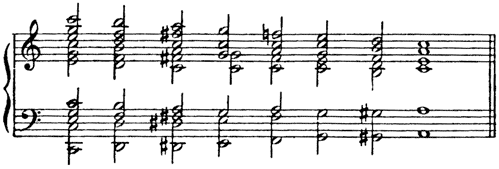
Fig. 51 · See it in the reader When the voices converge, the middle parts are eliminated one by one:
Schematic Example: |
Fig. 52 · See it in the reader ← Number of harmonic parts—Duplication All sections String harmony → More Playable Books Forsyth, Orchestration A witty, thorough guide to every orchestral instrument, with the original pages. Fux, Gradus ad Parnassum Learn how independent voices work together, one species at a time. Goetschius, Exercises in Elementary Counterpoint Build independent melodies through graded exercises, with 471 recorded examples. Goetschius, Counterpoint Applied Study imitation, canon, and fugue with 393 recorded examples. Prout, Analysis of J. S. Bach’s Forty-Eight Fugues Follow Prout through all 48 fugues of the Well-Tempered Clavier, every example playable. Rameau, Treatise on Harmony Explore the foundations of harmony, composition, and accompaniment. Rimsky-Korsakov, Practical Manual of Harmony The classic harmony course, newly translated from the 1910 French edition, with all 640 examples playable. Tchaikovsky, Guide to the Practical Study of Harmony Tchaikovsky’s Moscow Conservatory harmony course, with playable examples. Fenaroli, Partimenti Six books of partimenti, with playable basses, contrapuntal exercises, and bilingual rules. Reger, Supplement to the Theory of Modulation Explore Reger’s modulation method with 100 analyses and 102 playable examples. Schoenberg, Theory of Harmony Read all 22 chapters, with the original German beside a new English translation. Berlioz, Treatise on Instrumentation Berlioz’s treatise on the orchestra, revised by Richard Strauss, with the original pages. Sanganeria, Arrival Build jazz lines that land, with 30 original playable examples. Bona, Complete Method for Rhythmical Articulation Practice rhythm through 120 graded studies, with playable notation and original scans. ← All Playable Books  Playable Books