Pyotr Ilyich Tchaikovsky · seção 34 de 36
Capítulo XXXII. O prelúdio livre Leia e ouça esta seção na edição reproduzível →
Tradução automática da leitura em inglês. Rascunho; ainda sem revisão por um falante nativo.
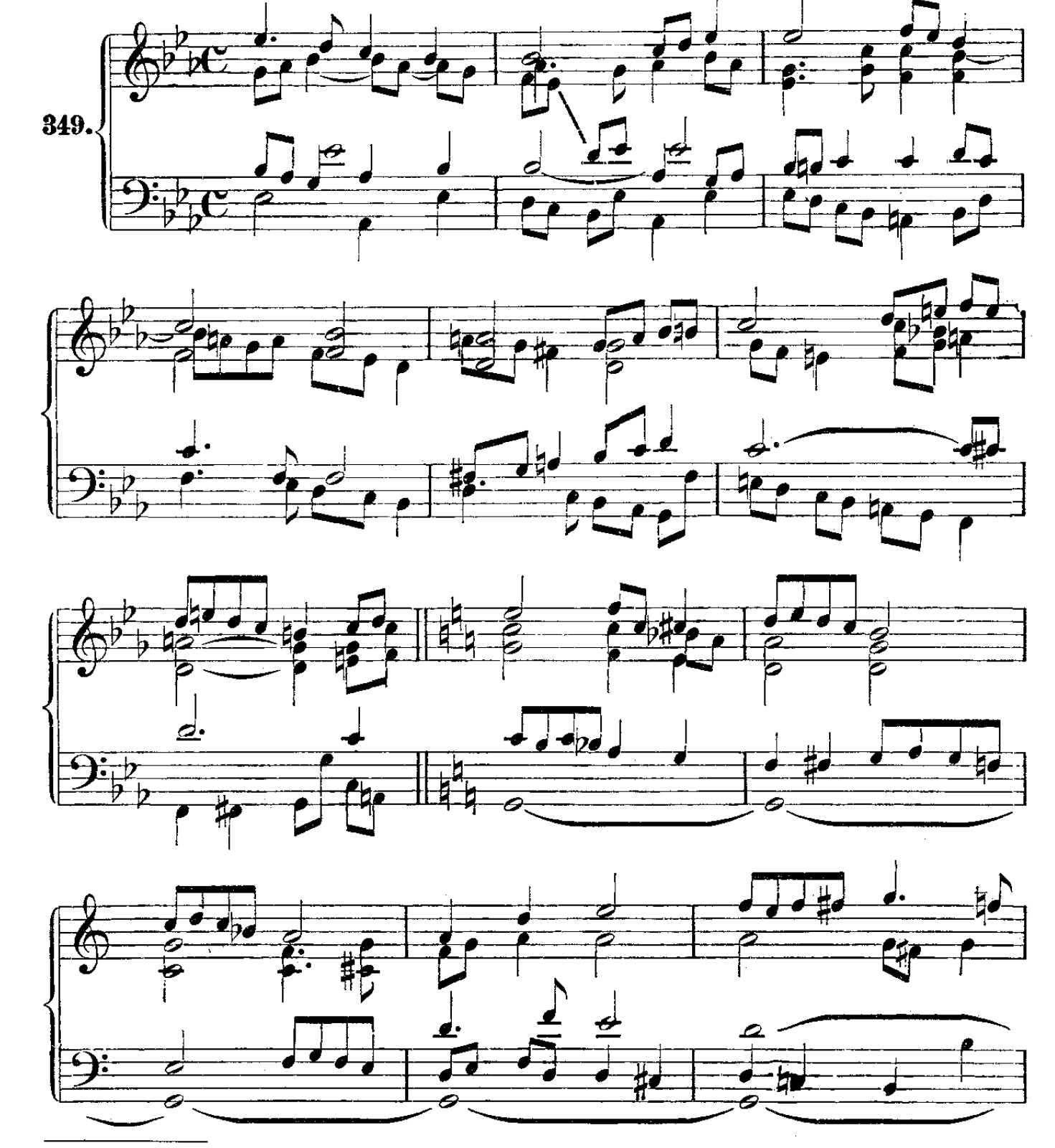
§ 137. Um exercício valioso é escrever progressões livres de acordes, sem domínio de uma voz específica, passando por todos os tipos de modulação. Esses exercícios, que não precisam adotar nenhuma das formas definidas da composição musical, devem caracterizar-se sobretudo por harmonização habilidosa *). Podem terminar na tonalidade original ou constituir uma modulação indireta; no final, pode-se empregar o pedal.
Fig. 364 · Reproduzir este exemplo no leitor ▶ *) O aluno conhecerá mais adiante as diferentes formas de apresentação do pensamento musical.
Nota. Por clareza, convém usar uma pauta separada para cada voz e escrevê-las em suas claves próprias.
← Capítulo XXXI. Figuração harmônica Todas as seções Capítulo XXXIII. Desvios das leis da harmonia → Mais Playable Books Fenaroli, Partimenti Six books of partimenti, with playable basses, contrapuntal exercises, and bilingual rules. Fux, Gradus ad Parnassum Learn how independent voices work together, one species at a time. Goetschius, Exercises in Elementary Counterpoint Build independent melodies through graded exercises, with 471 recorded examples. Goetschius, Counterpoint Applied Study imitation, canon, and fugue with 393 recorded examples. Prout, Analysis of J. S. Bach’s Forty-Eight Fugues Follow Prout through all 48 fugues of the Well-Tempered Clavier, every example playable. Rameau, Treatise on Harmony Explore the foundations of harmony, composition, and accompaniment. Rimsky-Korsakov, Practical Manual of Harmony The classic harmony course, newly translated from the 1910 French edition, with all 640 examples playable. Reger, Supplement to the Theory of Modulation Explore Reger’s modulation method with 100 analyses and 102 playable examples. Schoenberg, Theory of Harmony Read all 22 chapters, with the original German beside a new English translation. Rimsky-Korsakov, Principles of Orchestration Discover instrumental colors through scores and orchestral recordings. Forsyth, Orchestration A witty, thorough guide to every orchestral instrument, with the original pages. Berlioz, Treatise on Instrumentation Berlioz’s treatise on the orchestra, revised by Richard Strauss, with the original pages. Sanganeria, Arrival Build jazz lines that land, with 30 original playable examples. Bona, Complete Method for Rhythmical Articulation Practice rhythm through 120 graded studies, with playable notation and original scans. ← Todos os Playable Books  Playable Books