Playable Books
Hector Berlioz · section 19 of 67
Clarinets
Read and hear this section in the playable edition →

The instruments with a single reed, such as the clarinets and the basset-horns, constitute a family whose relationship with the oboe is by no means as close as might be supposed. It is the nature of their tone, above all, which distinguishes them. The medium range of the clarinets has a clearer, fuller, purer sound than the double-reed instruments, whose tone never lacks a certain tartness or harshness—though this is more or less concealed by the player’s skill. Only the high tones of the last octave of the clarinet,
possessed by the loud tones of the oboe; the lowest tones, because of their rough sound, resemble certain tones of the bassoon.
!These tones are generally duil.}
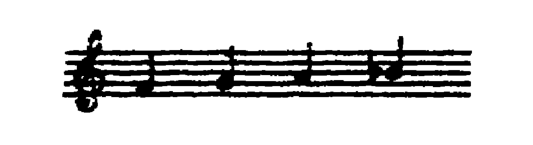
The third register comprises the following tones:

starting from; have something of the tartess
The clarinet is written in the G-clef; its range is three and a half octaves or more:
Inelading the chromatic Intervals

Four registers are distinguished on the clarinet: the low, the chalumeau, the medium and the high. The first comprises this part of the scale:

(The low tones do not sound well; they are rather hollow.)
Finally, the fourth register covers the rest of the scale up to the highest D:

A considerable number of diatonic progressions, arpeggios and trills, formerly impracticable on the clarinet, are no Jo so thanks to the ingenious mechanism of keys attached to the instrument. They will become even easier as soon as the system of Sax is generally adopted.
.Sharp keys are easier on Sax clarinets, those with flats on the German ones,by Iwan Mueller, improved by Baermann).
It is advisable to avoid, for the time being, passages like the following—or to write them only in moderate tempo:
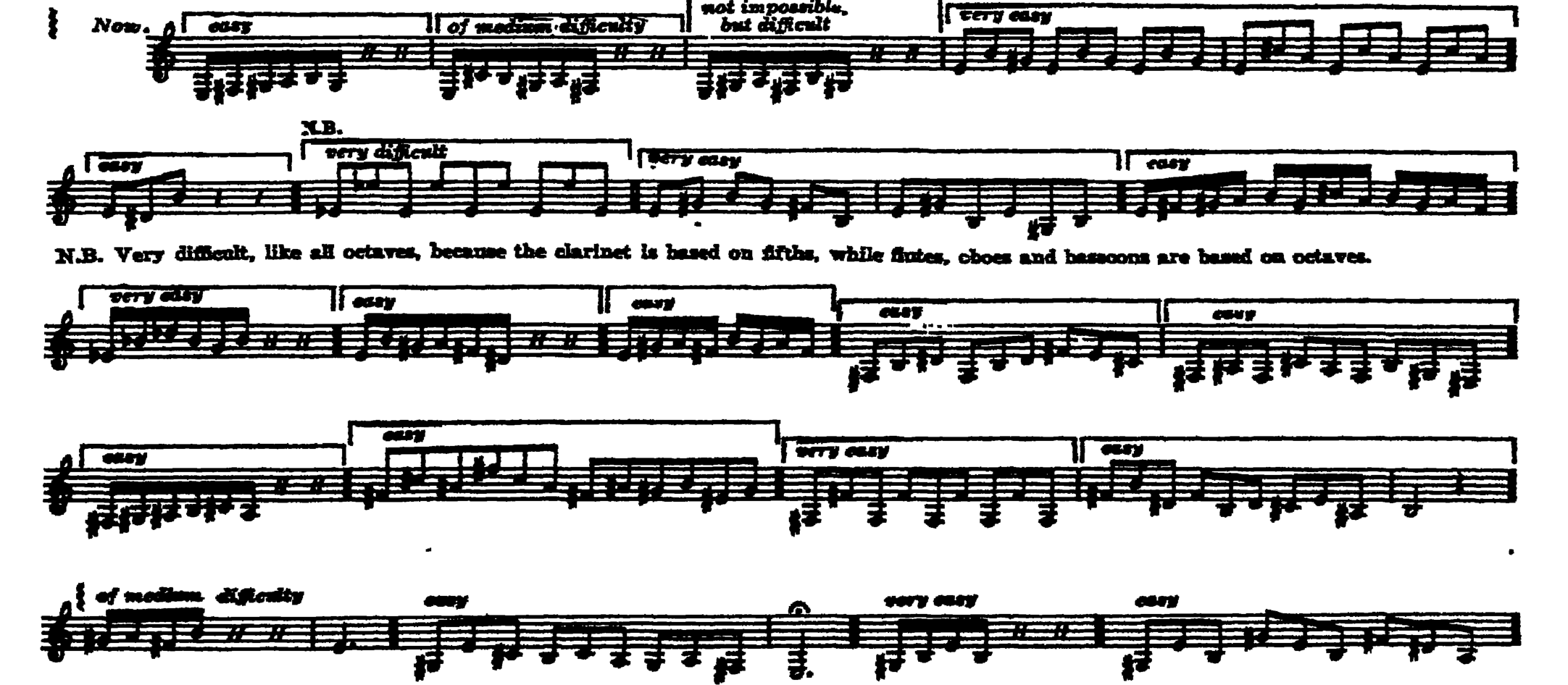
©The French darinets have 2 fist, nasal tome, while the German ones approximate the man singing voice.


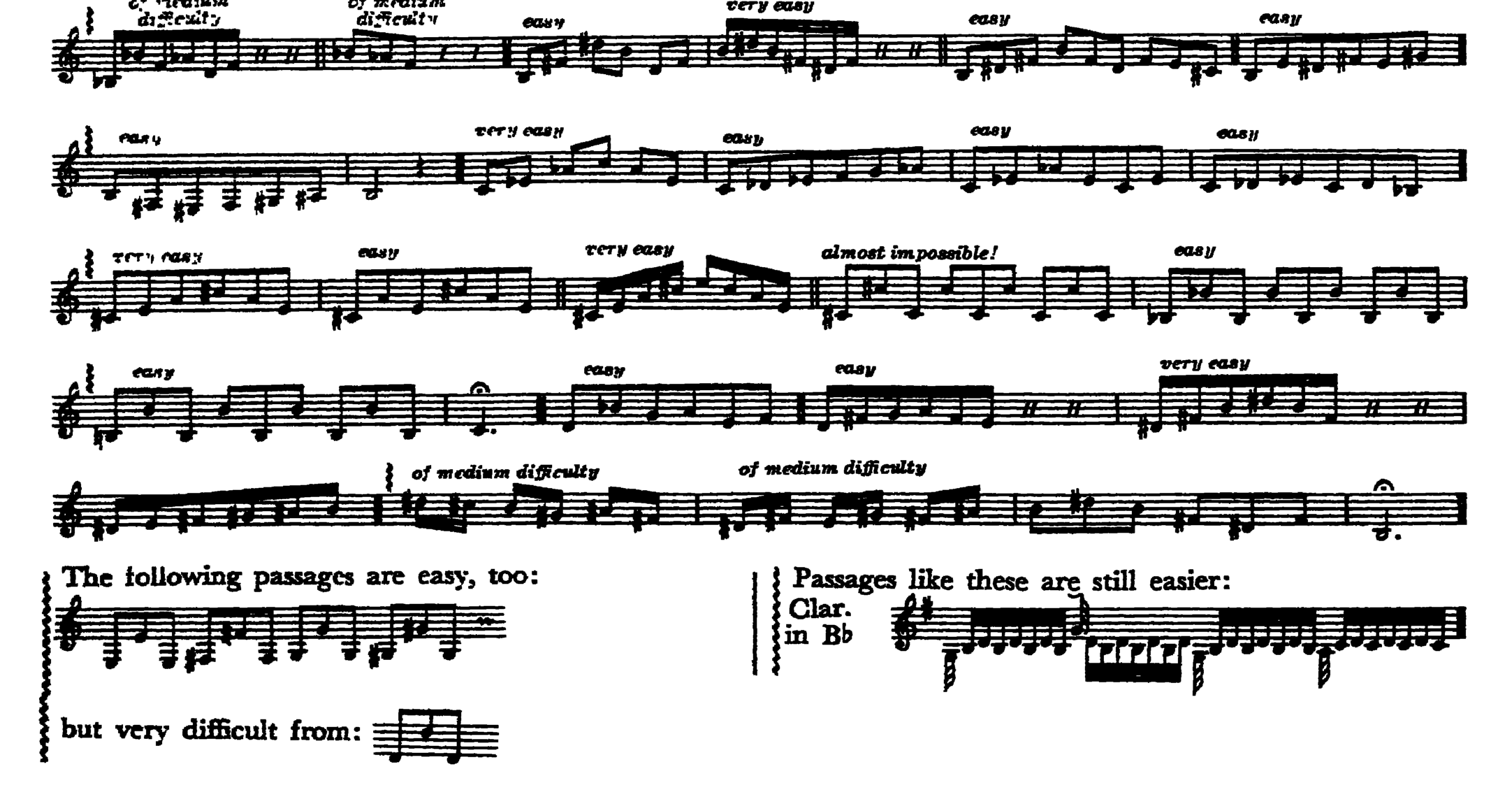
‘The number of major and minor trills practicable on the clarinet is considerable; those whose execution is not ¢asy are indicated im the following table.




tritls warked*) practicable today. For those there iliary keys. Wat ihe ve highest The eo ea aiyg Yer howe marked @ there are auxiliary Leva.
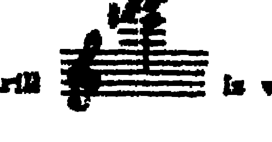
The favorite keys of the clarinet are mainly the keys of C, F, G: furthermore—B>, Er, A>. D; and their relative minors.
This view is now out of date. My clarinetist in Berlin tells me that with the modern. improved keys he actually prefers playing in Bz major to playing in B> major or the clarinet in B>.
Since there are clarinets in different xeys, their appropriate use makes it unnecessary for the performer to play in keys with many sharps or flats, such as A, E, B. Do, G2, and their relative miners.
There are four clarinets in general use today:
The small clarinet in E>. which should be assigned a range of not more than three octaves and two notes:
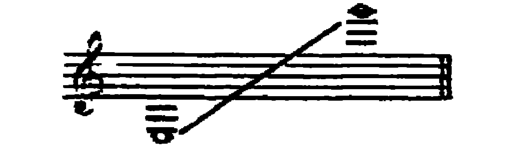
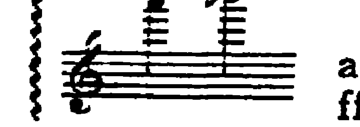
are to be used only with caution, or ff in a tutti!
It is a minor third above the clarinet in C and is written transposed; thus, to produce the following passage


The clarinet in C, the clarinet in B>, and that in A. The two latter instruments have the same range as the clarinet in C; but as the one sounds a major second and the other a minor third lower than the clarinet in C, their parts must be written a major second and a minor third higher, respectively.
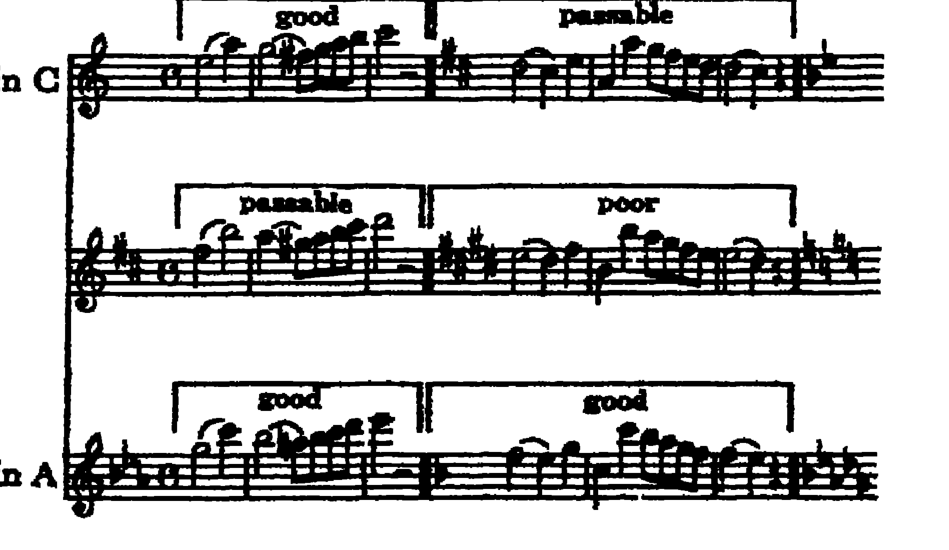



The expressions “good”. “poor”, “passable” do not refer here to the dificu‘ty of executing the phrases used as examples. but merely to the difficulty of the keys in which they are written. However. the more difficult keys. such as A and E, need not be entirely avoided in simple and slow passages.
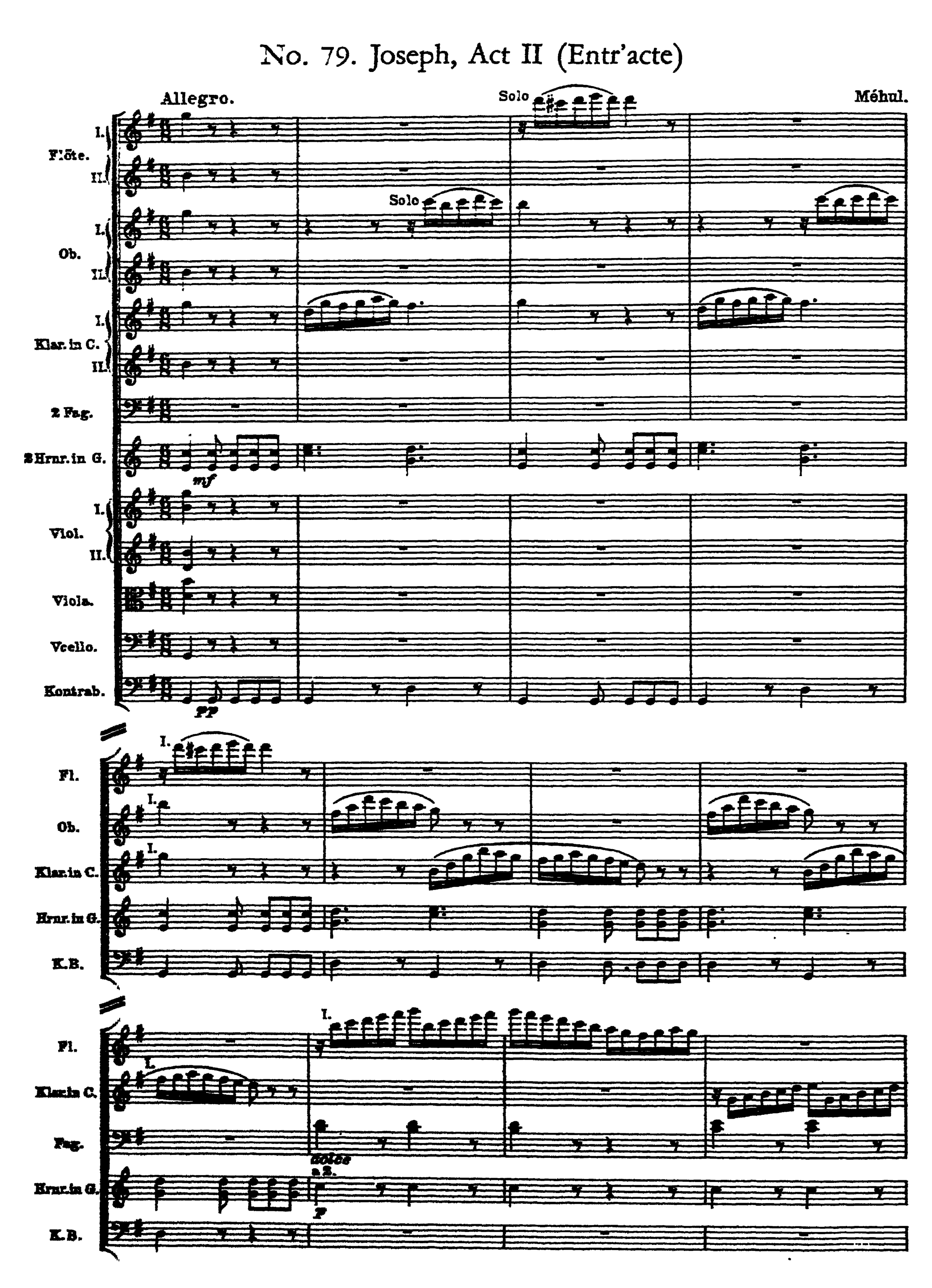
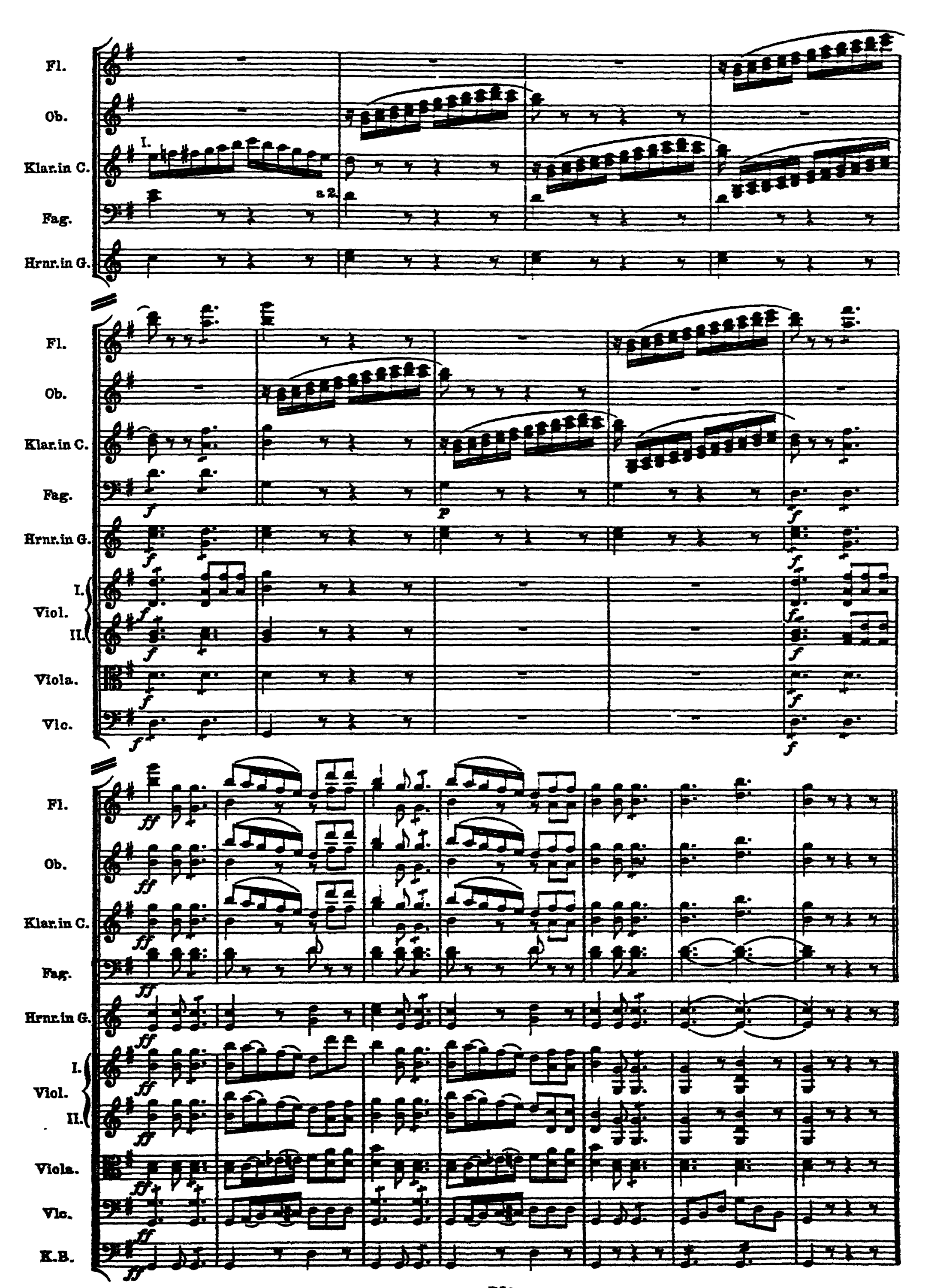
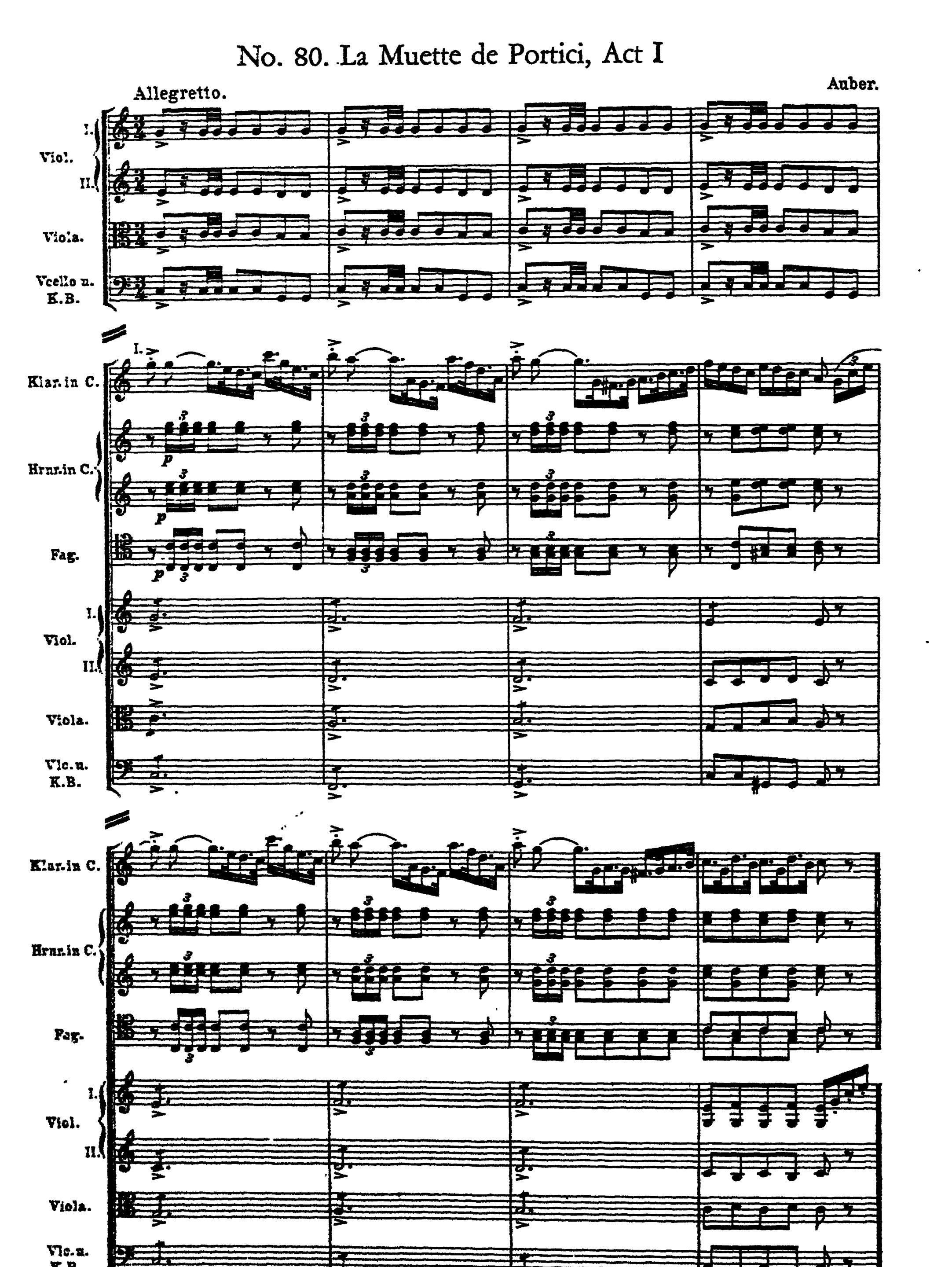
The clarinet in C is indispensable for certain pieces of brilliant character. Cf. the Entr’acte in Meéhul’s “Joseph” :Exampie 79, and the ballet in Auber’s “La Muette de Portici”,Example 80;. It is also preferable for passages demanding brighter colors.
The clarinet in D is used infrequently, though
undeservedly so. Its tone is pure and
siderable power of penetration. It could be used ad-
vantageously in many instances.
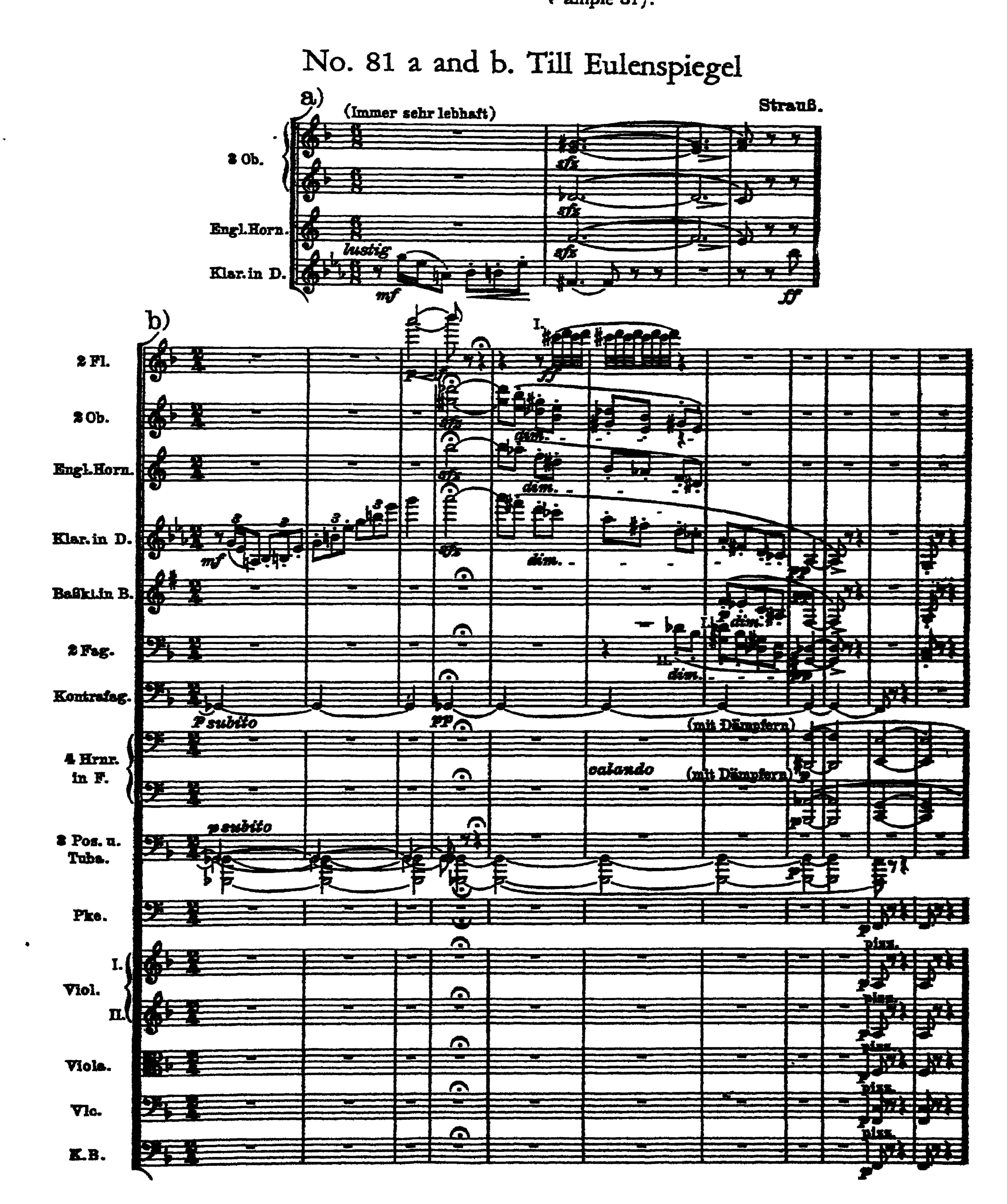
Unfortunately, it is even today usually replaced by the clarinet in E>, in spite of the important role given to it in Liszt’s ‘““Mazeppa” and Wagner’s “Ride of the Valkyries”. I have used it for roguish and droll humor in my “Till Eulenspiegel” {Example 81).
Independently of the particular character of their timbre—of which I shall speak presently—it will be seen that these different clarinets are very useful insofar as facility of execution is concerned.
‘This is no longer necessary.) It is to be regretted that there are not still more elarinets available. Those in the keys of B and D, for instance, are rarely found; yet they would be of great value to composers on numerous occasions. The high clarinet in F is the one to be most highly recommended; it has now been introduced into all military bands. There are also clarinets in A>. High clarinets in F and E> should be used in greater numbers in the modern orchestra. They are the only instruments capable of counter-balancing a strong body of stringed instruments and the massive effect of the brass ‘especially in polyphonic pieces’; for the oboes are quite useless in the high register, and the flutes are without character in forte. Compare, for instance, the symphonies of Gustav Mahler—It may be mentioned here that an improvement of the piccolo would also be highly desirable, as its tone and technique are still in a rather primitive stage. The small clarinet in high F, formerly much used in military music, has been displaced almost comletely by the clarinet in E». This is justified by the ‘act that the latter is less screamy, and is quite adequate for the keys ordinarily used in compositions for band. Clarinets lose proportionally in purity, sweetness and nobility as their key is raised higher and higher above that of B?; this key is one of the finest on the instrument.
The tone of the clarinet in C is harder than that of the one in Bd and has much less charm. The small clarinet in E> has penetrating tones, which tend to become rather commonplace beginning from the A above the stave. It has been used in a modern symphony to parody and degrade a melody: the dramatic meaning of the piece requires this rather strange transformation. The small clarinet in F has a still more marked tendency in this direction. Conversely, the lower the instrument becomes. the more veiled and melancholy are the tones it produces.
Generally, performers should use only the instruments indicated by the composer. Since each of these instruments has its own peculiar character, it may be assumed that the composer has preferred one ar the other instrument for the sake of a definite timbre and not out of mere whim. To persist—as certain virtuosos do—in playing everything on the clarinet in Bb by transposition, is an act of disloyalty toward the com-
poser in most instances. This disloyalty becomes even more obvious and culpable when, for example, the in A is prescribed by the composer just in to reach the low E (producing Cf). This oc-
Clarinet in A:
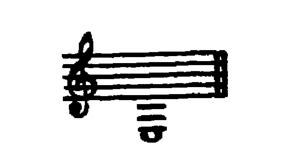
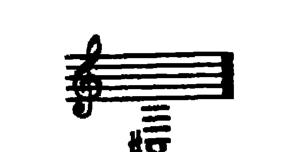
What would the player of the clarinet m Bb do in such a case, since its low E only reaches the D?
Clarinet in Bb:
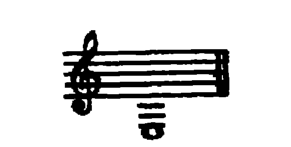
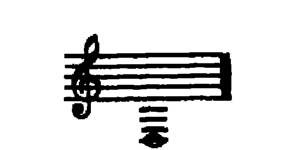
He would transpose the note to the higher octave and thus destroy the effect intended by the author. This is intolerable!
The new clarinets in Bb and bass clarinets have
a C#-key. Bass clarinets in A are now used very rarely; one frequently has to transcribe them in Bb.
It has been mentioned above that the clarinet has four registers. Each of these has its own distinct quality of tone. The high register has something piercing, which can be used only in the fortissimo of the orchestra or in the bold runs of a brilliant solo. (Some of the very high notes can, however, be sustained piano if the tone has been properly prepared.) The medium and chalumeau registers are suited to cantabile melodies, arpeggios and runs. The low register, especially in sustained notes, produces those coldly threatening effects, those dark accents of quiet rage which Weber so ingeniously invented.
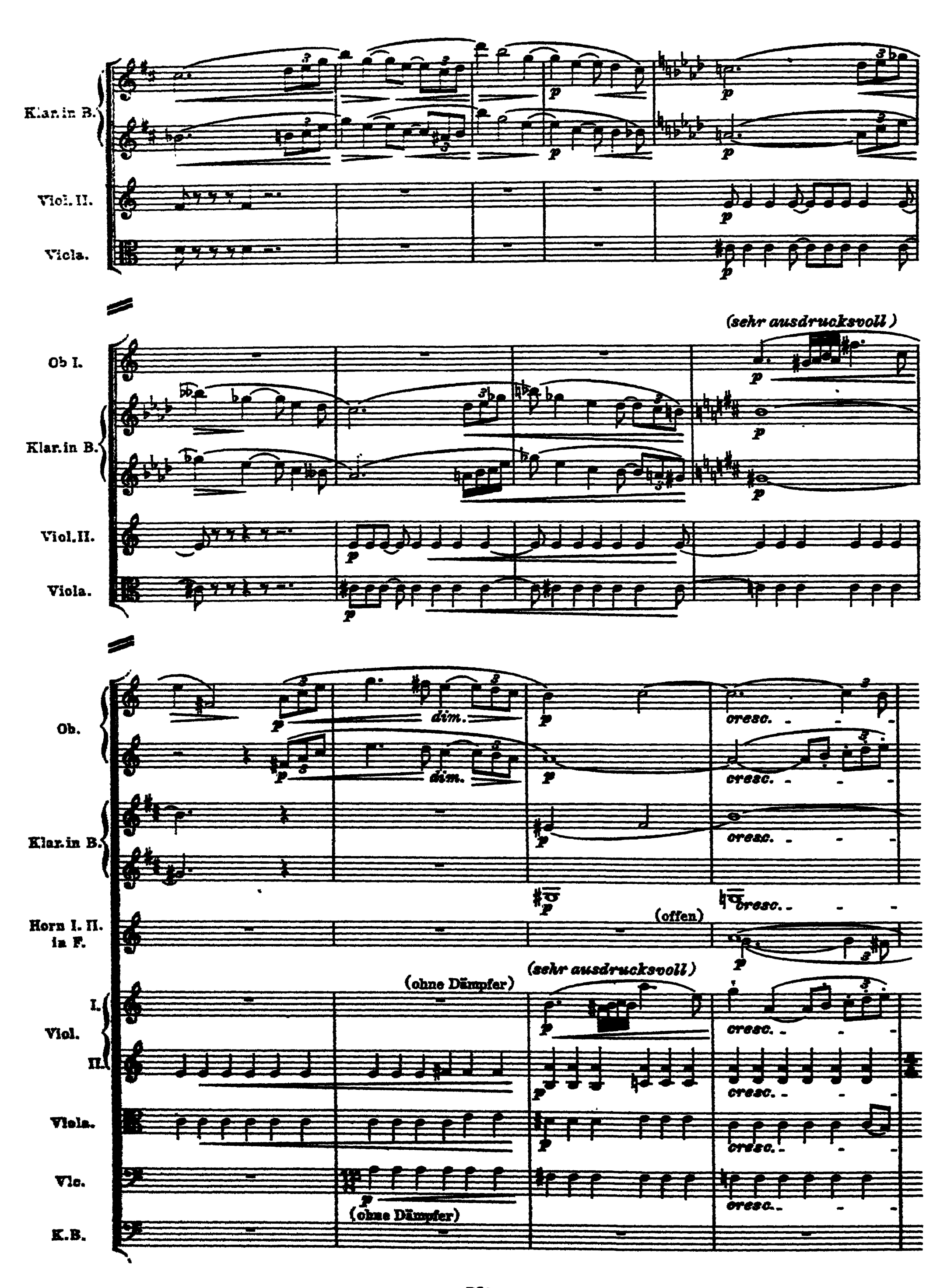
Wagner utilized cleverly the change of registers in the third act of his “Meistersinger”, with David’s words, “Nur gestern, weil der Junker versungen”. (Example 82.)
No. 82. Meistersinger, Act III Wagner.
Sie ist $0 gut, sosanitfir mich udblickimichoft an so in-ner- lich.
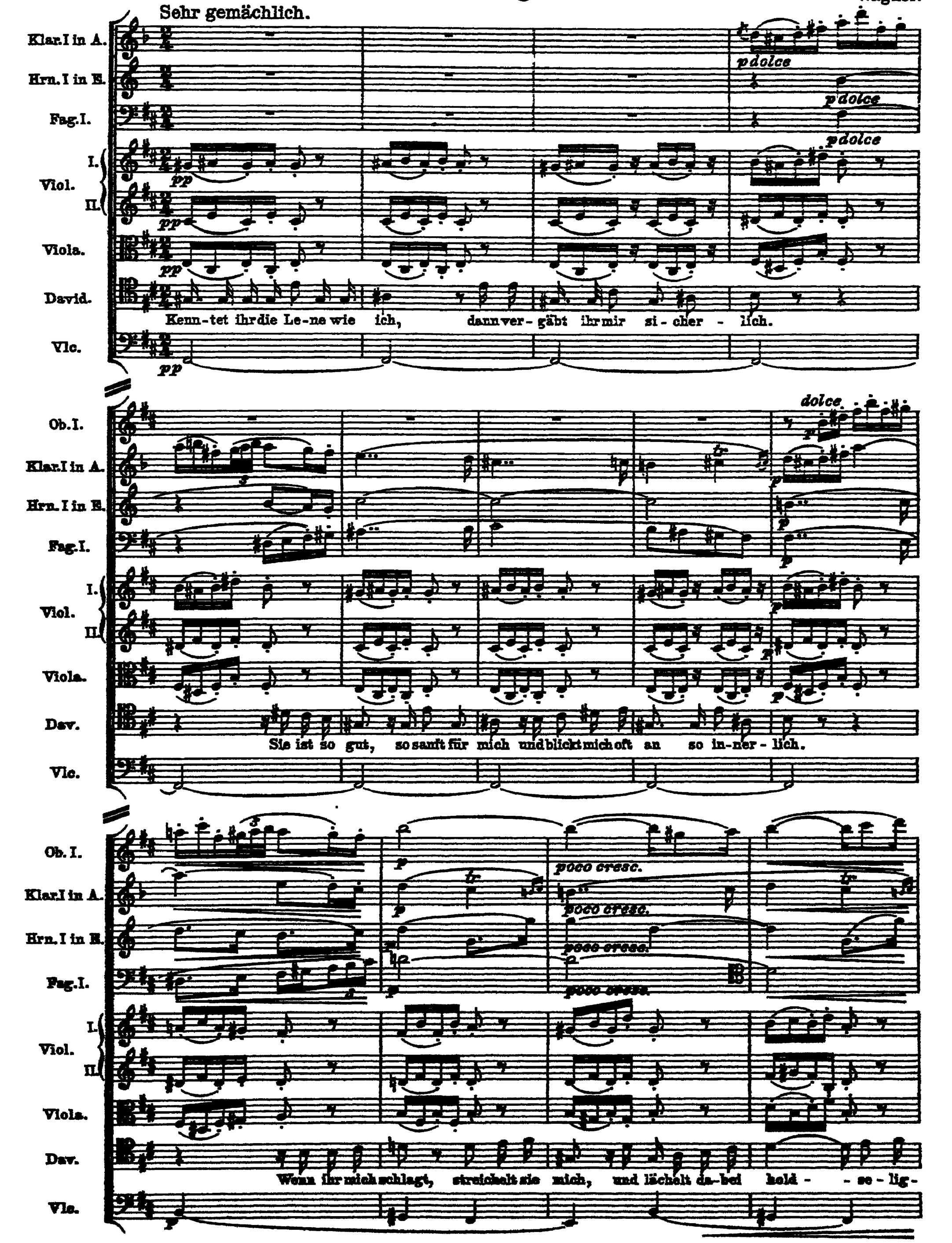
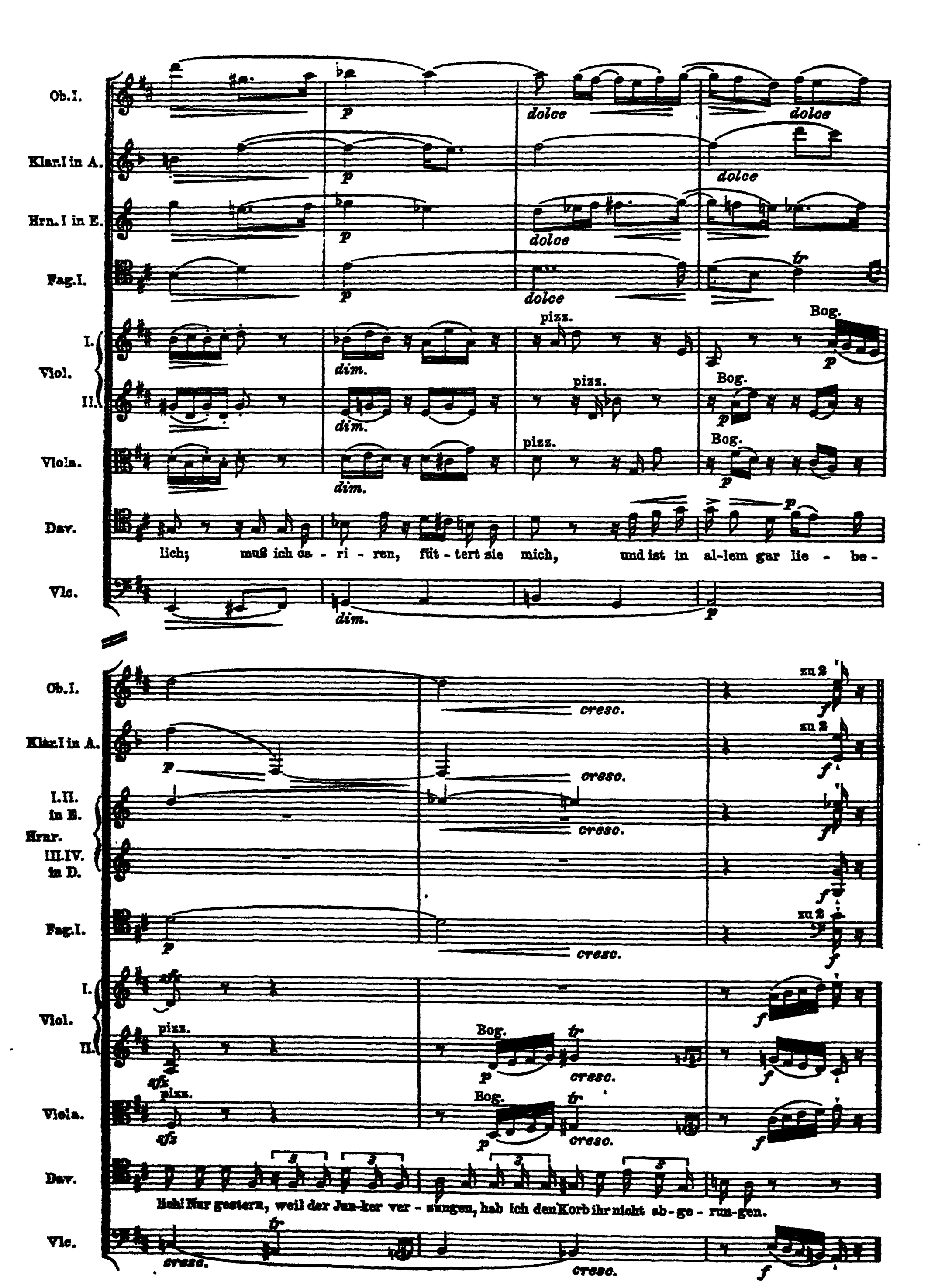
When one desires to use the penetrating sound of the highest notes prominently, but if it is feared that the sudden attack of these difficult tones would be too risky for the performer, the entry of the clarinet should be hidden under a strong chord of the entire orchestra until the tone has become firm and clear.
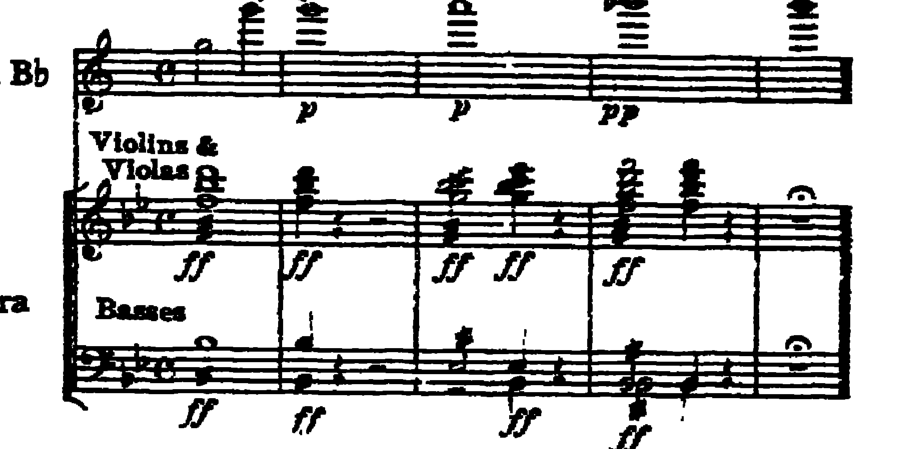
-No. 83. Walkuere, Act II
Opportunities for using these high sustained tones appropriately are. however, very rare.
The character of the tones of the medium register is imbued with ‘oftiness tempered by a noble tenderness, appropriate for the expression of the most poetic feelings and ideas. Only the expression of frivolous gaiety and even of artless joy seems to be denied to the instrument. The character of the clarinet is epic rather than idyllic—like that of the horns, trumpets and trombones. Its voice is that of heroic love; and if the mass of brass instruments in grand military symphenies suggests the idea of warriors covered with glittering armor, marching te giory or to death, so do numerous clarinets playing in unison seem to represent loving women who, with proud glances and deep affection, exalted by the sound of arms, sin during the battle, crowning the victors or dying wi the vanquished.
j Compare Bruennhilde’s exit in the second act of
“Walkuere”. Example 83,.
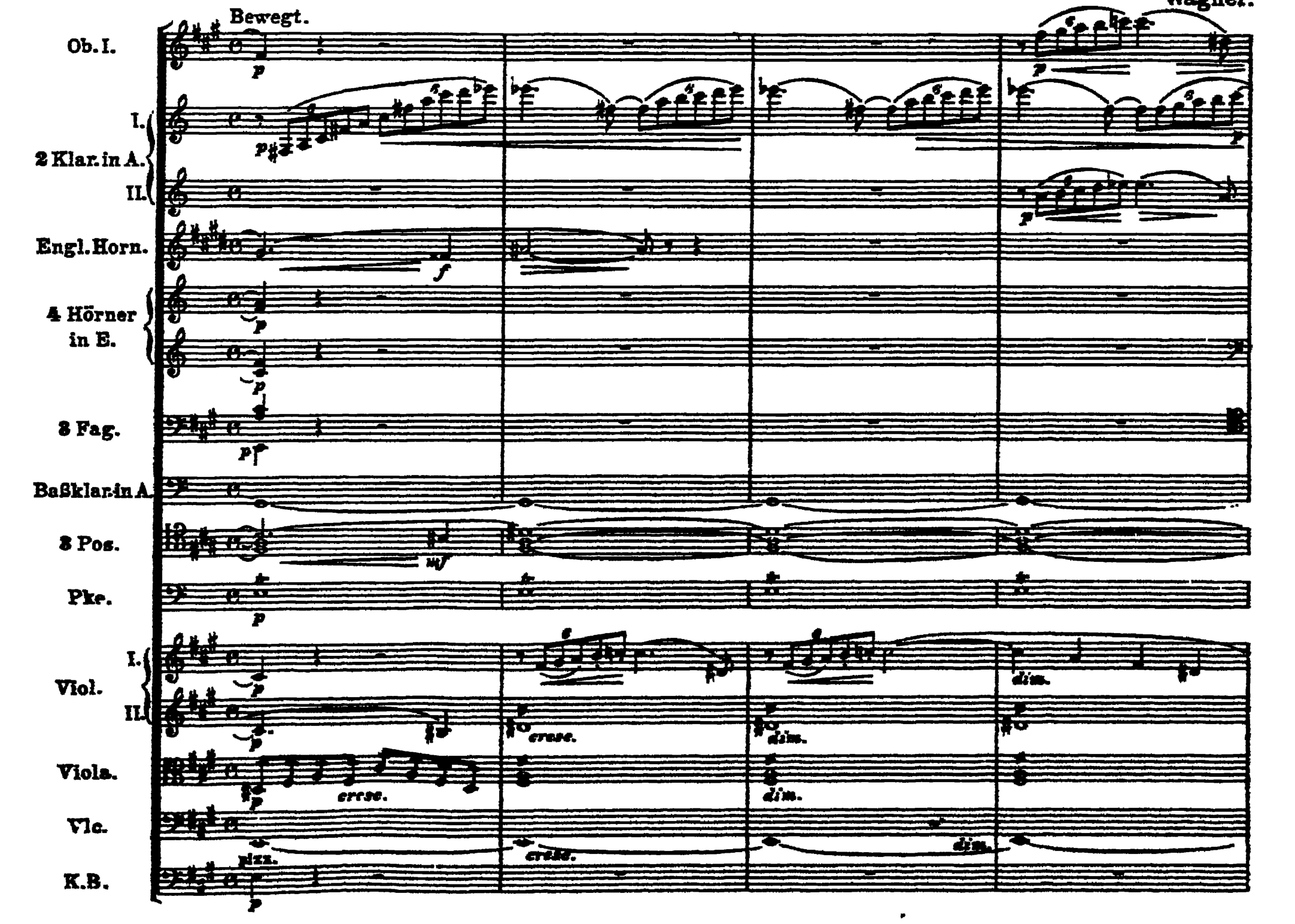
afar without being profoundly moved by that feminine quality of tone present in the clarinets; it has always left me with mmpressions similar to those received when reading ancient epic poems. This beau-
as a solo instrument in delicacy what it loses in power and brilliance. Nothing is so virginal and pure as the tinge given to certain melodies by the tone of a Clarinet in the medium register, if played by a master of the instrument.
This is beautifully felt, but it is somewhat onegradations of feeling if the registers are properly employed, the melodic lines skillfully formed
scenes the dreadful and haunting voices of seduction—unforgettable to anyone who has ever heard them. Of course, one must not overlook the fact that each particular character is determined not only by the timbre of the instrument, but also by the form of the theme and by the rhythm, harmony and melody.
There is no other wind instrument which can pro-
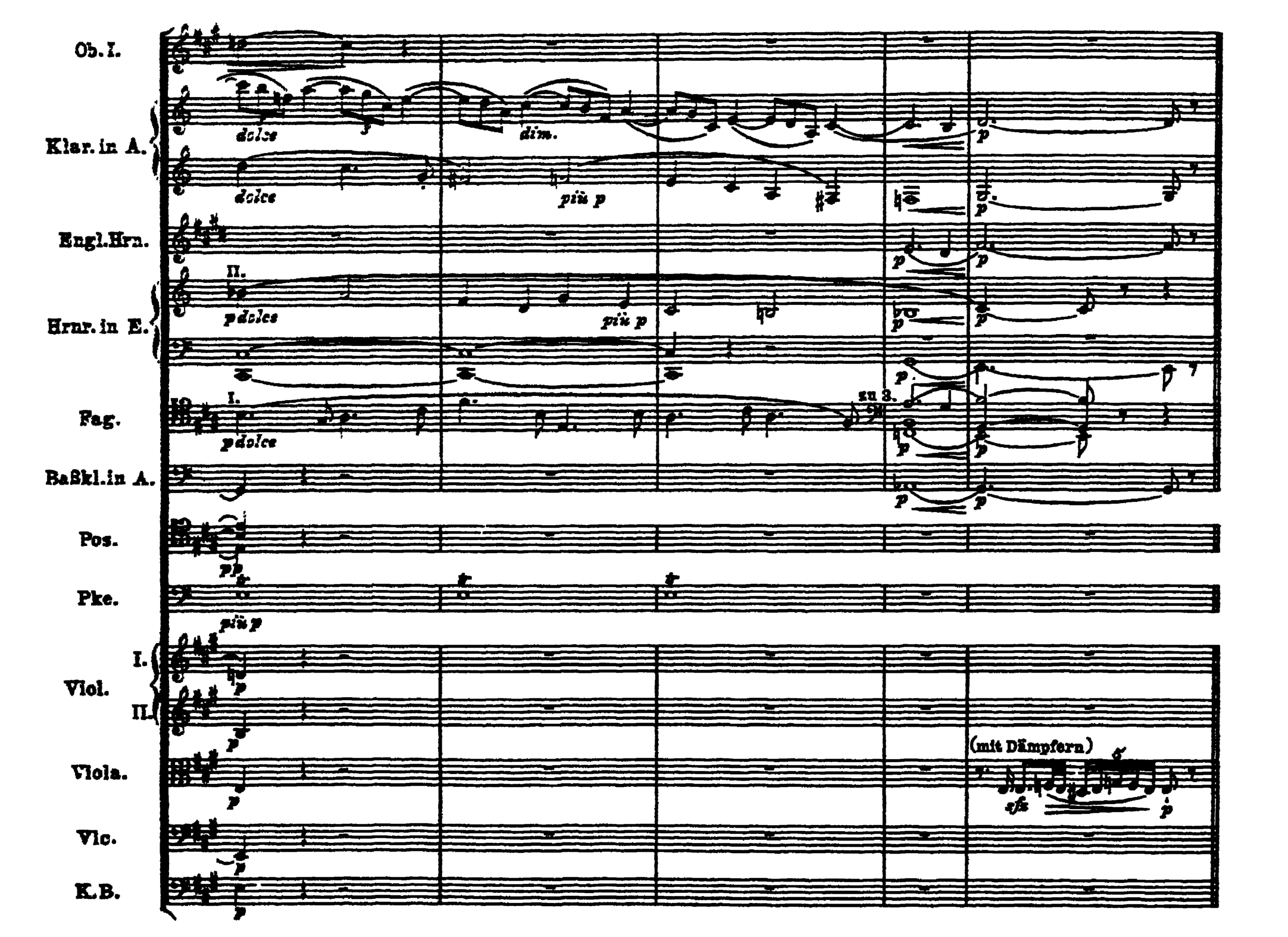
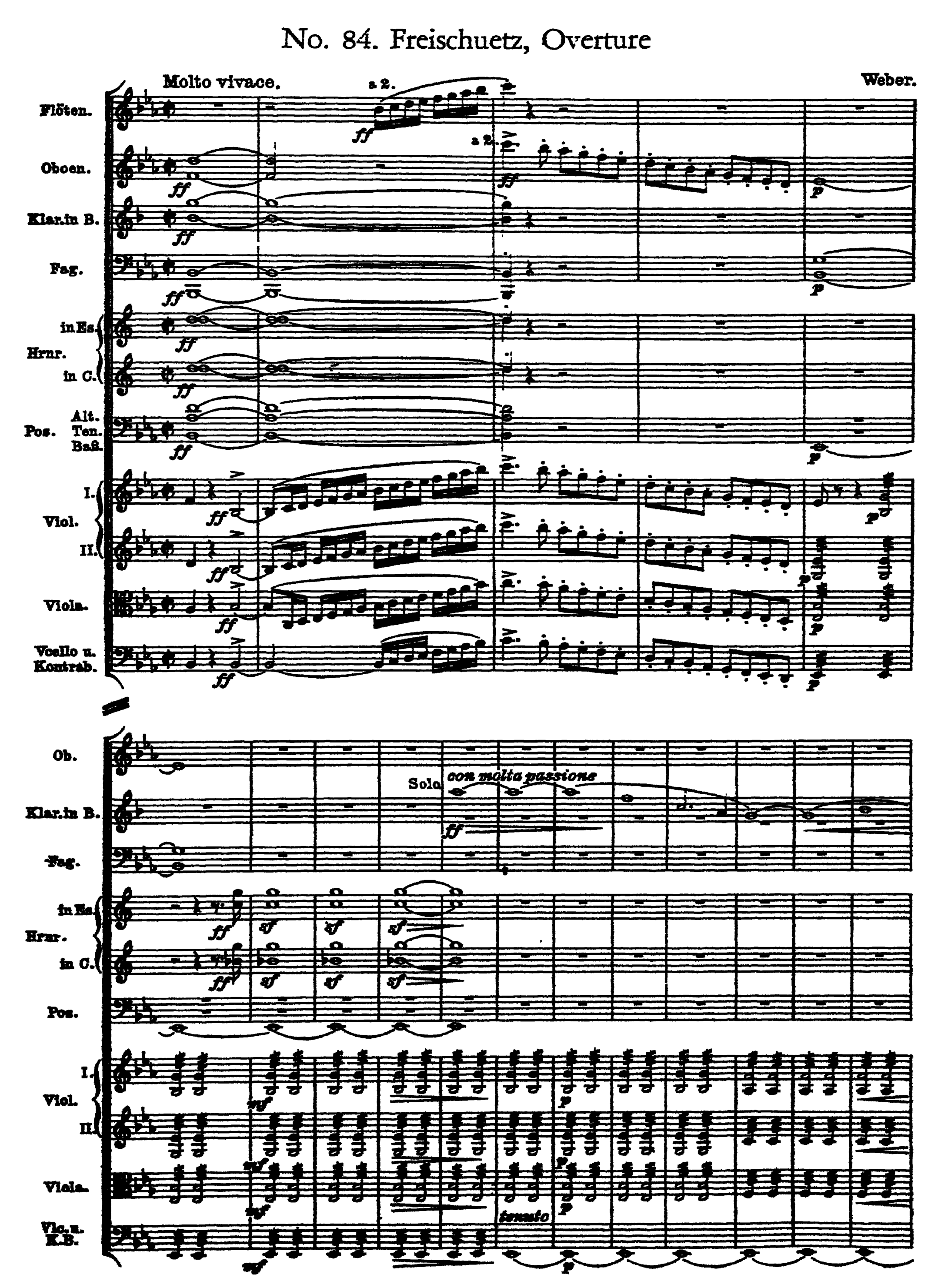
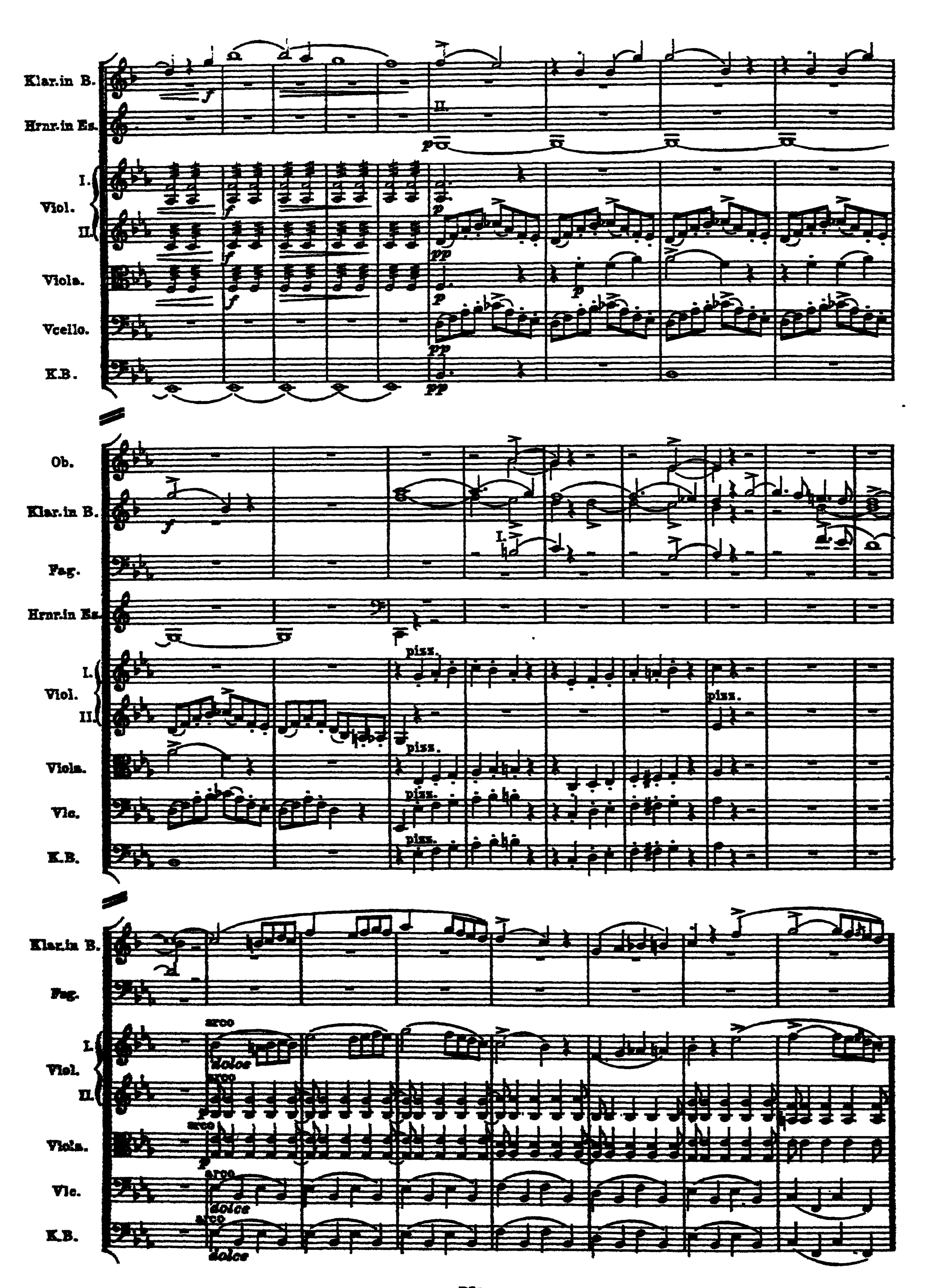
duce a tone, let it swell, decrease and die away as beautifully as the clarinet. Hence its invaluable ability to render distant sounds, an echo, the reverberation of an echo, or the charm of the twilight. I know no more admirable example of such shading than the dreamy melody of the clarinet, accompanied by the tremolo of the strings, in the Allegro of the “Freischuetz” overture. Is this not the lonely maiden, the blond betrothed of the huntsman, with her eyes raised to heaven uttering her tender plaint, amidst the rustling noise of the deep forest shaken by the storm?—O Weber!
The clarinet, more capable than any other woodwind instrument to produce all dynamic shadings from a whispered pp to a crying ff, can therefore reproduce the finest nervous impulses of a melody entrusted to it within the well-balanced framework of the modem orchestra. Its enormous range of almost four and a half octaves makes it more flexible than any other wood-wind instrument.
In the octave the character of $ its tones is indif- ferent in piano;
in forte it has something com-
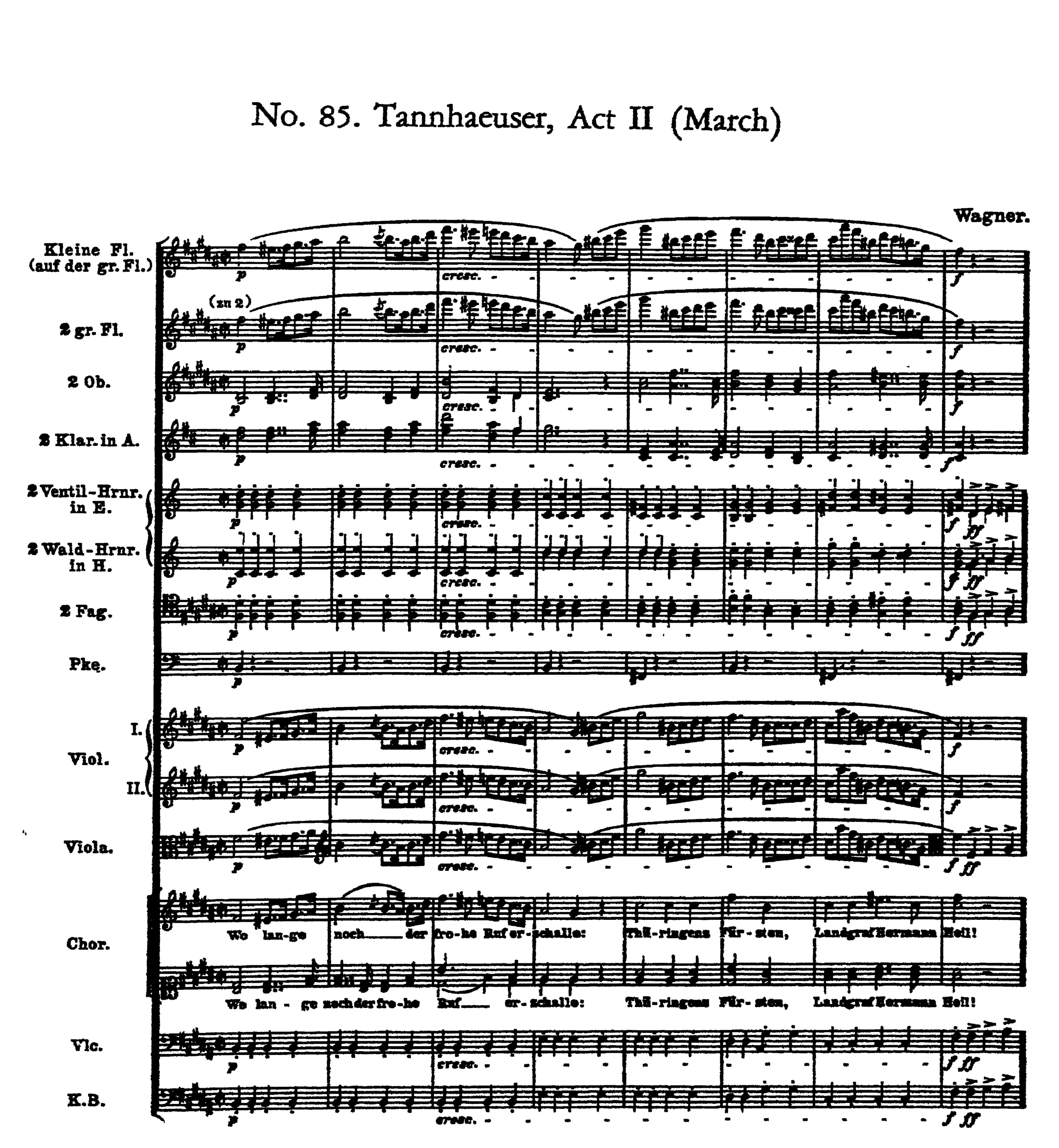
meonpiace. Since the arrangement of the modern orchestral score always places the clarinets on the stave under the obce, the carelessness of composers and the ignorance of beginners frequently cause them to piace the clarinet in chords below the oboes. In four-part chords the two lower parts sheuld best be given to the oboes, whose strong, deep tones form a much better foundation for the high register of the clarmets than the slack and dull medium register of the latter for the oboes placed above them. An example of this is found in the march from “Tannhaeuser” {Example 85}.
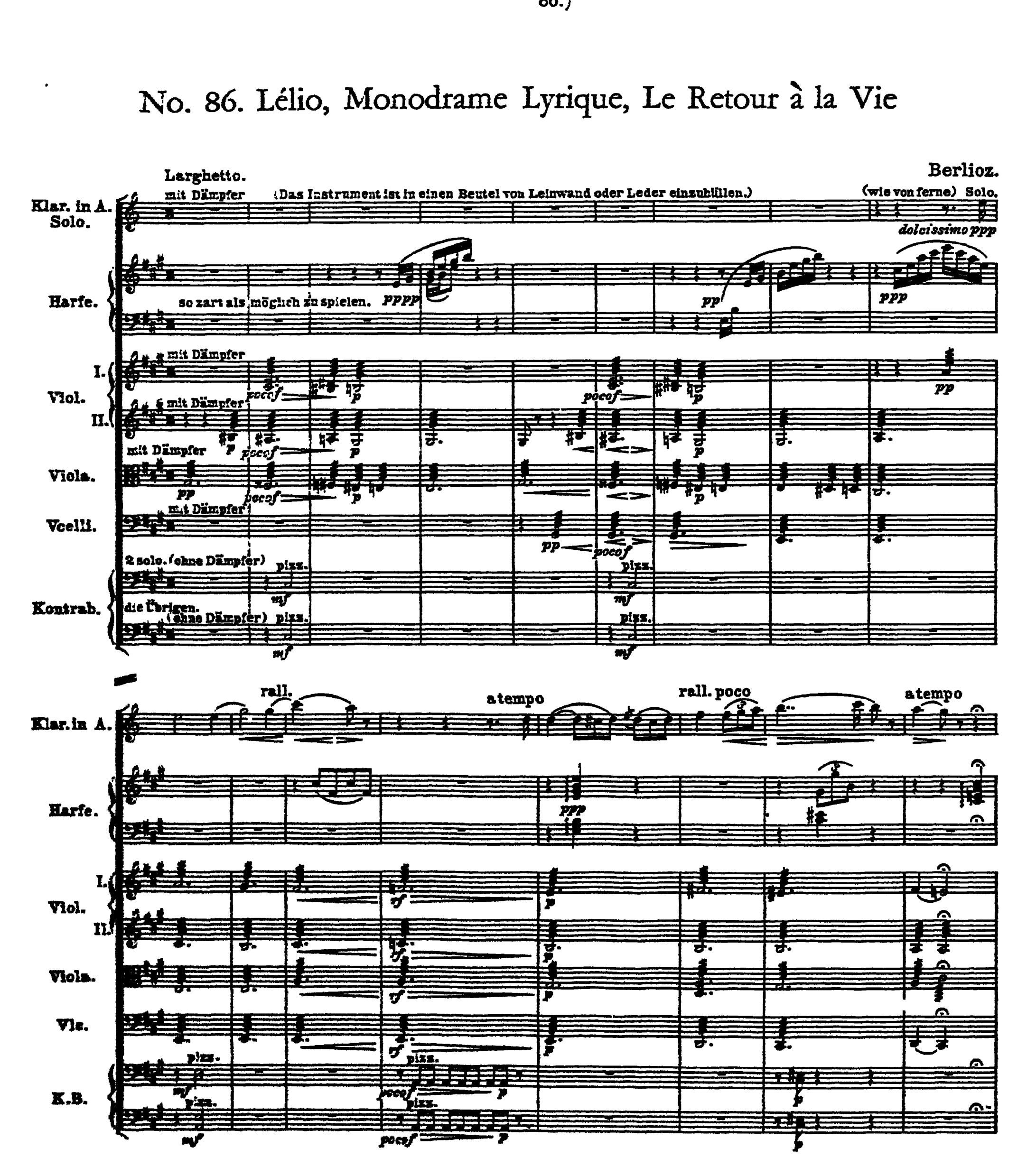
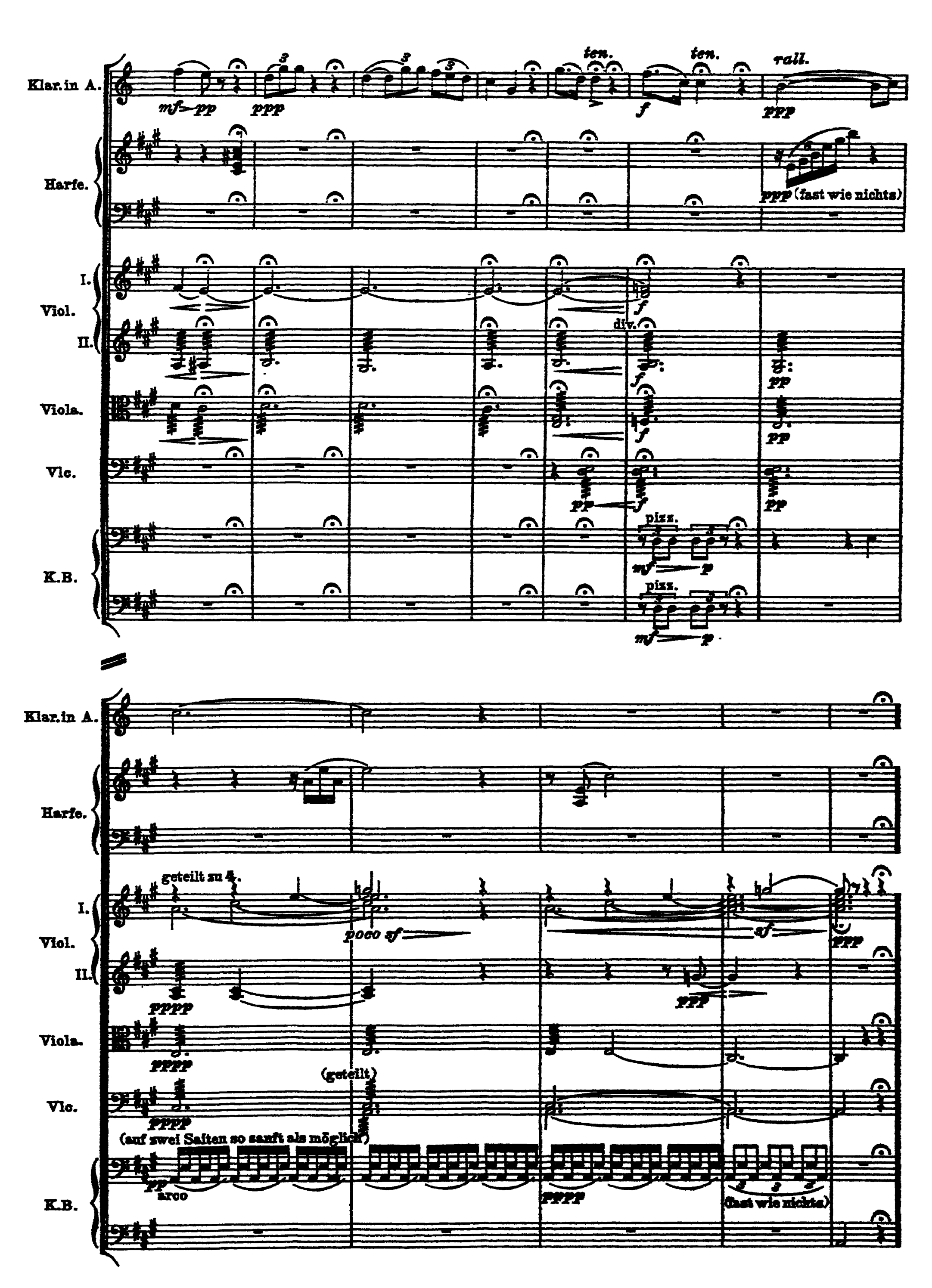
I take the liberty of quoting from my Monodrama “Lélio” another analogous—if not simnilar—effect of a clarinet melody whose fragments. interrupted by rests, are also accompanied by a tremolo of a section of the stringed instruments while the double-basses play an occasional low note pizzicato. thus giving the harmony a heavy pulsation. with the harp introducing fragments of scarcely audible arpeggios. However, in order to make the scund of the clarinet as vague and
remote as possible in this instance, I had the instrument enveloped in a leather bag serving as a mute. The sadly murmuring and half-blurred sound of this solo, repeating a melody previously heard, has always made a deep impression upon the listeners. This shadow-like music creates a somber sadness and tends to provoke tears—beyond the power of the most dolorous tones; it has a melancholy similar to the trembling harmonies of the aeolian harp. (Example
Beethoven assigned the A-maior melody in the immortal Andante of his Seventh Symphony to the
redium range of the clarinet on account of its melancholy. noble character and in order to bring out all its inherent painful plaintiveness. Gluck first wrote the ritornelle of Alceste’s aria, “Ah. malgré moi” for the flute: but then. doubtless perceiving that the tone of this instrument is too weak and not sufficiently noble to render a theme of such desolation and mournful grandeur. he gave it to the clarinet. It is the clarinets again which sing, together with the human voice. that other aria of Alceste, “Ah, divinités implacables” with its expression of sorrowful resignation. An effect of an entirely different kind results from the three slow notes of the clarinets in thirds in an aria from Sacchini’s opera “CEdipe”, “Votre cour devint mon asile”. These two clarinets in thirds, softly descending previous to the entry of the singing voice while the two lovers exchange a tender glance, have an excellent dramatic meaning and produce a fine musical effect. The two instrumental parts serve here as a symbol of love and purity. Listening to them, one almost sees Eryphile modestly casting down her eyes. It is truly admirable!

If one substitutes two oboes for the clarinets, then
the effect is destroyed. This wonderful orchestral effect is missing, however, in the printed score of Sac-
chin7's masterwork; but I have been moved by it too often during performances not to feel sure of my memory.
Neither Sacchini nor Gluck nor any other great master of the period availed himself of the low range of the instrument. I do not know the reason for this.
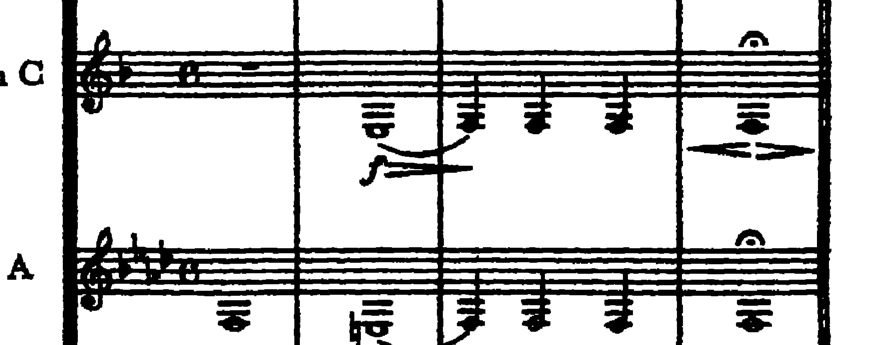
Mozart appears to be the first who used it for accompaniments of a somber character as, for instance, in the trio of masks in “Don Giovanni”. It was reserved for Weber to discover all that is awful in the timbre of these low tones when employed in sustaining somber harmonies. In such cases it is better to write them in two voices than to combine the clarinets in the unison or in octaves. The more numerous the notes in the harmony, the more striking will be the effect. If, for example, three clarinets are available for the chord C%-E-Bd, this diminished seventh, if well motivated, well introduced and scored in this fashion, would have an awesome aspect, whose gloom might be increased even further by the addition of the low G on a bass clarinet:


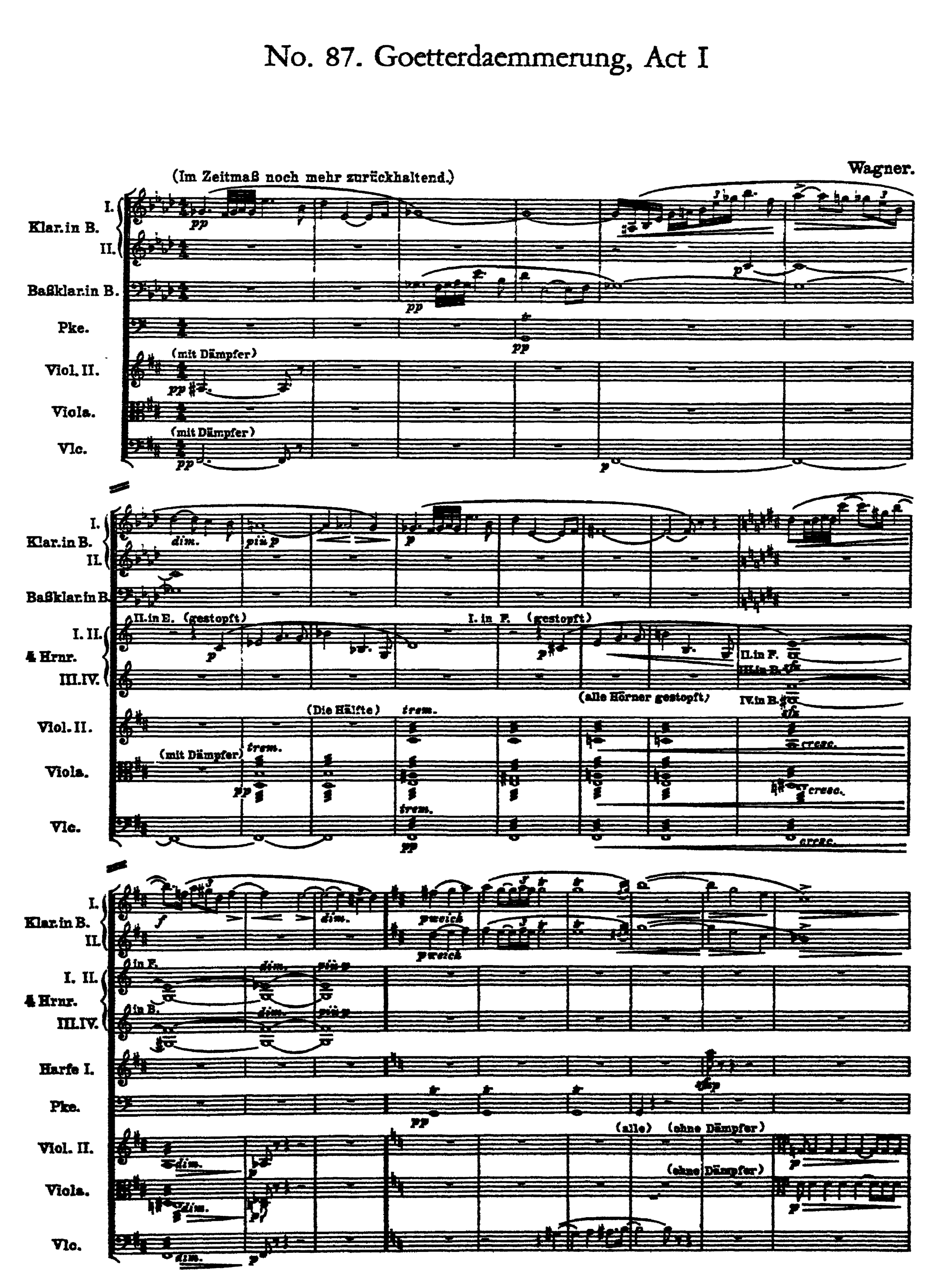
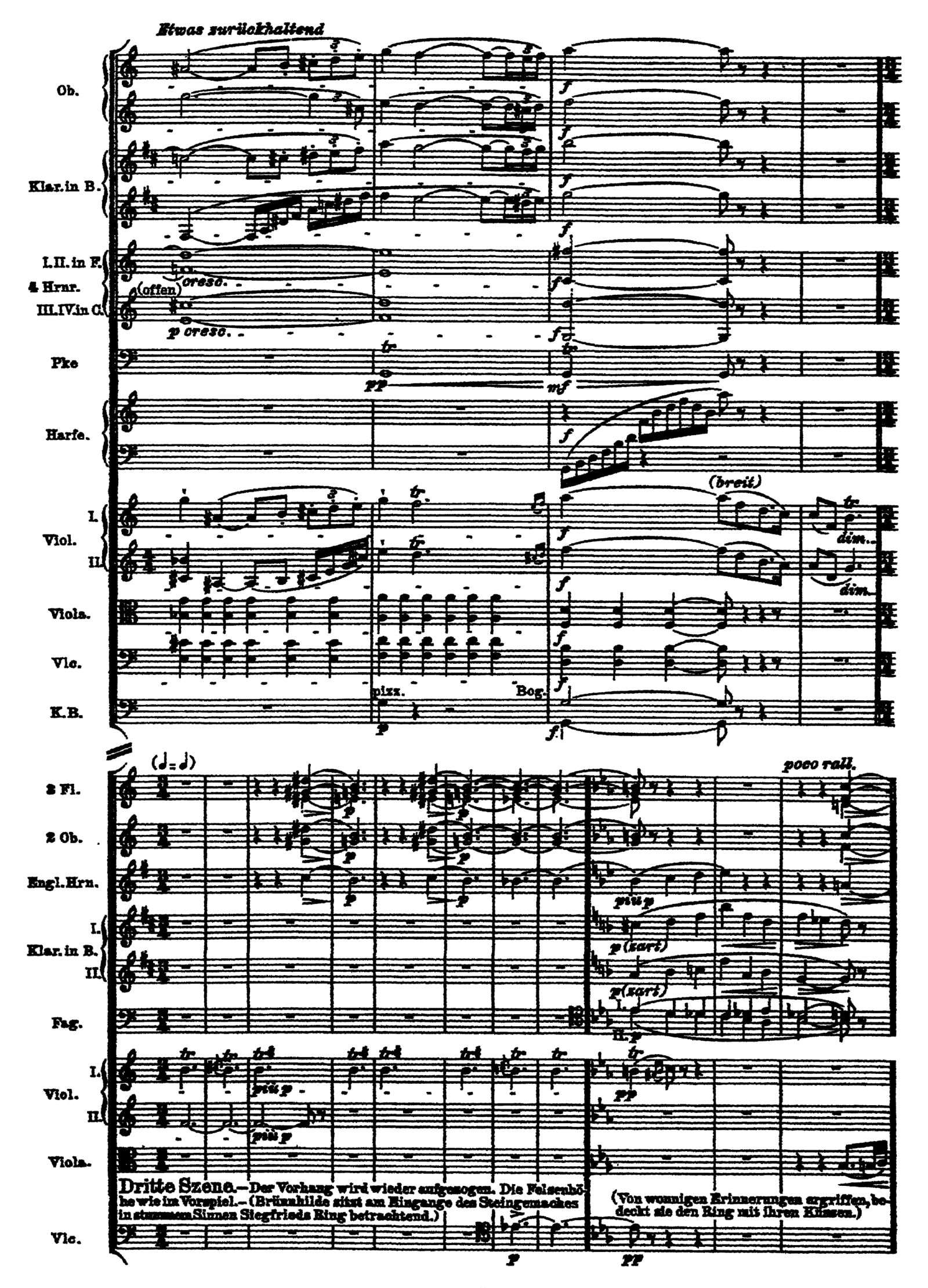
The anxiety of Bruennhilde, thinking longingly of Siegfried, and the presentiment of the approaching disaster could not be expressed more magnificently than has been achieved in the incomparable solo passage of the two clarinets in the entr’acte music before the last scene of the first act of “Goetterdaemmerung” (Example 87).
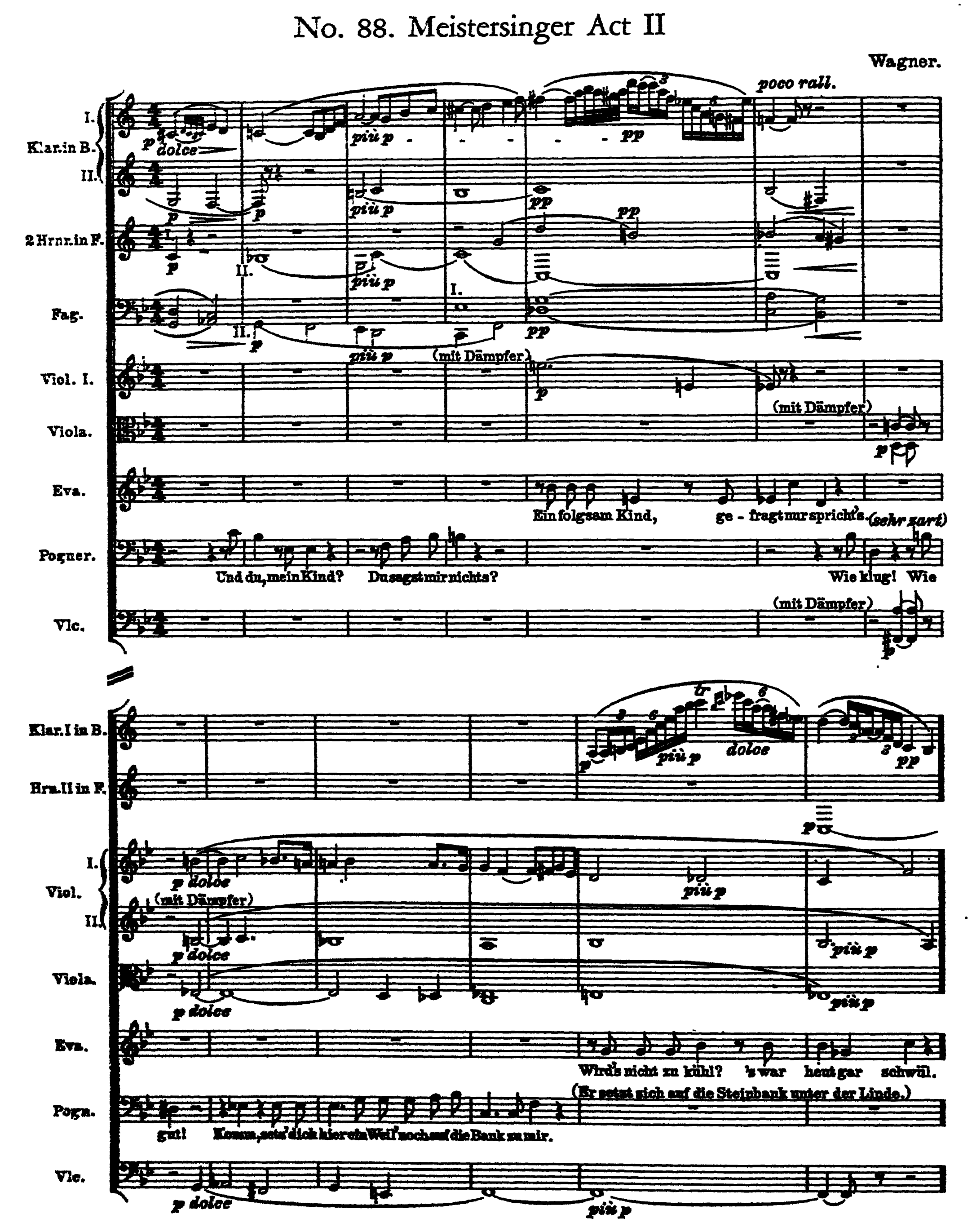
Ever since Wagner's wonderful blackbird call
trsinger, second act, before the setting in
of the night) the clarinet has frequently been used for the imitation of bird calls. (Example 88.)
The clarinet can also execute accompaniment figurations of a serious or humorous character bet-
ter than any other wood-wind instrument. Re-
cently, during an examination of clarinetists, I
heard the passage quoted above, p. 200. at the end
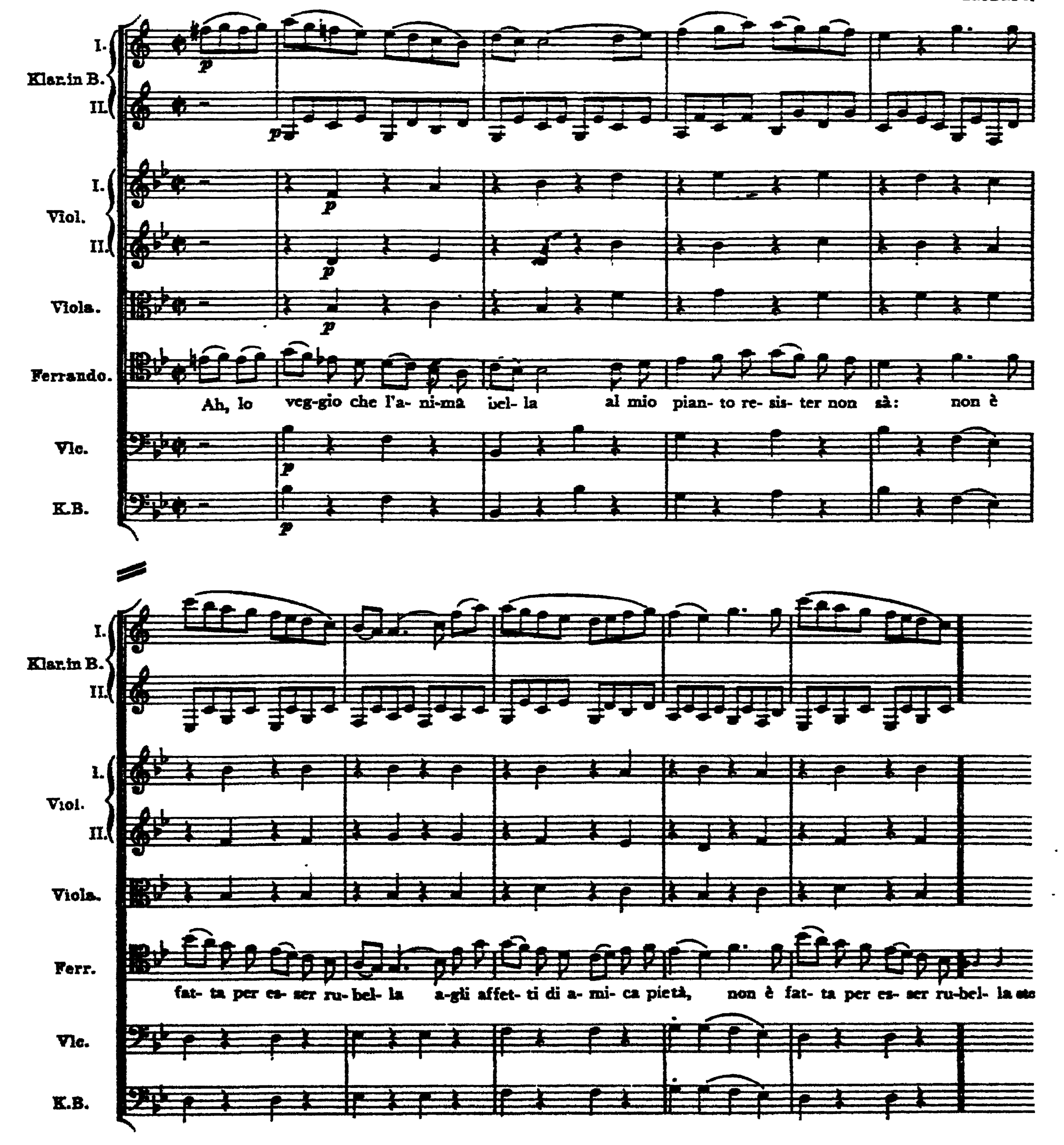
No. 89. Cosi fan tutte
Ah, lo =. veg-gio che I'a- ni-ma bel- la al mio pian- to re- sis- ter non = s3: non @
fat- ta per es- ser ru-bel- la a-gii affet- ti di a- mi- ca pieta, non @ fat- ta per es- ser ru-bel- Inete
of the examples; it makes an excelient effect and is very easy to play.
Cf. alsc Ferrando’s aria in B> in Mozart's “Cosi
fan tutte” ‘Example 89).