Playable Books
Hector Berlioz · section 21 of 67
The Bass Clarinet
Read and hear this section in the playable edition →
Still lower in range than the preceding, it is a full octave below the clarinet in B®. There is also a bass clarinet in C {an octave below the clarinet in C}, but the one in B> is much more common. Since it is exactly the same instrument as the ordinary clarinet built in larger dimensions, its range is also much the same. The reed of the bass clarinet is somewhat weaker and more covered than that of the other clarinets. The bass clarinet is not intended to replace the high clarinets with its upper notes, but to extend their range downward. Yet the effect of doubling the high tones of the clarinet in BS in the lower octave by the bass clarinet is very beautiful. It is written, like the
No. 90. Les Huguenots, Act V
other clarinents, in the G-clef.
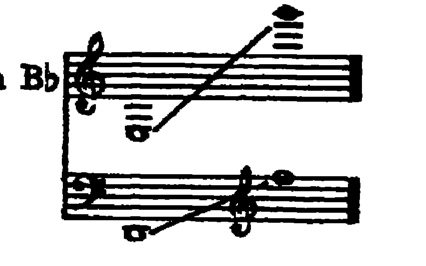
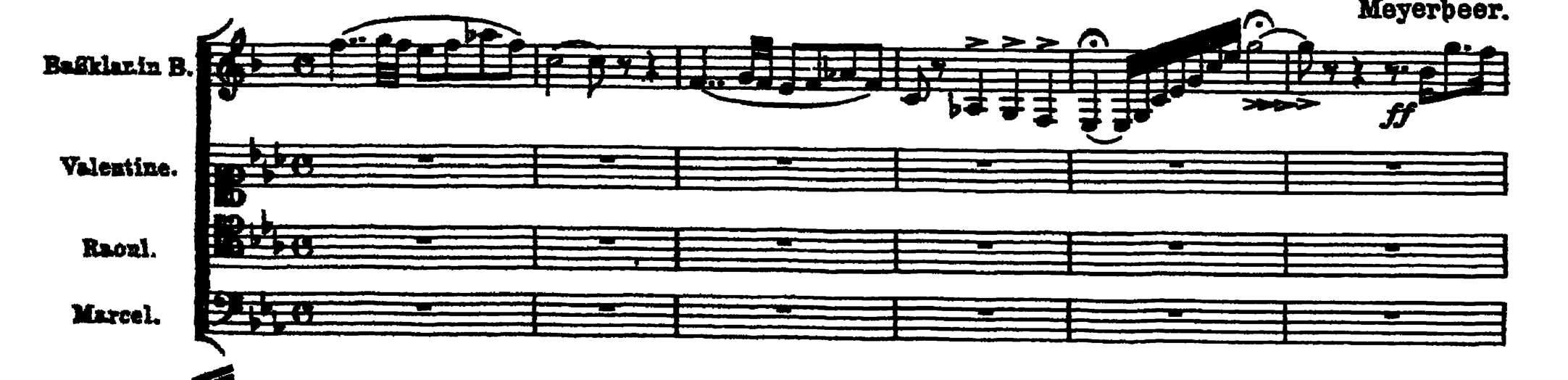
Its lowest notes are the best; but because of the slowness of their vibrations they should not follow one another too rapidly. Meyerbeer gave the bass clarinet an eloquent monologue in the trio of the fifth act of “Les Huguenots” (Example 90).


né - bres, je comsacreet bé- nis le banquet des a- dieux_ et des no-ces fu-
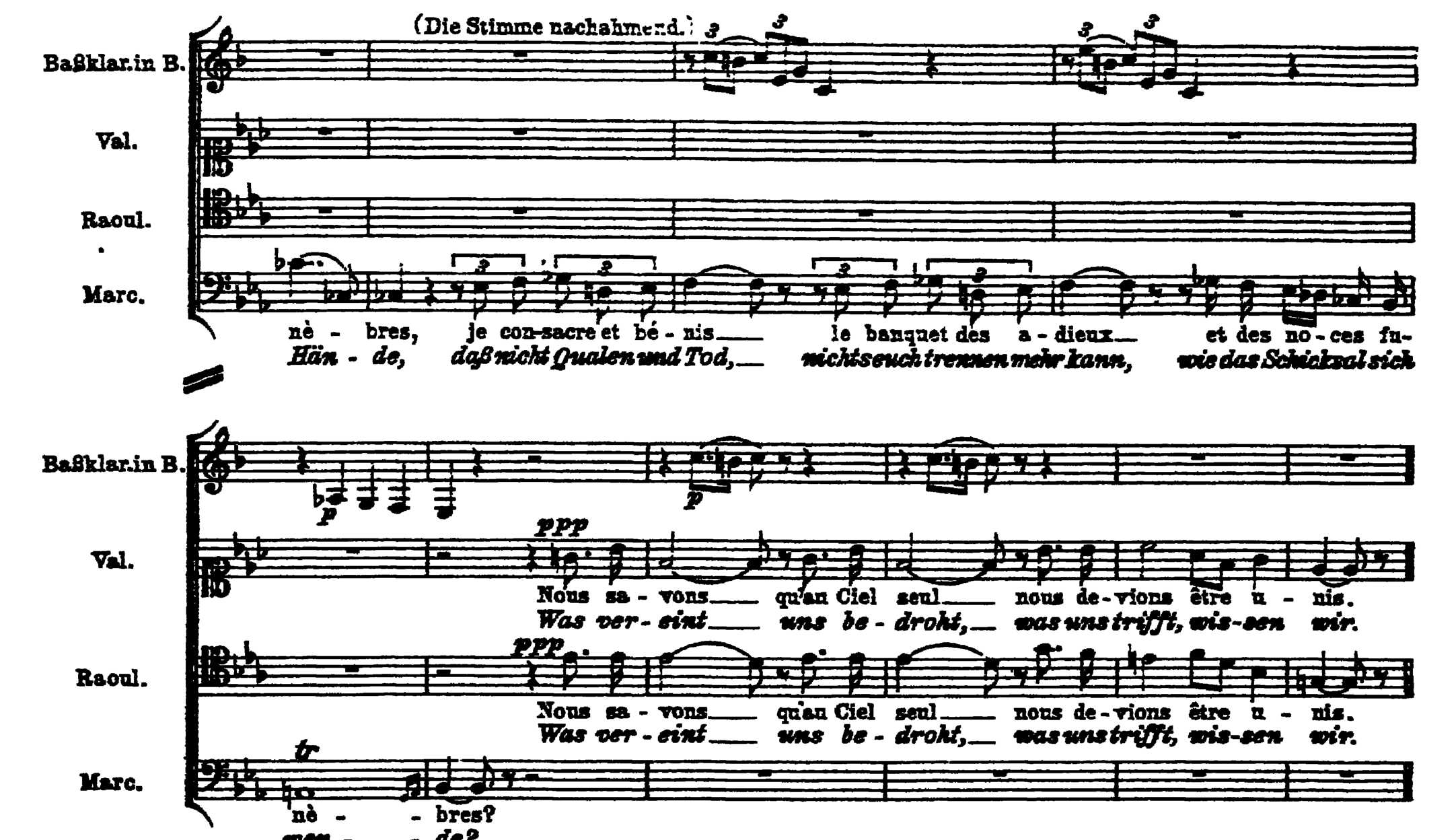
According to the style of its music and the skill of the performer, the bass clarinet can assume in its low register the wild character of the low tones of the ordinary clarinet or the calm, solemn expression of certain organ registers. It may therefore be used frequently and advantageously. Moreover, if four or five are employed in unison, it imparts an excellent devo-
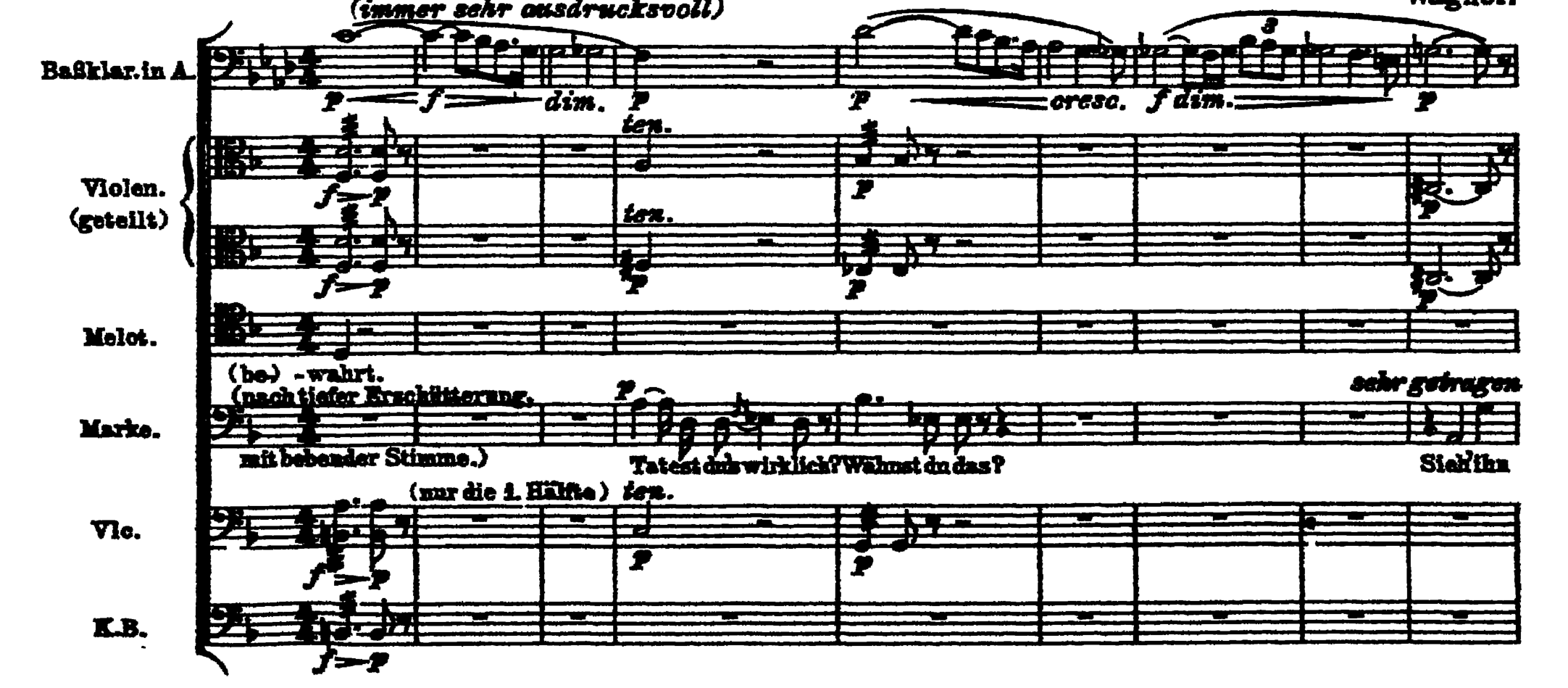
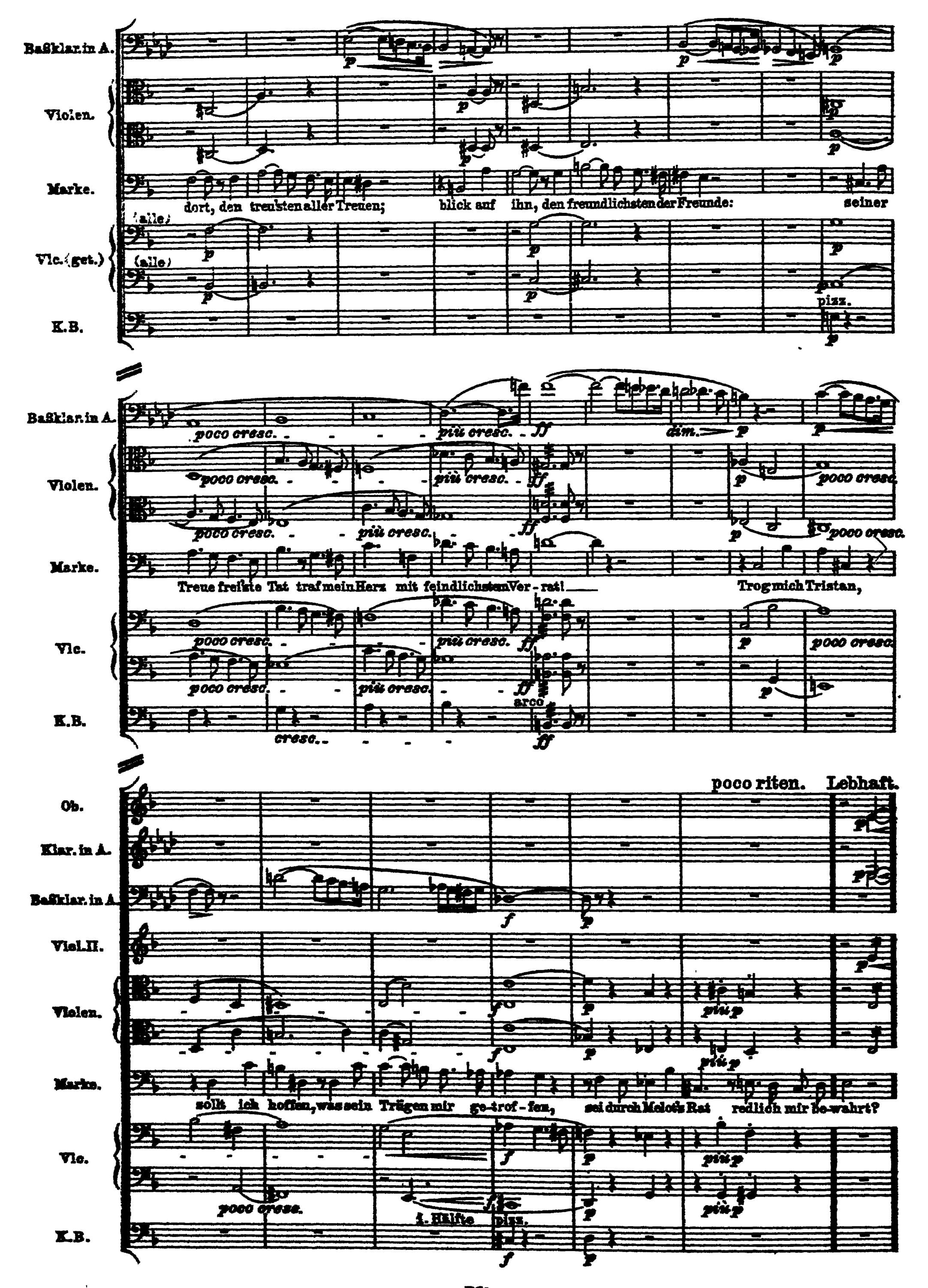
No. 91. Tristan, Act I
tional sonority to the basses of the wind instruments. Wagner always used the bass clarinet in the character of solemn resignation; see Elisabeth’s prayer in “Tannhaeuser” and King Marke’s great scene at the end of the second act of “Tristan” (Example 91}.
As the low tones of the bassoon are stii] devoid of any flexibility, the bass clarinet is the finest and
softest bass for the wood-wind instruments. espe-
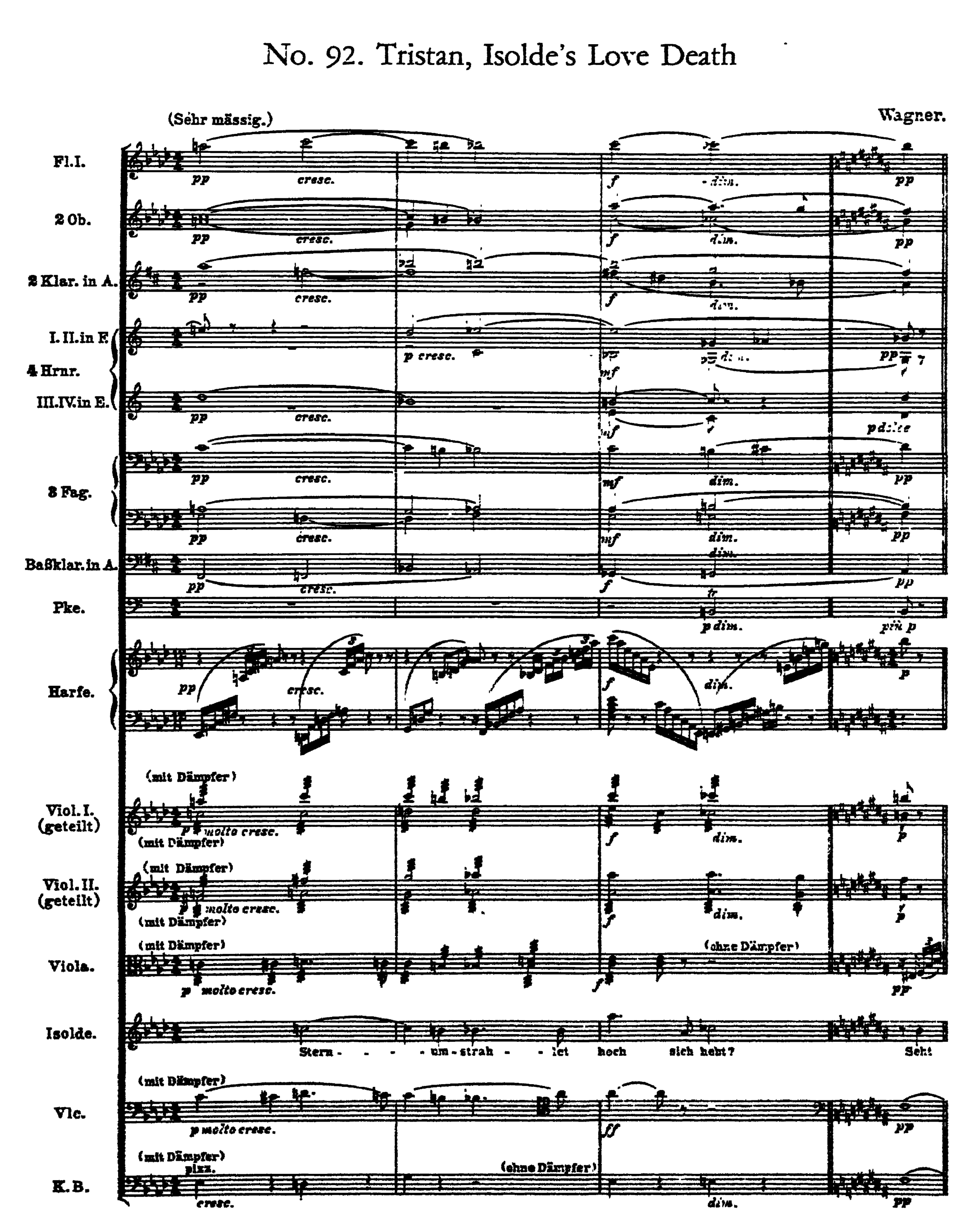
Cialiv as the lowest voice in combination with three bas:oons—c!. Isoide’s Leve Death Example 92}.