 Playable Books
Hector Berlioz · section 22 of 67
The Basset-Horn
Read and hear this section in the playable edition →
The bacevt-Lorn differs from the alto clarinet in iow F eniy by uaiving the added Httle brass bell extending its lower end. und by its fueulty to descend chromaticalls ta Ca tied liwer thor the lowest note of th: clarinet.
a intias.ng the chromatic intervals 2 +
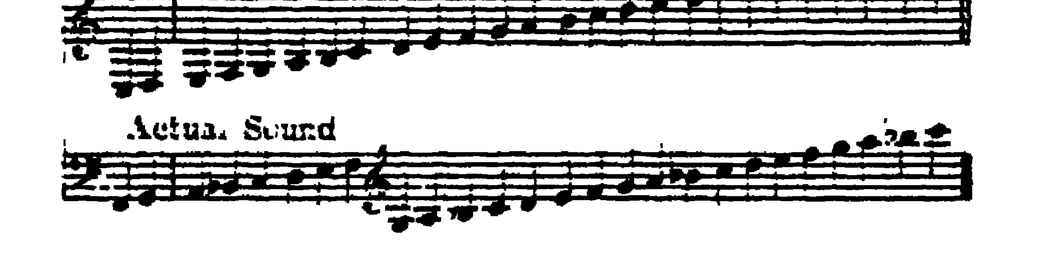
The tones above this range are rery risky; besides, there is no good reason for employing them. since the clarinets can produce them without any difficulty and with much more purity.
On the basset-horn, a» on the bass clarinet, the low tones are the finest and the most characteristic. [t should
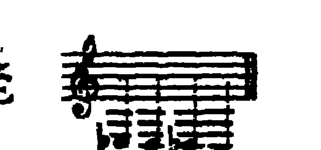
be observed. however, that those below E
esn only be played slowly and detached from each other. A passage like the following would not be practicable:
apes TS RSs
Mozart used this beautiful instrument in two voices to darken the color of the harmony in his Requiem; he also assigned to it some important solos in his opera “La Clemenza di Tito”"— and employed it in wonderful combinations in his 3 “Entfuehrong aus dem Serail” and especially in the solemn arias of Sarastro in “Die Zauberfloete.”
The basset-horns are suitable as soft middle voices and for filling in the harmony, particularly when one wants to avoid the more distinct timbres of violas and bassoons or the characteristic low clarinet tones. However, as filling-in voices they can be replaced just as well by the French horns, which adapt themselves to any timbre; this is why Richard Wagner made the most extensive use of the latter. The Adagio from Mozart's Serenade for 18 wind instruments (K. 861) offers a wonderful example of the above described application of the basset-horn.
The double - bass clarinet*
Its range is that of the double bassoon, with the timbre of the clarinet. It provides the lower octave to
the bass clarinet (corresponding to the double-bass oboe.)
Improvements in the clarinets
The manufacture of these instruments, which remained almost in its infancy for so long a time, has now progtessed to a point where excellent results may be expected. Great advances have already been made by M. Adolphe Sax. an inventive and skilled manufacturer in Paris. By slightly lengthening the tube of the clarinet toward the bell, an additional semitone was gained at the lower end of its range; the new instrament can now
produce the E? or D*. The medium p=, of poor
gaslity on the old clarinet, is one of the best tones on the new one.
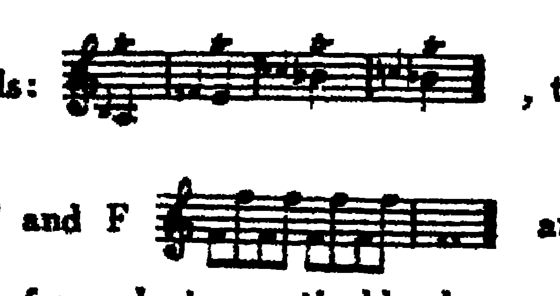
arpeggios between F and F 4 and
many other passages, formerly impracticable, have now
“Manafactured by F. Besson & Co. New York, and W. Heckel, Biebrich.
**it makes it brighter, but also barder.—
My first clarinetist at the Berlin orchestra, Herr Sehubert, after experimenting with mouthpieces of marble, giass, porcelain, hard rubber and has gone back to the wood-
mouthplece because of beauty of Its tone.
become both easy and effective. The tones of the high register were once dreaded by composers and performers; only rarely and with extreme caution did they dare to use them. By means of a little key close to the mouthpiece of the clarinet. M. Sax has rendered these tones just as pure and mellow, and almost as easy, as those of
the medium register. Even the highest oges
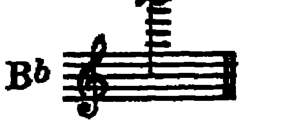
which one hardly ever ventured to write, responds on the Sax clarinets without any preparation or effort on the part of the performer. He can play it pianissimo without the slightest risk, and it is at least as soft as that of the flute. To remedy the disadvantages of the wooden mouthpiece (ie. dryness when used infrequently, moisture in the opposite case), M. Sax has given the clarinet a mouthpiece of gilded metal, which increases the brilliance of its tone** without being subject to the changes affecting the wooden mouthpiece. This clarinet has a