 Playable Books
Hector Berlioz · section 24 of 67
The Piccolo
Read and hear this section in the playable edition →
It is an octave higher than the large flute. The fol-
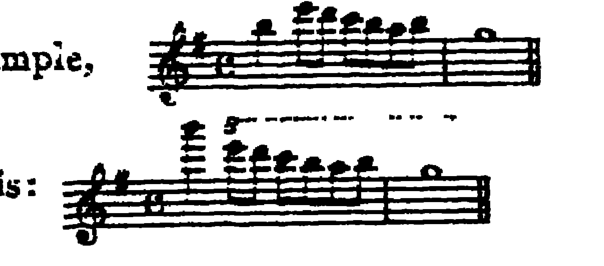
lowing notes. for exampie, 7, SSS
Tt has the same range as the large flute. with the excep-
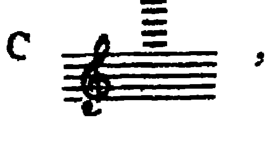
tion of the highest C :——; Which is difficult to
{also the high B)
this tone is almost intulerably harsh and should therefore be avoided.
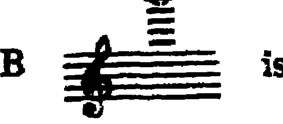
Even B is very harsh and cen be employed
only in a fortissimo of the entire orchestra. On the other hand, it is practically useless to write the notes in the lowest octave since they are scarcely audible. However, if one wants to use precisely this weakness of sound for 2 special effect. it is better to employ the corresponding tones in the second octave of the large flute.
No. 98. PASTORAL SYMPHONY, 3rd MOVEMENT
Piceolos. like all instruments with a loud and penetrating sound. are frequently misused nowadays. In pieces of a joyful character, the tones of the second
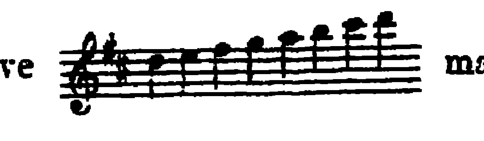
actave feeeet tite may be used in varied
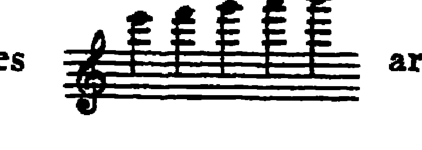
dynamics. The higher tones
cellent in fortissimo for violent and incisive effects—for example, in a thunderstorm or in a scene of fierce or infernal character. Thus, the piccolo is used very felicitously in the fourth movement of Beethoven’s Pastoral Symphony—sometimes alone, freely suspended over the low tremolo of. violas and basses, imitating the whistling of a storm not yet fully unchained; sometimes its highest notes combined with the entire mass of the orchestra. Gluck, in the storm scene of his “Iphigénie en Tauride”, enhanced the shrillness of two piccolo flutes in unison by writing them, in a succession of chords, always a fourth above the first violins. The piccolos, sounding an octave higher, and the first violins thus form a series of elevenths, whose roughness and sharpness achieve precisely the appropriate effect, (Examples 98 and 99.)
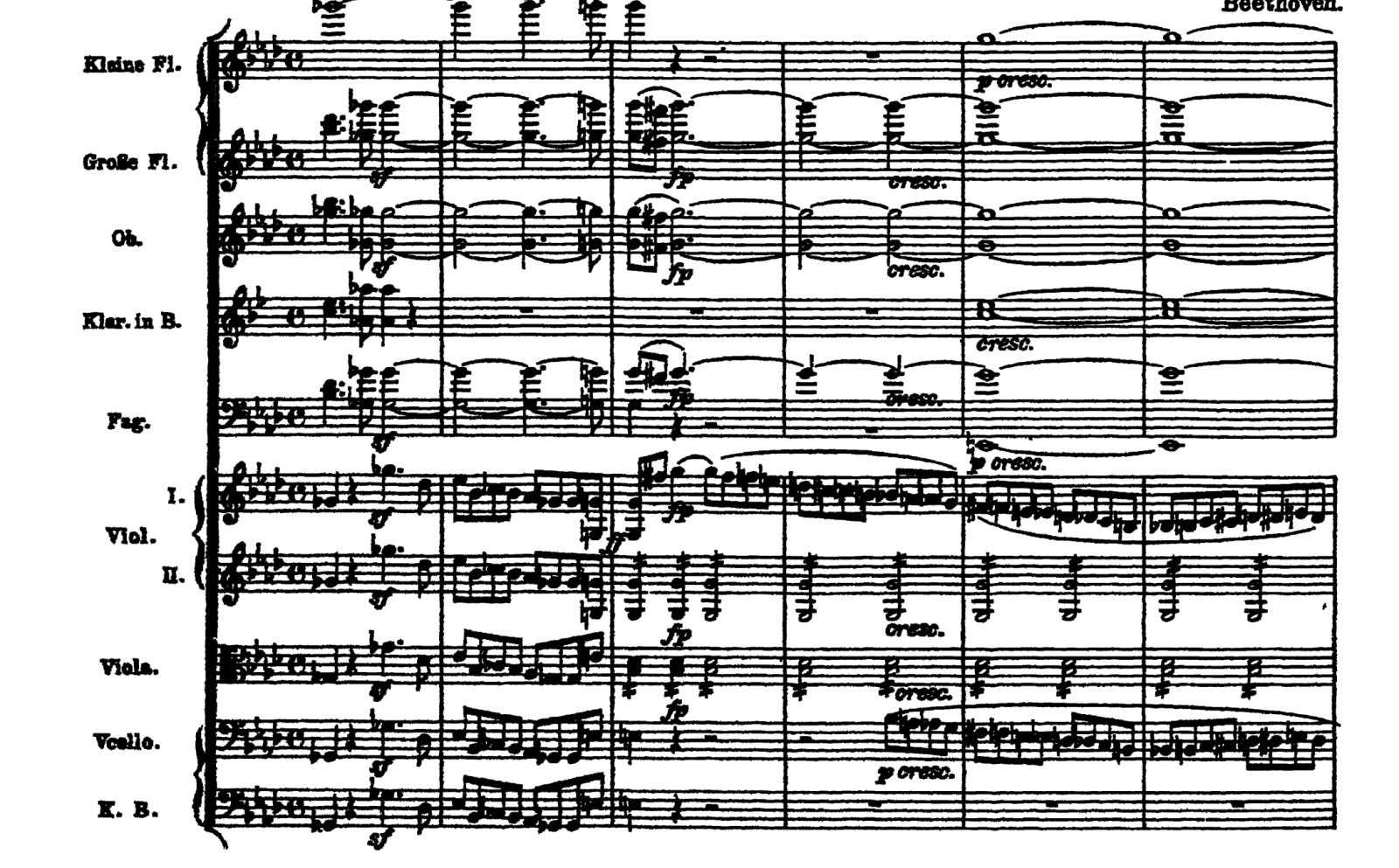
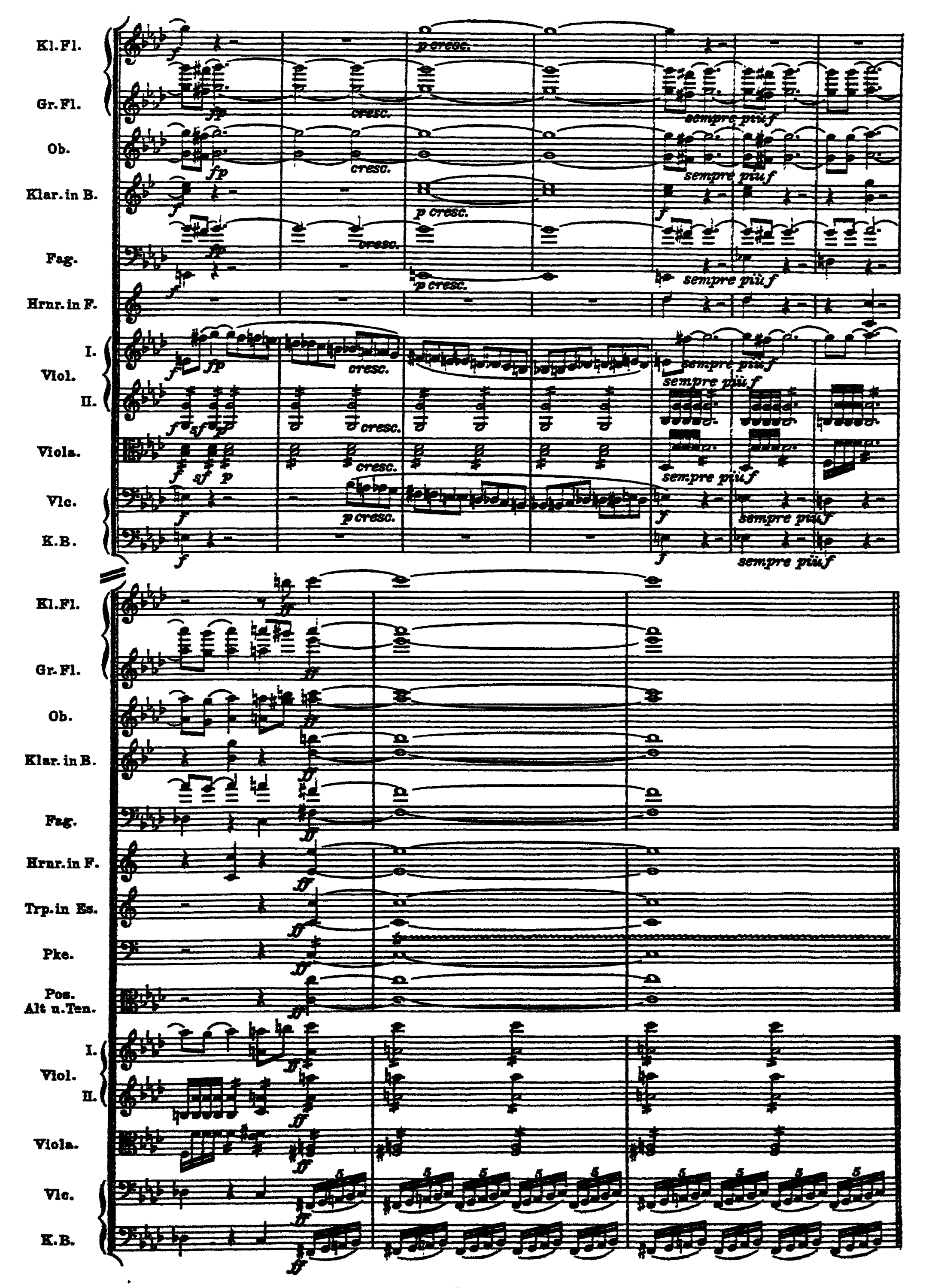
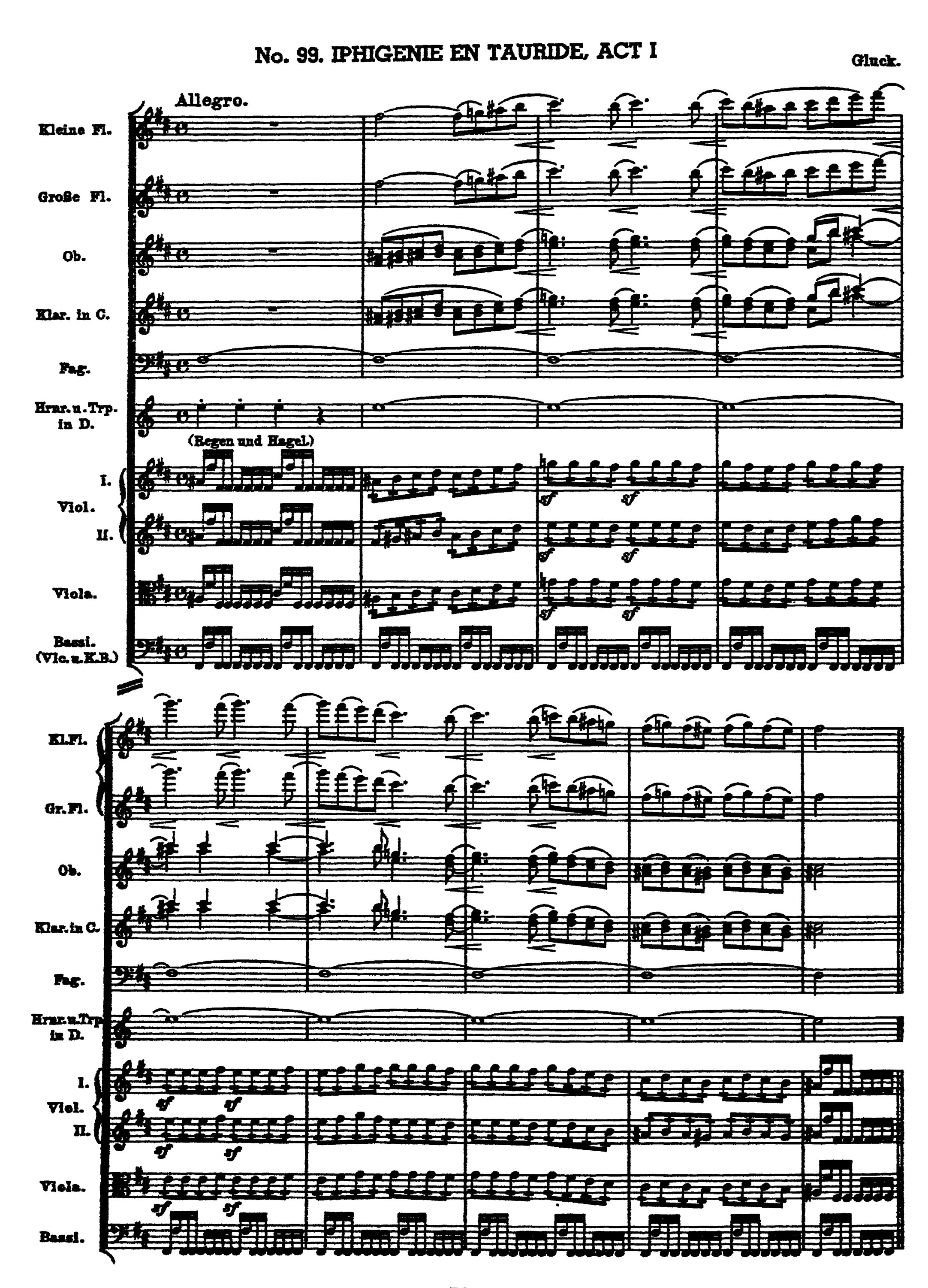
In the chorus of Scythians in the same opera by Gluck the two piccolos double the turns of the violins an octave higher; these whistling tones. mingled with the ravings of the savage crowd and the rhythmic. incessant din of cymbals and tambourins are truly awe-inspiring. See
The diabolical sneer produced by two piccolo fictes in thirds, in the drinking song of ‘‘Freischuetz”, is well known. It is one of Weber's happiest orchestral effects:
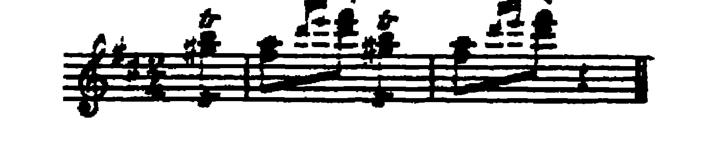
Spontini, in his magnificent Bacchanal of the Danaides (later used as a drinking chorus in “Nurmaha!’’>, first conceived the idea of combining a short, piercing cry of the piccolos with a stroke of the cymbal. Nobody before him had discovered the strange sympathy between these two instruments of such contrasting quality. The resulting sound is like the stab of a dagger. The effect is very characteristic, even if only these two instruments are employed; but it is further increased by a dry stroke of the kettledrums combined with a short chord in the other instruments:
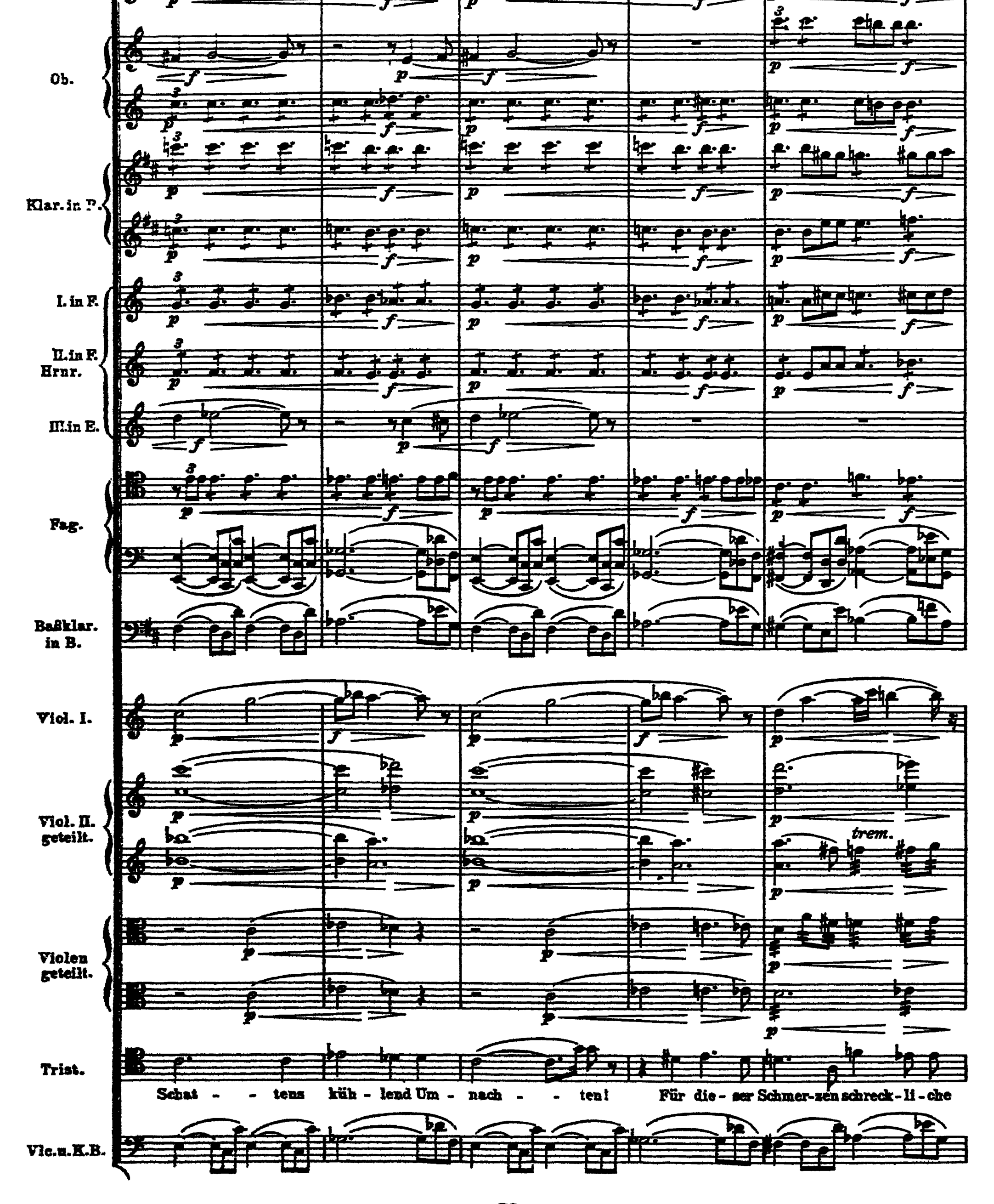
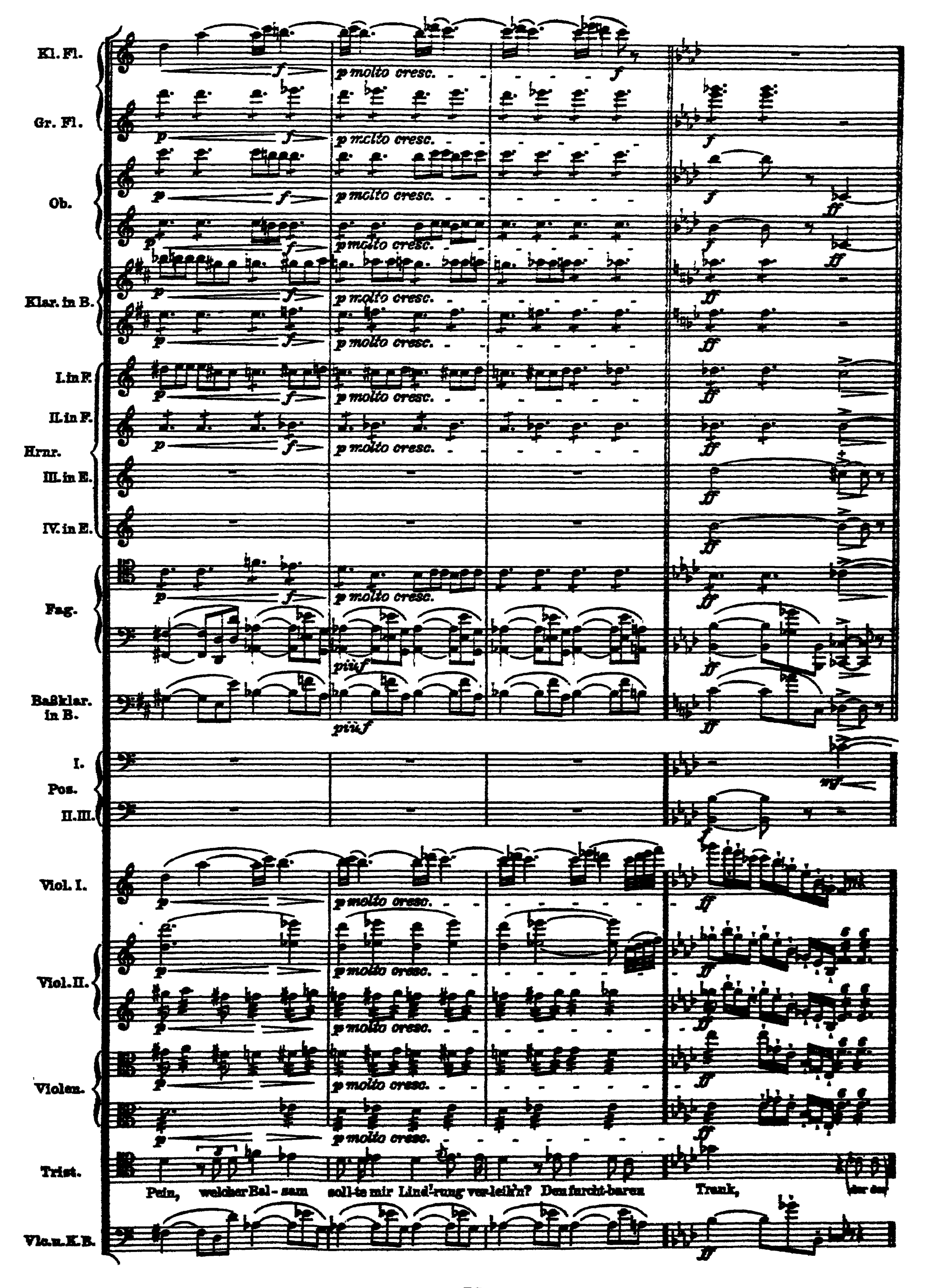
No. 100. TRISTAN, ACT
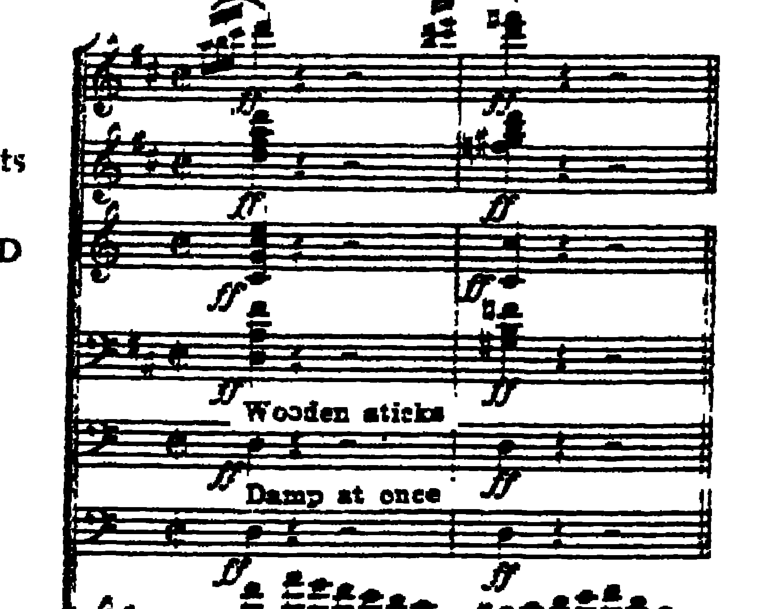
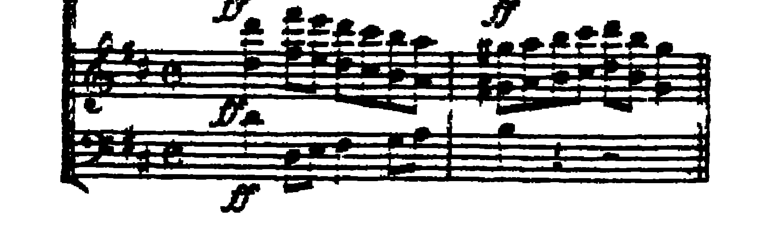
These examples, as well as others which I might cite, are admirable in every respect. Beethoven. Gluck, Weber and Spontini used the piccolo in a fashion as ingenious and logical as it was original.
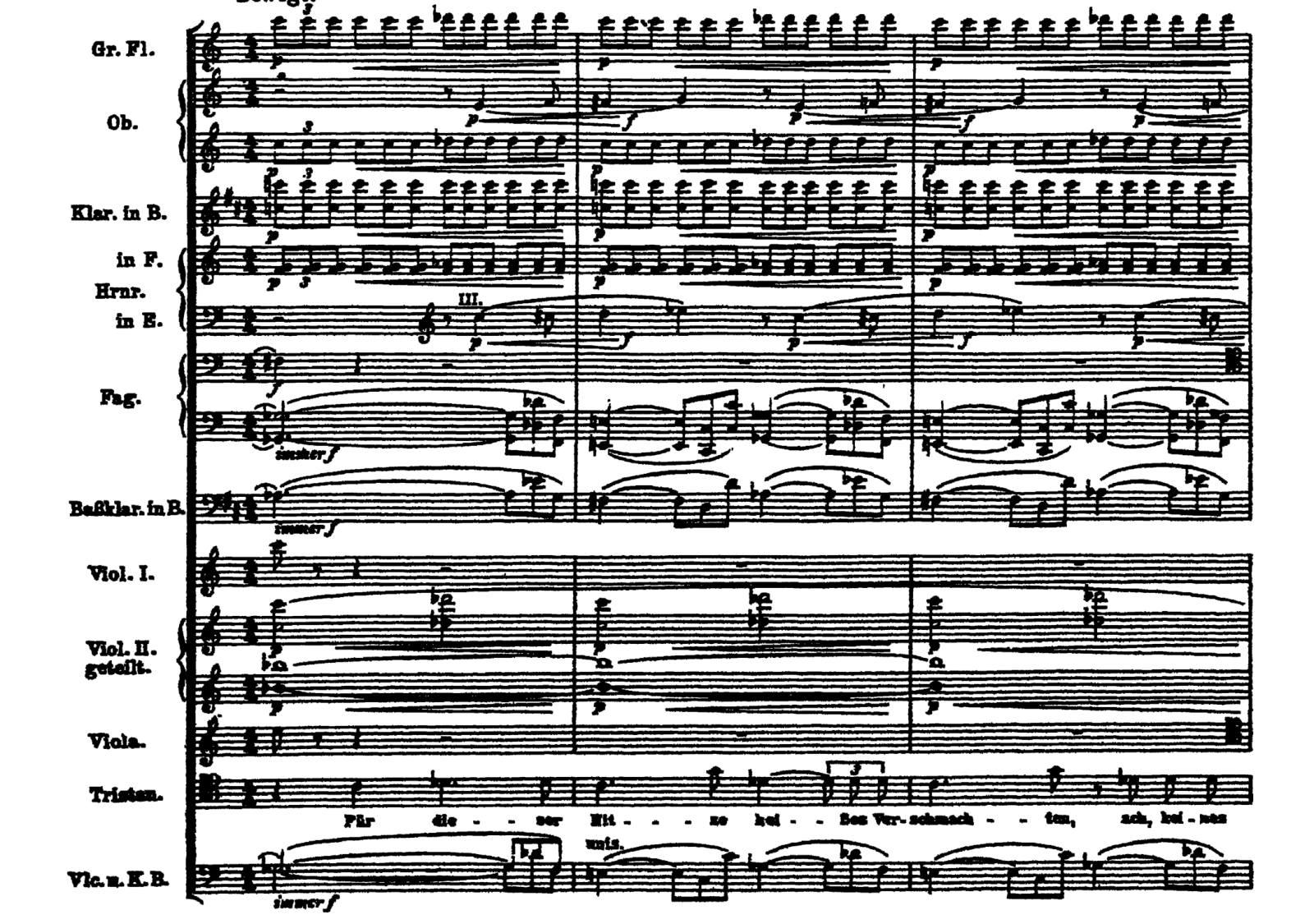
The following quotation from “Tristan”, third act, owes its profoundly moving effect to the impressive tones of the small flute:
va pa deh i i a fee se lege le ¢ eg |e eee lee ¢ 2 = e os s es s oo e Gr. Fl. - = — Lal Lal hs _——* a =< L. oll Le a A. ofl L. af = La ——
But when I hear this instrument doubling, in the triple octave, the meledy of a baritone vuier. or casting ity screaming tones inte a religious harmony. or reinforcing and sharpening the upper voice of an opera orchestra, out of the sheer love of noise. then this kind of instrumentation appears to me to be just as shallow and stupid as is the melodic styie to whicn it is usually applied.
The piecolo may also be of excellent effect in soft
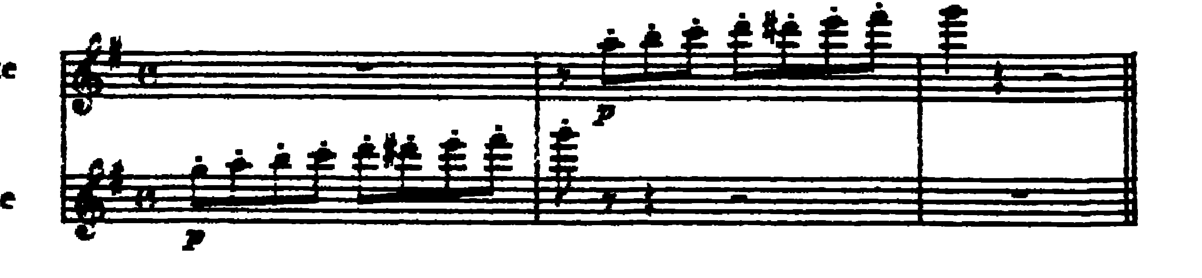
passages; it is mere prejudice to think it can be used only in forte. Sometimes it serves the purpose of continuing high-pitched scales transgressing the range of the large flute; in such cases the piccolo enters at the extremity of the flute’s high range. In this instance it is easy for the composer to conceal the transition from one instrument to the other in such a way that only one flute of extraordinary range seems to be playing. For instance:
In military music use is made of three other flutes, which might also be employed advantageously in ordinary orchestras:
1. The flute in the third (the so-called flute in F),
whose C produces E®; this belongs to the transposing instruments in E), as stated above. It is a minor third - higher than the ordinary flute; besides, its timbre is more crystalline.

2. The piccolo flute in the minor ninth (the so-called small flute in Eb), whose C produces D>. It is a semi-
tone higher than the piccolo, and should be treated similarly.

3. The piccolo fiute in the tenth (the so-called small fiuate in F), whose C produces E>, and which we shall name the piccolo tenth-flute in E>. It is an octave higher
than the third-flute and a tenth higher than the ordinary flute.

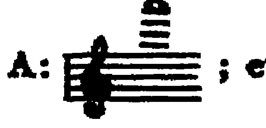
It should never go beyond high A: EL===; even this
excessively shrill tone is obtained with difficulty. Some orchestras also possess a large fute in the minor
second, whose C produces D®, and which must therefore be called, flute.in D>. It is tuned only a semitone higher than the ordinary flute:

All these flutes serve to increase the upper range of the instrament. Their timbres have different characteristics. They also facilitate the execution and preserve the son-