Playable Books
Hector Berlioz · section 28 of 67
The Valve Horn
Read and hear this section in the playable edition →(Horn with three pistons or cylinder valves)
This instrument can render ali its tones open by mvans of a special mechanism which makes it possibie to change the key of the instrument instantaneously. By using the different pistons one can transform the horn in F into hern in E, E’ or D, vte.; and by combining the open tunes of one key with those of the other key. the complete chromatic scale can be played in open tones, Moreover, the use of the three pistons adds six semitones te the scale of the instrament below its lowest nataral tone.
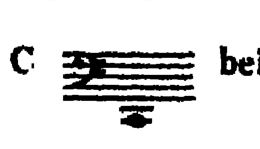
C 2e== being the lowest natursi tone of the horn,
the pistons would give it the following additional tones:
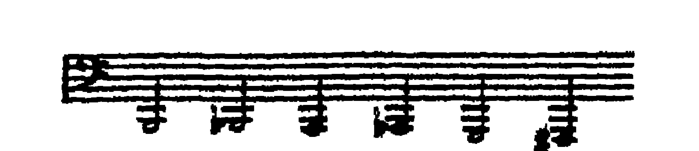
This applies to all brass instruments which have this mechanism—i.e. trumpets, cornets, bugles and trombones.
The range of the horn with three pistons in a mixed key such as that of E® would therefore be as follows:



This system offers great advantages. especially for the second horns, by filling the great gaps between their
low natural tone» from the lowest C =
the timbre of the horn with pistons differs a little from that of the ordinary horn; therefore, it cannot replace it altogether. I think it should be treated almost as a separate instrument, particularly suitable in furnishing good, Sonorous and energetic basses, similar to the low tones of the tenor trombone. although without their strength. It can also render melodies quite well, especially those moving mainly in the medium range.
The medium keys are the best on the piston horn— in fact. they are the only ones leaving nothing to be desired as tc purity of intonation. The horns in E, F. G and Ab are therefore far preferable to any of the others.
Since their introduction intc orchestras, many composers have shown a certain hestiity toward these new instruments because some hurn players have used them in cases where an ordinary horn is indicated. By means of the new mechanism they find it easier to play open tones instead of the stopped ones actually desired by the composer. This is. of eourse. 2 dangerous abuse; but it ean easily be checked by the conductor. One must not forget that the piston horn, in the hands of a skilled player. can produce ali the stopped tones of the ordinary horn as well as some additional ones; for it can play the whole scale without using 2 single open tone. Since the pistons, by changing the key of the instrament, add to the cpen tones of the principal key those of the changed keys, it is obvious that the stopped tones of all keys zan be combined in the same fashion. The horn in F,
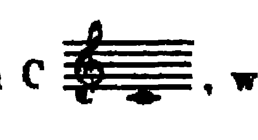
for instance, plays this open C —- which sounds
F, as a natural tone, and by means of the pistons also
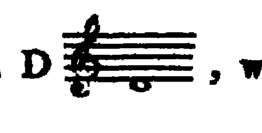
the open D — » which sounds G. By placing the
hand into the bell and thus lowering these notes a tone,
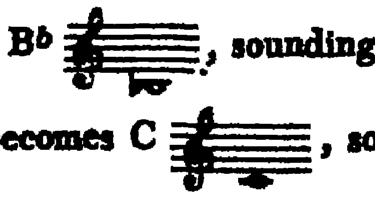
the first becomes B® —— sounding the stopped Eb,
Hence, to indicate those tones which he does not want executed as open tones, the composer simply has to add the word “stopped” and the figures 4 or 2/3 (showing how much of the bell should be closed). For a scale written as follows:
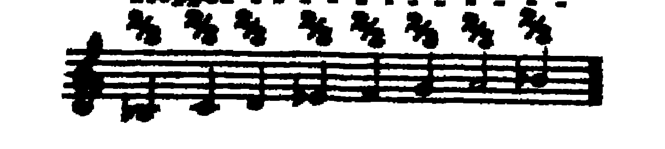
the performer takes the pistons proper for the seale of C: “pen
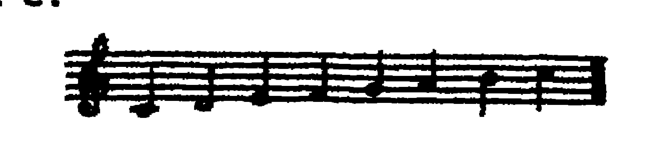
By inserting the band, which closes the bell two-thirds during each note, this scale is transformed into one in Bb, whose tones are the most hellow and most stopped obtainable on the horn. In this fashion a passage previously heard in open tones can be repeated by the piston horn in stopped tones—like a distant echo..
The horn with cylinder valves differs from the preeeding only in the nature of its mechanism. The differ-
ence is entirely in its favor as far as facility of tone production is concerned. The tones of the cylinder horn can scarcely be distinguished from those of the ordinary horn. The instrument is already in general use in Germany and will doubtless soon be adopted everywhere.
Of all the instruments the horn is probably the one that blends best with all instrumental groups. To demonstrate this fact in its full measure I should have to insert here the entire score of “Meistersinger”: for I think I am not exaggerating in saying that $ this score, differing from the ensemble of Beethoven's C-minor Symphony only by the addition of the third trumpet, harp and tuba, has become so entirely different, new and unheard-of principally because of the enormous versatility and highly developed technique of the valve horn.
Mozart's two flutes, two oboes, two clarinets and two bassoons are certainly utilized here to the full virtuosic extent of their expressive potentialities; they are combined by a stupendous application of all the secrets of their registers. The string quintet, with most intricate divisions, creates ever new miracles of sound, enriched by the harp and exalted to an unheard-of warmth of feeling by the most wonderful polyphony. Trumpets and trombones are made to reveal all solemn and comic features of the work. But the most essential of all is the faithful horn functioning untiringly in carrying the melody or as a medium filling-in voice, or as the bass. The “Meistersinger” score is the finest eulogy for the horn. The introduction and improvement of the valve horn has
Sasabprrtated Vttudtuttadatatuitte prure
undoubtedly inaugurated the greatest advance in the technique of the modern orchestra since Berlioz.
To demonstrate exhaustively the truly protean nature of this instrument I should have to go through the scores of the great magician bar after bar, beginning with “Rheingold”.
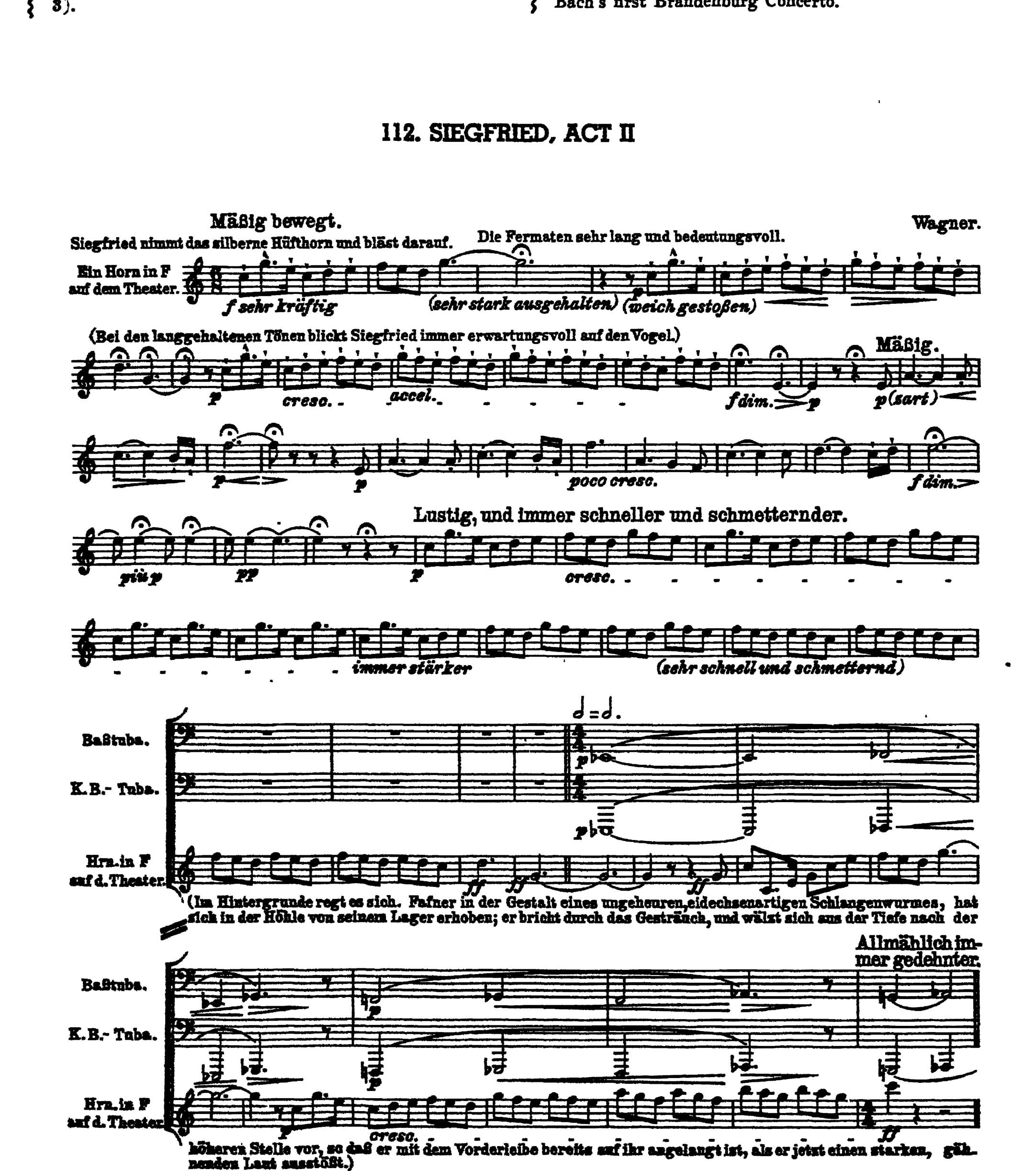
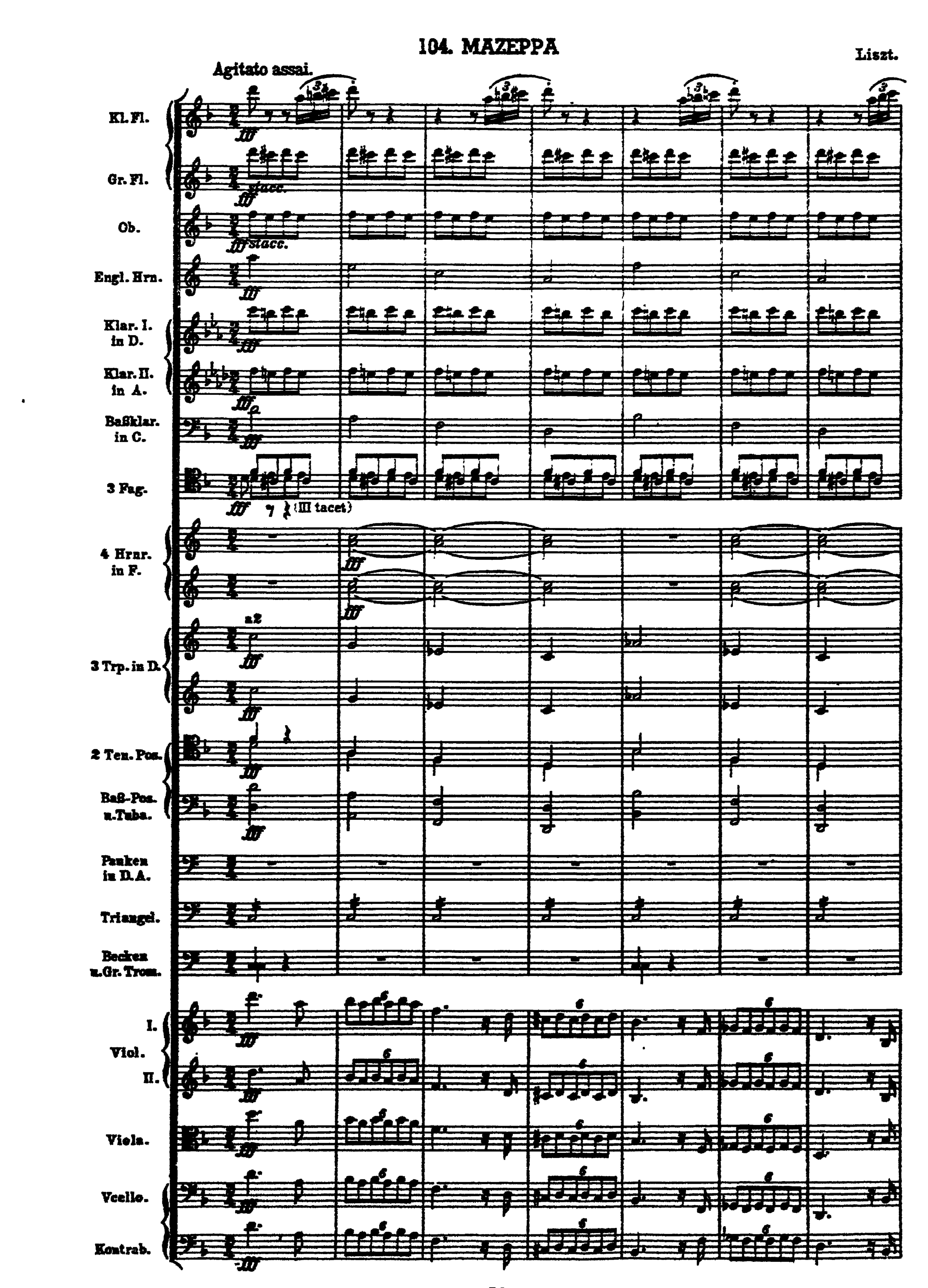
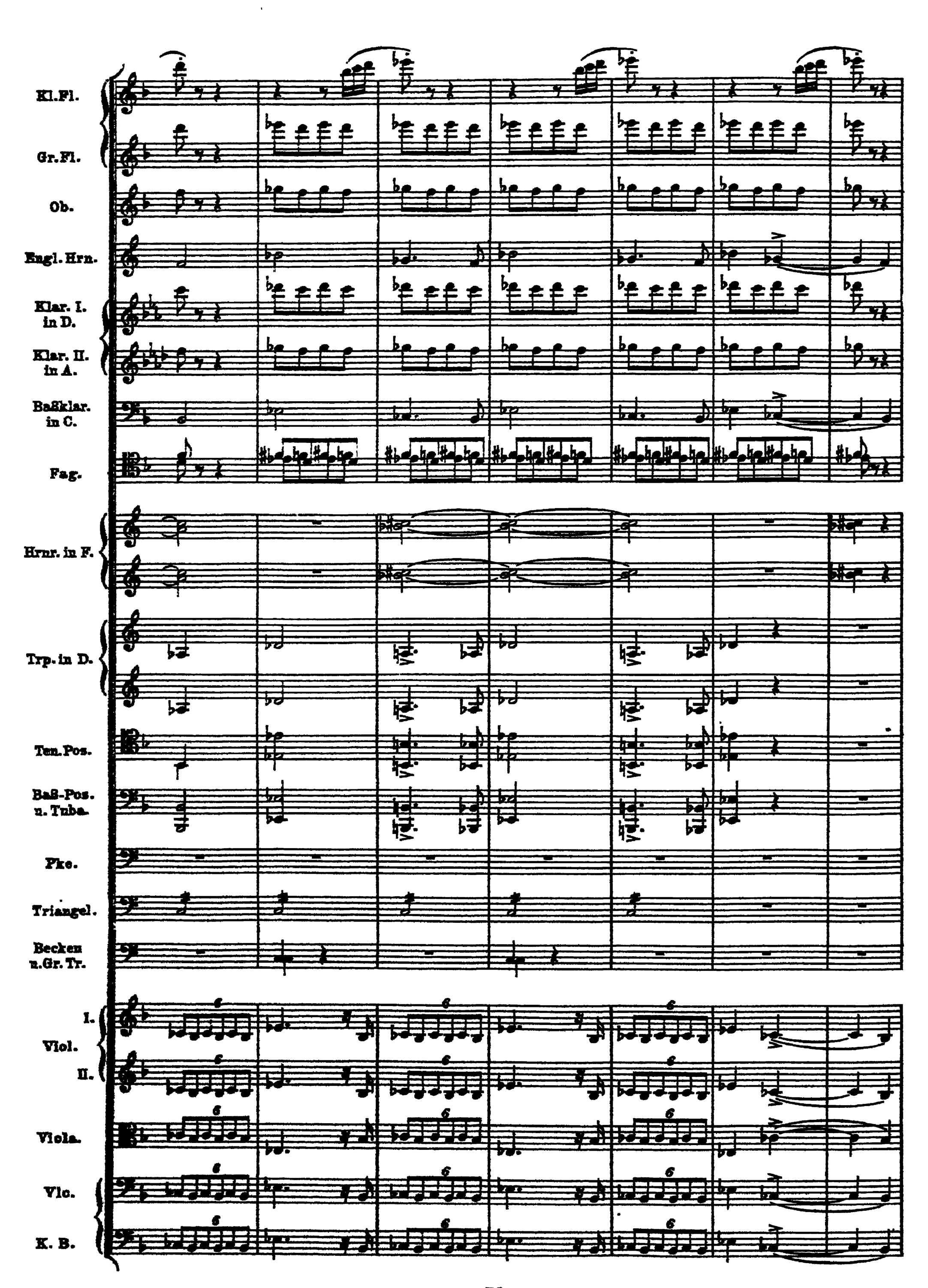
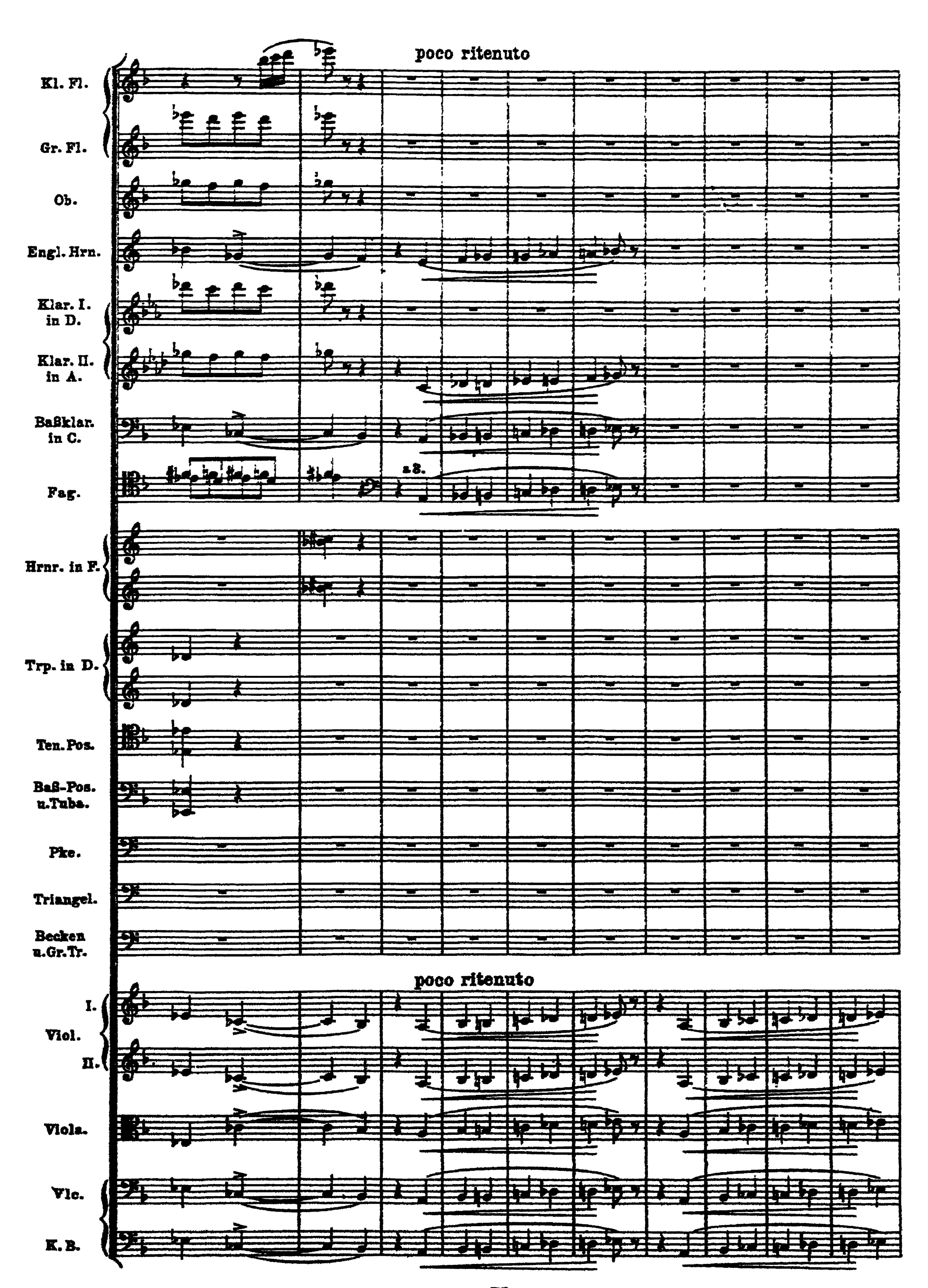
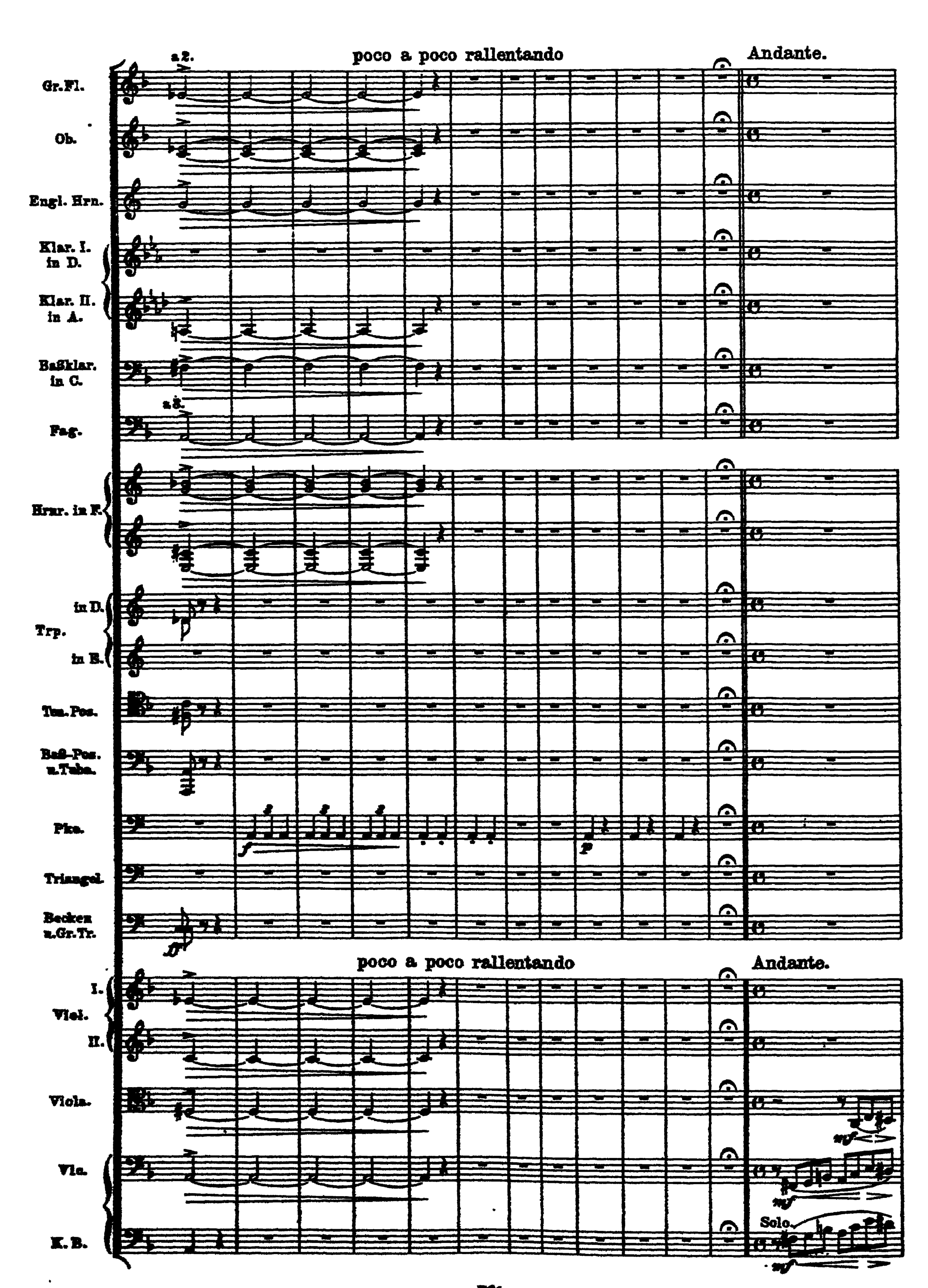
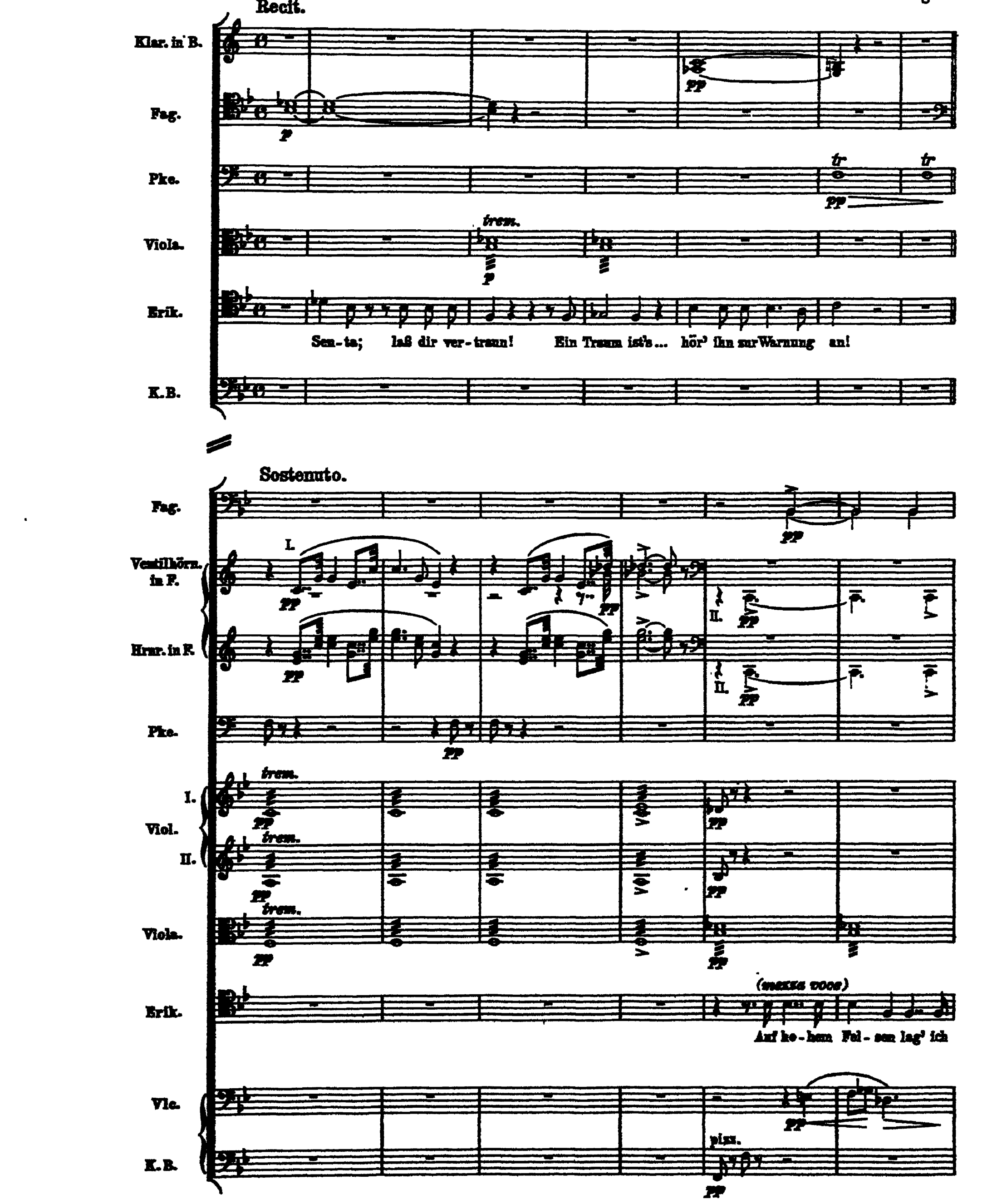
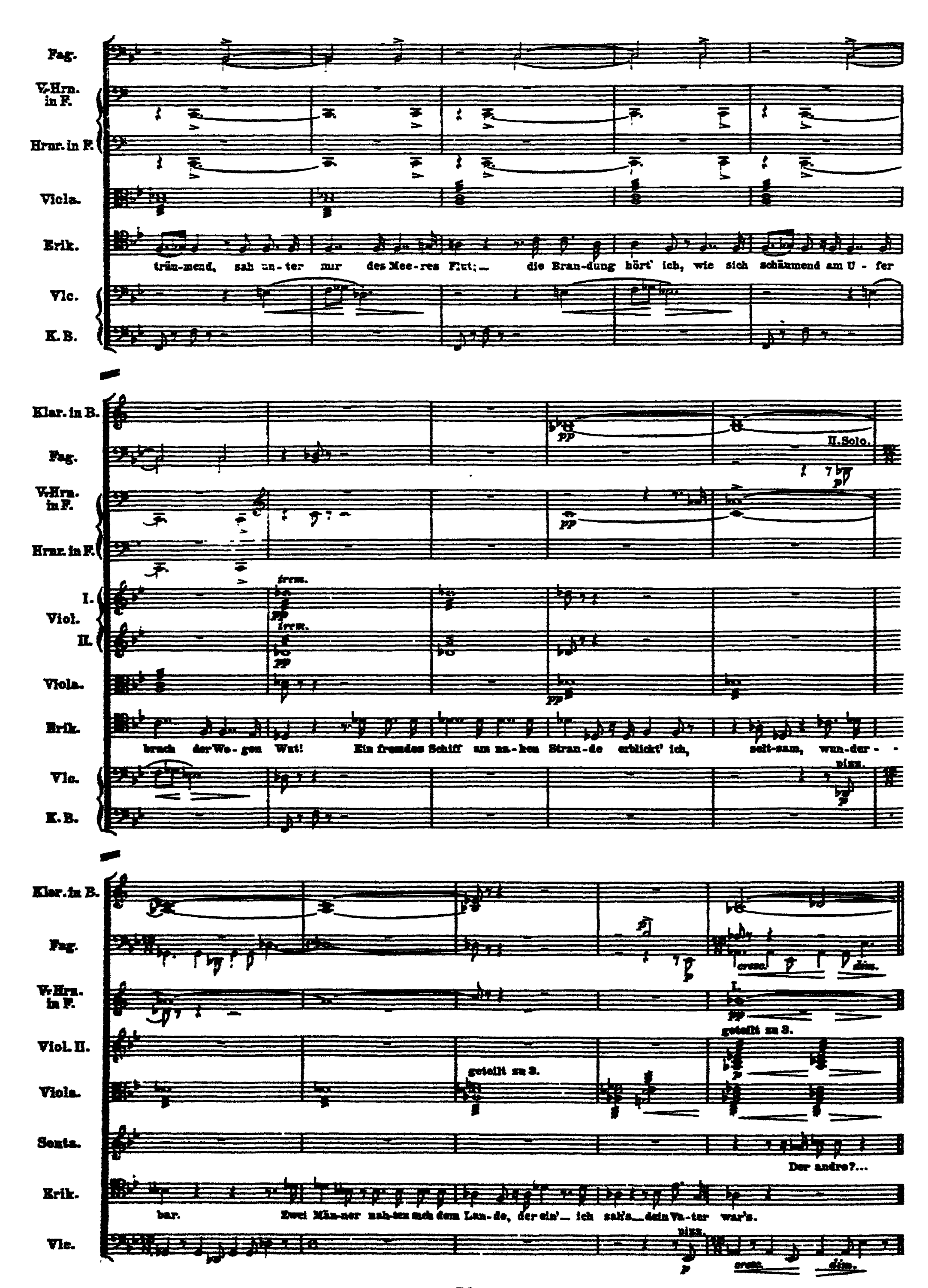
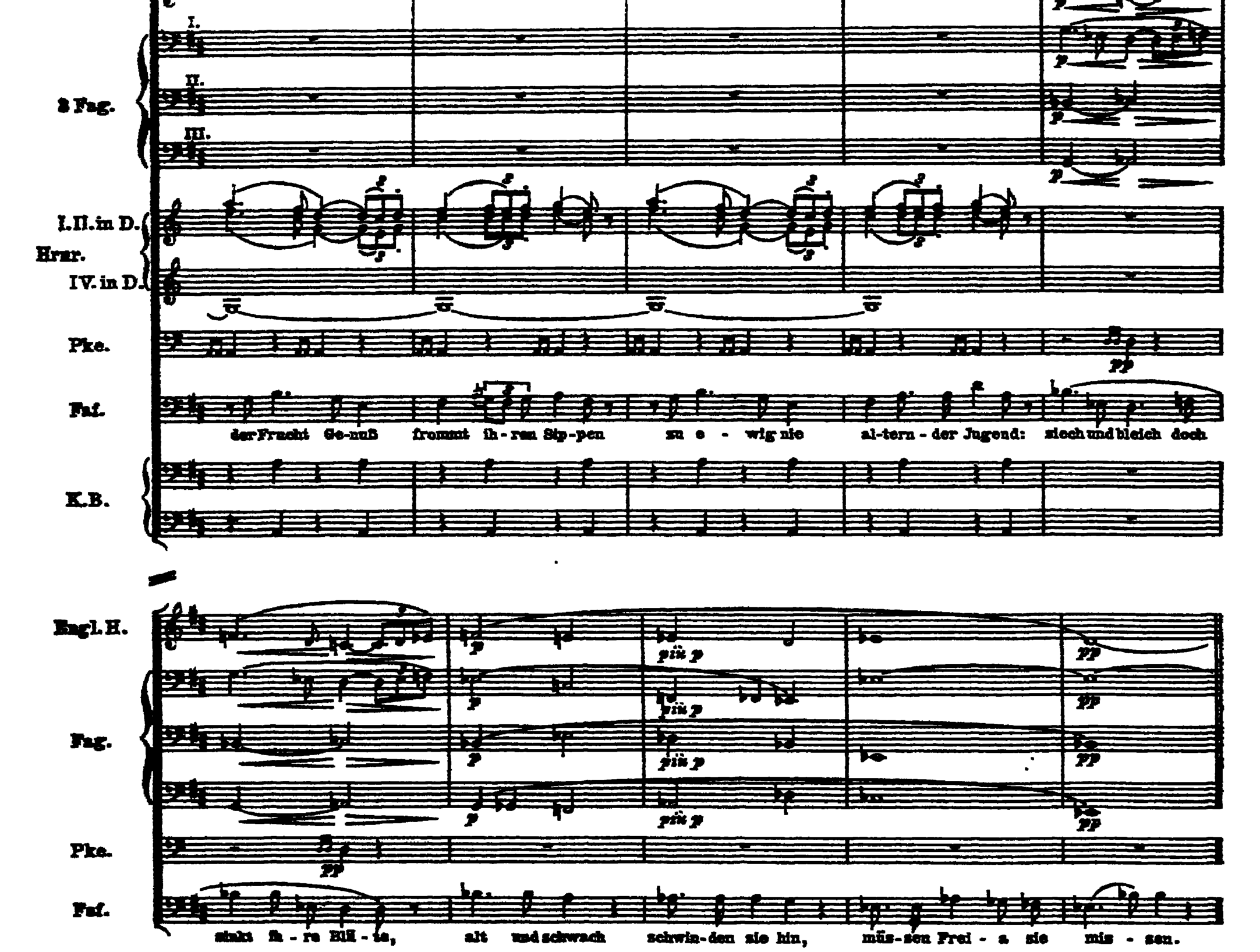
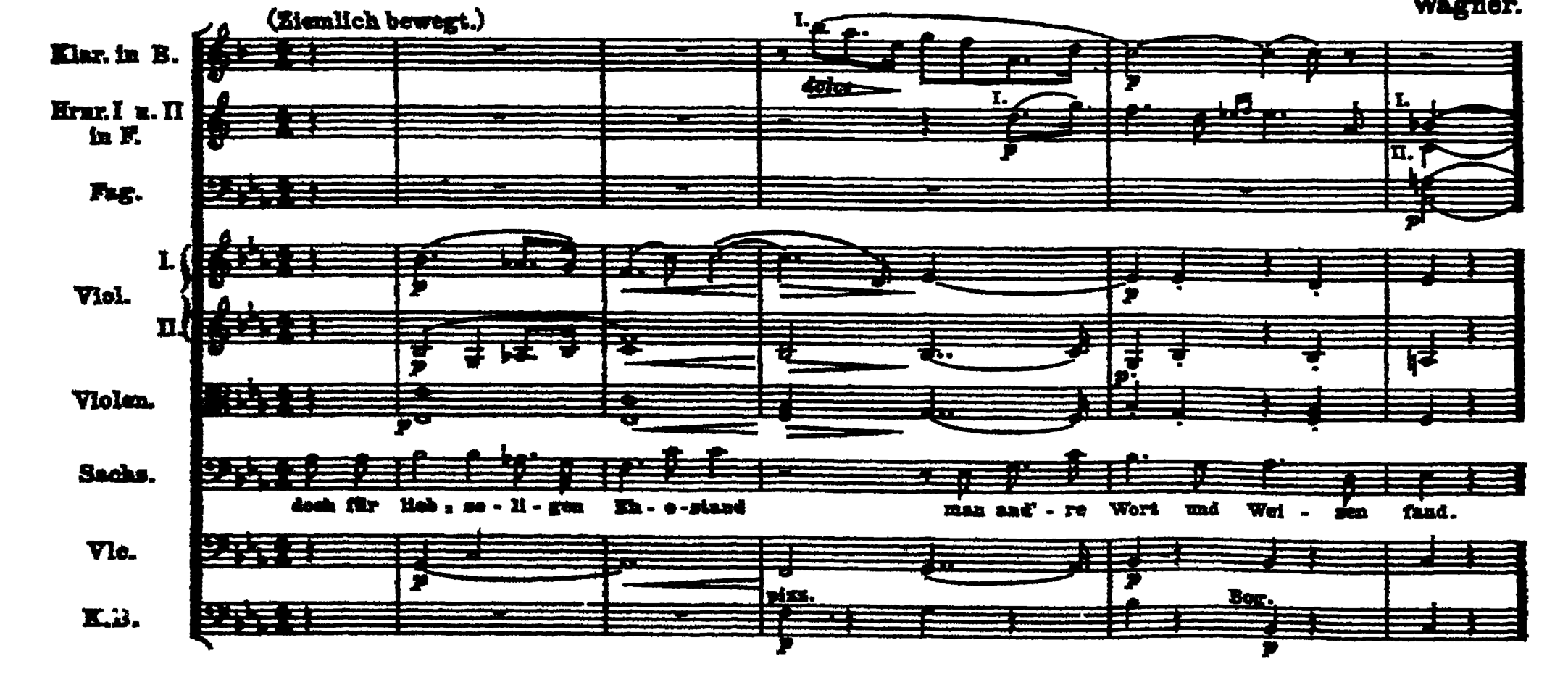
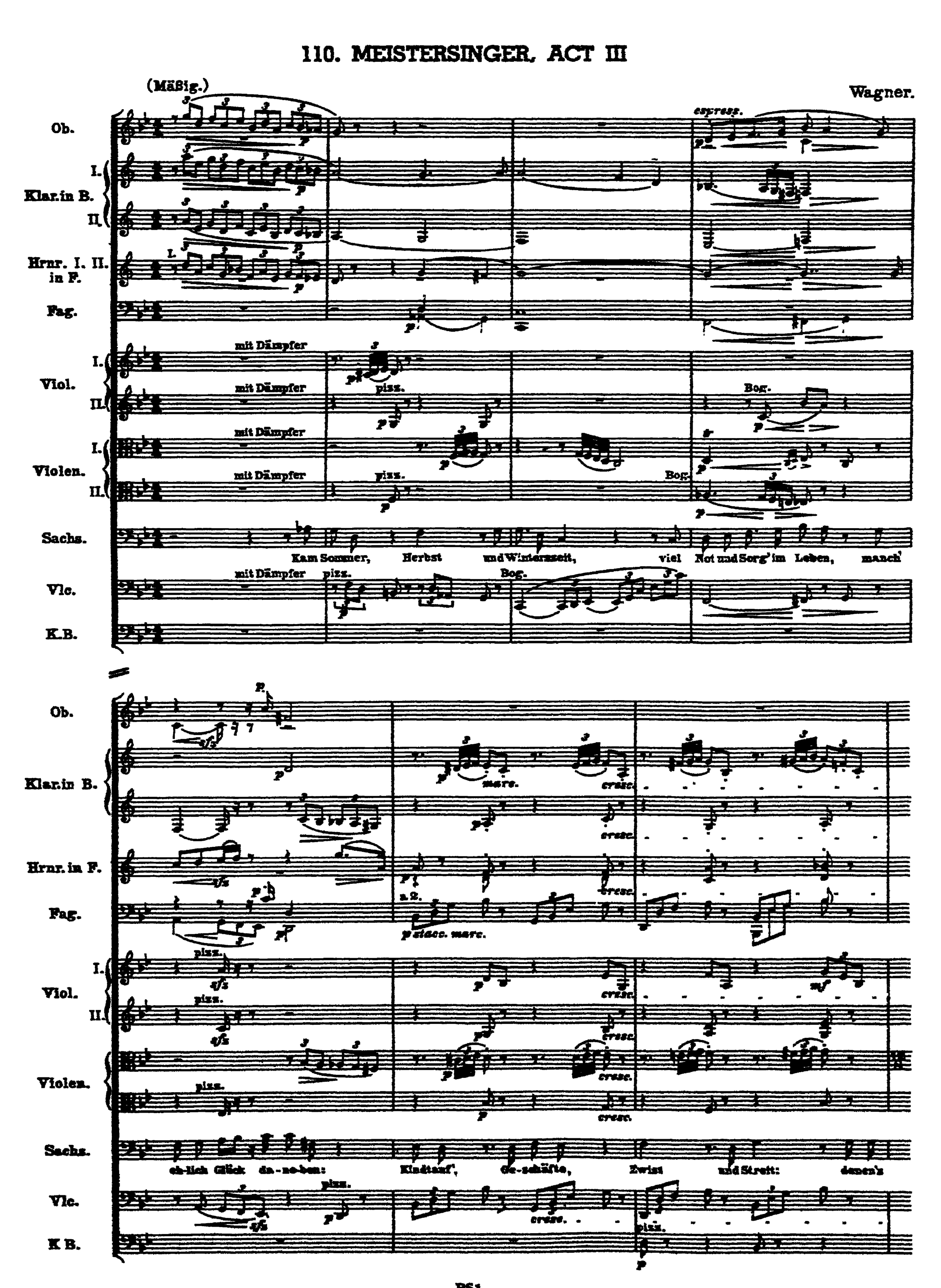
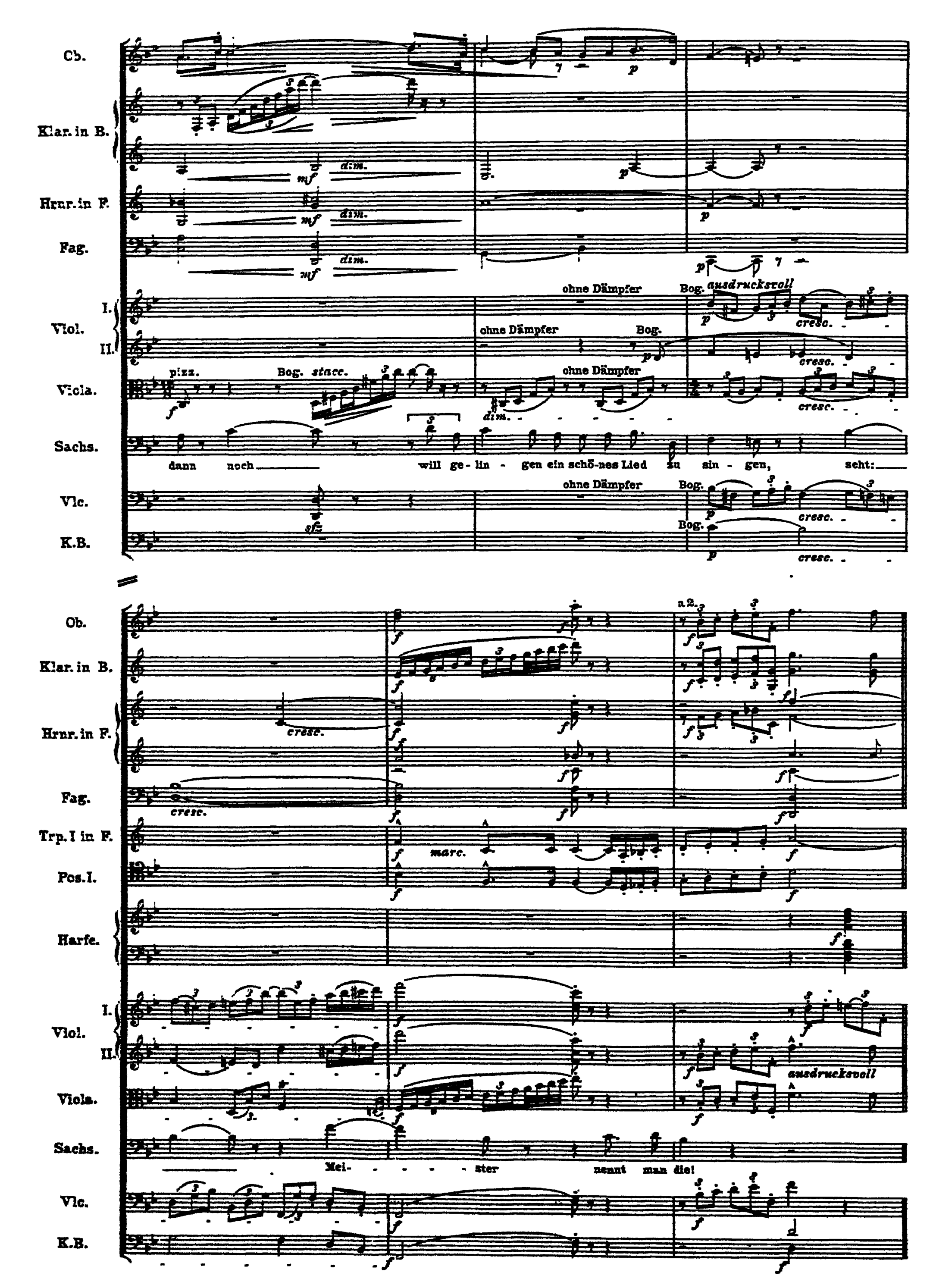
The horn, whether it calls ringingly Siegfried’s exuberant vitality into the virgin forest; whether it fades away in Lisst’s “Mazeppa” as the last, hoarse cry of the dying Cossack prince in the endless steppe (Example 104); whether it seeks to conjure the picture of the unknown mother to Siegfried, who is pining for her like a child (Example 105); whether it brings Isolde’s shining image over the 3 gentle waves to the dying Tristan; whether it indicates Hans Sachs’ thanks to his faithful apprentice (Example 106); whether in Erik’s dream (“Fliegender Hollaender”, second act) it lets with a few hollow accents the surf of the northern sea hit the nocturnal shore (Example
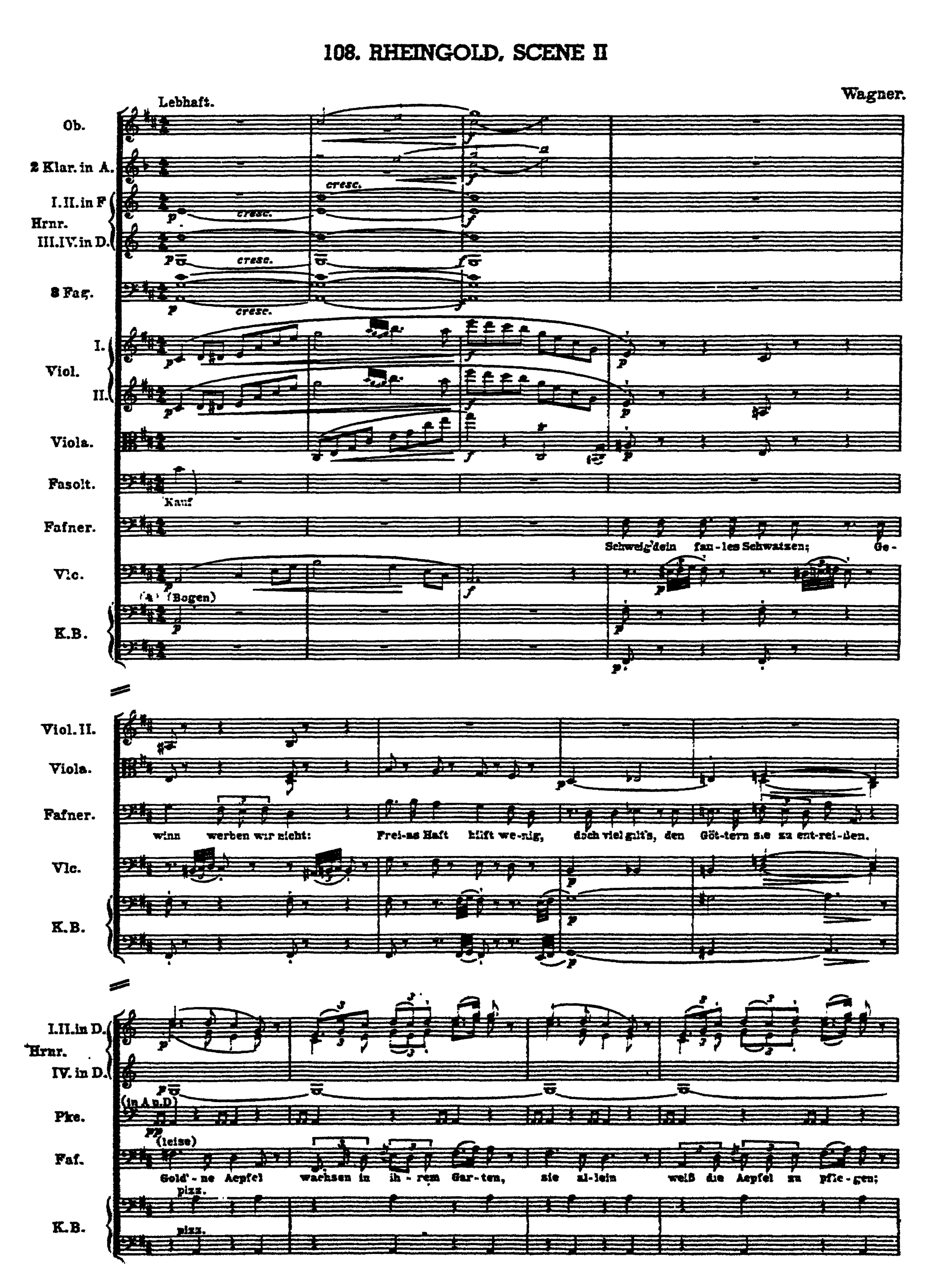
whether it is the symbol of Freya’s youth-giving apples (Example 108); whether it pokes fon at the henpecked hosband (“Meistersinger”, third act)—(Examples 109 and
whether it thrashes Beckmesser with the jealous apprentice David and actually functions as leader of the brawl (“‘Meistersinger”, second act); whether it sings in muted sounds of the miracles of $ the Tarnhelm (Example 111)—it always serves its task fully and entirely, it is unique in its versatility, and its effect is always conspicuous.
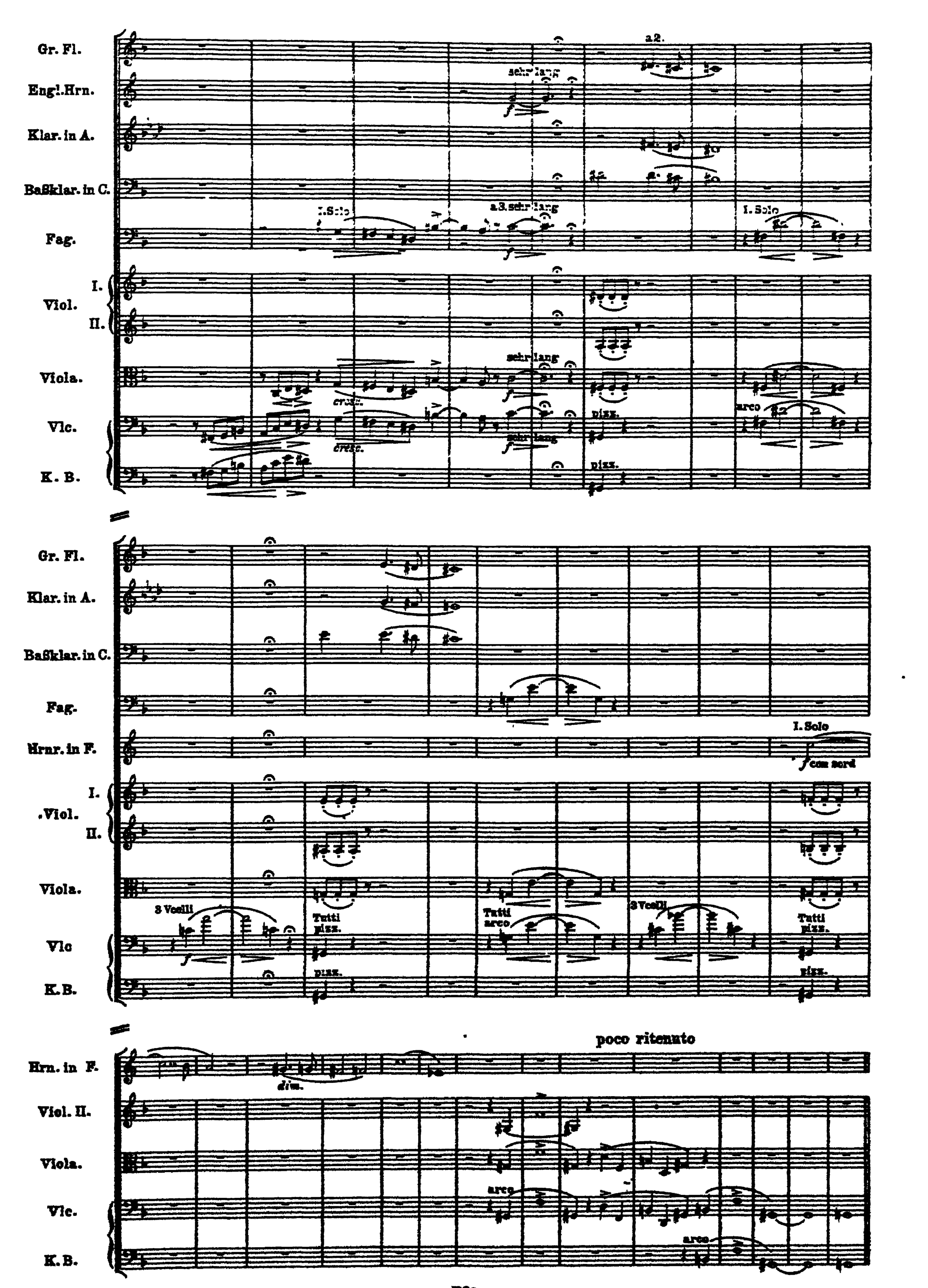
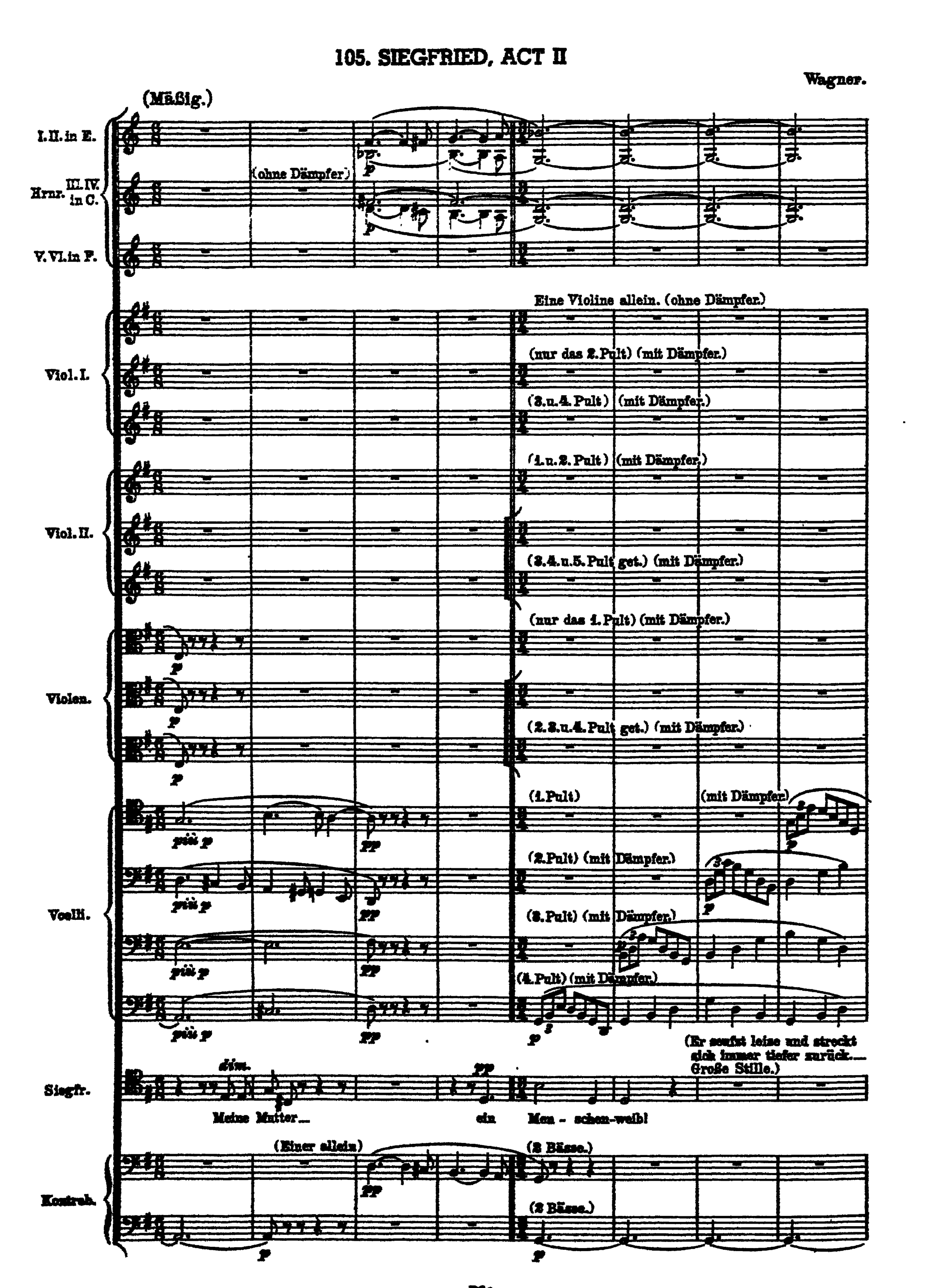
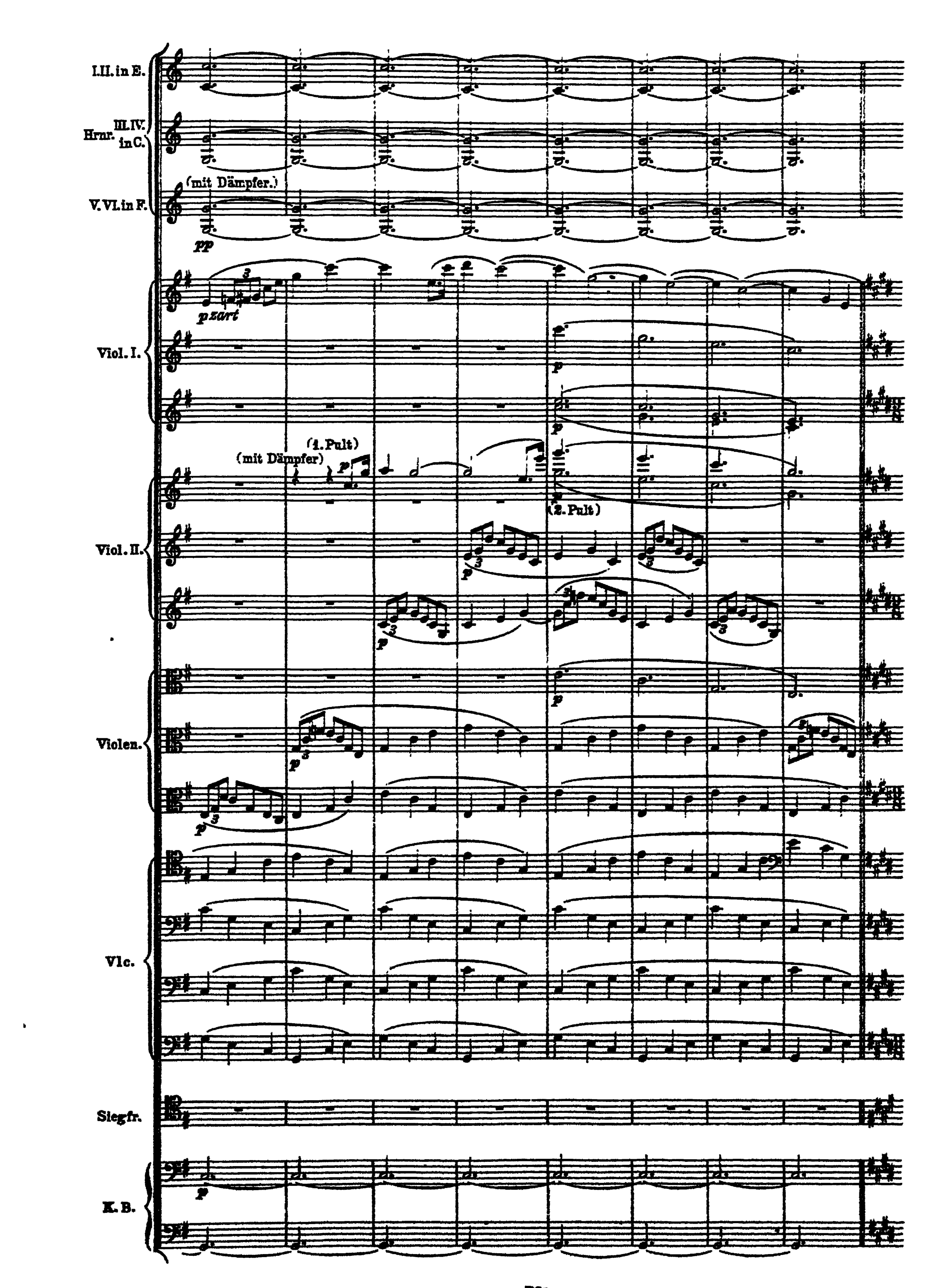
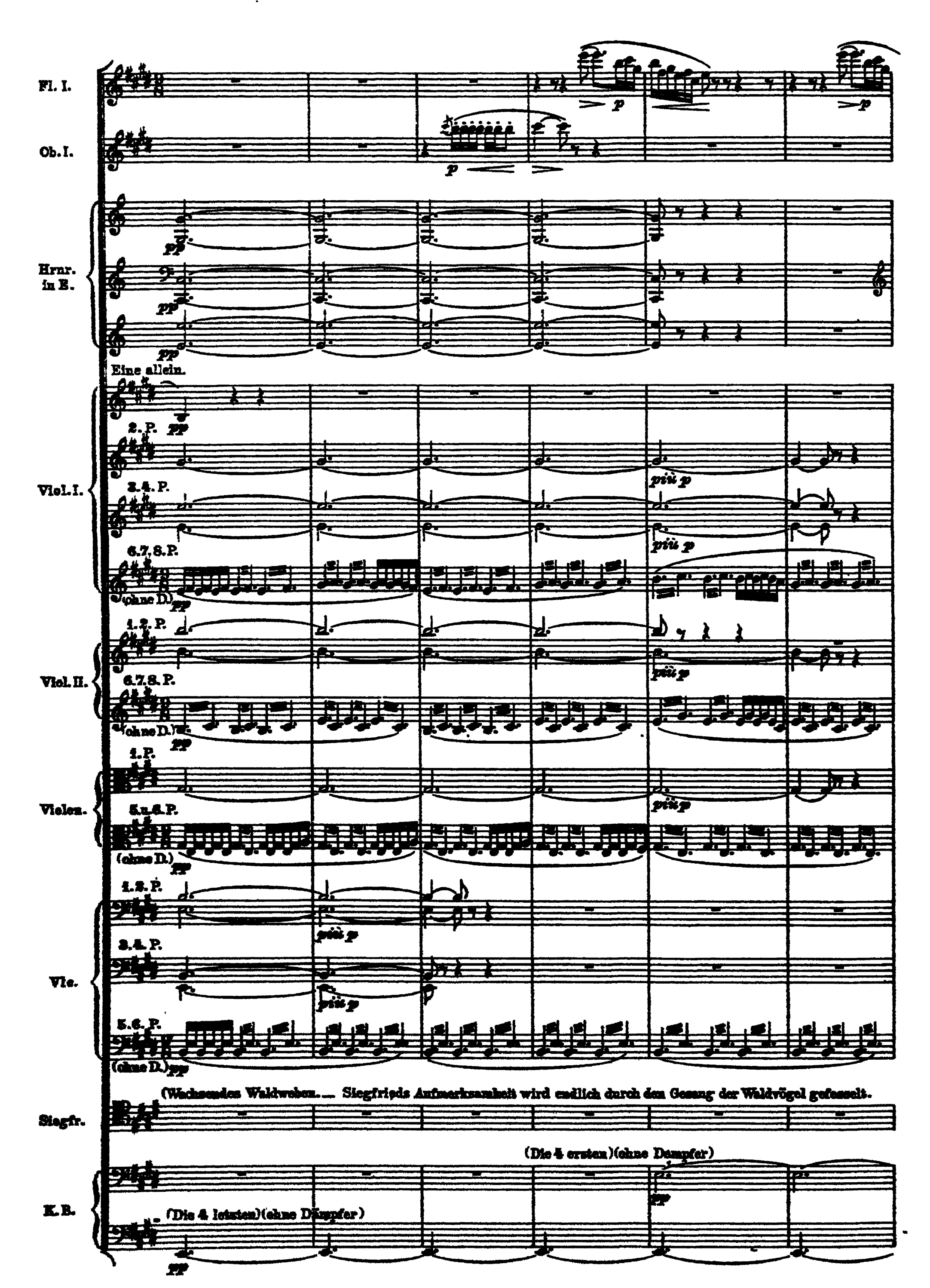
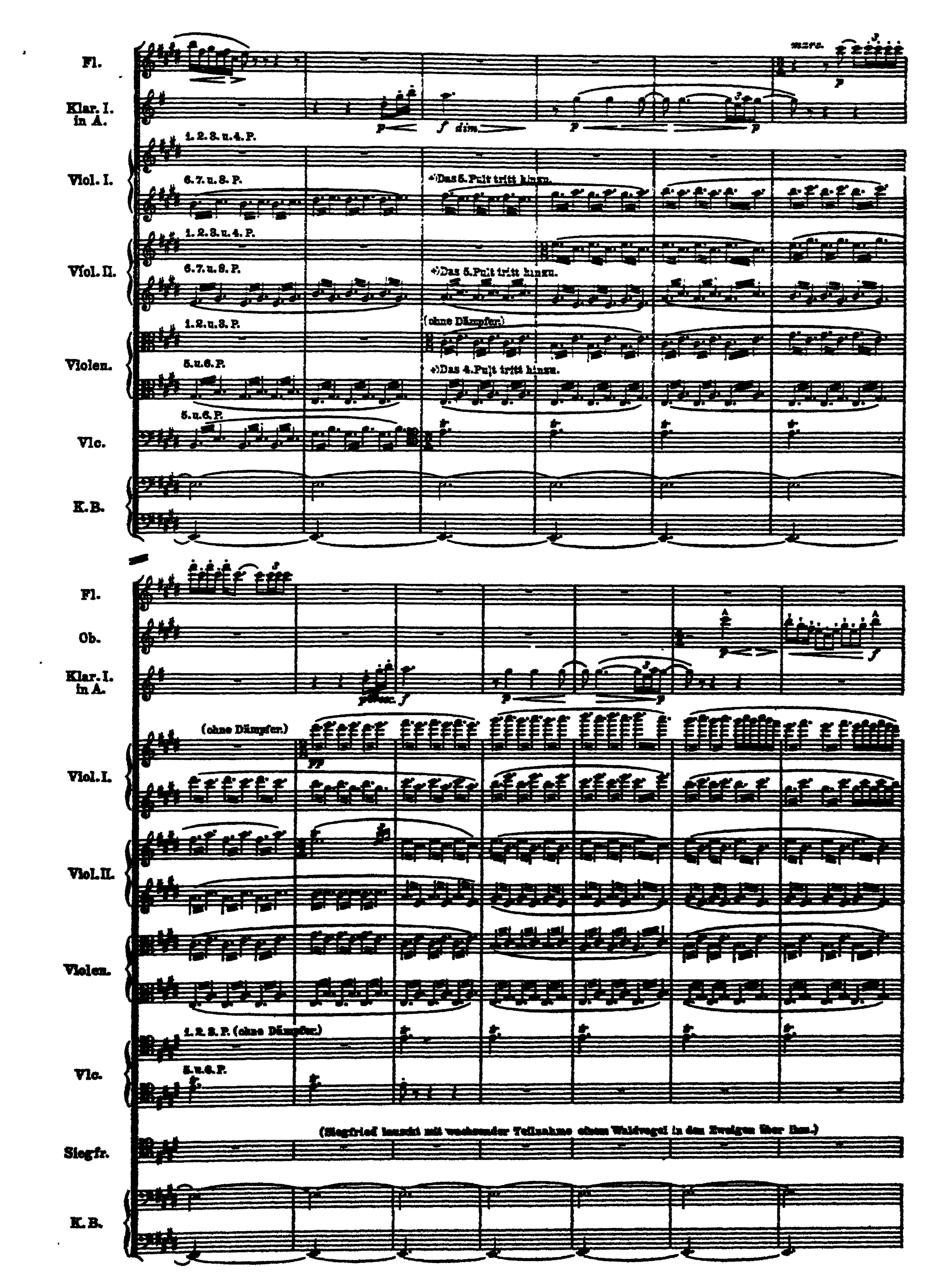
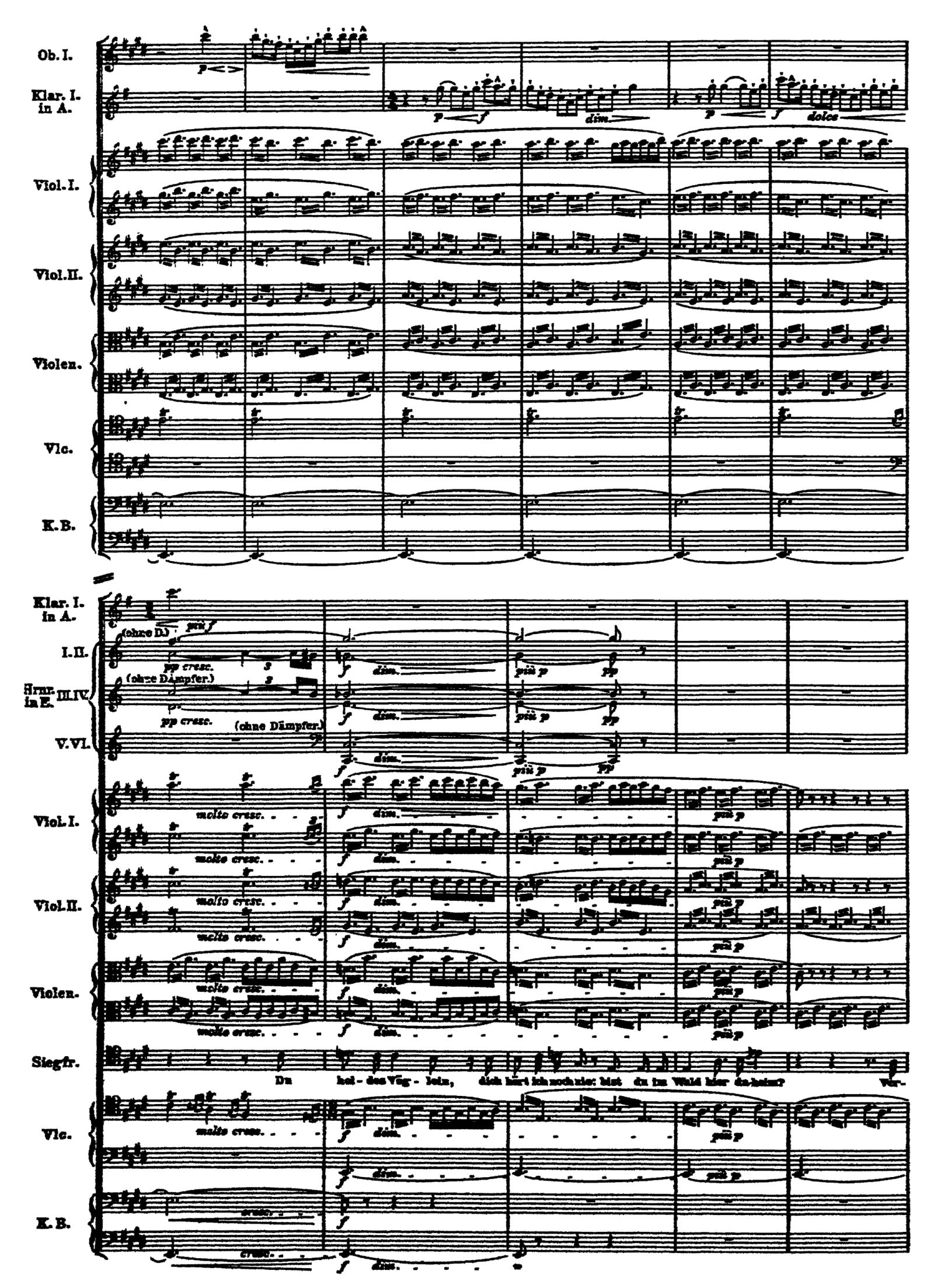
srw ie —_ 2 oe. ee ee ee ee | oo a ws ee ee Bnd alten eal ‘1. _mens >) 2 a. ae me CVF bth a — oe | et to et eee ee ee ee eee: eee ee ee lL es)
f : frit Diimpfer’
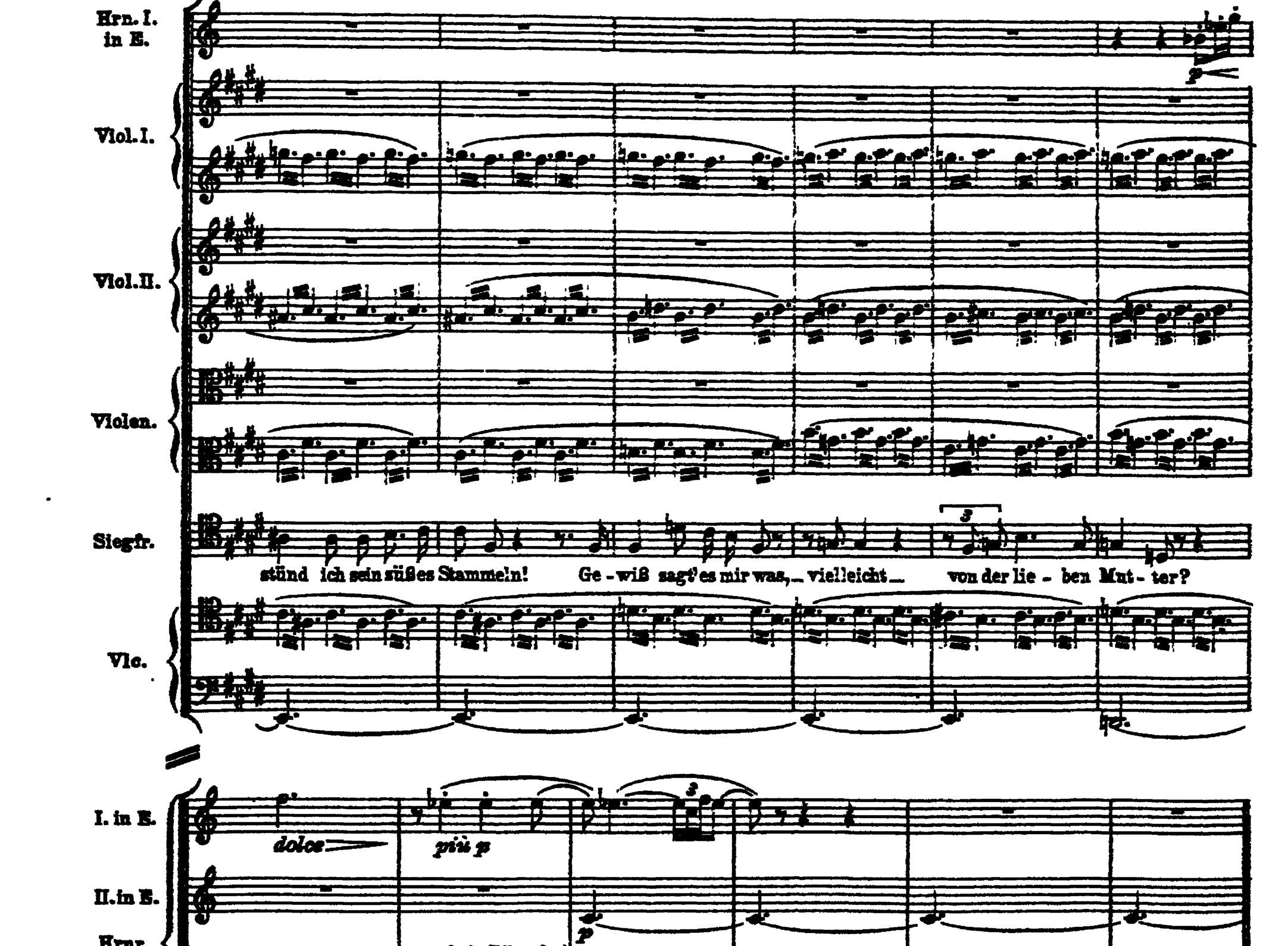
20 6 I~ er + ae meen TF a 7 ee en ee eee et ne Res me te a se Oe
eet a ens tee et et a re re) aos mb.
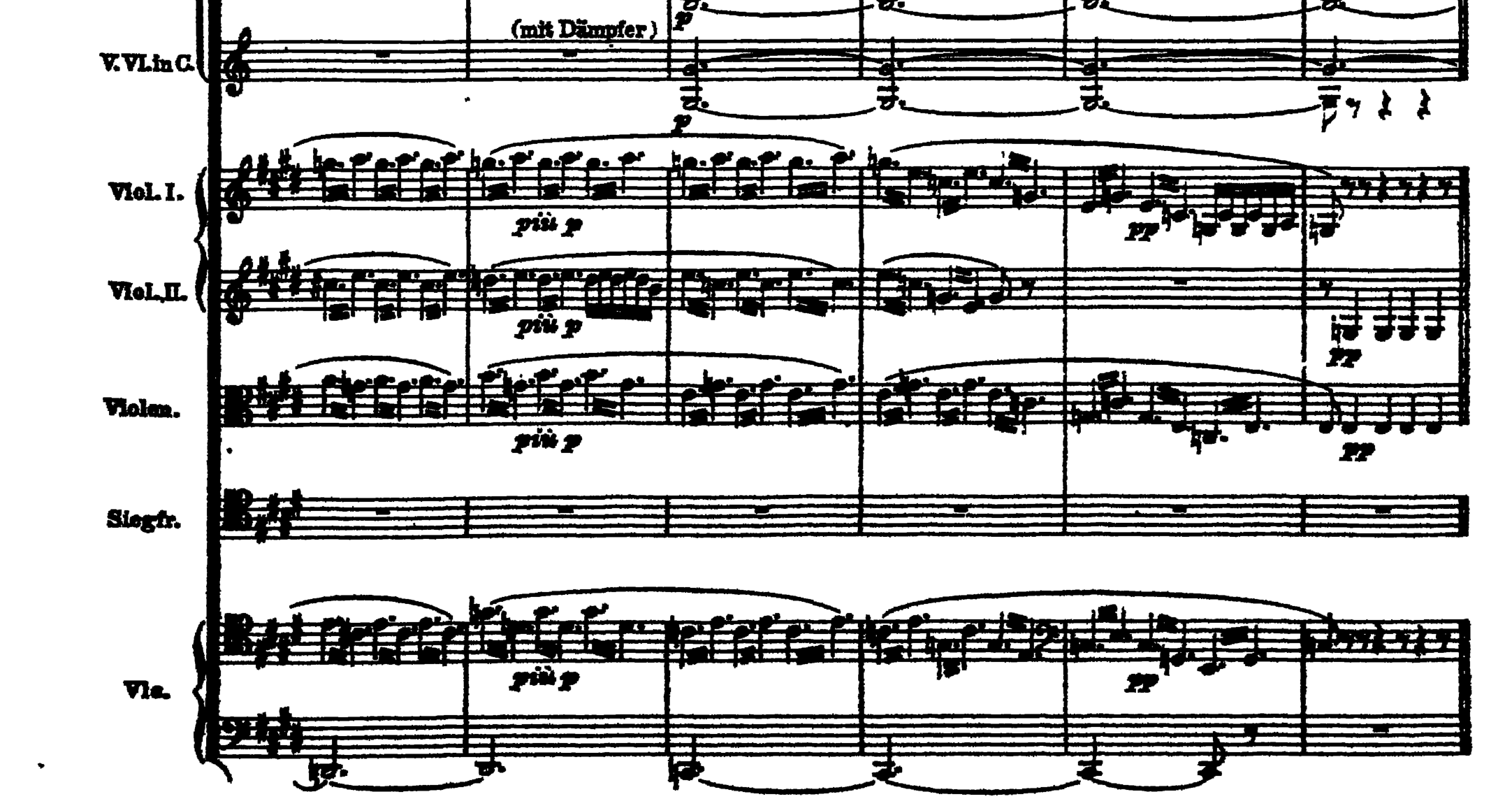
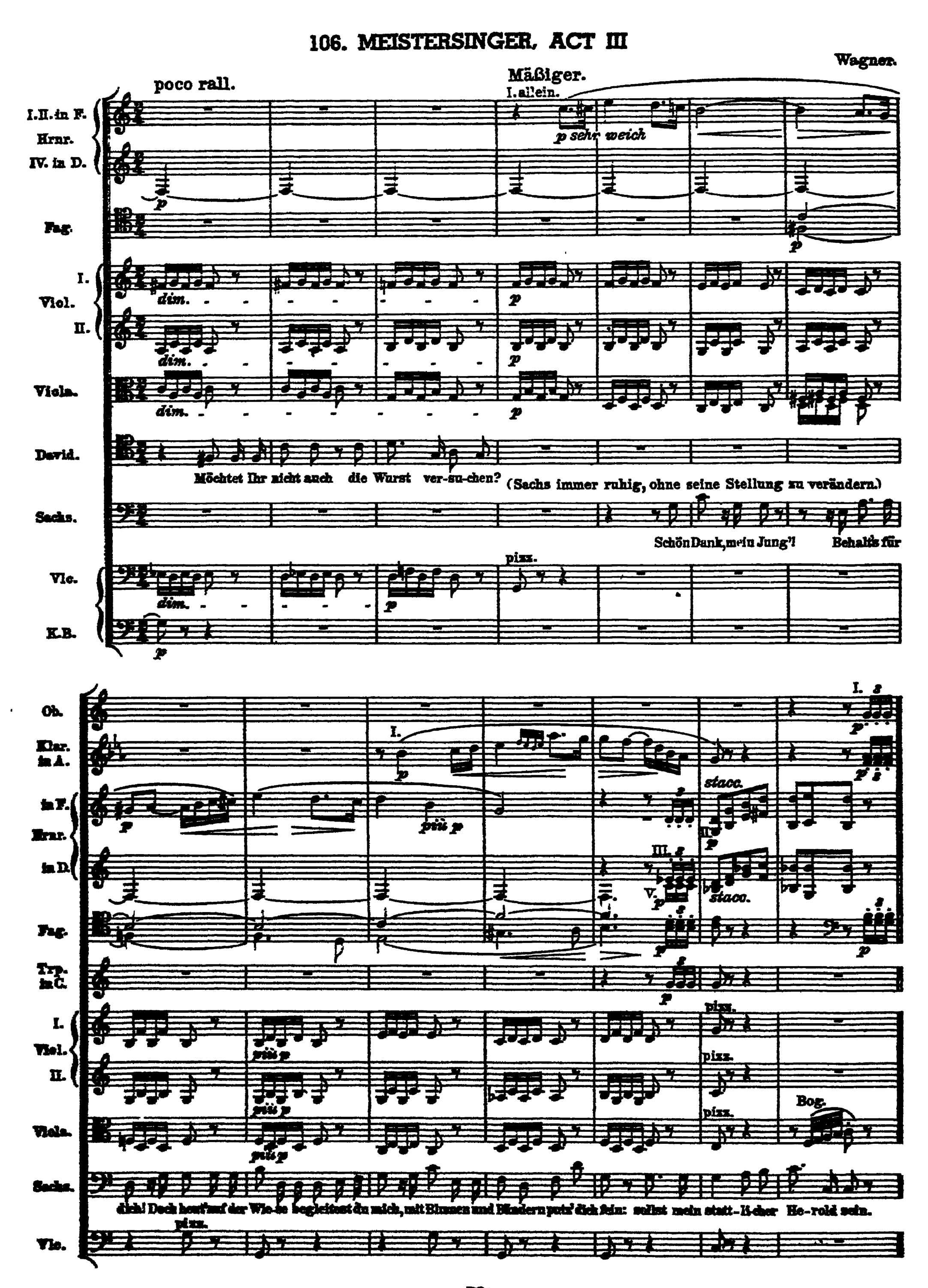
107. der fliegende hollaender, act I
Sen-ta; = 1a8 dir ver- trann! Ein Traum ists... hor fhn surWarnung an!
Wagner.


Fal. 8 iS 2 ES SSS re ee ee eo re ee ee ee ST ES A NS ES Te a SK ecw |
111. rheingold, scene II
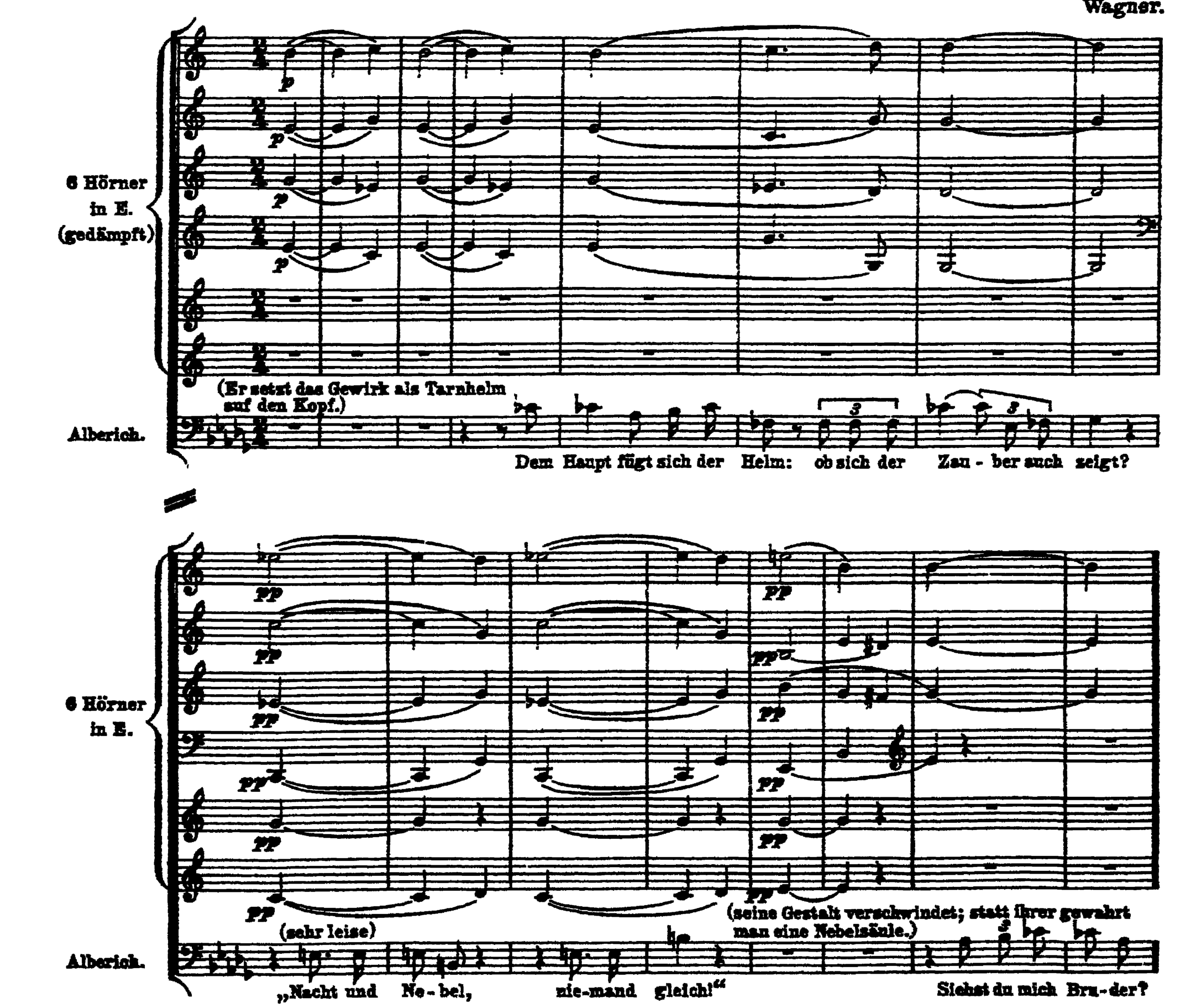
Although horn players now use almost exclusively the horns in E, F, high A and bigh BY (incidentally, tone of vie hoes to BB cote tie soft and noble timbre it’ requires to
of the horn in F), it is nevertheless advisable to retain Richard Wagner's method of indicating the key of the horn according to the changes of key in the music. It is true that horn players do not observe these different keys any more; but they are accustomed to transpose any key instantly into the kev of the horn they are using, and they much prefer this method to being forced to read all the time the horn in F, for instance, with a great nomber of accidentals (sharps. double sharps, etc.). Hence, composers should continue to indicate:
horn in E46, D, D® as they see Gt. In my opinion, this has the advantage of a cleaner. appearance of the seore. Personally I prefer to read the horns in the different keys and to transpose them (habit may have something to do with this, too). The score is much clearer on first sight, since the staves of the horns and trumpets at onee stand out plastically in contrast to the staves of the wood-winds and strings with their transpositions and numerous accidentals.
Except for the above stated difference in softness between the horns in F and high B®, all the other differences in timbre between the various valve horns are merely illusory. This is why many horns in different keys are no longer used. Generally, the pisy- ers of the first and third horns use the horn in high B* for almost ali pieces in flat keys and the horn in high A for all pieces in sharp keys. The players of the second snd fourth horns use horns in E and F.
High keys are less strenuous and permit greater sureness. For instance, Siegfried’s solo (Example
112) is executed with surprising ease by all horn players in spite of its seeming difficulty; likewise the following passage (“Meistersinger”, Act III, Scene
Horns in high F and high C are now said to be in the process of construction. This would be of very particular interest in reference to the rendition of