 Playable Books
Hector Berlioz · section 31 of 67
The Trombones
Read and hear this section in the playable edition →

There are four kinds of trombones. each of which bears the name of the human voice which it resembles most in character and range. The soprano trombone, the smallest and highest of them, exists in Germany; it is unknown in France. It has hardly ever been used in the works of the great masters. This is no reason why it should not be employed sooner or later. especially since it is by no means certain as yet whether it can be successfully replaced by the valve trumpets—even by those highest in range. Only Giuck has used the soprano trombone under the name of cornetto in the Italian score of “Orfeo”. Here it serves to double the soprano voices of the chorus, while the other three trombones (alto, tenor and bass) double the other voices.
These three last-named trombones are the only ones in general use. It must be mentioned, however, that the
alto trombone is not found in all French orchestras and that the bass trombone is almost unknown there. The latter is almost always confused with the third tenor trombone, which executes the lowest voice and is therefore quite incorrectly called the bass trombone, although differing from it essentialy.
Trombones are instruments with slides; their double tube can be lengthened or shortened instantly by a simple movement of the player’s arm. It is obvious that these changes in the length of the tube must completely change the key of the instrument. Thus the trombones, possessing all the notes which result from the natural resonance of the tube in all positions, like the other brass instraments, attain a complete chromatic scale with just one gap at the bottom of the scale, as we shall presently see.
The alto
Trombone
It has # range of more than two and a half octaves. It is written in the C-clef on the third line (alto-clef):

Its timbre is somewhat shrill in comparison with that of the lower trombones, and its low tones are rather poor. It is generally advisable not to use them, particularly since their quality is excellent on the tenor trombone; the latter is almost always to be found in orchestras together with the alto trombone. However, the high tones such as B, C, D, E. F may be very useful. For their sake it is regrettable that the alto trombone is at present banished from almost all French orchestras.
When its slide is closed, the lips alone produce the following tones, in the same order as the natural tones of
the horns, trumpets, cornets and all other brass instruments in Eb:
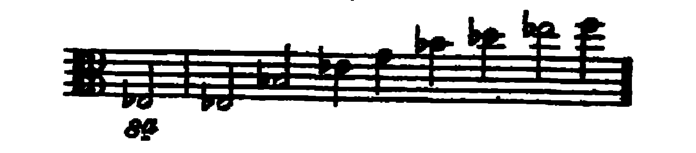
Hence the name Small Trombone or Alto Trombone in Eb, given to it by players. The latter name would be useless in seores, since the instrument emits the tones as they are written and does, therefore, not belong to the transposing instruments. As we have explained
above, only transposing instruments require such indications of key.
The tenor
Trombone
This is undoubtedly the best of all the trombones. Its strong and full tone remains of good quality over the whole extent of its scale. It cam execute passages of a rapidity unobtainable on the bass trombone. It is usually written in the tenor-clef (the C-clef on the fourth line). But since in many orchestras the three trombone parts, although differently named, are played on three tenor trombones, it follows that the first tenor trombone is written in the alto-clef, the second in the tenor-clef, and the third in the F-clef. With its slide closed, it produces the following tones, which are the natura] tones of all brass tubes in B®, i.e, of those tubes which produce Bb es their first low tone, if the entire mass of air in them is put into vibration.
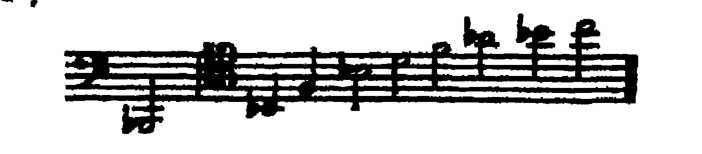
For this reason it has been called trombone in B®. It is a
fourth below the alto trombone and has the following range:

One perceives that the low E2 =o is missing on
the tenor trombone. This causes innumerable errors even in the most learned scores. Thus, one of our contemporary composers, whose skill in the art of instrumentation is outstanding and uncontested, starts one of his operas with several low Ebs of the third tenor trombone. Actually the ophicleide plays them, while the trombone only doubles them in the higher octave. The composer has perhaps never noticed that the low E? is not played by
the instroment for which it was written.
The bass
Trombone
The only cause of its infrequent use is the oreat fate gue experienced even by the mast robust players.
the largest and consequently the lowest of 2l trambom », When it is emploved, there should be adequate pruses ta give the players sufficient rest. Altogether sparing and well-founded use should be made of this instrament. With its slide closed. it sounds the Zluwing tenes:
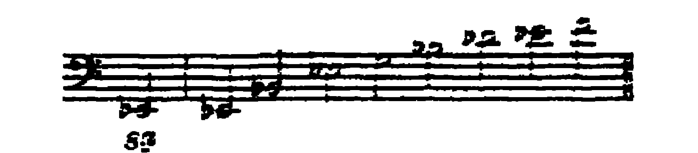
whenee it is also ered the Large Trombone or Bass Trombone in E*, It is an cetave lower than the alto trombone and a Afth iower than the tenor trombone, It is written in the F-cief; its range is as follows:
Including all chromatic intervals a Me 4

The tone of the bass trombone is majestic, awe-inspiring and formidable. The bass trombone deservedly takes the lowest voice in the brass fam‘ly. Unfortunately, it is entirely lacking in Paris: it is nut taught at the Conservatoire, and thus far no trombone player has been willing to study it. Consequently. most of the modern German works and even the old French and Itatian works scored for orchestras with bass trombones are more or less distorted when performed in Paris, For
instance, in Weber's “Freischuetz” the low D =
occurs several times in the accompaniment of the hunt-
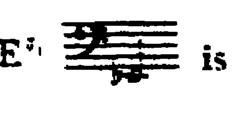
ers chorus, and the low E" z= is found when the hermit enters. These notes have to be transpased an octave higher. because the three trombone players of the Opéra orchestra use tenor trombones exelusively, on which these low tones cannot be played. The situation is
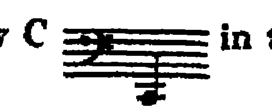
the same with the sustained low C == in the chorus
in Gluek's “Alceste’—‘Pleure. o patric”. Here the effect of the low C is extremely important and its transposition is. therefore, all the more deplorable. The bass trombone is not so well suited to rapid movements as the other instruments of this famity. Because of the length and width of its tube, it needs more time for vibrating; besides, the slide of this trombone is operated by means of a special handle (because the length of the arm is not sufficient for certain positions). Thus it is easily understandable why the bass trombone does not possess greater agility. It is. therefore. simply impossible for the German performers using the bass trombune to execute many passages in modern French scores. which French players can execute on the tenor trombone after a fashion. The imperfection in the performance of these passages—in spite of the talent of some of our artists—-proves moreover that they are too fast even for the tenor trombone, and that trombones are altogether unsuited for passages of this kind. At any rate, this shows that the performers—as long as the composers do not impose too great difficulties upon them—should always use the instruments indicated by them, and no others. Unfortunately, many composers obstinately in-
sist on indicating in their scores alto trombones, tenor trombones aad hass trembones instead of tenur trombones FLT TT althoagh ther know quite well that most ef osr orchestras have only tenor trombones. Cunsequently, in order to perform these works elsewhere exaetiy ay in Paris, it would be necessary to disregard the compuser’s indicitions and tu use the same instruments as in Paris. But can such: interpretation of the compos- ér'y intentions be permitted at all? Would this not open the dour to ai) sorts of distortion and abuse? Is it not more just to iet these compysers who are so negligent in marking their works suffer a little. rather then let others who write theirs carefuily and with an exact knowledze of instrumental resources run the risk of seeing their scores disfiwared >
All trombones have the same range, starting from their different lowest tones. This range, as we have seen. is two octaves and a sixth. But that is not all. Besides this extensive seale they possess at the extreme low end and starting from the frst natural tone downward four additional tones, tremendous and magnificent on the tenor trombone. indifferent on the altn trombone, and terrible on the bass trembone—if they can be produced at ail, They are called pedal tones. doubtless beeanse of the similarity of their sound with the lowest tones of the organ. which have the same name. It is rather diffiealt tu use them well and they are even unknown to many trombone plarers. These tones are:
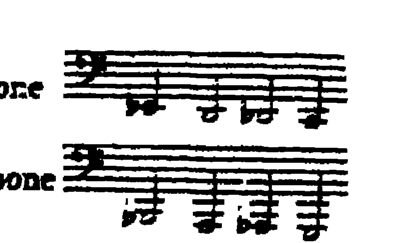
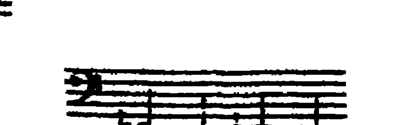
and on the bass trombones they would be oon howe s,
if ali players had the power to produce them, Even if the bass trombone had only the first of these pedal tones, E>, this one tone could be of great value for certain effects which are unattainable without it. since no other instrument of the orchestra, with the exception of the tuba and the double-bassoon, reaches this extraordinary depth. These tones are separated from the others on all trombones by a gap of an augmented fourth between the first natural note and the lowest note pro-*
duced by mesns of the slide: e.g. on the trombone in Bb:
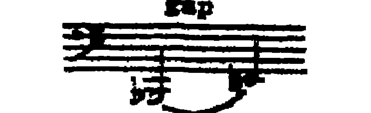
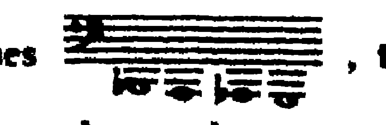
On secount of this gap it is sometimes indispensable to designste the keys of the trombones to be employed. For this gap changes its place on the scale according to the length of the tube and the key of the instrument, so that one or more or even all pedal tones available on a trombone in ont key may be wanting on one in another key. For instance, if a composer fails to indicate that he requires a trombone in'B5 when writing these pedal
, the orchestra which is to
esis pay his work may have a real bass trombone in E>, which lacks the low A’ and G; or 2 bass trombone in F, which lacks the four notes Bb, A, Ab, G (these two trombones are very popular in Germany): or, finally, a bass tromhone in G (frequently found in England), which also lacks Bh, A, AF. This will become clearer by the follow-
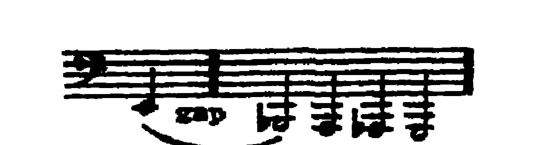
Pedal tones of the tenor trombone in Bd:
Pedal tones of the bass
( trombone in G the zap = only one of these exists on + trombone in Bb): —* °
General range of the three trombones
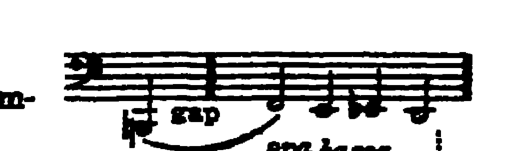
Pedal tones of the bass
(it has none of those of the trom- =
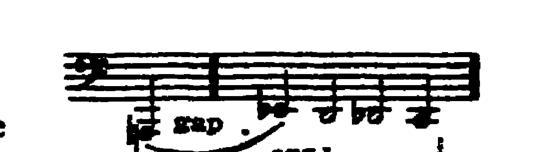
it lacks the Ad an of the gap 7
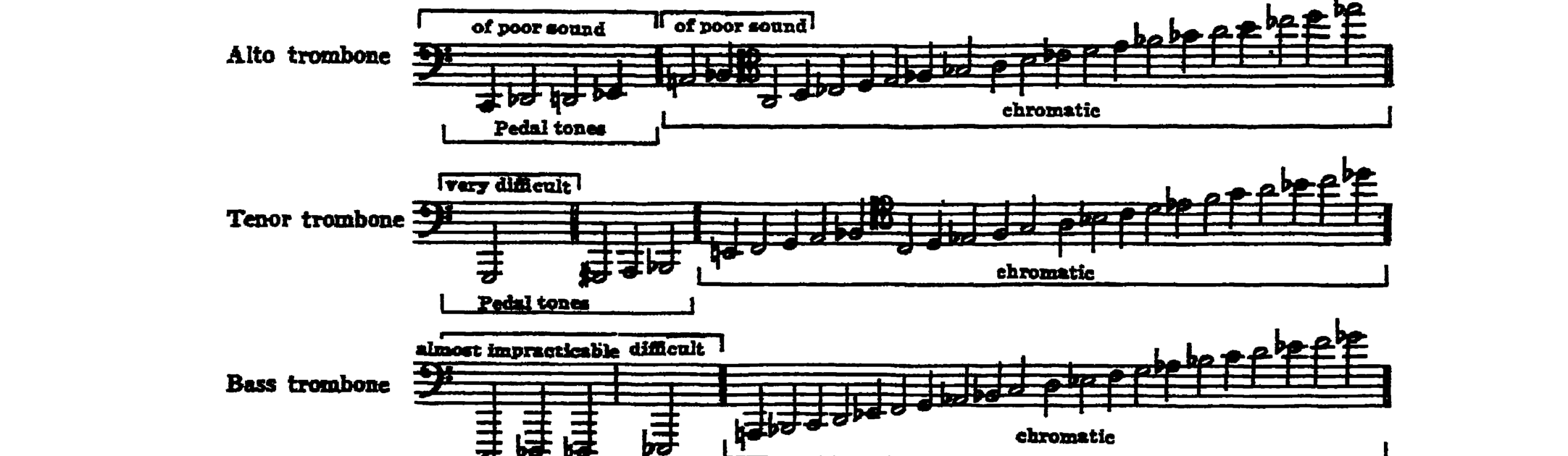
If the pedal tones of the alto trombone were not of such poor quality, they might be used in the orchestras that have no bass trombone to fill the gap between the E
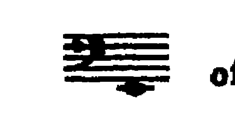
=== «of the tenor trombone and its first pedsl tone,
BE = Unfortunately, they are so thin and dull
that they can by no means replace the beautiful low tones of the tenor trombone. Only the bass trombone with the powerful tones of the extreme low range of its
The ingenious manufacturer Sax, of Paris, has fortonately surmounted this difficulty by means of a single valve attached to the body of the tenor trombone. This valve is controlled by the player's left-hand thumb while his right hand remains completely free to move the slide. By filling the gap. the valve gives the tenor trombone in Bé the following tremendous range:
Inclading the chromatic intervals

With the thumb-valvel Pedal tones!
{ (It is now generally used by the third trombone.) All orchestras shonld have at least one of these fine instruments !
The vibrations of the pedal tones are slow and demand mach breath To make them come out well, one must
give them sufficiently long doration. They should follow
one another slowly and be interspersed with rests to give the player time for breathing. Care should also be taken to keep the part in which they occur generally rather low so as to allow the lips of the trombone player to become gradually accustomed to the production of these very low tones. The best manner of writing pedal tones for the tenor trombone, for instance, is to ap-
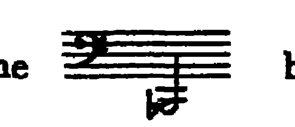
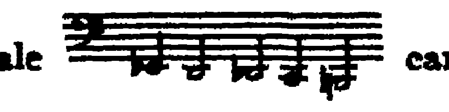
proach the first pedal tone == by a downward
leap of a fifth or octave from the F or B® above and, after a rest for breathing, to proceed chromatically downward to A and G# (the G is more difficult, very rough and rather risky). The composer of a Requiem (sEzRx10z) has recently introduced these three tones in this fashion. Although at the first rehearsal of this work five or six of the eight trombone players exclaimed with indignation that this was impossible, nevertheless the eight Bbs, the eight As and the eight G#s came out quite full and pure—played by artists who did not believe in the existence of these tones because they had never tried to produce them. The sound of the three pedal tones appeared even more beautiful than that of the
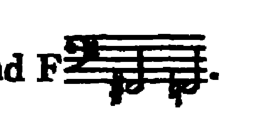
higher and more frequently used tones F#* and SS
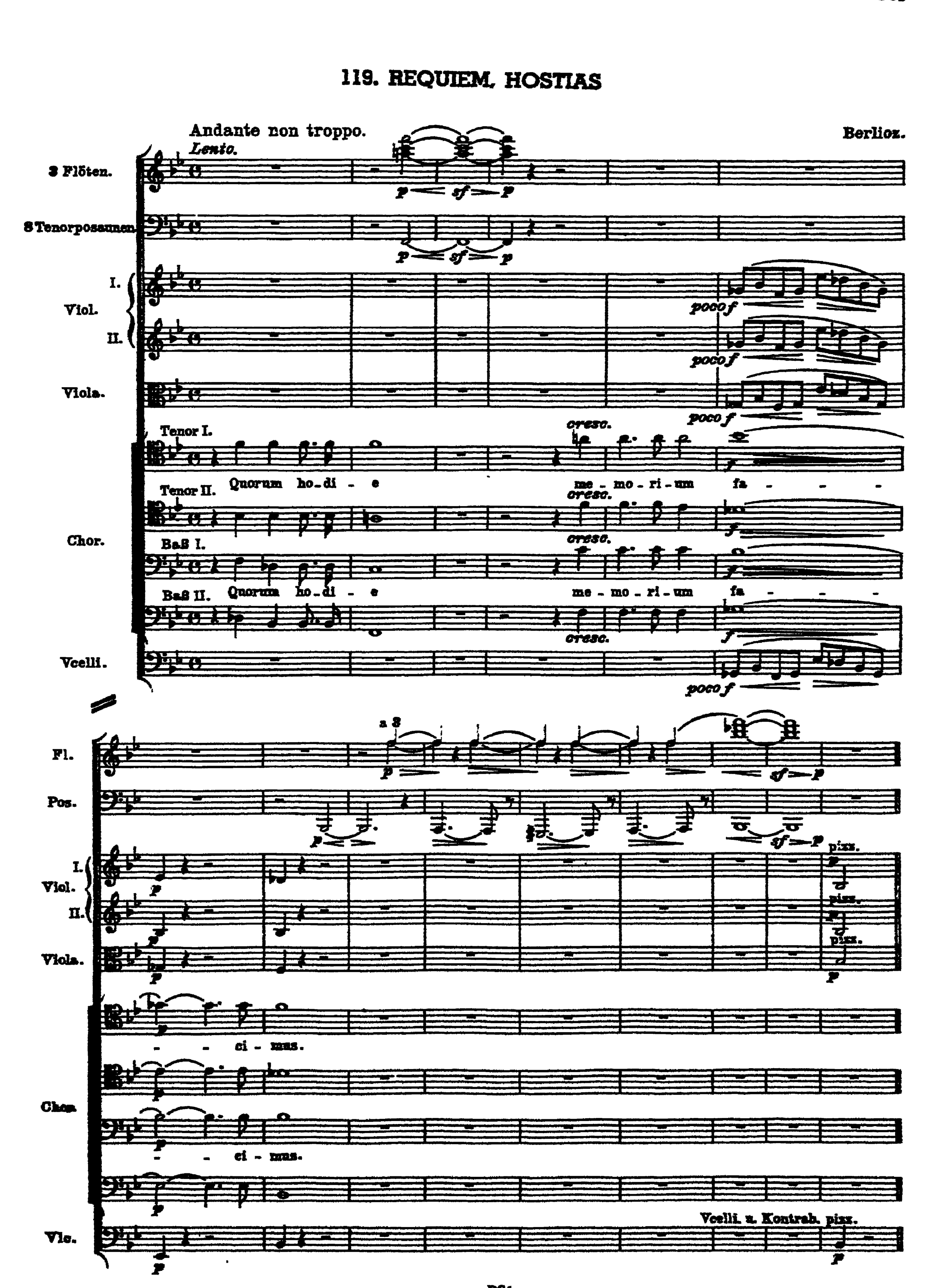
This effect is used in the work just mentioned below a three-part harmony of flutes, without any voices or other instruments. The sound of the flutes, separated from that of the trombones by an immense interval, seems to be the realization of the extremely high resomance of the pedal tones, whose slow movement and profound voice enhance the solemn impression of the Hostias during the rests interrupting the choir. (Example 119.)
I have used the pedai tones of the tenor trombone in yet another place, but for an entirely different purpos+. The intention was to produce low harmonies of extreme roughness and of unusual timbre. I believe I have attained this by means of the fifth on two tenor trombones
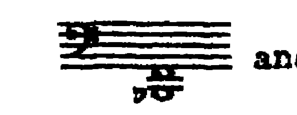
== and furthermore through a diminished sev-
enth between the Gf of an ophicleide and the pedal-A of a tenor trombone:
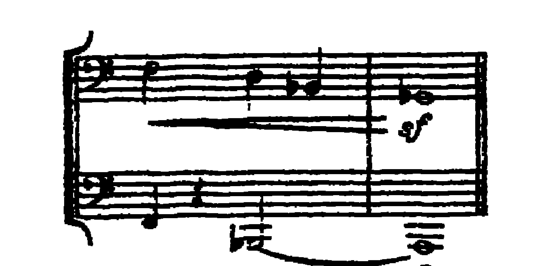
Ophicleide in C
2 Tenor trombones
A special difficulty, sometimes even impossibility. unknown to most composers despite its importance, exists for the trombones if they are to play the following tones in rapid succession:

The transition from one ot these notes to the other requires an enormous change in the position of the trombone slide and consequently » considerable stretch of the performer’s arm; this is why it can be executed only in very moderate tempo. A famous master wrote the rapid succession of B, A*, B,several times repeated. The trombone players of the Théatre Italien carried this out like the players of the Russian horns—each playing a single note: one took the B, the other one A®, to the great amusement of their colleagues; they langhed particularly at the efforts of the second trombone player to edge in his A* on the weak beat. For the same reason it is also rather difficult to play the following passage
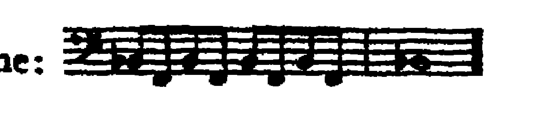
rapidly on the tenor trombone:
It is better to write this reversed. because the figure
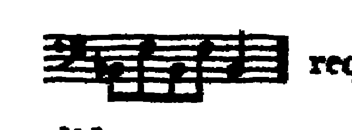
2a requires no change in the position of the
slide. The trill is practicable on the trombone—but only on
the tones of its highest octave, I believe that one should not write it for the bass trombone, where it is too difficult. In the hands of skilled players the tenor and alto trombones ean execute the following trills:
Including the chromatic intervals

Including the chromatic intervals

One sees that all these are major trills; minor trills are impossible.
In my opinion the trombone is the true head of that family of wind instruments which I have named the epic one. It possesses nobility and grandeur to the highest degree; it has all the serious and powerful tones of sublime musical poetry, from religious. calm and imposing accents to savage, orgiastic outbursts. Directed by the will of a master, the trombones can chant like a choir of priests, threaten, utter gloomy sighs, a mournful lament or a bright hymn of glory, they can break forth into awe-inspiring cries and awaken the dead or doom the living with their fearful voices.
Nevertheless, ways were found some thirty years ago to degrade this instrument by limiting its use to the worthless and ridiculous doubling of the double-bass part. Fortunately, this method has now been almost completely abandoned; but in many otherwise beautiful scores one can still find the basses almost continuously doubled in unison by a single trombone. I know nothing less harmonious or more vulgar than this manner of instrumentation. The tone of the trombone is so characteristic that it should never be used except for special effects. It cannot be its function merely to reinforce the double-basses, with whose timbre, moreover, it has no sympathy whatever—
—whereas the softer bass tuba or, still better, the
low horns are excellently suited to support the basso
Besides, it must be admitted that one single trombone always seems more or less out of place in the orchestra. This instrument needs harmony or at least unison with other members of its family to display its true qualities.
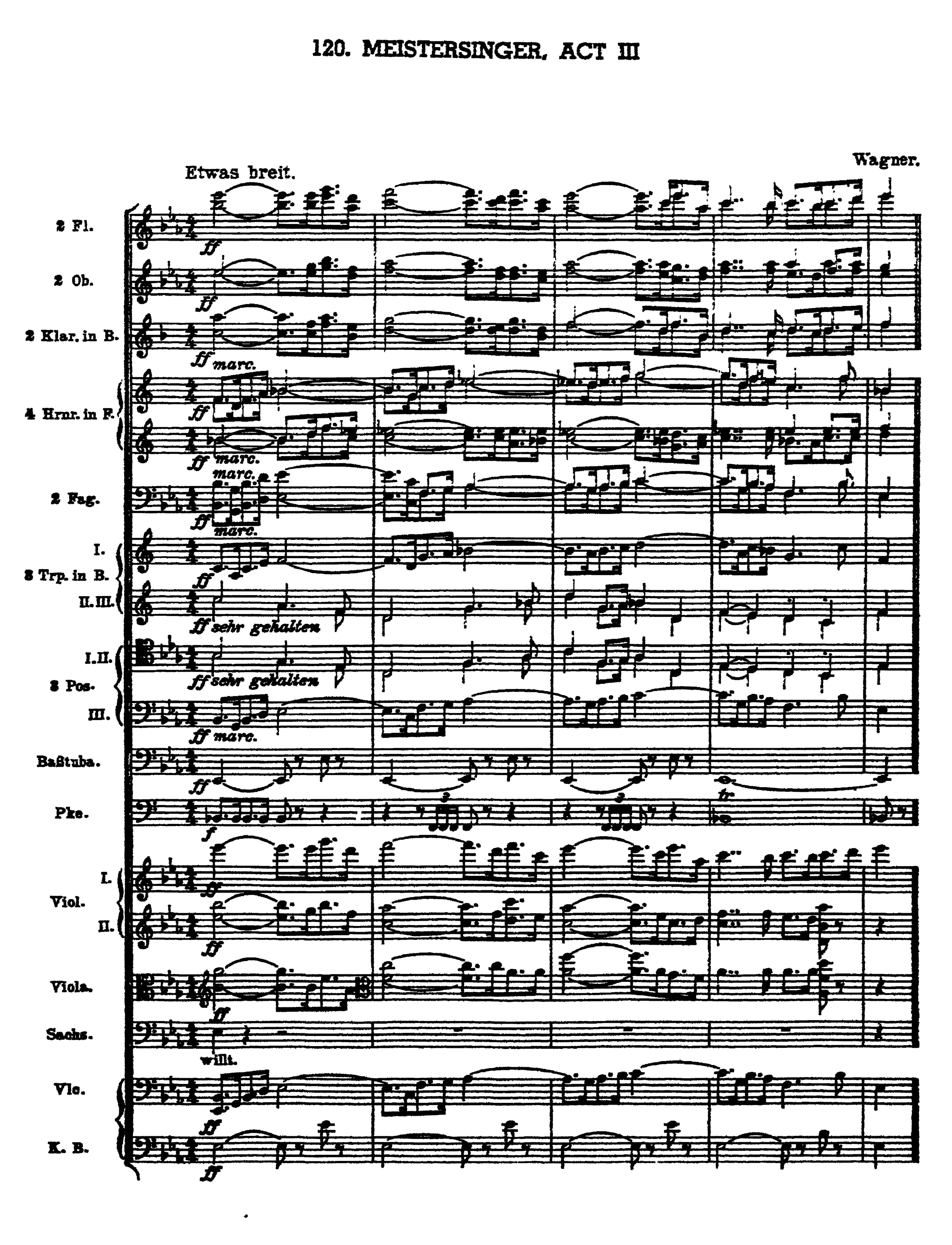
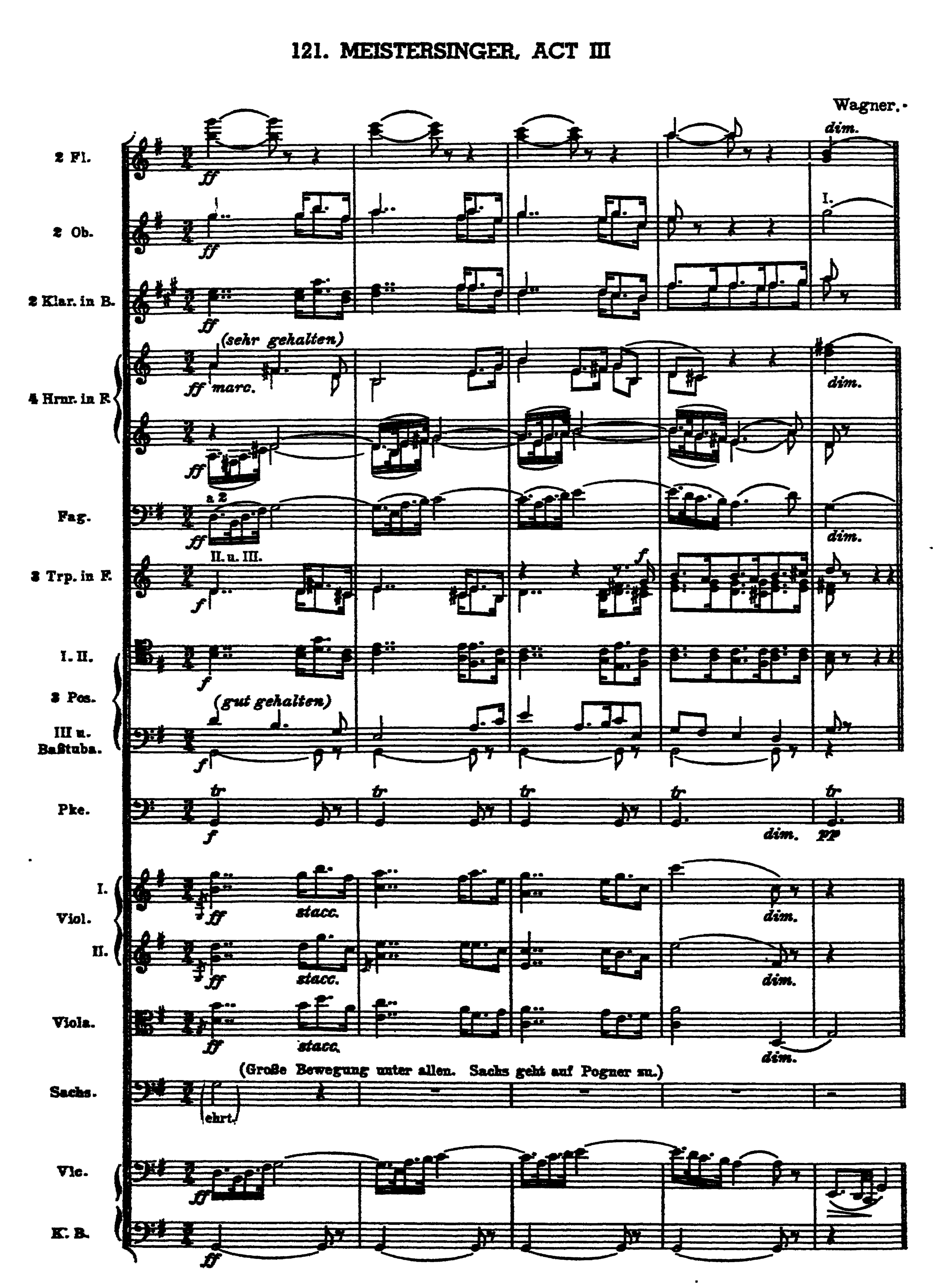
Some very interesting examples which contradict this statement are to be found in the third act of Wagner’s “Meistersinger”, where the two first trombones $ together and the third trombone alone play two themes with sharply contrasting rhythms; this is extremely effective. The passages in question may serve here as examples of the polyphonic treatment of the brass. (Examples 120 and 121.),
Beethoven sometimes employed the trombones in pairs, like the trumpets: but the accepted custom of writing them in three parts appears preferable to me.
It is difficult to determine with precision the degree of speed obtainable on the trombone in certain pussages. NeWertheless, the following may be stated: in 4-4 time of an Allegro moderato. a passage in simple eighths i.e. eight notes to a bar’ is practiczble on the brass trom-
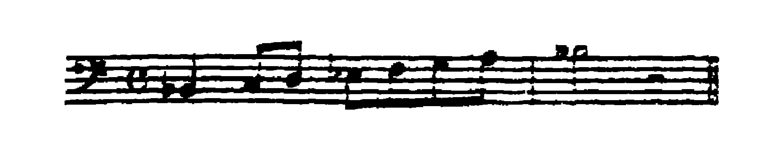
The tenor and alto trombones. being a ithe more agile, can execute passages in tripier eighths twelve to a bar} without too muc® troubie:

But these are the natural limits of their agility: to go beyond them means to venture into unsafe regions, to cause confusion—if not to attempt the impossibie.
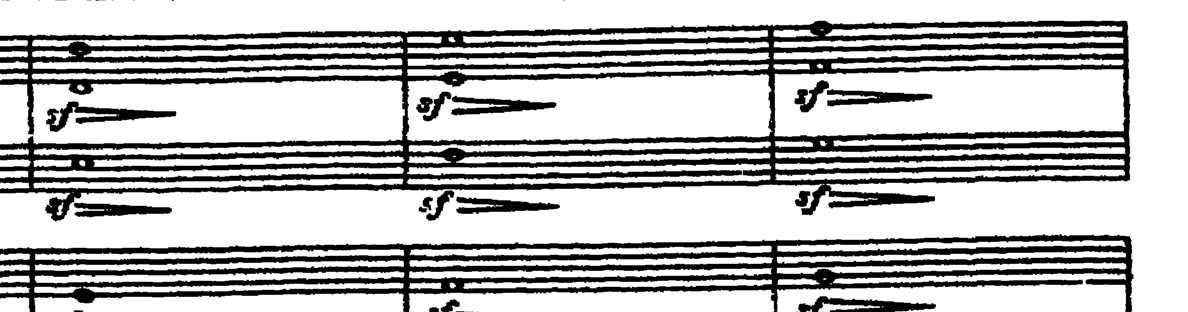
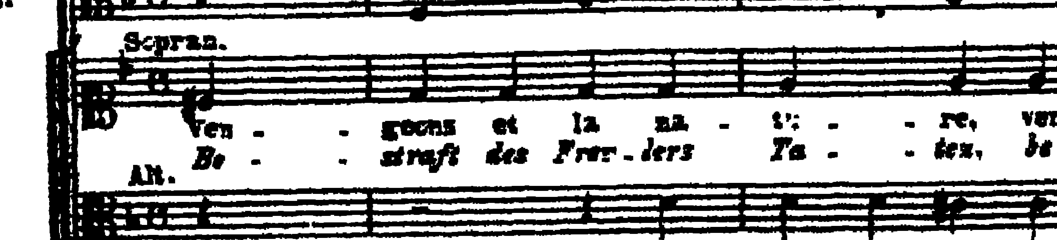
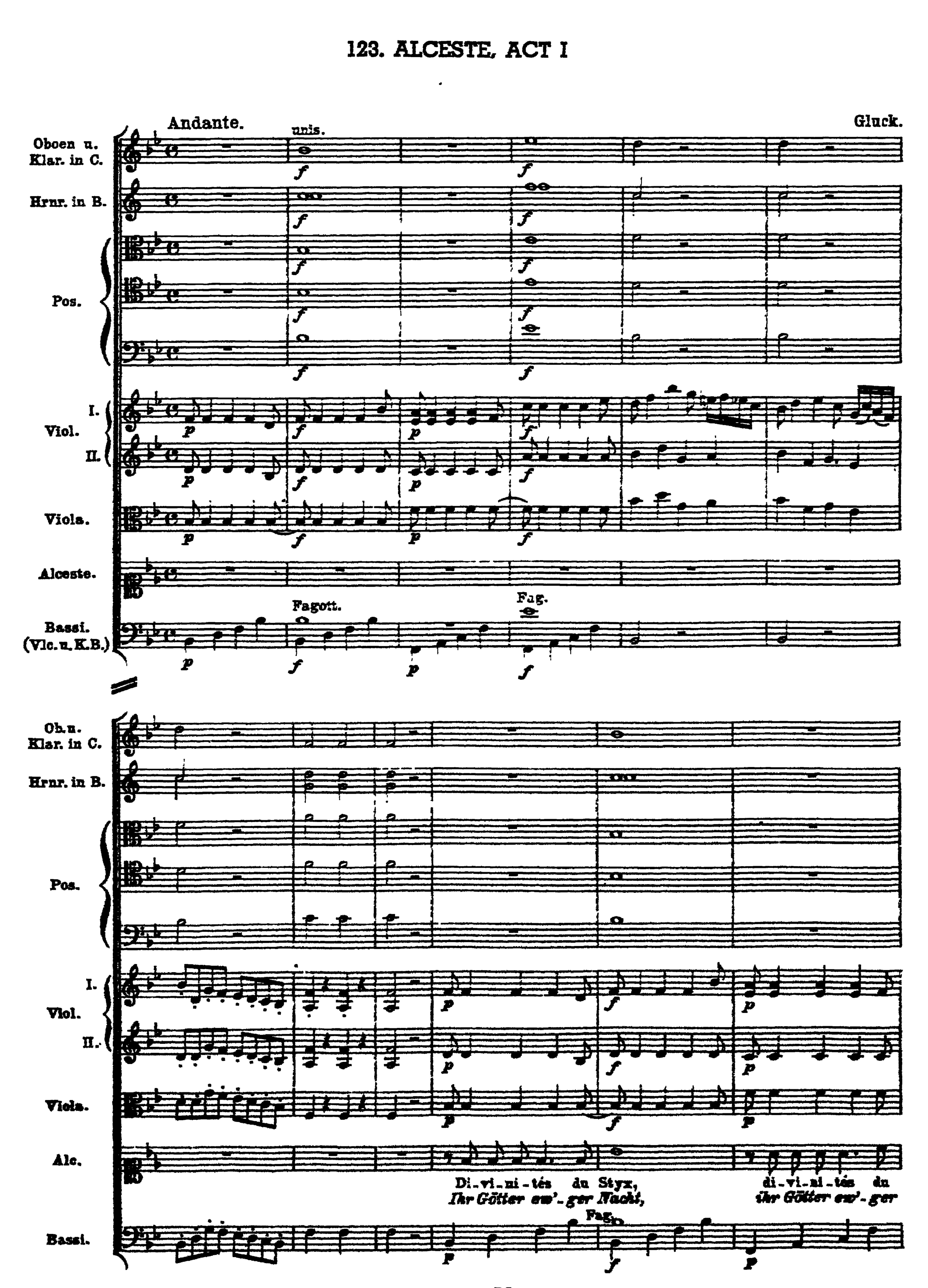
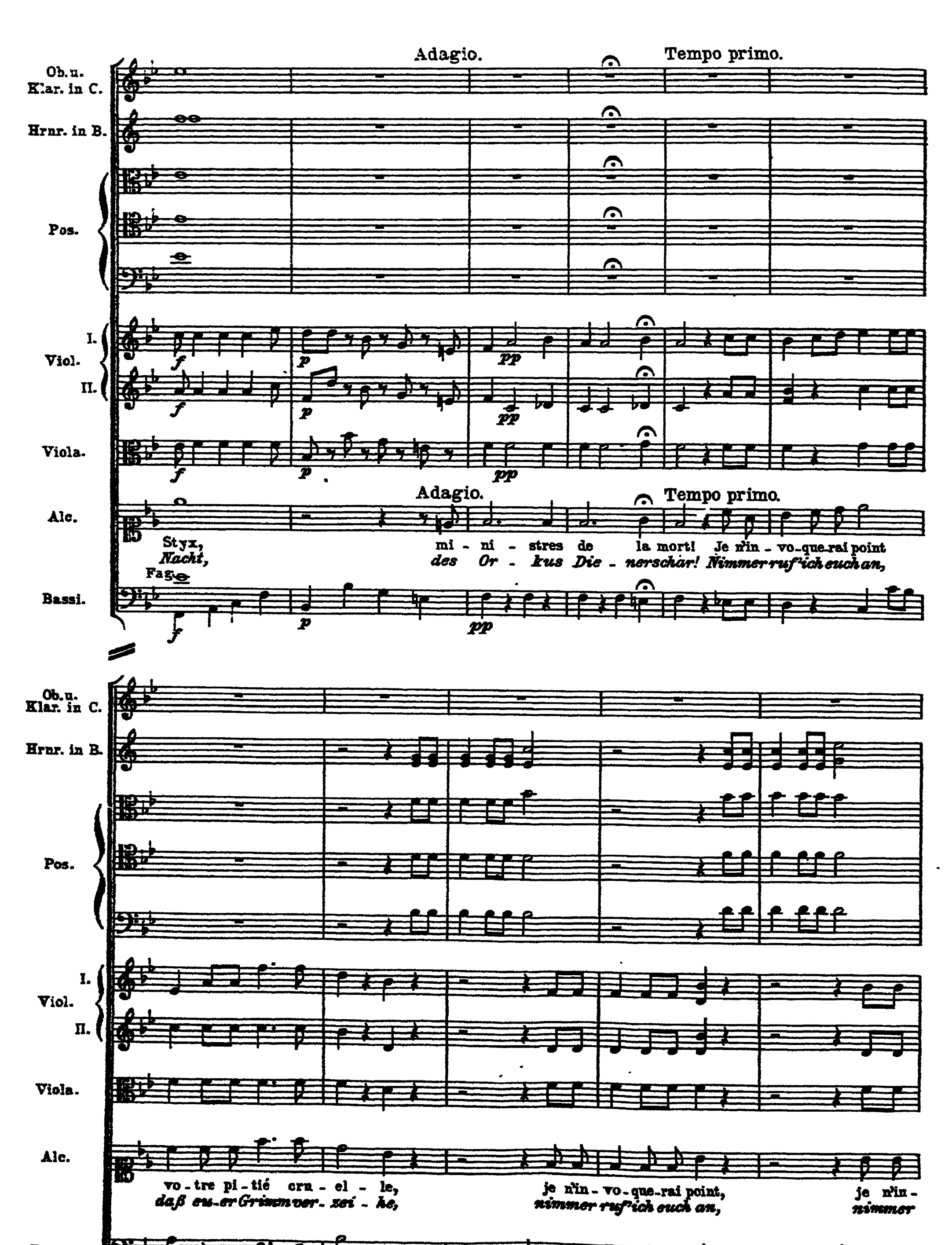
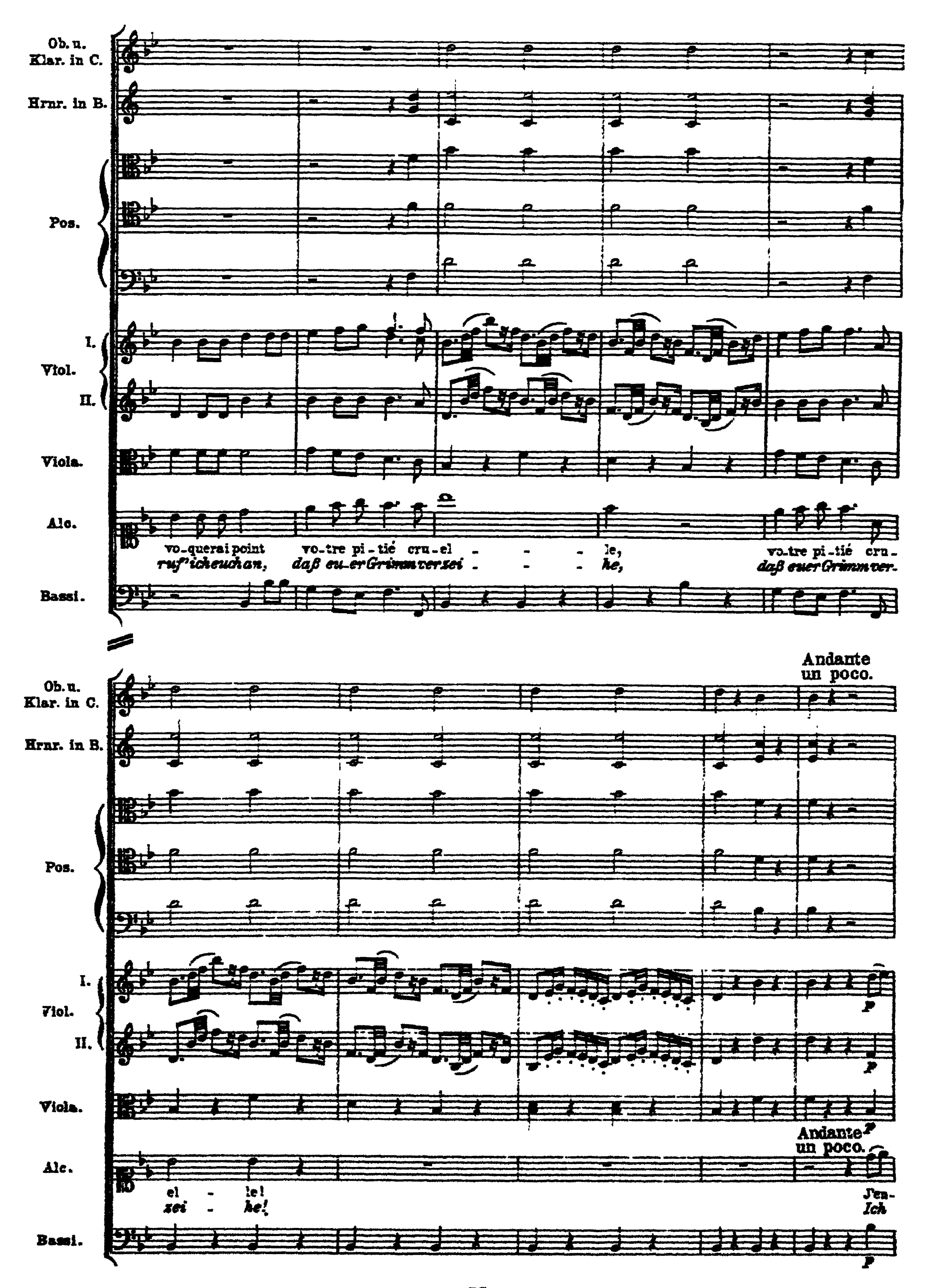
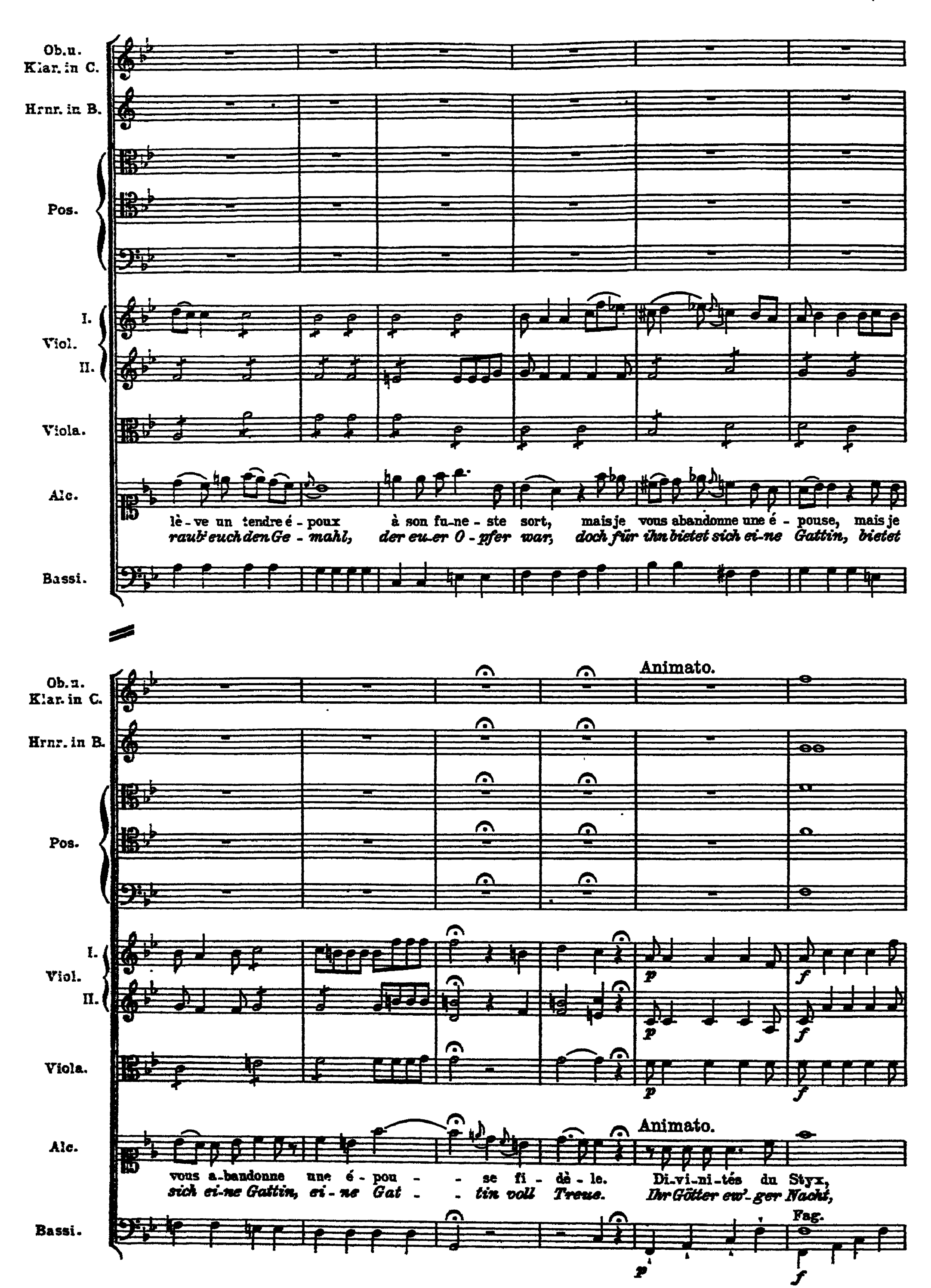
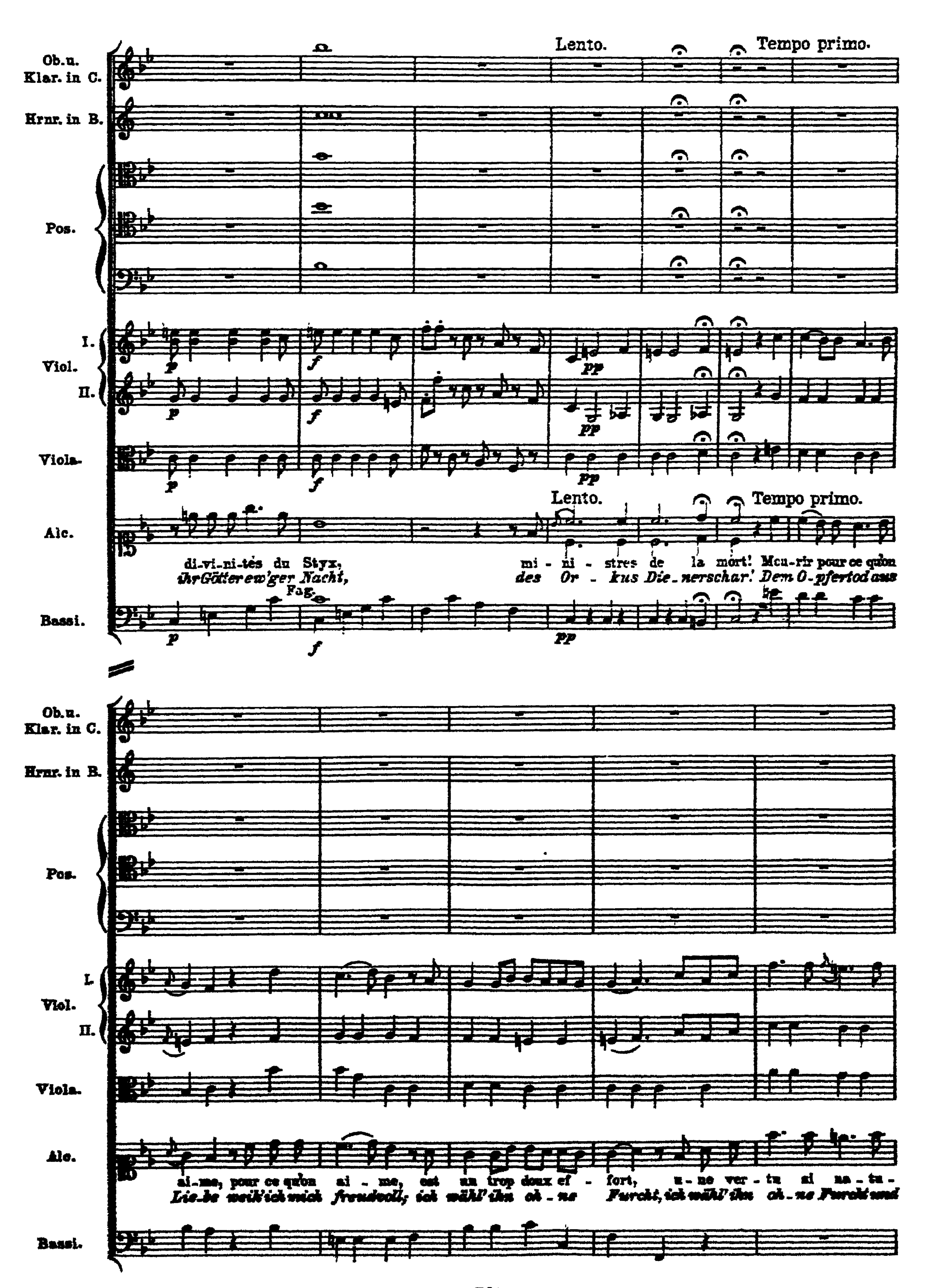
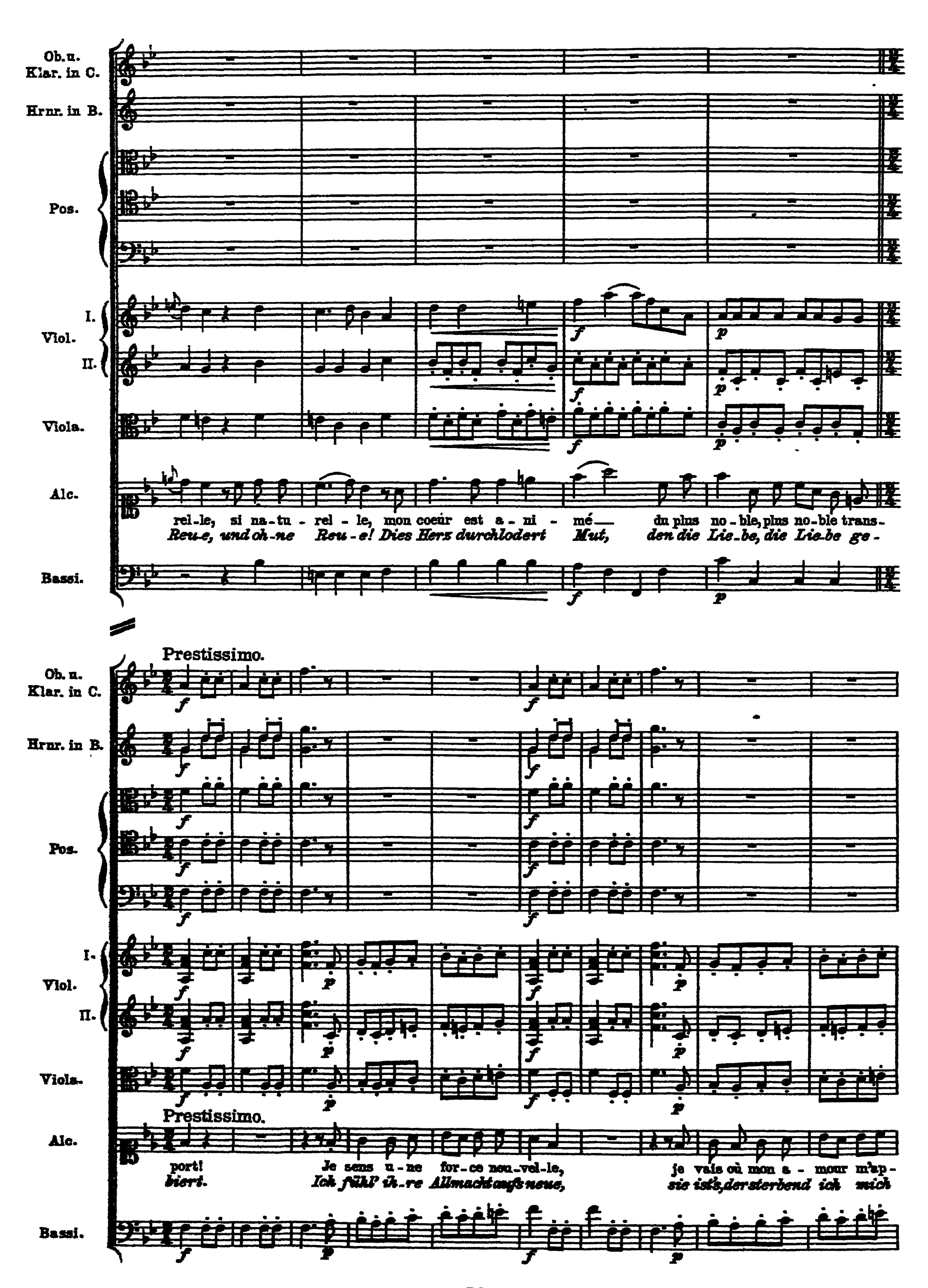
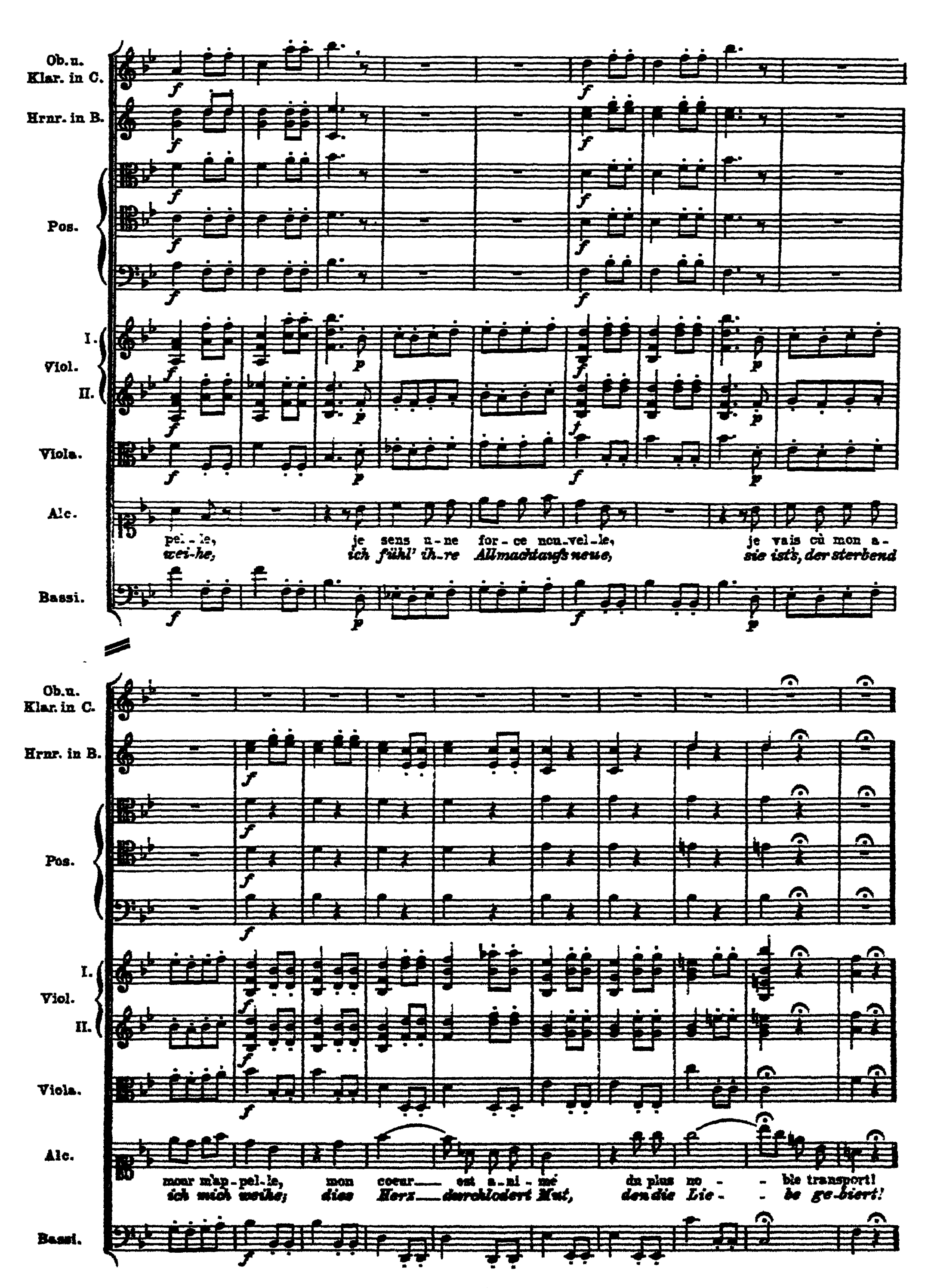
The character of the timbre of the trombones varies with the degree of londness. In fortissimo is is menacing and terrifving, especialy if the three trombones are in unison, or if at least two are in unison and the third takes the octave of the same tone. Such is the thunderous D-minor seale which forms the basis of the chorus vf Furies in the second act of Gluck’s “Iphigenie en Tauride”. Example 122.: Such also—but still more sublime—is the immense outery of the three trombones in unison answering, iike the angry voices of the gods of the underworld, Alceste’s eries, “Ombre! larve! eompagne di morte !, in that wonderful aria whose uriginai min idea Glock allowed to be perverted by the Frenc!: trunsiator, but which hus nevertheless remained in everybody's memory with its unfortunate first verse. “‘Divinités da Styx! ministres de In mort?’ There is another remarkable pissage in this piece toward the end of itfrst section where the trombones. divided into threr parts, answer the phrase of the aria, “Je n'invoquerti point votre pitié eruelle”, imitating its rhythm: by the very effect of this division the sound of the trombones immediately assumes something at once ironic, rough. frightful and jocose, which differs markedly from th: sublime rage of the preceding unisens, : Example 123. :
122. iphigenie en aulide, act I
Animato.
Gluck.


ant Be -. streft des Frev.ders Ta -. tex, be. straft das Pree. ierz fo. '. ten und
- ven co et la is. oe. Pe, ven- gems m ia ta -
Chor. Be. tirafe dar Brev-lers Ta.. tom, be - stvaft des Prev-lers Texcr. :
» - Sat dee Prev. lers fo.) lten. be. atreft dex Peer dere Ta.. ton and




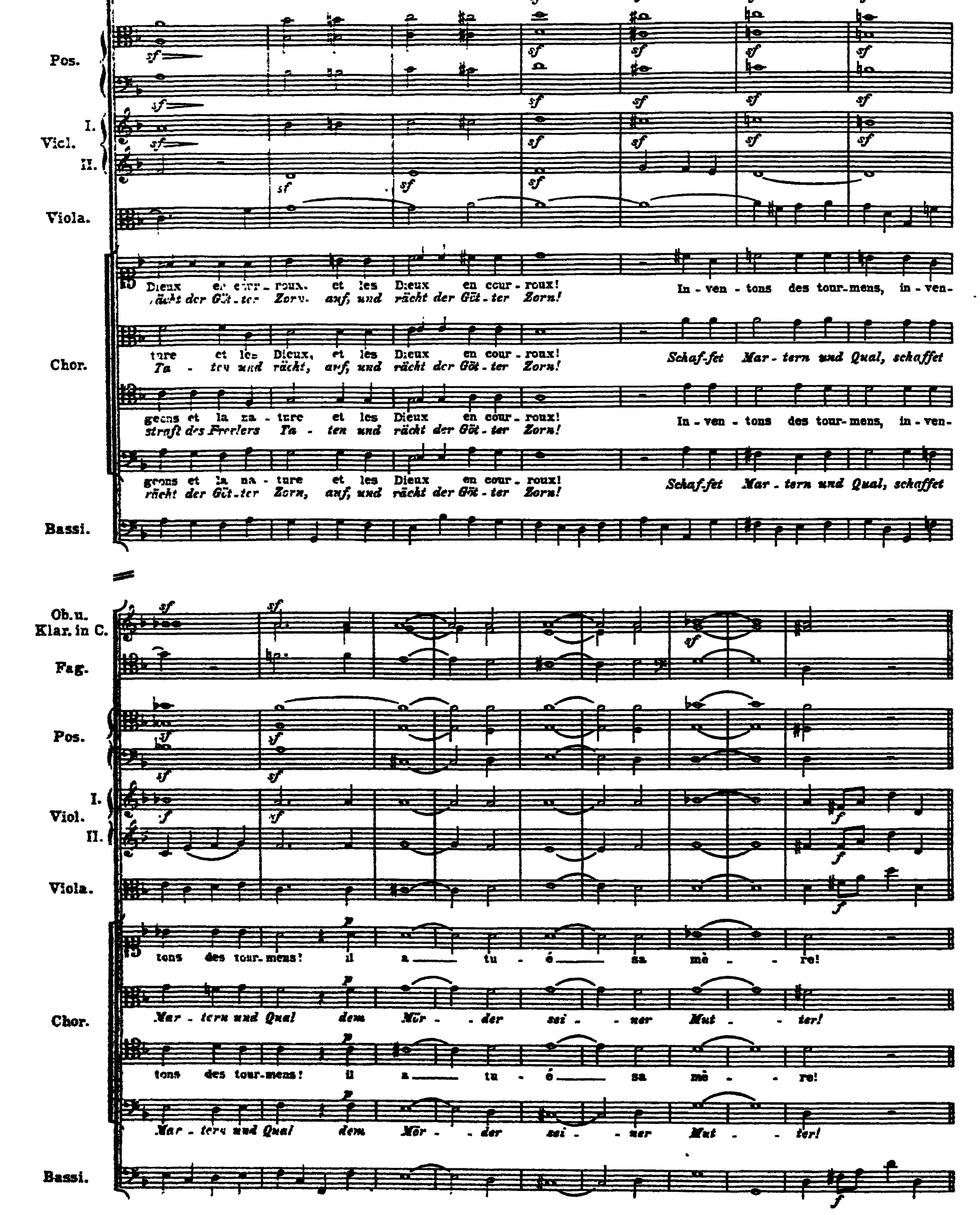
x Dieax < ¥ ear rounr et tes "Doenx pa cour. roux! " In i : bons des tour. mens a. ven-
eiraft aes Peeriers Ta - ten und racki der Got-ter Zorn! In- ven - tons des tour-mens, in - ven
fons des. towr-meas! a a——— ta - 6 sa mm. - A
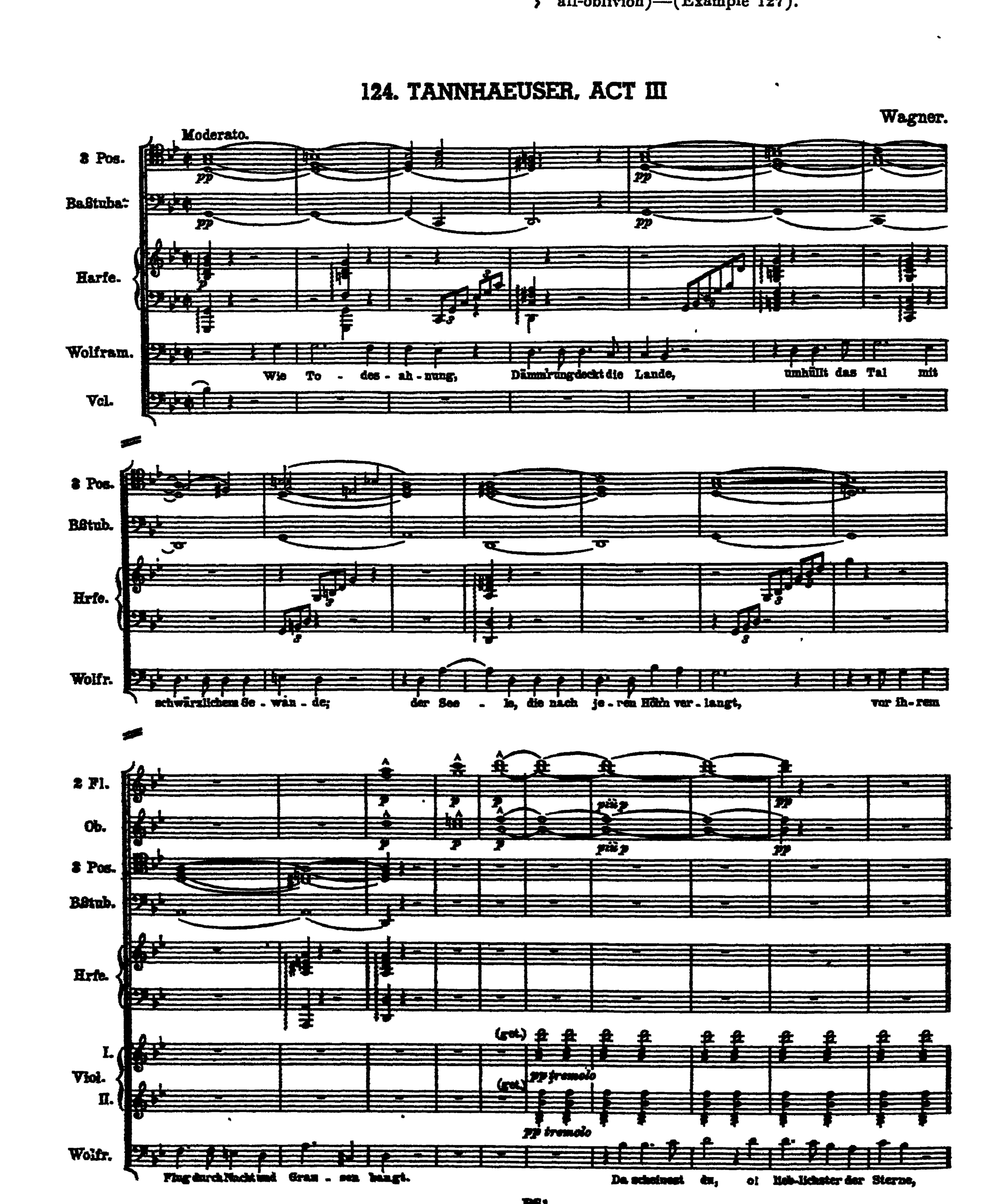
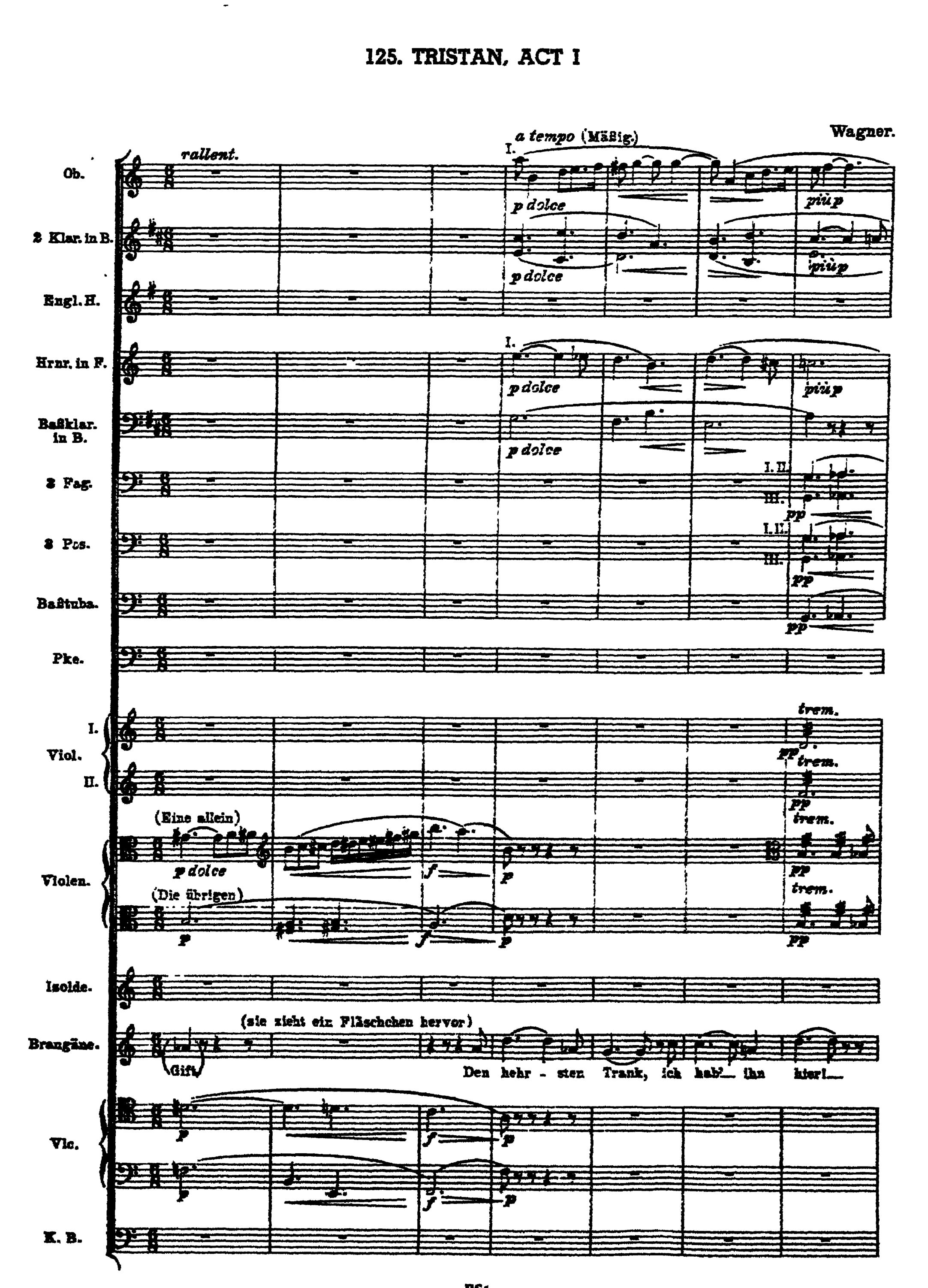
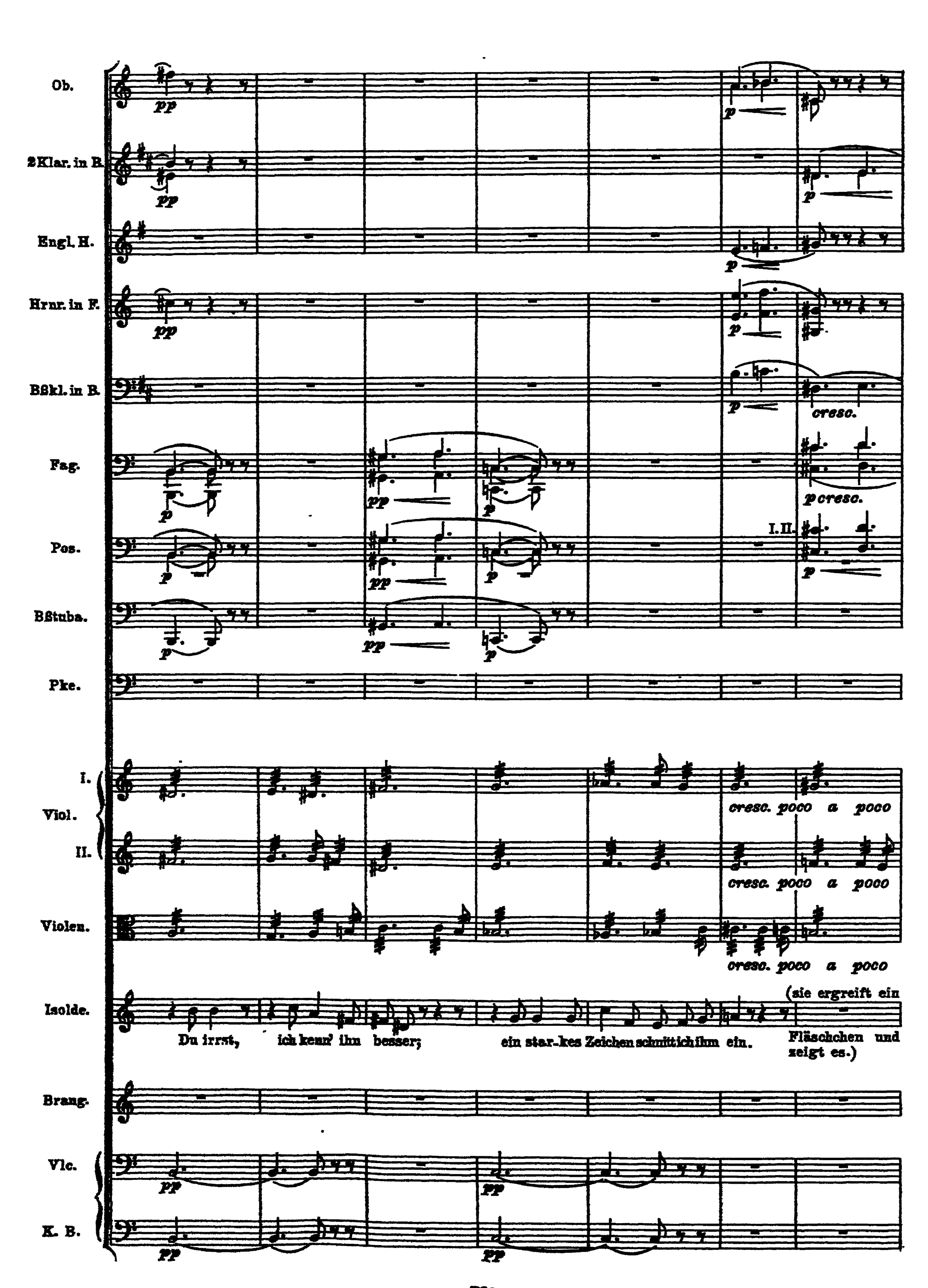
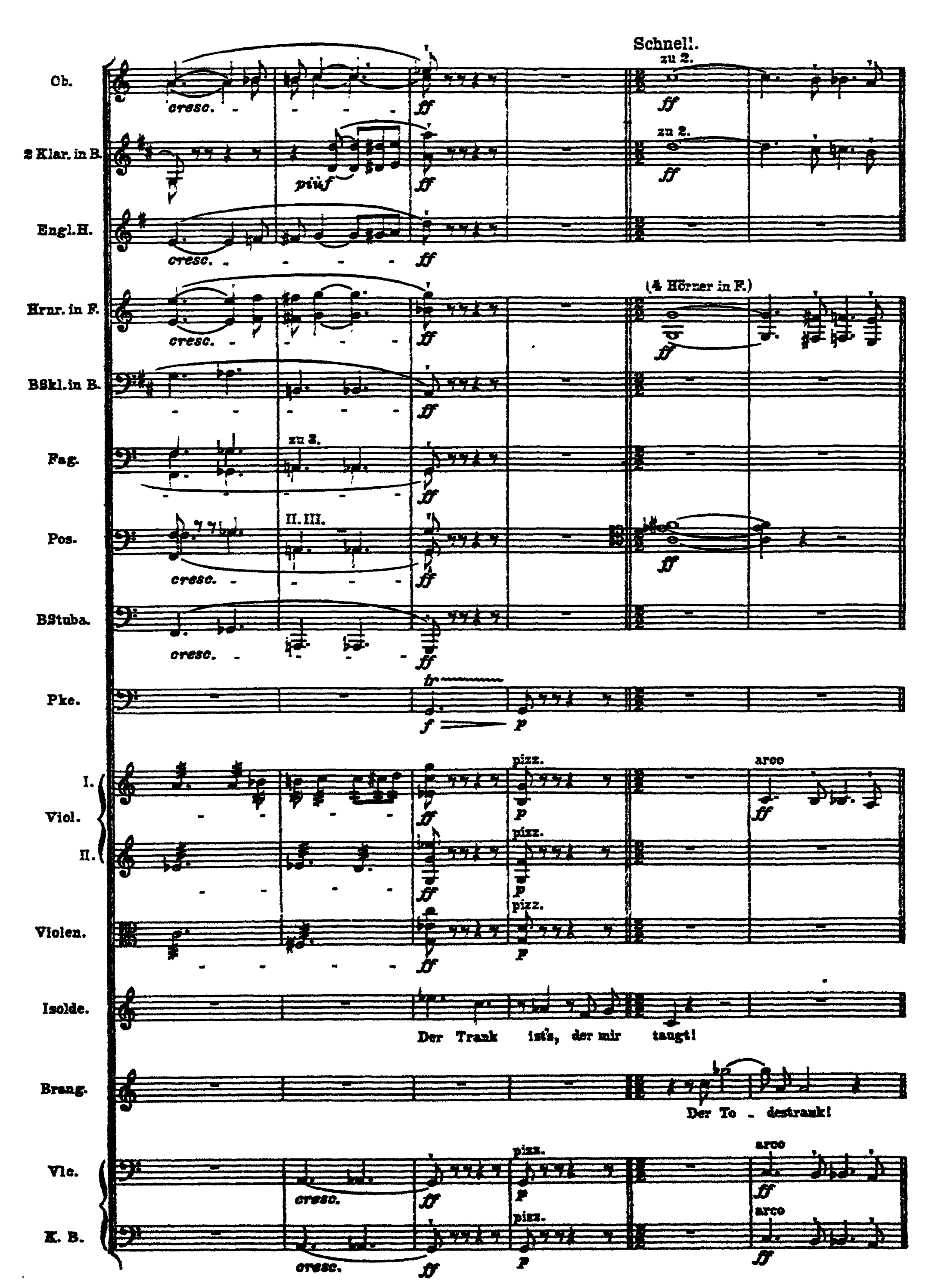
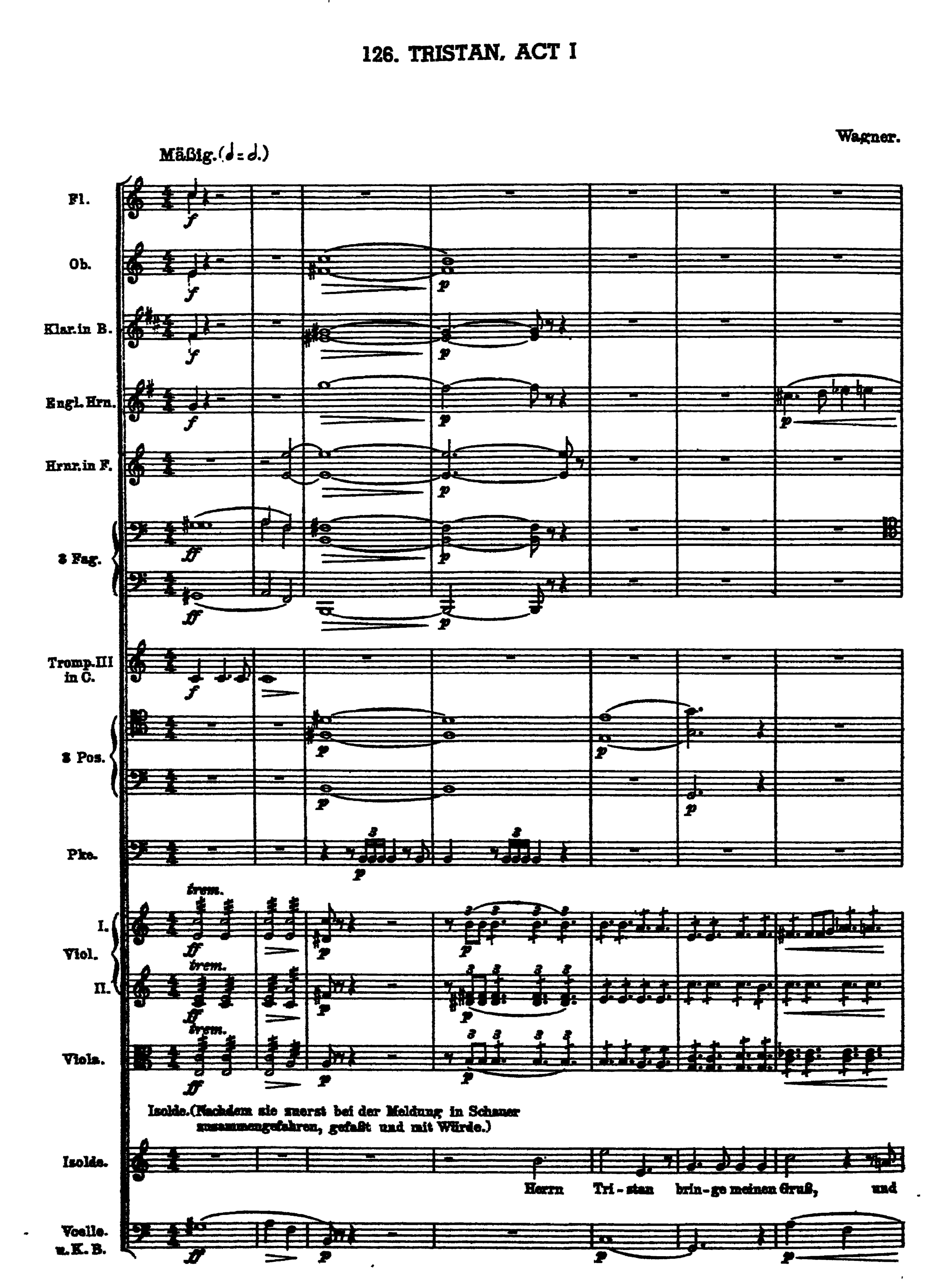
In three-part harmony and particularly in their medi- Wagner lets them accompany Wotan as an almost um range. the trombones have in forte an expression of continuous symbol of proud power. Compare also: hervie splendor, full of majesty and pride, which could “Tannhaeuser,’ “third act, (Wolfram), as a symbol of be weakened and destroyed only by the prose of a vulgar solemn resignation (Example 124); “Tristan”, first melody. In such cases they assume the expression of the act, death potion (Example 125); Isolde’s threat to trumpets—but with far more nobility. They no longer Kurwenal (Example 126); “Tristan”, third act
~ threaten—they admonish; instead of roaring they sing. (‘“‘goettlich ewiges Urvergessen”—divine, unénding
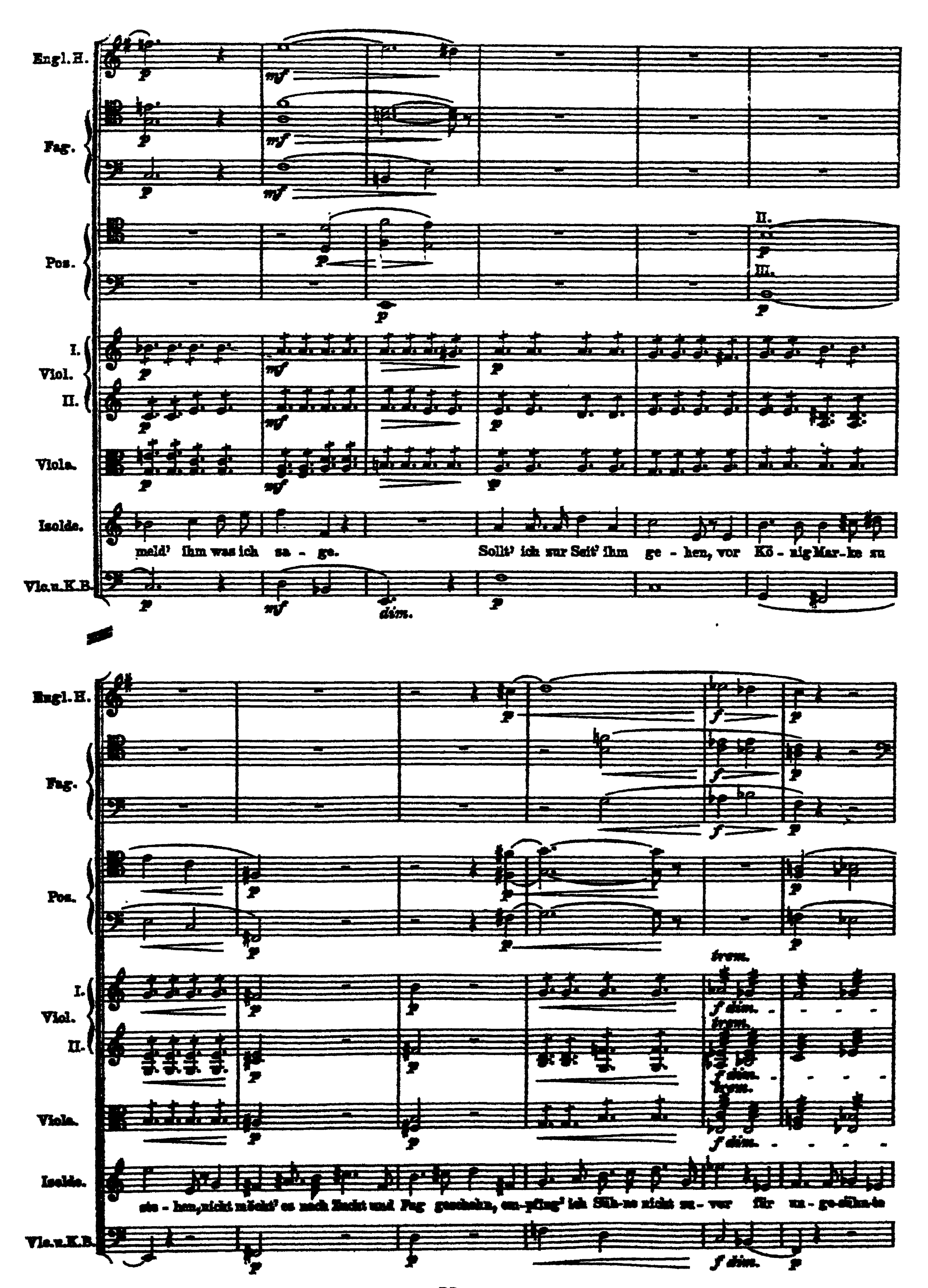
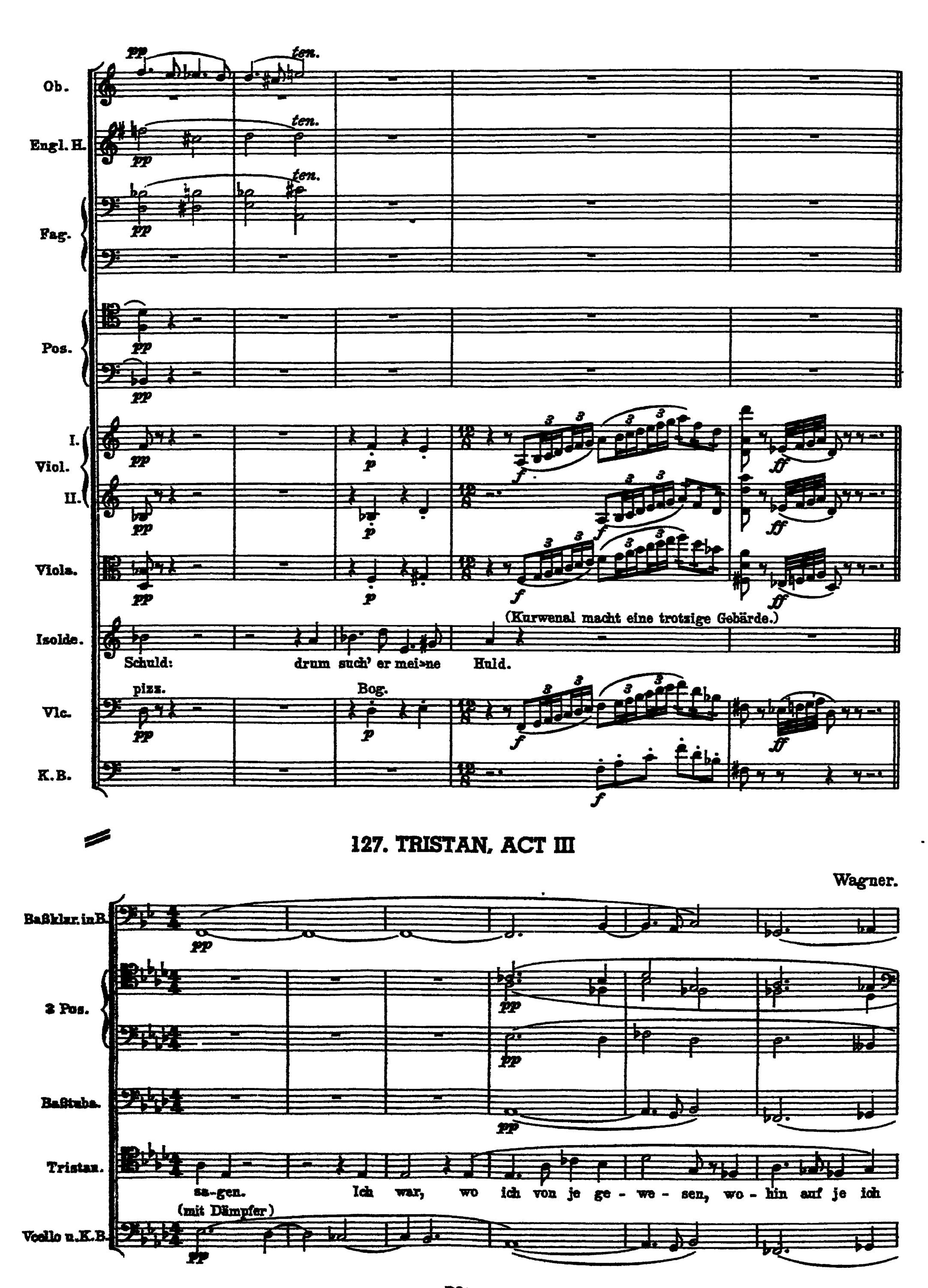
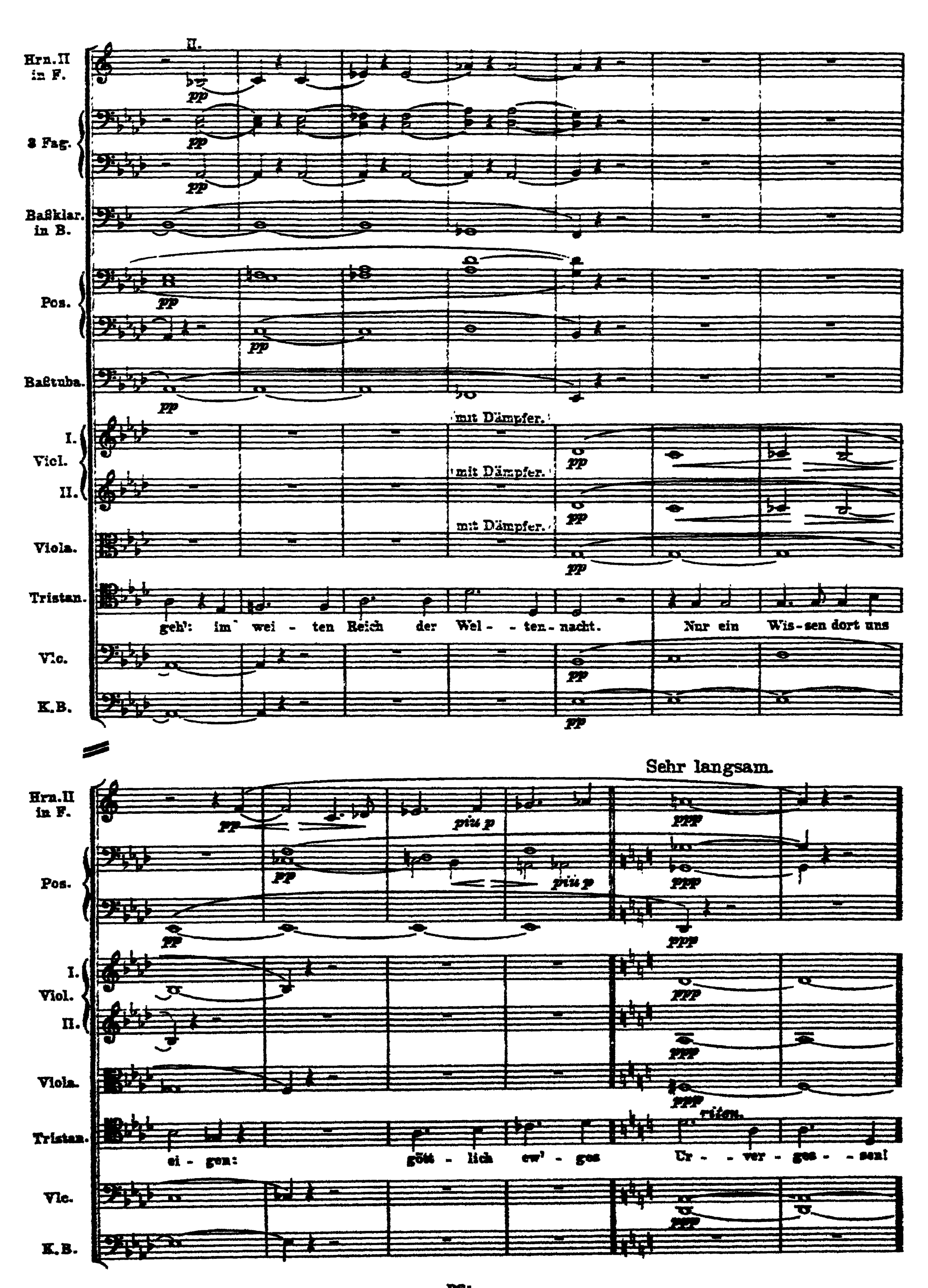
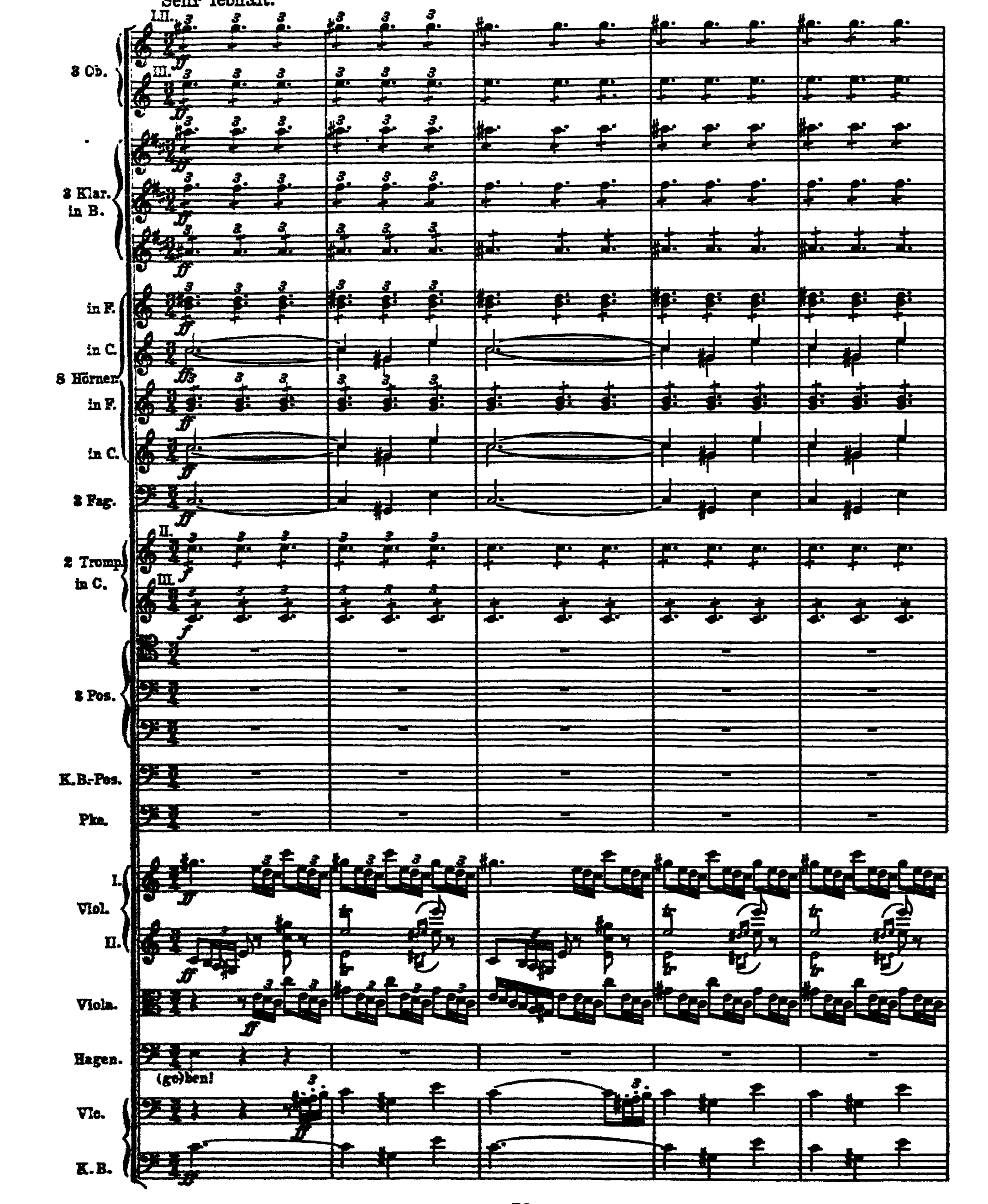
Hke ta mention the ring
gen's word
“Ruestig gezecht bis der Rausch euch
zaehmt, Alles den Goettern zu Ehren, dass gute Ehe
sie geben.” (Example 128.)
Goetterdaemmerung, act I
Lip m/ Bi a sh A an H!| || Kl aaghi ce iui mit a sy
mela! | sms athe ait : bs LY at hy. “WF; a H
the entire “Ring” Wagner generally wrote for trombones, adding a double-bass trombone in order te separate the sound of the bass tuba completely from the trombones and to combine it with
the kindred timbre of tubas and horns.
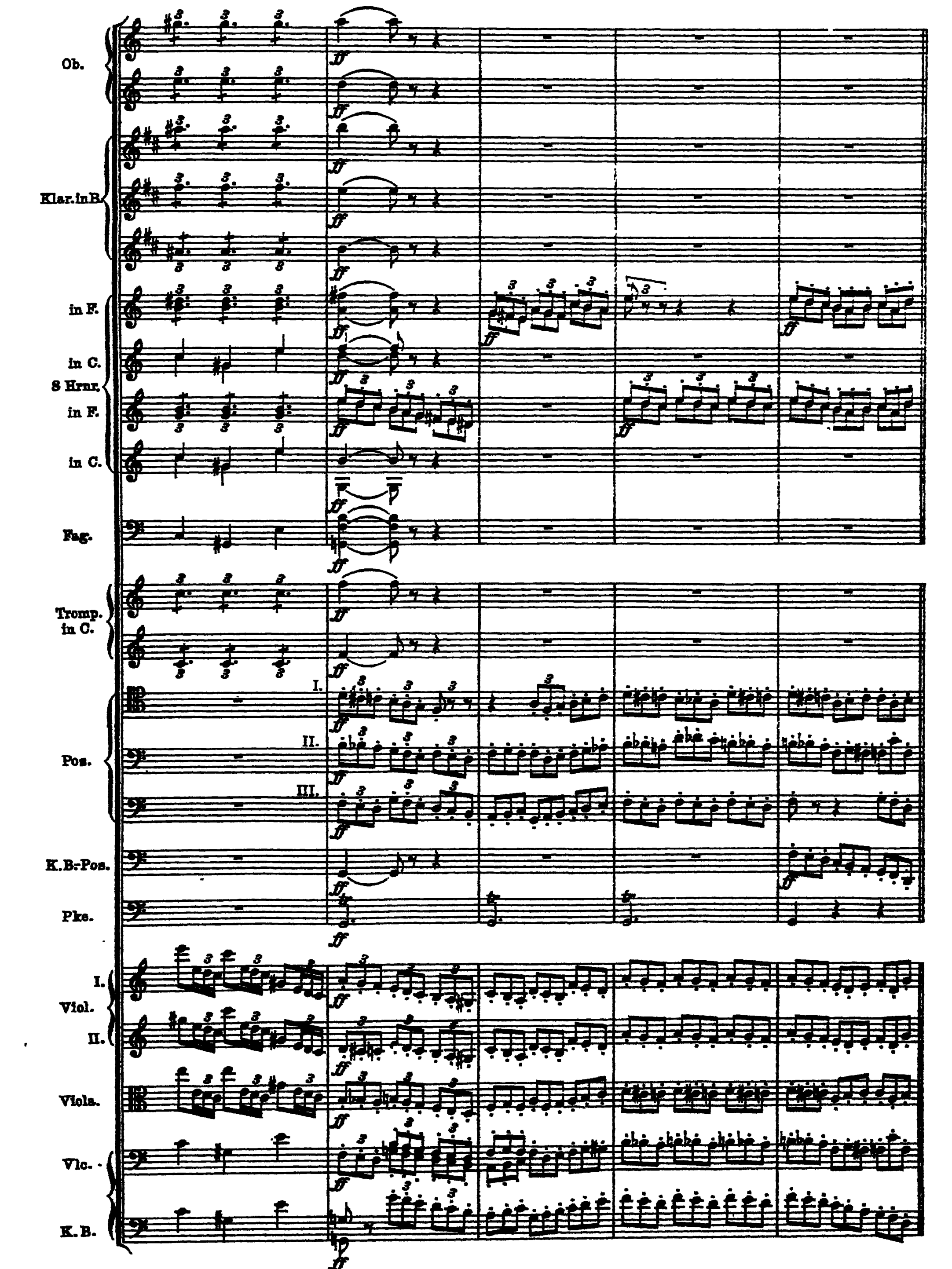
When using three trombones, one must remember that the tone of the bass trombone is always more or less prominent, especially if the first one is an alto trombone. (Example 129.)
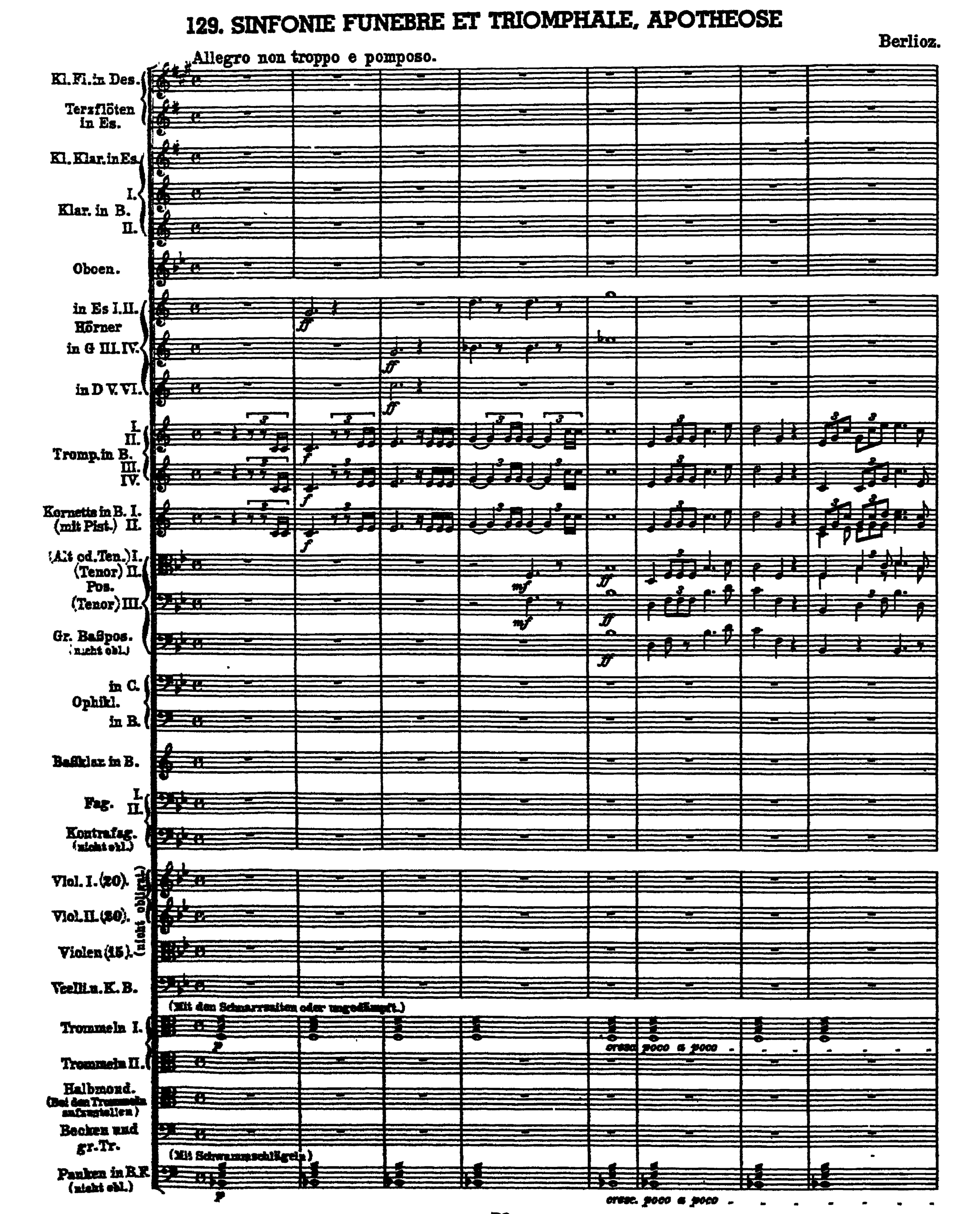
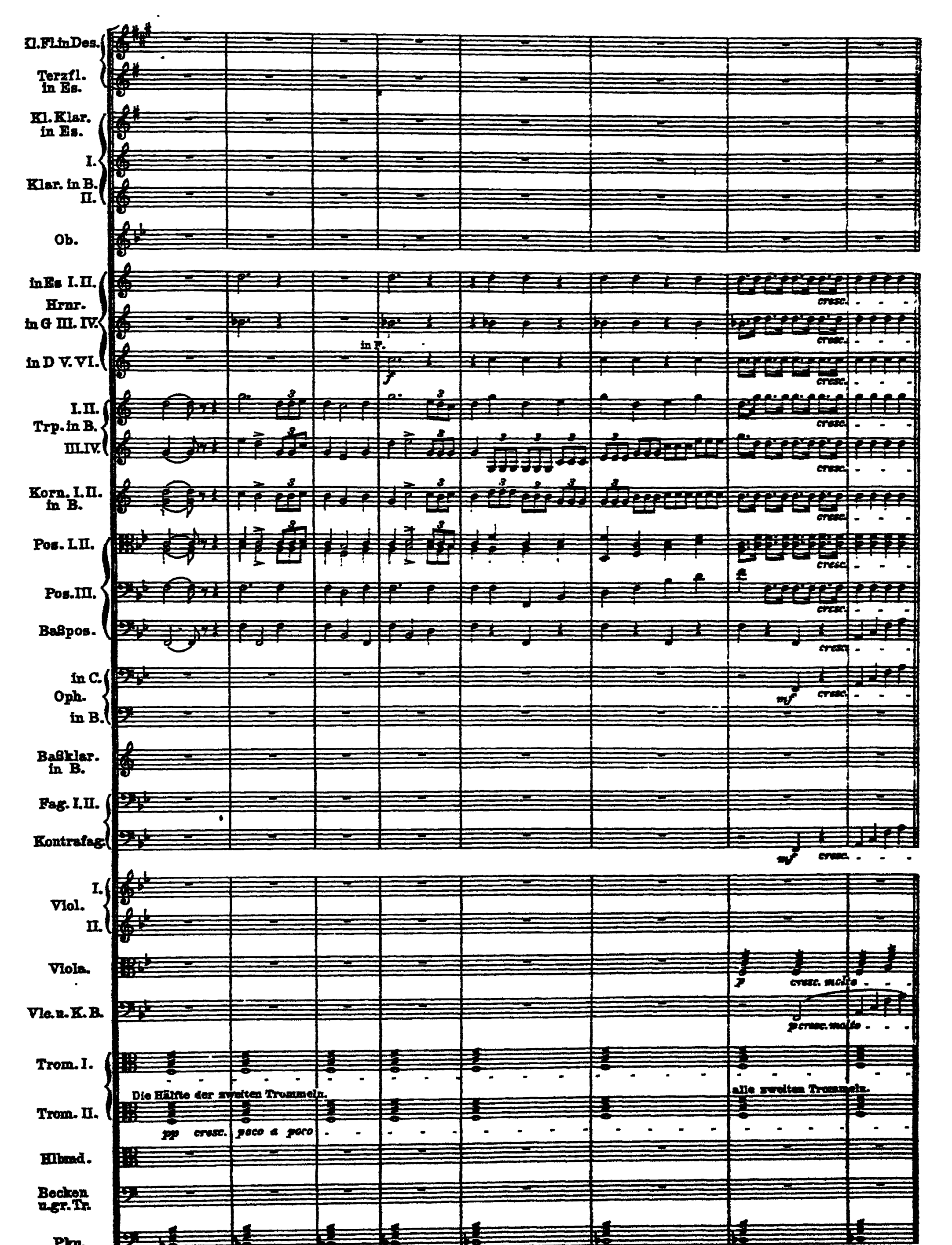
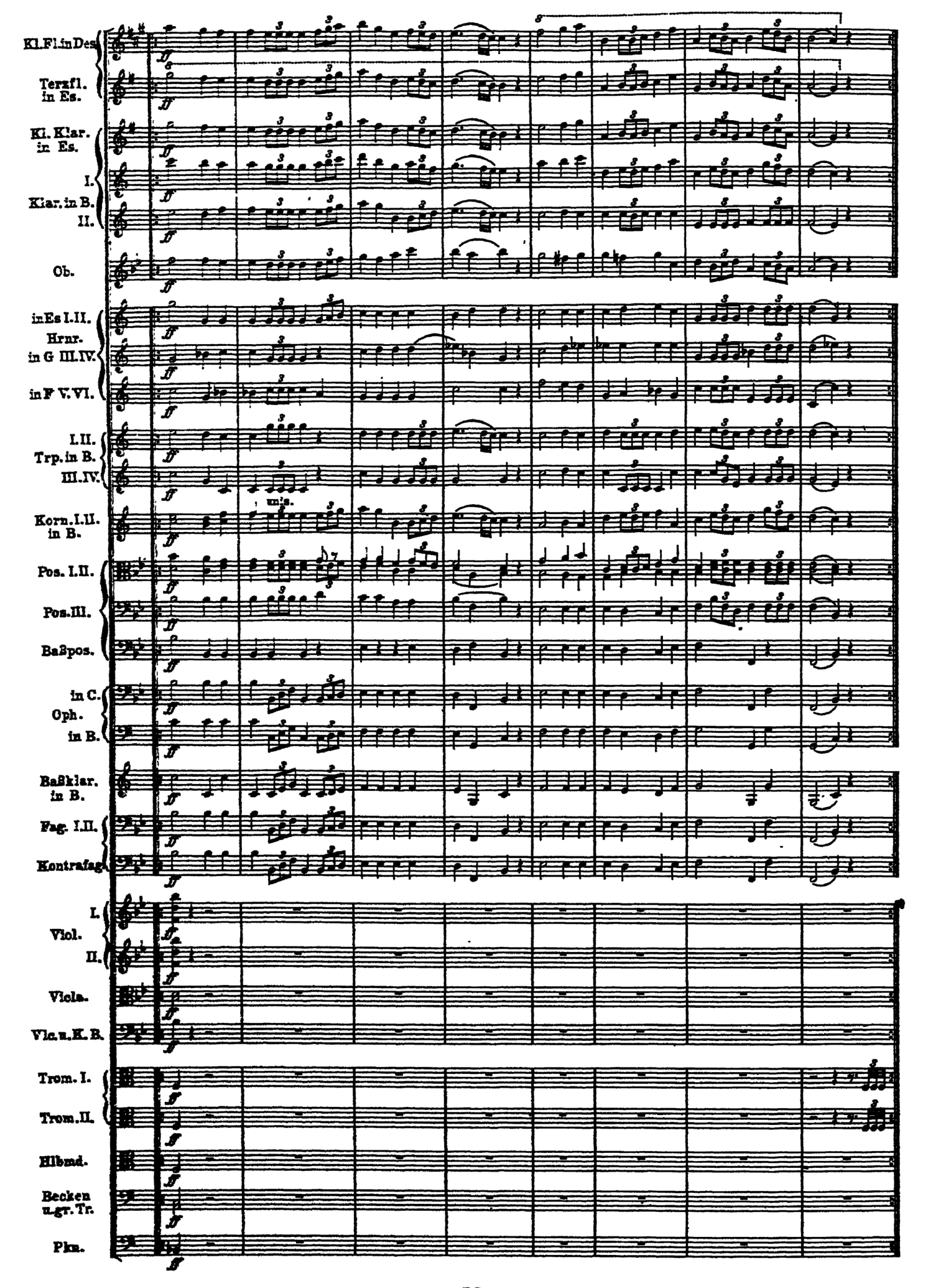
In a mezzoforte in the medium range, unisone or in of this religious and solemn tone in the priests’ choruses harmony. the trombone assumes a religious character if in “Die Zanberflorte” | Example 180’. the tempo is slow. Mozart has given us admirable models :
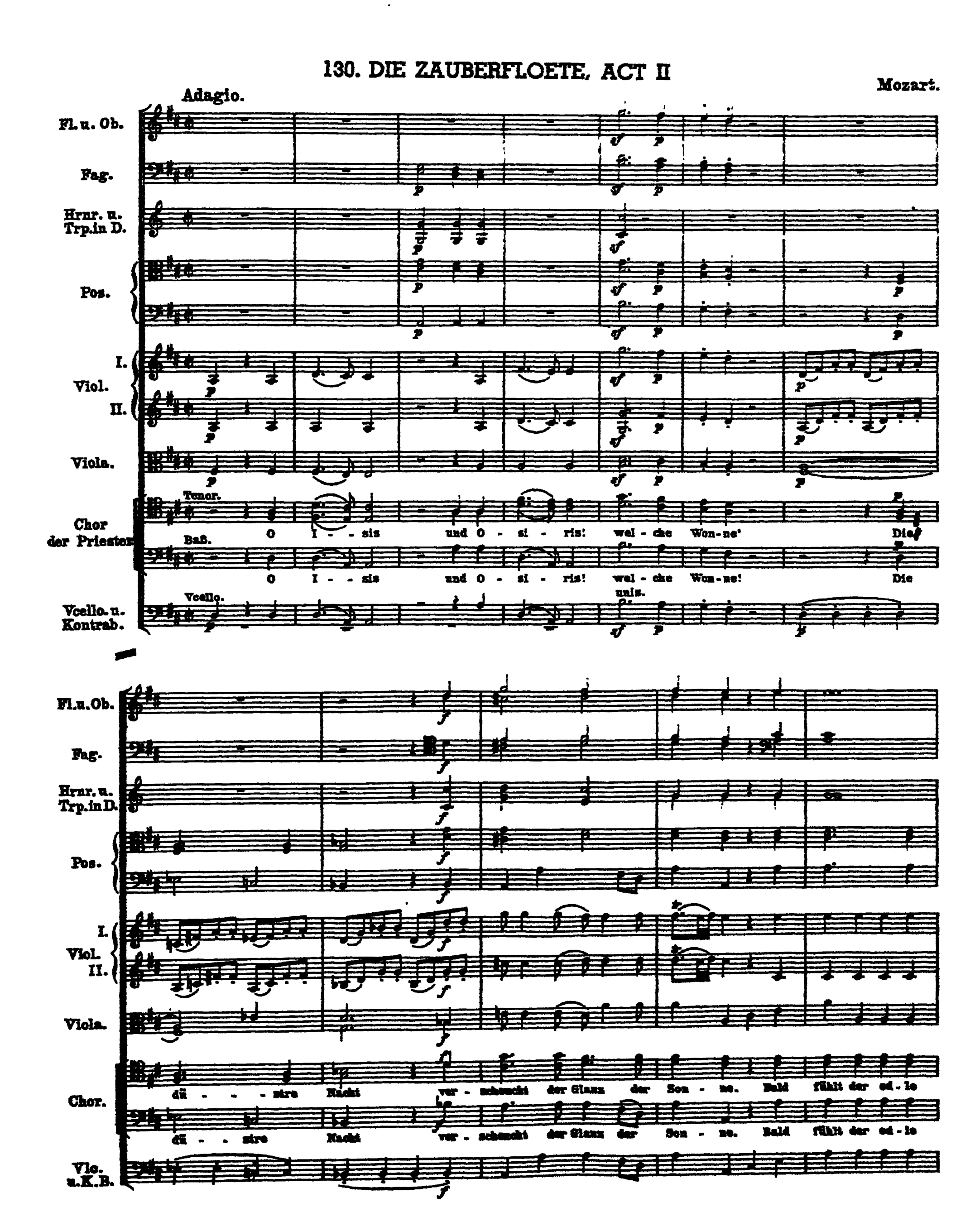

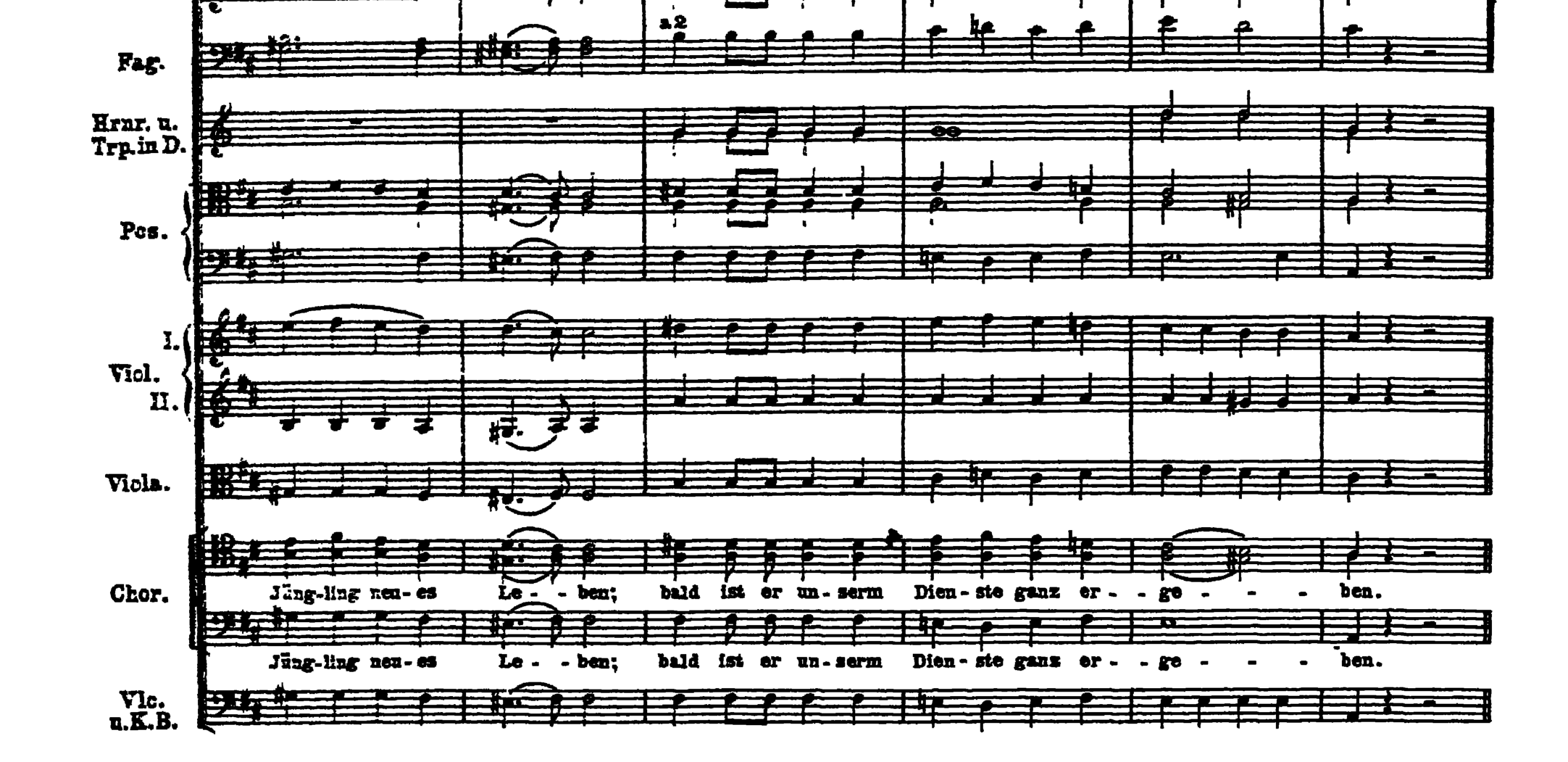
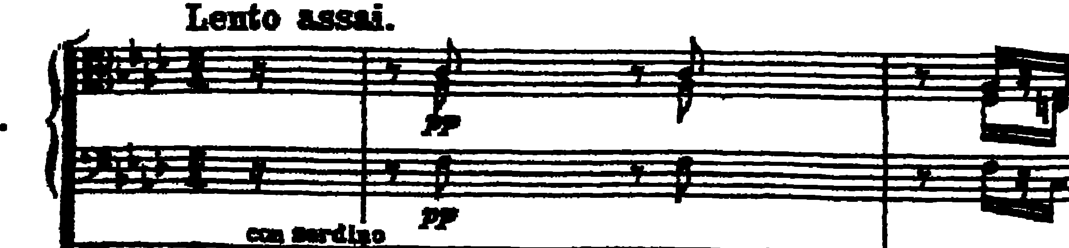
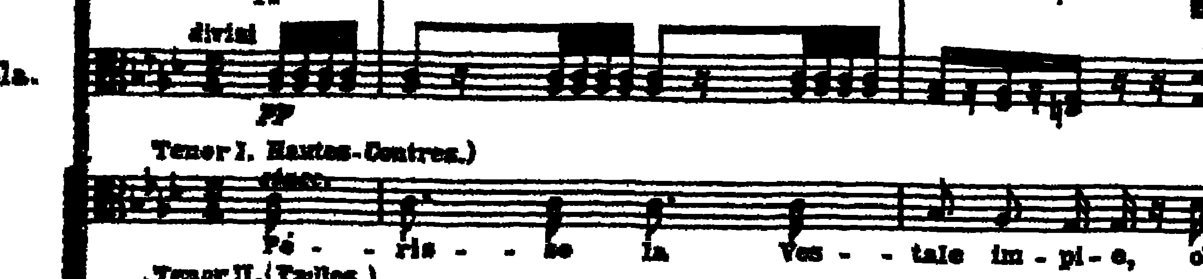
The pianissimo of the trombones, employed in minor chords is gloomy. mournful—I might almost say, horrible. Especially if the chords are short and interrupted by rests, one can imagine strange monsters uttering groans of repressed rage from a groesome darkness,.
In my opinion no one has used this particular expres-
sion so dramatically as Spontini in his incomparable foneral march in “La Vestale”, and Beethoven in the immortal duet of Leonore and the jailer in the second act of “Fidelio”, while they are digging a grave for the prisoner condemned to die. (Examples 181 and 48, page
131. la vestale, act oi



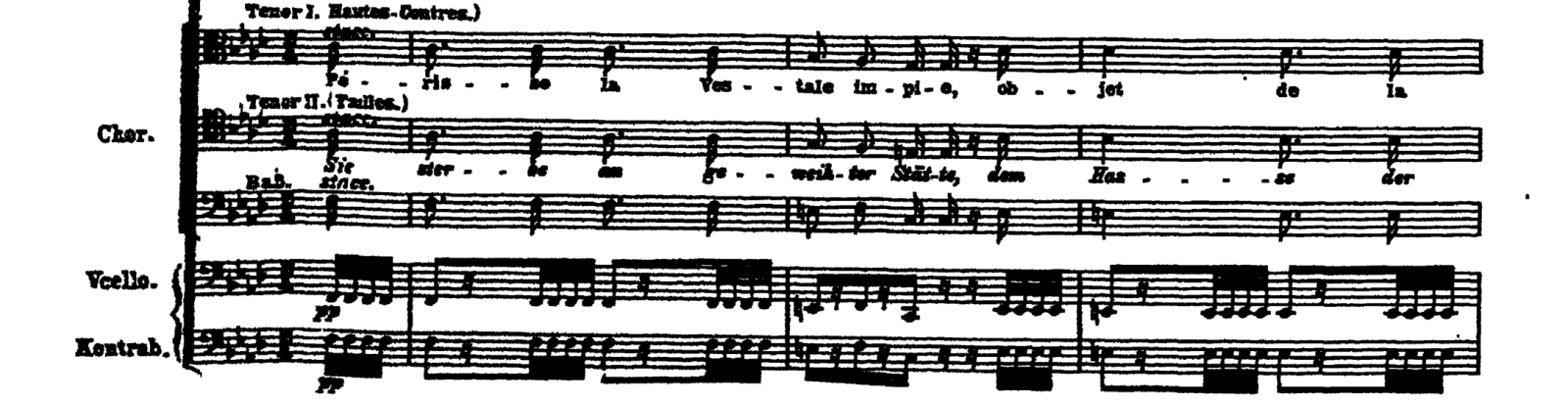

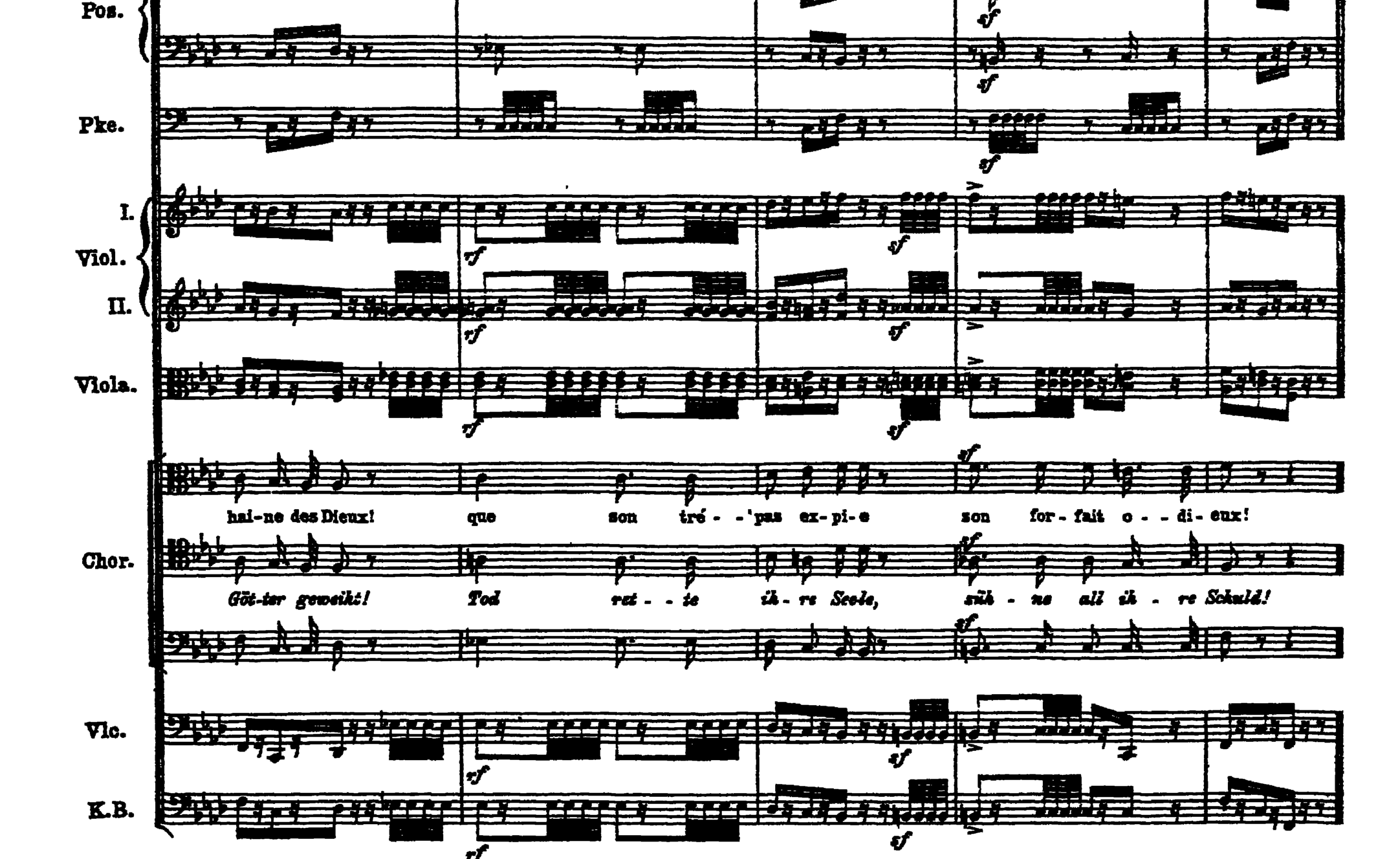
The habit of some modern masters to form a quartet of three trombones and an ophicleide, assigning the actual bass to the latter, is rather objectionable. The penetrating and prominent tone of the trombones is by no means the same as that of the ophicleide. I consider it much better to use the ophicleide only for doubling the lowest part or at least to give the trombones the real bass by writing their three parts as if they were to be heard alone.
Gluck, Beethoven, Mozart, Weber, Spontini and several other composers have fully comprehended the high value of the trombones. They have ingeniously employed the different characteristics of this noble instrument to depict human passions as well as to reproduce the sounds of nature, They have faithfally preserved its power, its dignity and its poetry. But to force it—as the majority of contemporary composers does—to how] in a Credo crude phrases more fitting for a saloon than for a church; to play as if to celebrate Alexander’s entry into Babylon, when there is actually nothing more than a
dancer’s pirouette; to strum the tonic and dominant of a song in which a guitar could furnish an adequate accompaniment; to join its Olympian voice with the trashy melody of a vaudeville duet or with the frivolous noise of a quadrille; to prepare in the tutti of a concerto the triumphant entry of an oboe or fiute—all this means degrading a magnificent individuality, making a slave or a buffoon out of a hero, marring the sound of the orchestra, paralyzing all rational progress in instrumentation; it means destroying the past, present and future of art, committing a wanton act of vandslism and disclosing a lack of feeling for musical expression which comes close to stupidity.
Trombone mutes have been introduced recently with success. They are similar to the mutes of the horn and are—similarly to the trumpet mutes—easy to handle. In forte they give the trombones a rattling sound, in pp a tremendously gruesome, fantastic and gloomy one.
The alto trombone with valves
(With Pistons or Cylinders)
There are aito trombones in E? and F; one must therefore indicate precisely for which of these keys one i, writing because this trombone is usually treated as transposing instrument. It has no slide and is in certain respects a cornet with pistons in E2 or F with a somewhat stronger tone than the real cornets.
The range of the alta valve trombone is the same as that of the ordinary alto trombone. It is written in the aito-clef or in the G-clef, transpesing’ like the cornet:
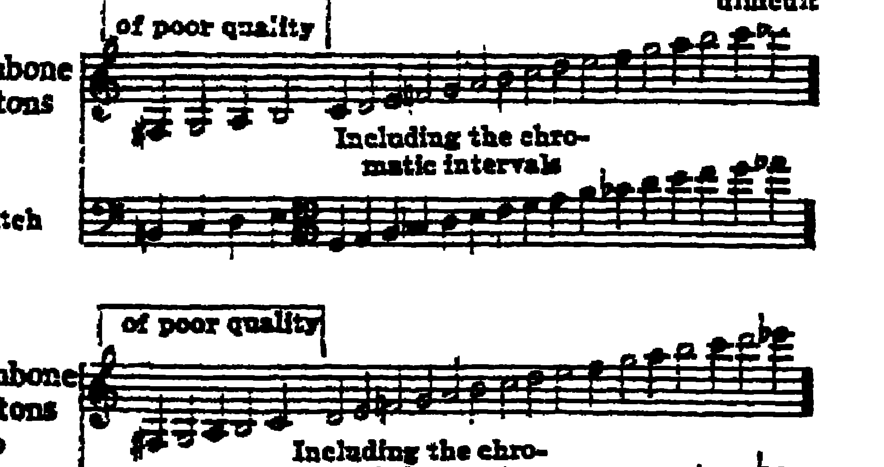
Since the valve trombone does not have the slide, it cannot produce the so-called pedal tones of the other trombones. Those trilis of the alto trombone with a slide which are produced only by means of the lips can also be executed on the valve trombone. Several trills can also be played with the sid of the valves, but in general only
minor trills are of good effect and can be executed rapidly. The following are the best:
The valves lend the trombones great agility, but reduce their purity of intonation a little. It is easily understood that the trombone, with its slide instantaneously obeying the slightest move, must be the purest of all wind instruments in the hands of a player who possesses a good ear; whereas the valve trombone, lacking the slide, becomes thereby an instrument with fixed intonation which can be modified very little by the lips. The alto trombone with valves is frequently employed for solo melodies. Well phrased, such a melody can display much charm; but it is an error to assume that the same melody would not sound just as well if played on a slide trombone—as has been frequently demonstrated with success by M. Dieppe. The advantage of purer intonation must be decisive for the composer, unless there are very rapid passages to consider.
In Germany there are tenor trombones with cylinders
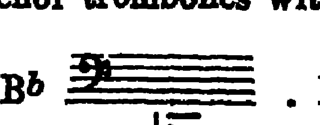
which descend as low as Be == - In spite of this advantage I prefer the slide srowbones
Verdi’s treatment of valve trombones and trumpets has been dealt with in the chapter on trumpets. I have only to add here that Wagner’s manner of employing them for the expression of calm dignity and wisdom or of heroic, unrestrained vigor as in the Ride of the Valkyries corresponds much better with the true nature of the instrument.