Hector Berlioz · section 34 of 67
The Valve Bugle Read and hear this section in the playable edition →
It has a lower range than the preceding. However. this is of no particular utility since its low tones are of
very pour quality and respond eusily onir on the small bugle i in E%, which has therefore the greatest range:
Fig. 789 · See it in the reader Fig. 790 · See it in the reader This instrument is much better than the key bugle; it is quite suitable for rendering certain melodies of
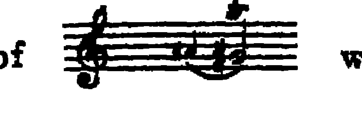
Beginning from the middle = ail major and
slow or at least moderate tempo. In lively or gay passages, however, it shows the same shortcomings which we pointed out in the valve cornets: it has no distinction, although this may be improved to a certain degree by the individual player’s skill.
minor trills are good on the valve bugle, with the excep-
Fig. 791 · See it in the reader tion of er which is very diticuli.
Fig. 792 · See it in the reader ← The Bugle All sections The Bass Ophicleide → More Playable Books Sanganeria, Arrival Build jazz lines that land, with 30 original playable examples. Fux, Counterpoint Learn how independent voices work together, one species at a time. Goetschius, Exercises in Elementary Counterpoint Build independent melodies through graded exercises, with 471 recorded examples. Goetschius, Counterpoint Applied Study imitation, canon, and fugue with 393 recorded examples. Prout, Bach’s Forty-Eight Fugues Follow Prout through all 48 fugues of the Well-Tempered Clavier, every example playable. Rameau, Treatise on Harmony Explore the foundations of harmony, composition, and accompaniment. Rimsky-Korsakov, Practical Manual of Harmony The classic harmony course, newly translated from the 1910 French edition, with all 640 examples playable. Tchaikovsky, Practical Study of Harmony Tchaikovsky’s Moscow Conservatory harmony course, with playable examples. Reger, Modulation Explore Reger’s modulation method with 100 analyses and 102 playable examples. Schoenberg, Theory of Harmony Read all 22 chapters, with the original German beside a new English translation. Rimsky-Korsakov, Principles of Orchestration Discover instrumental colors through scores and orchestral recordings. Forsyth, Orchestration A witty, thorough guide to every orchestral instrument, with the original pages. Bona, Rhythmical Articulation Practice rhythm through 120 graded studies, with playable notation and original scans. ← All Playable Books  Playable Books