Very felicitous effects are obtained - especially in military bands - with a set of eight or ten very small bells fastened to an iron bar one above the other in diatonic sequence according to size, the highest tone being at the top of the pyramid and the lowest at the
bottom. These chimes, which are struck with a little hammer, can execute melodies of moderate speed and small range. They are made in different keys; the highest ones are the best.
The gloceenspiel
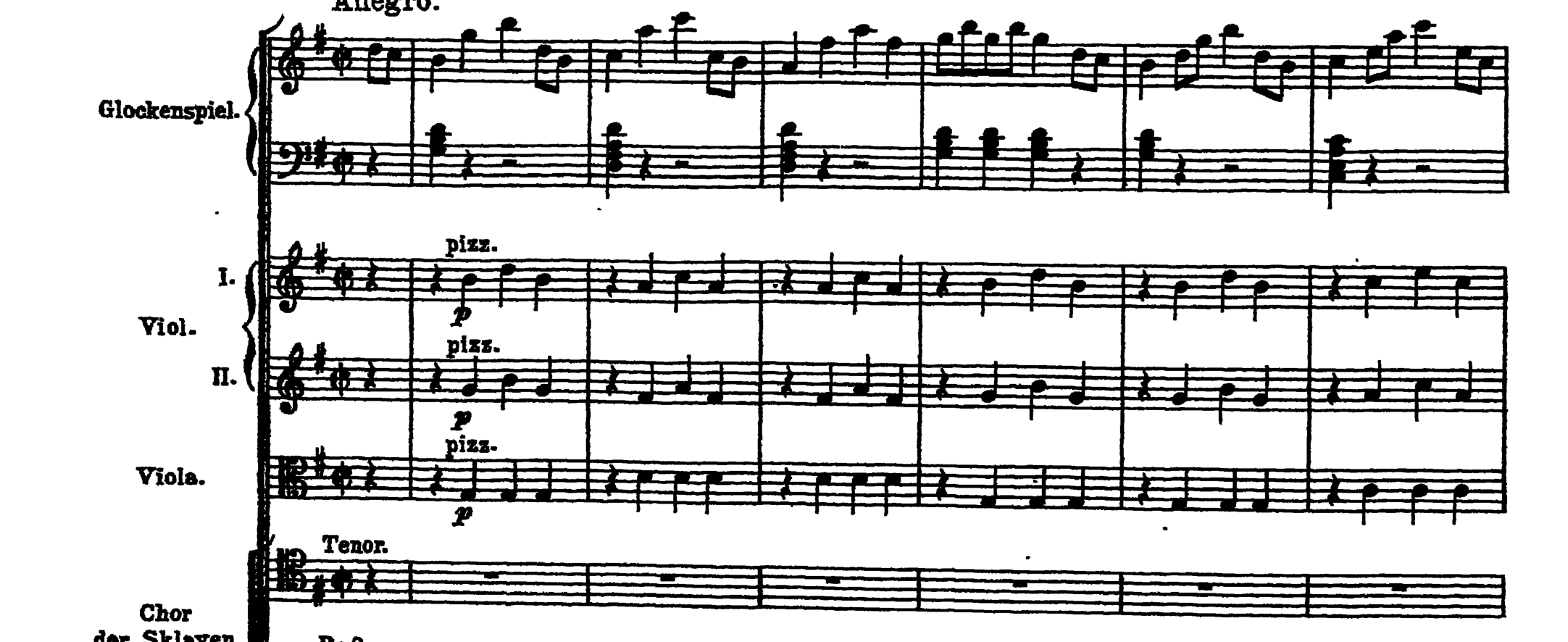
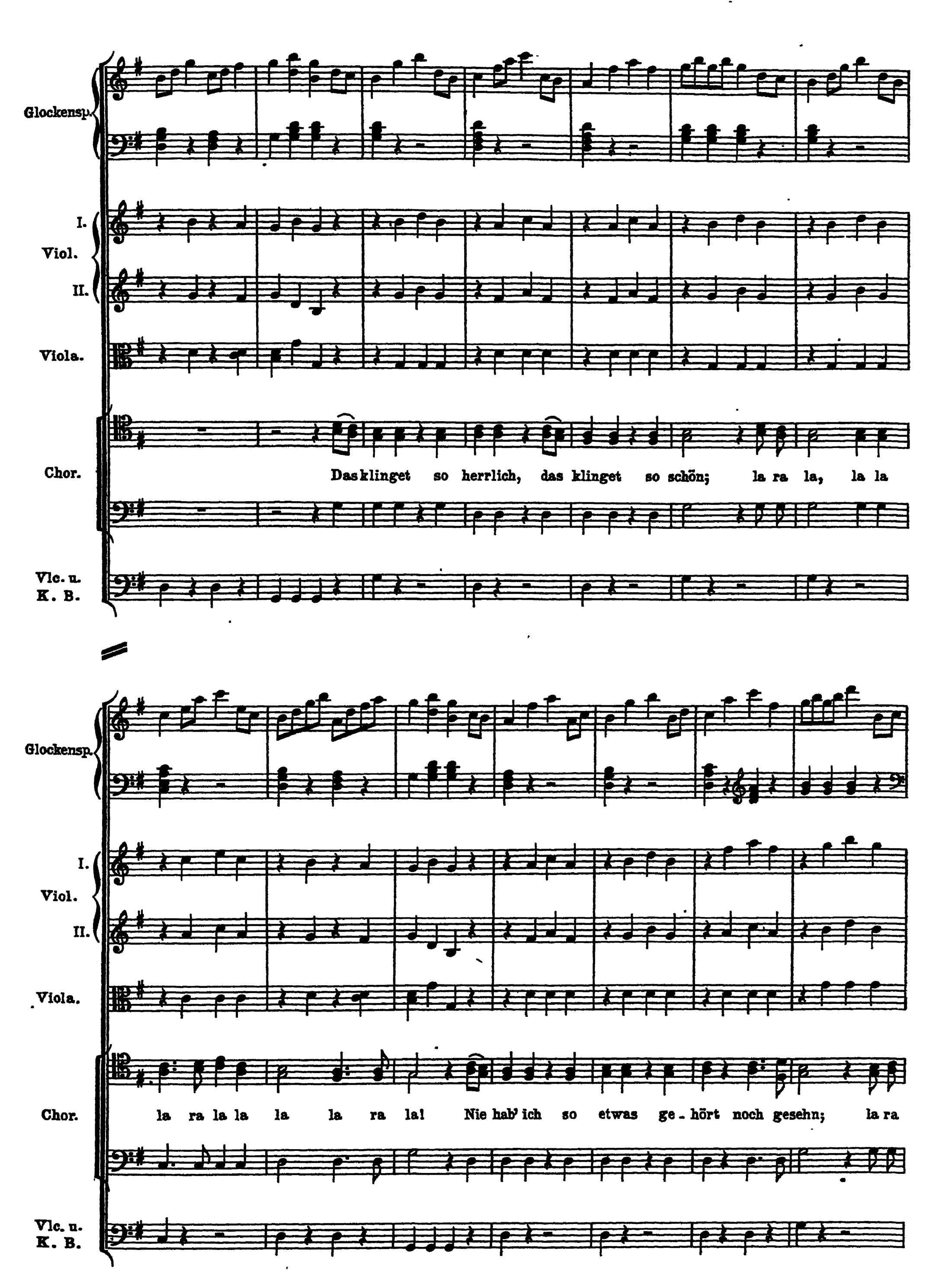
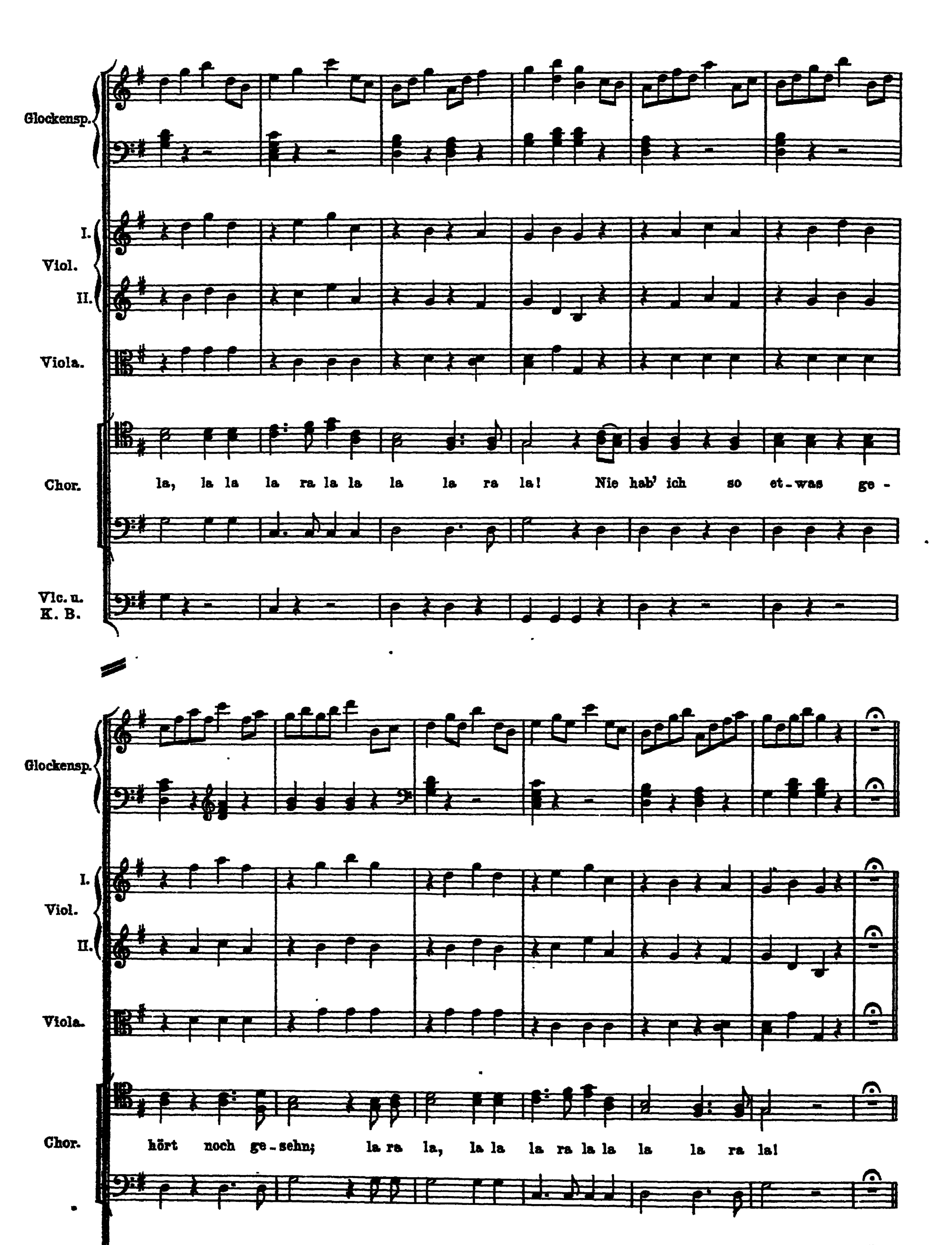
In his “Zauberfloete” Mozart wrote an important part for a keyboard instrament which he called the Glockenspiel. It doubtless consisted of a great number of small bells arranged in such a fashion that they could be sounded by a mechanism of keys. He gave it the following range:
and wrote it on two staves and in two clefs, like the Pianoforte. (Example 147.)
When the pasticcio “Les Mystéres d’Isis”, which contains more or less disfigured parts of the music of “Die Zauberfloete”, was performed at the Paris Opera, they had a little keyboard instrument built for the Glockenspiel music; its hammers struck steel bars instead of bells. Its sound is an octave higher than the written notes. It is soft, mysterious and of extreme delicacy. It is suitable for the most rapid movements, and it is much better than the instrument with little bells.
 Playable Books