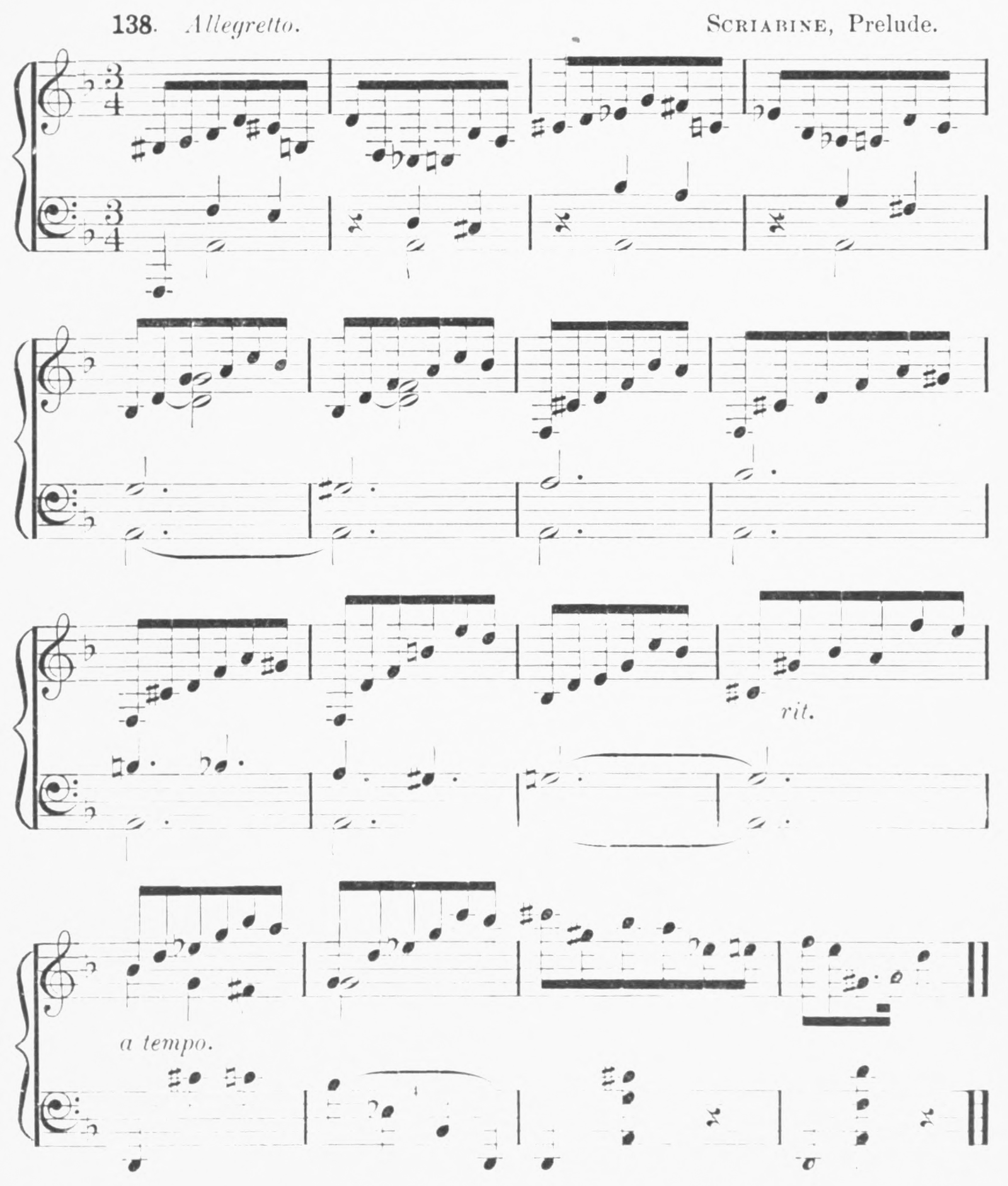
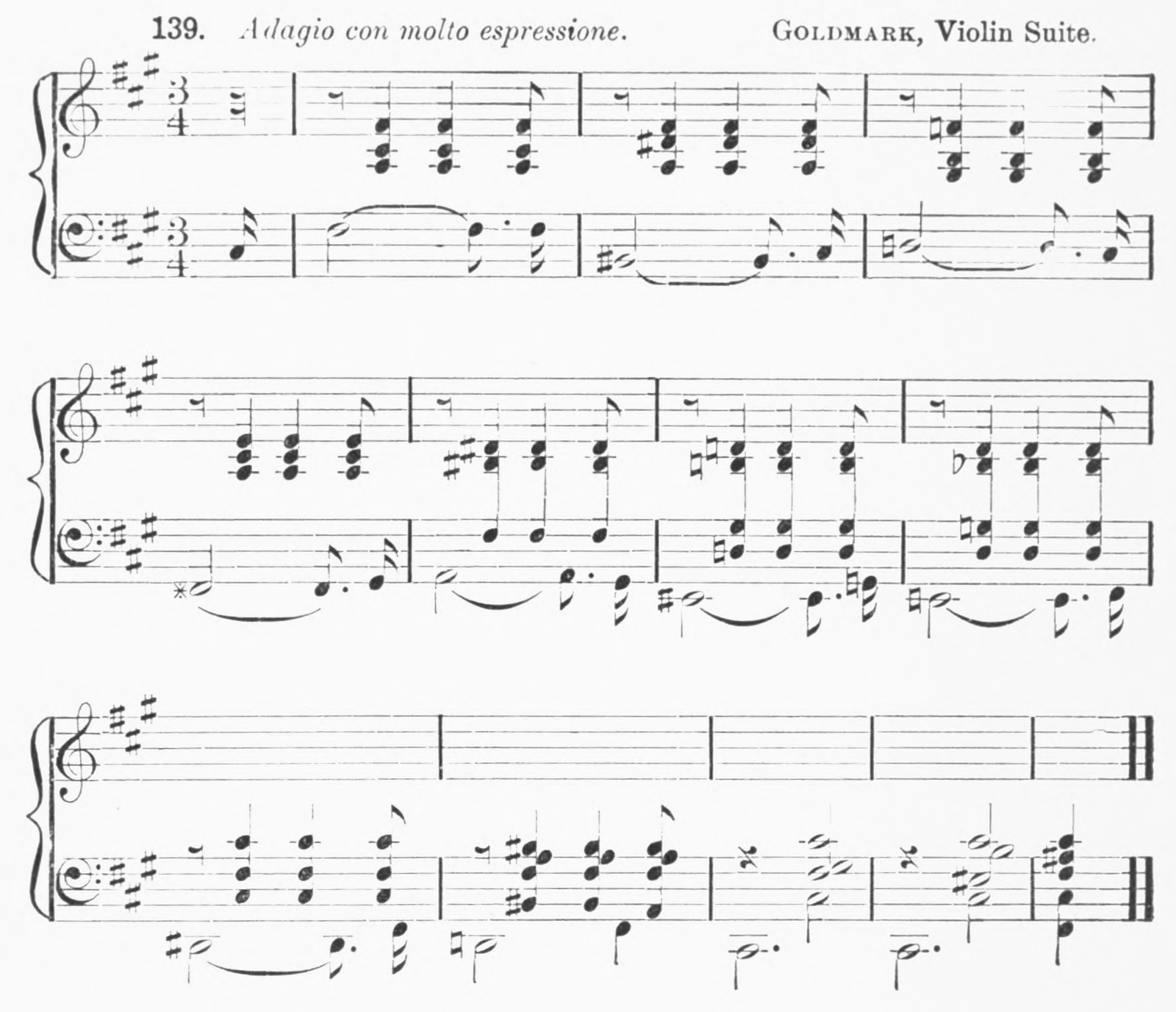
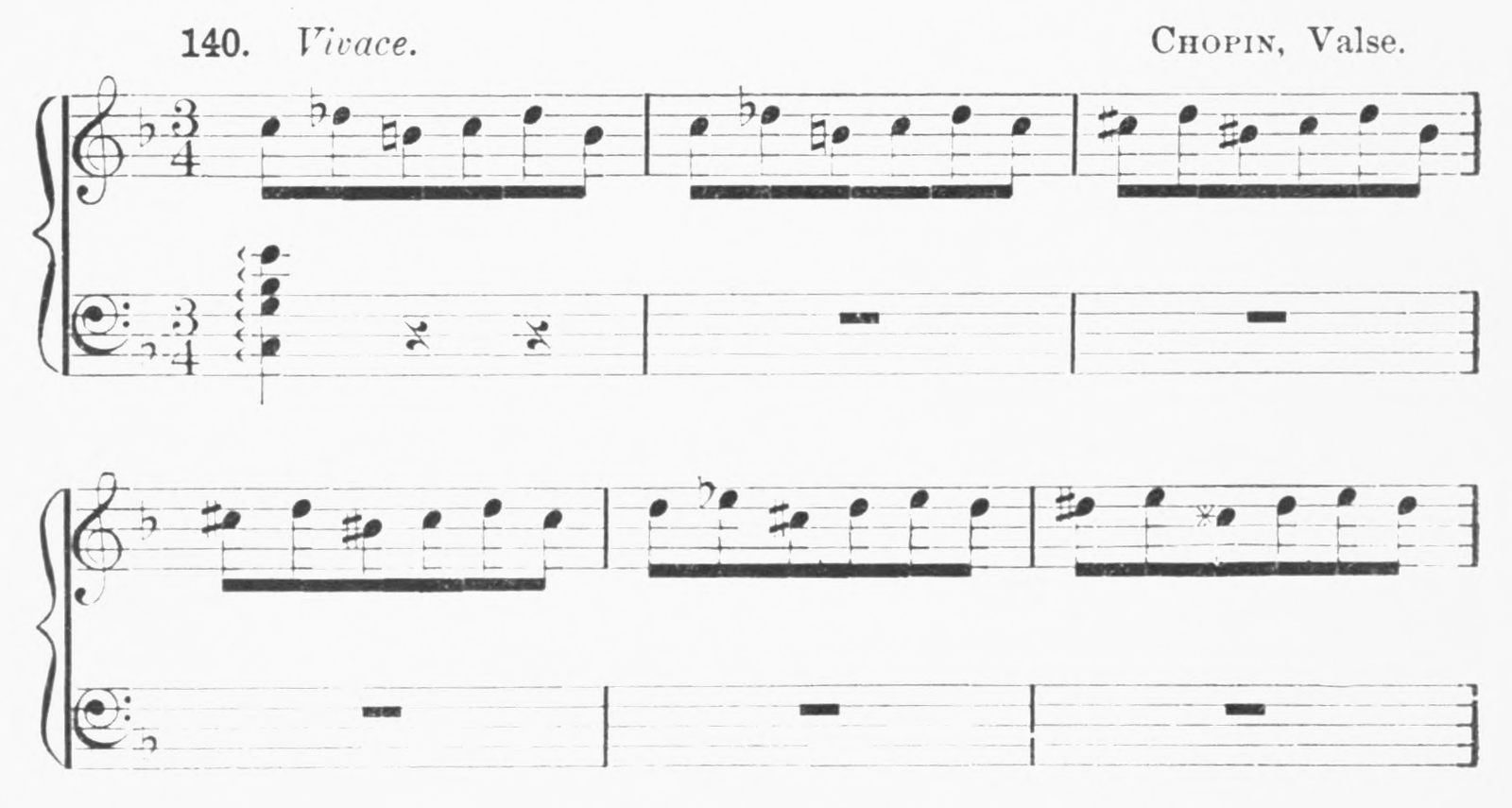
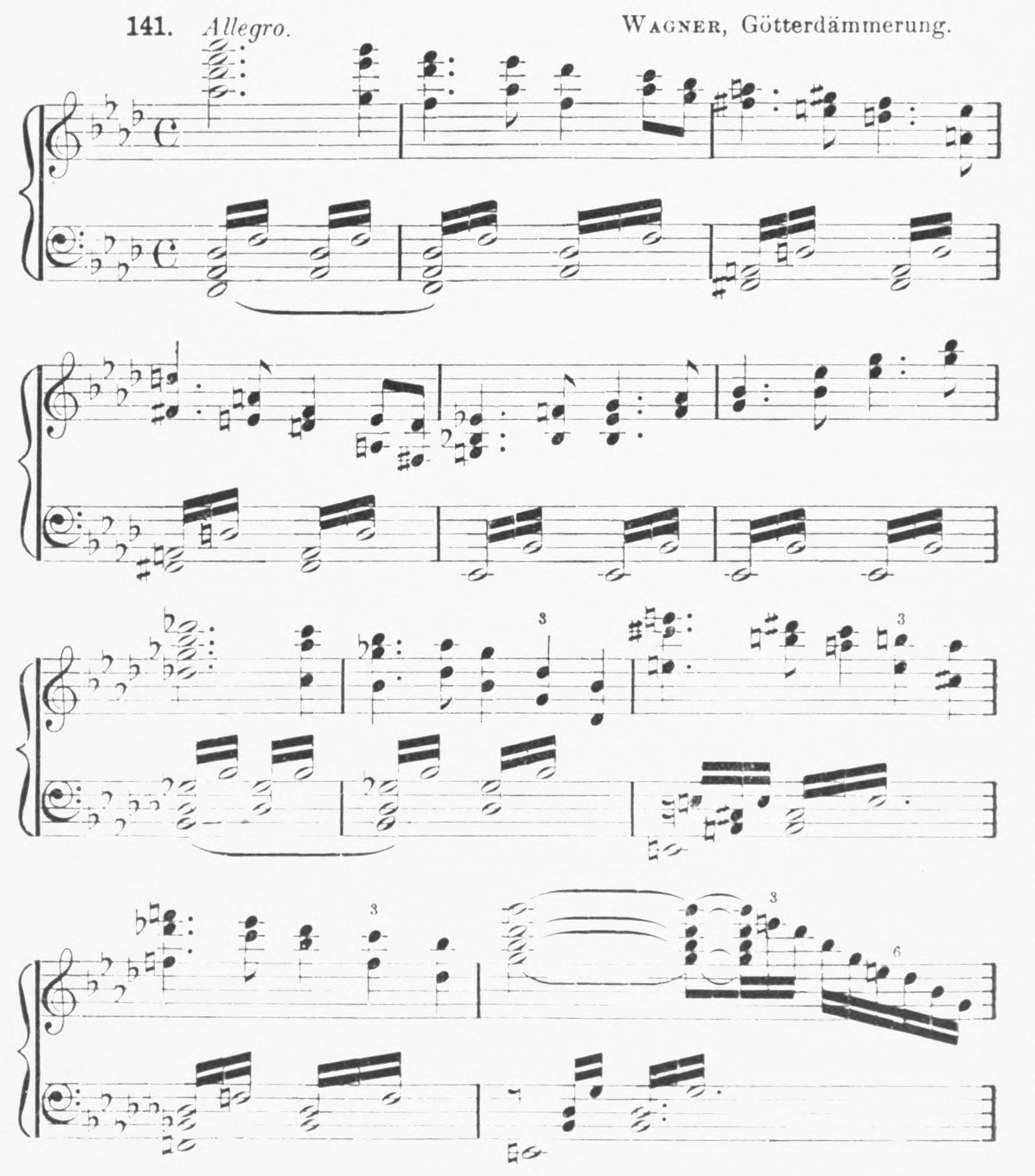
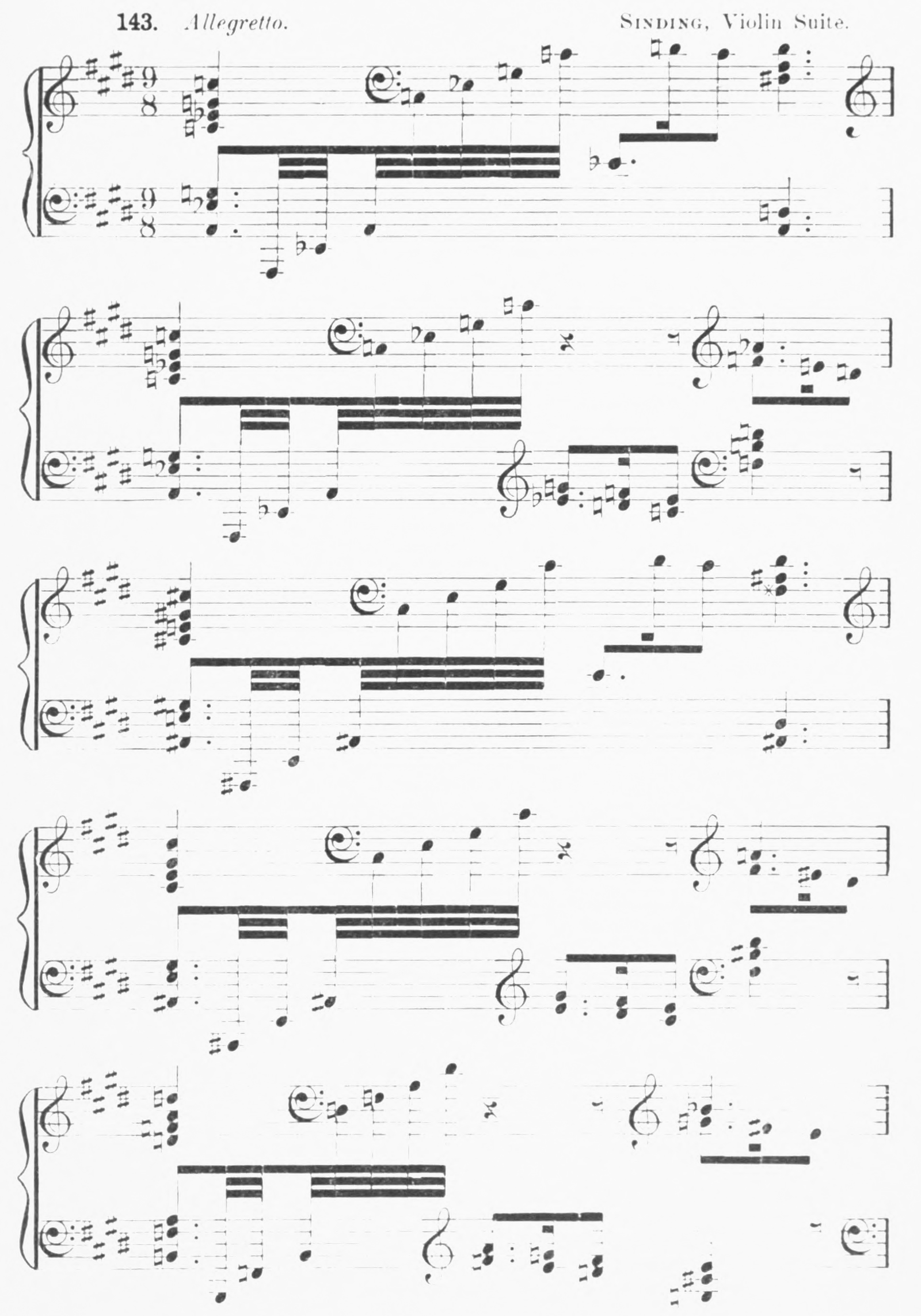
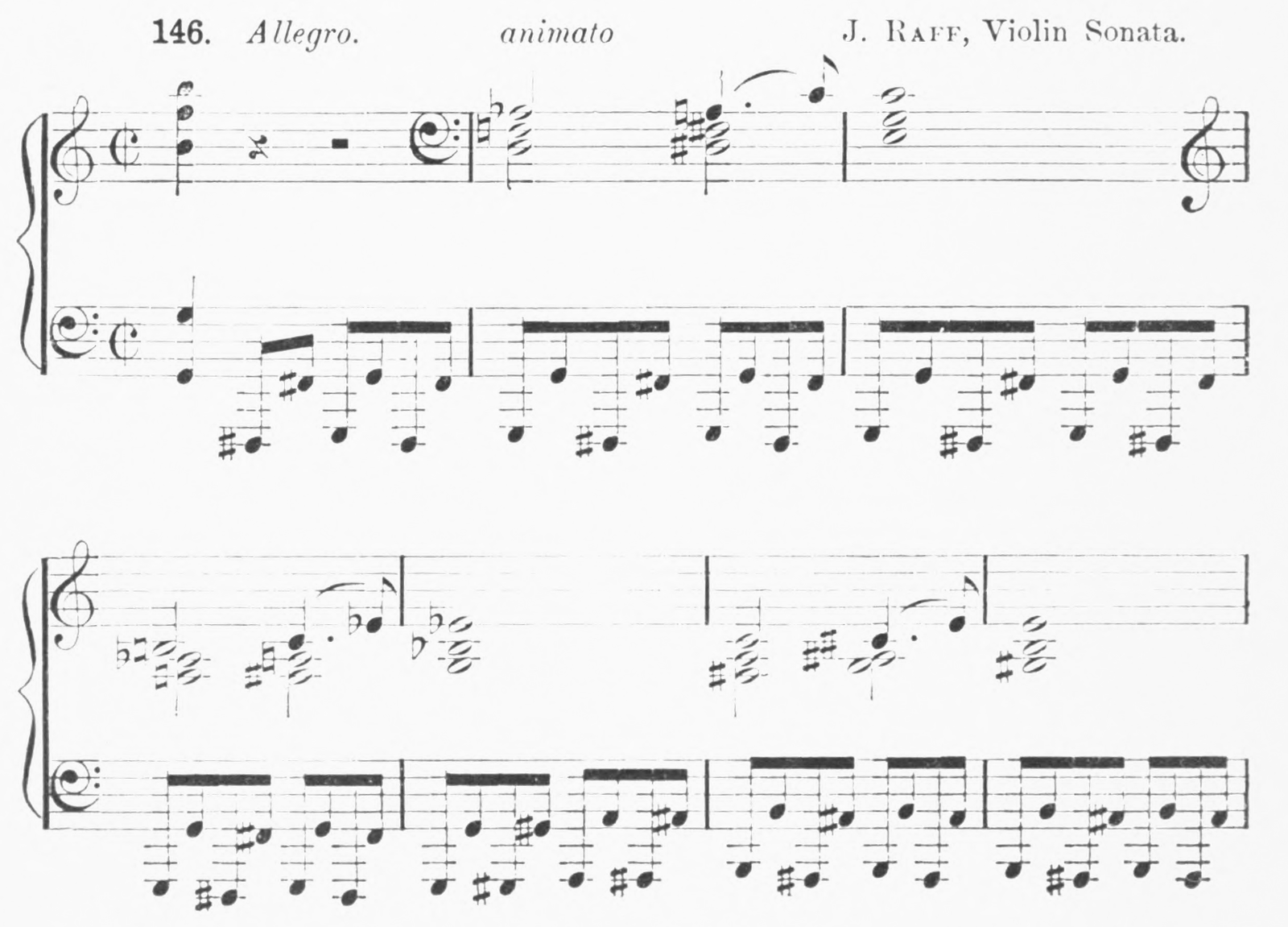
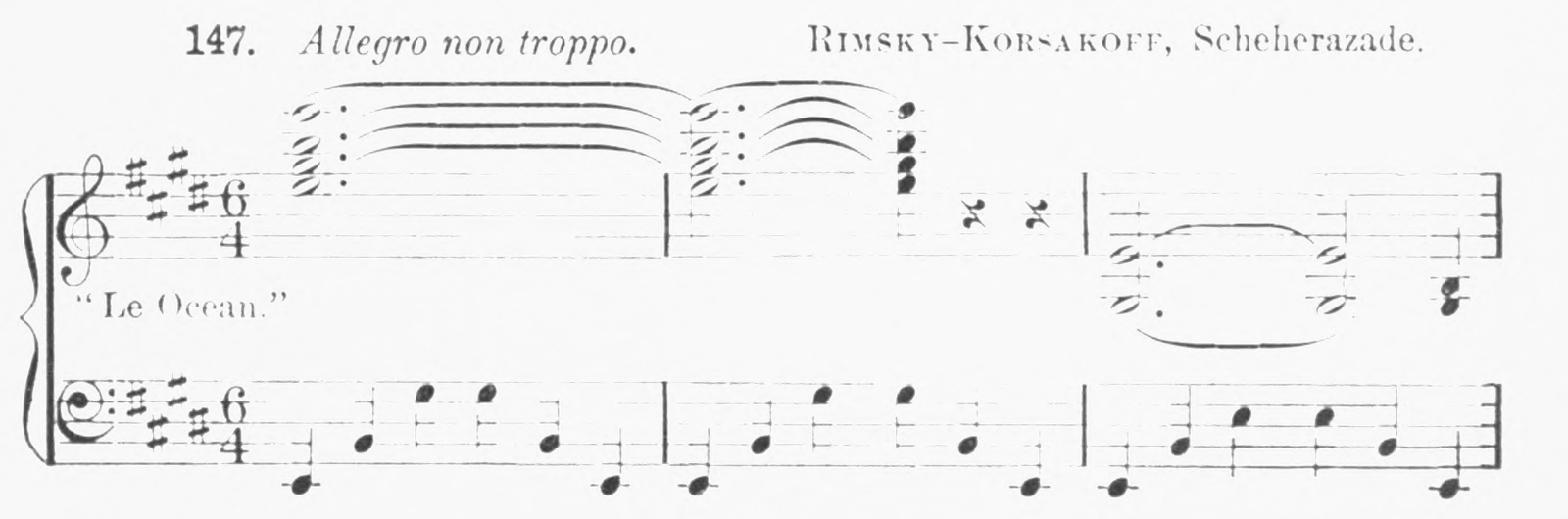
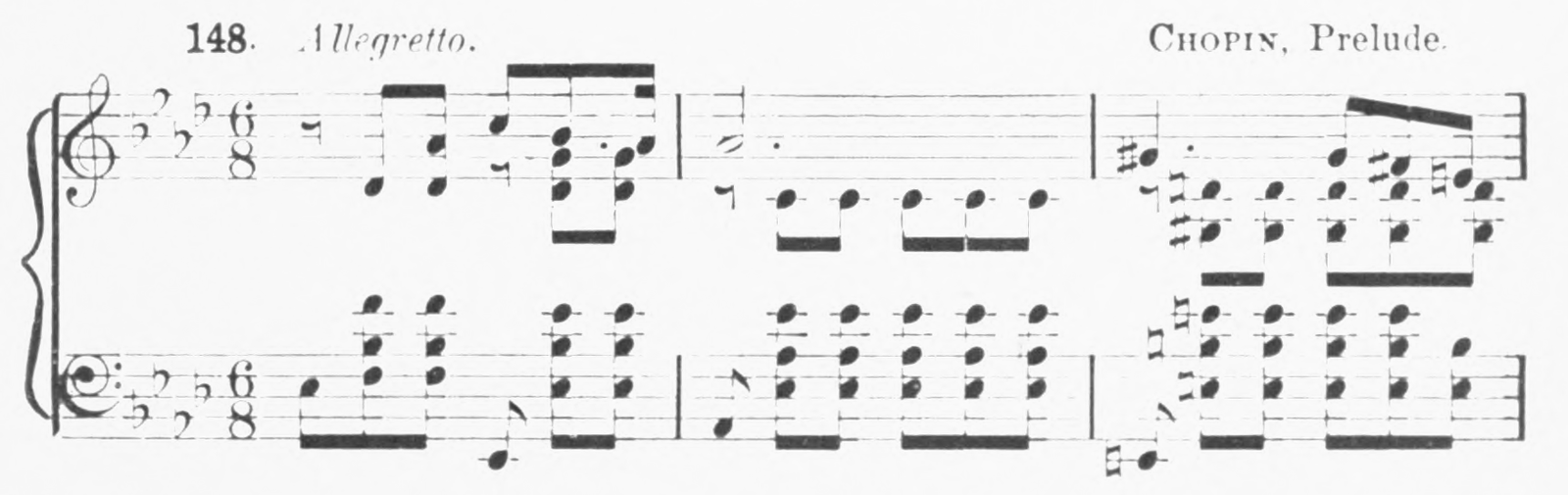
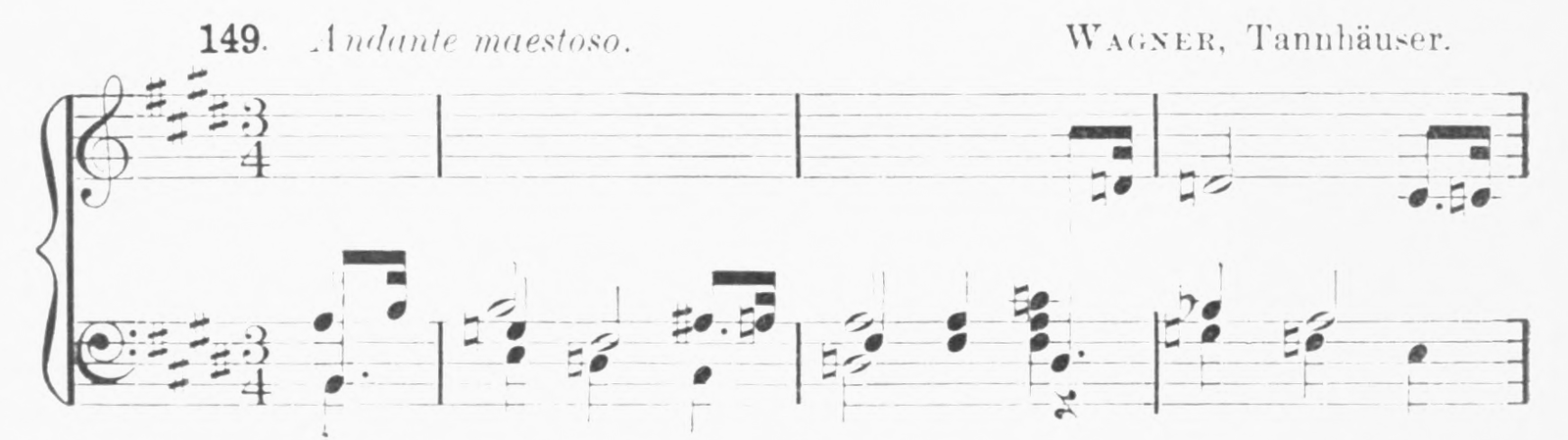
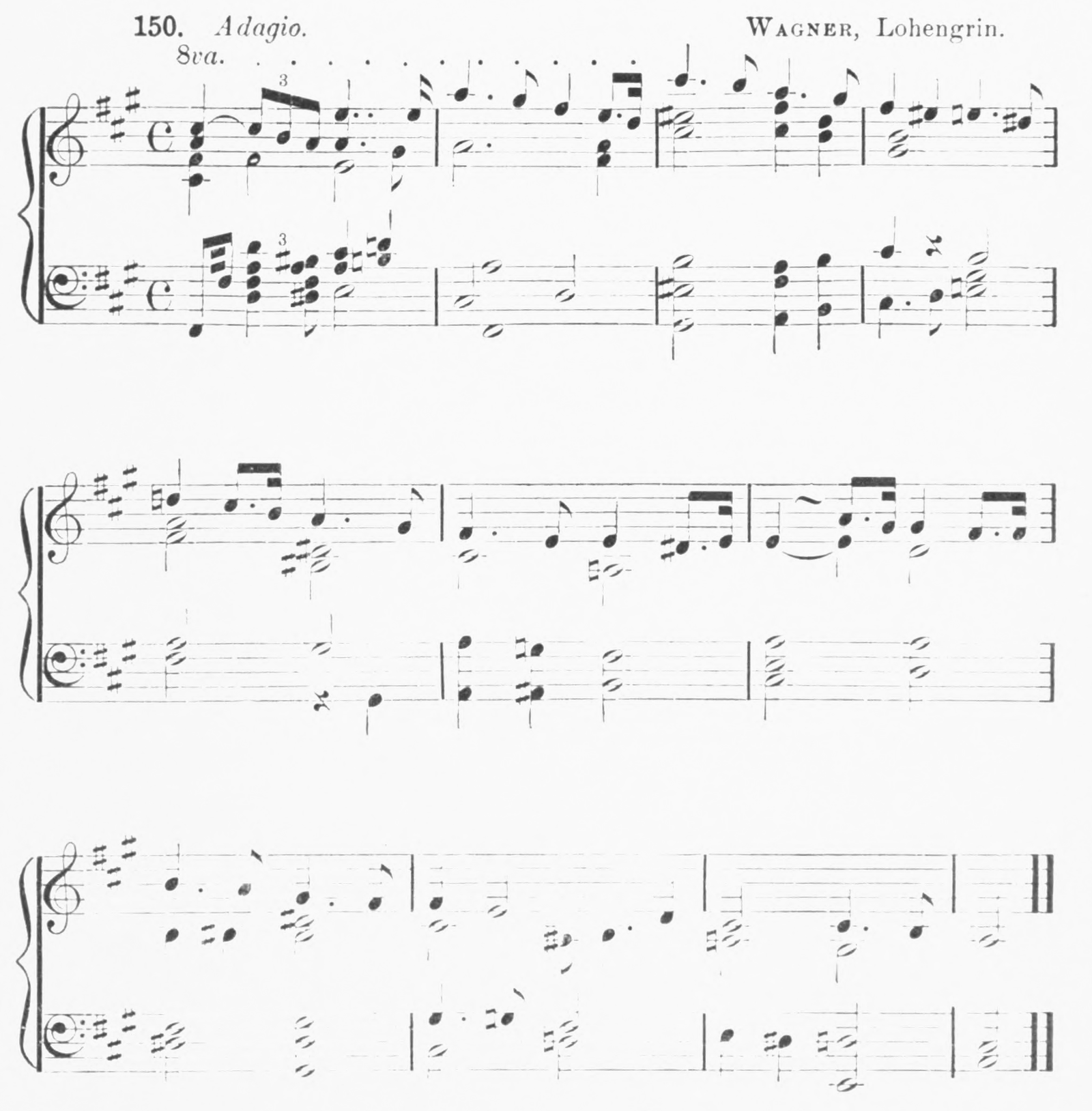
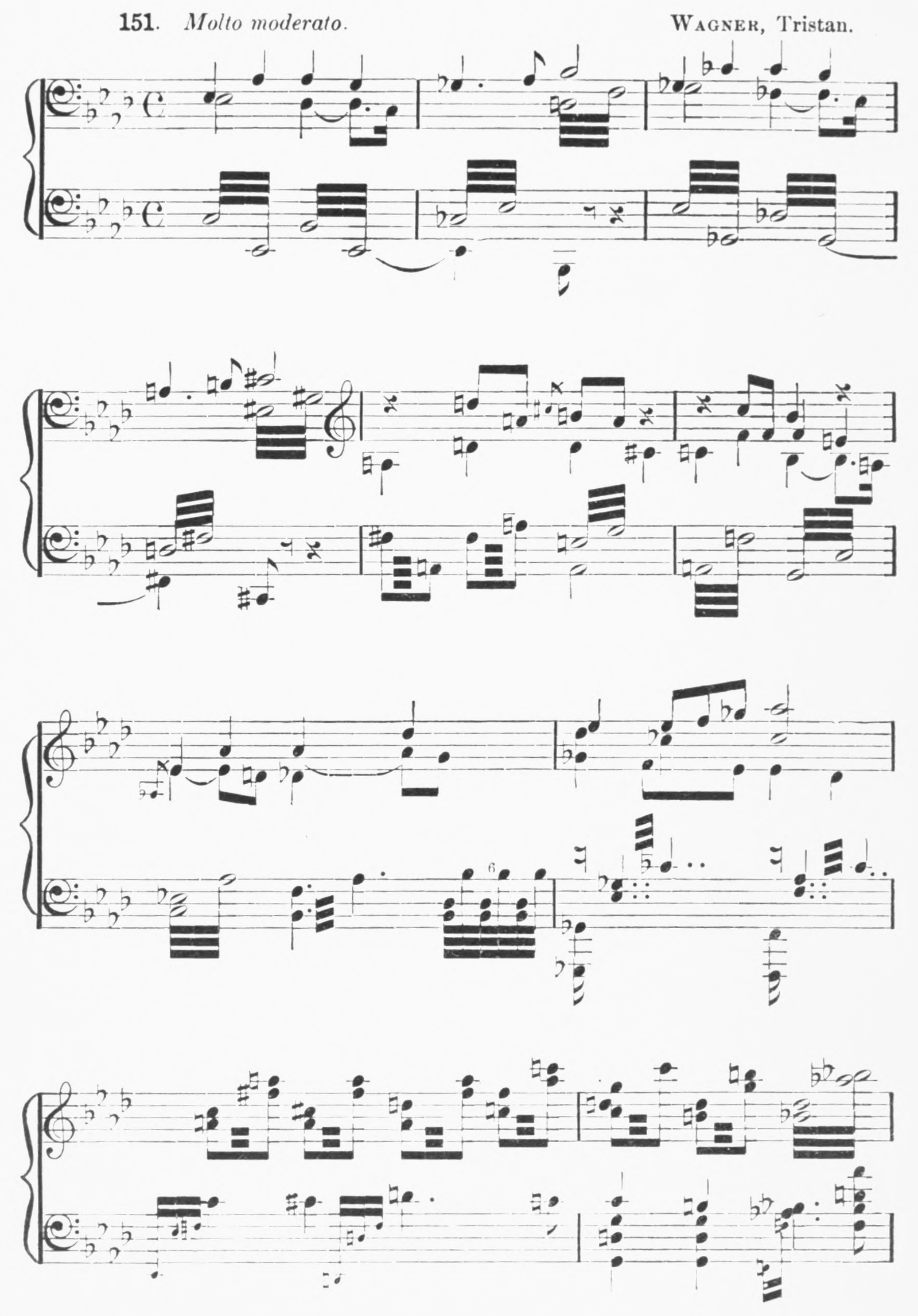
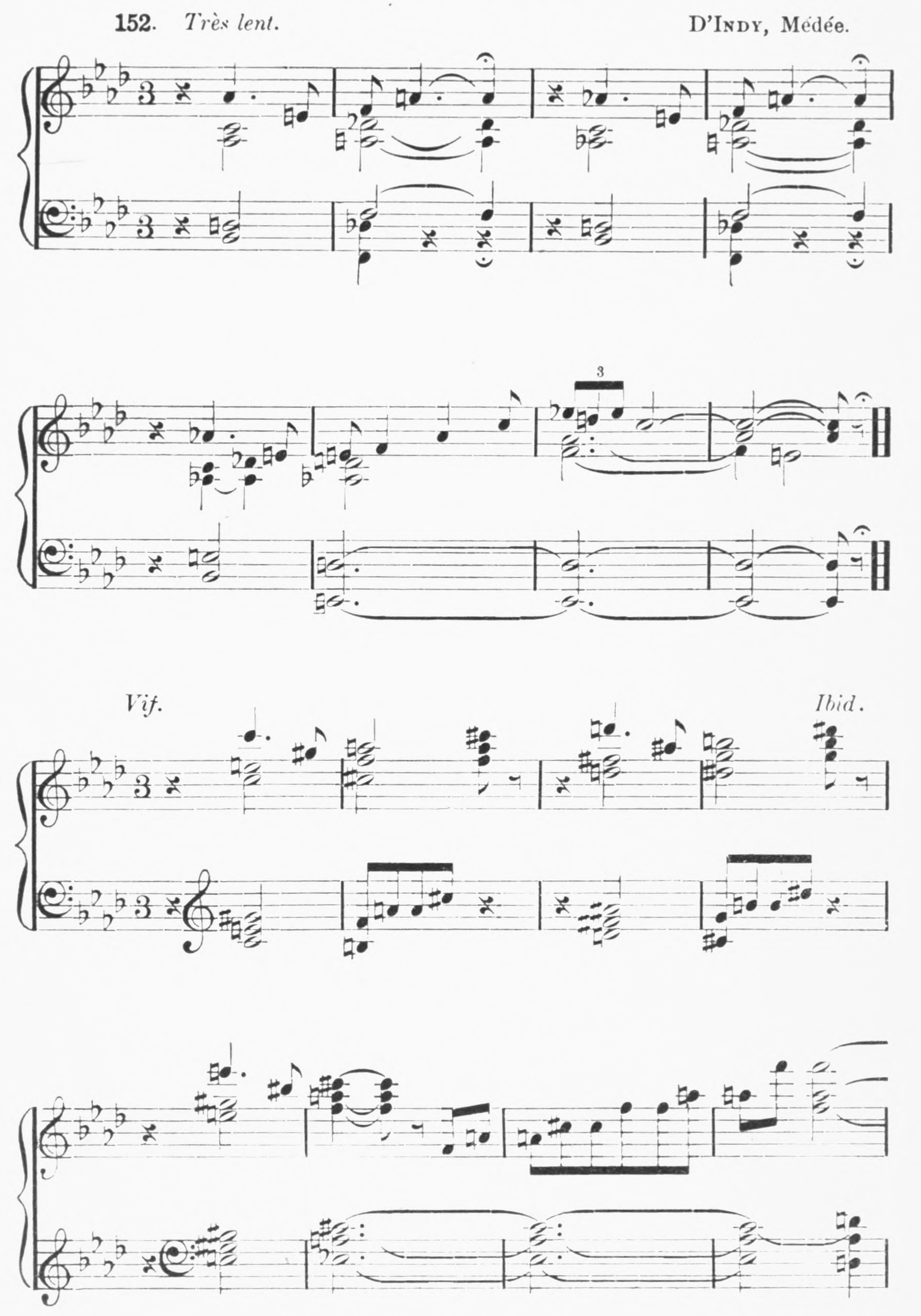
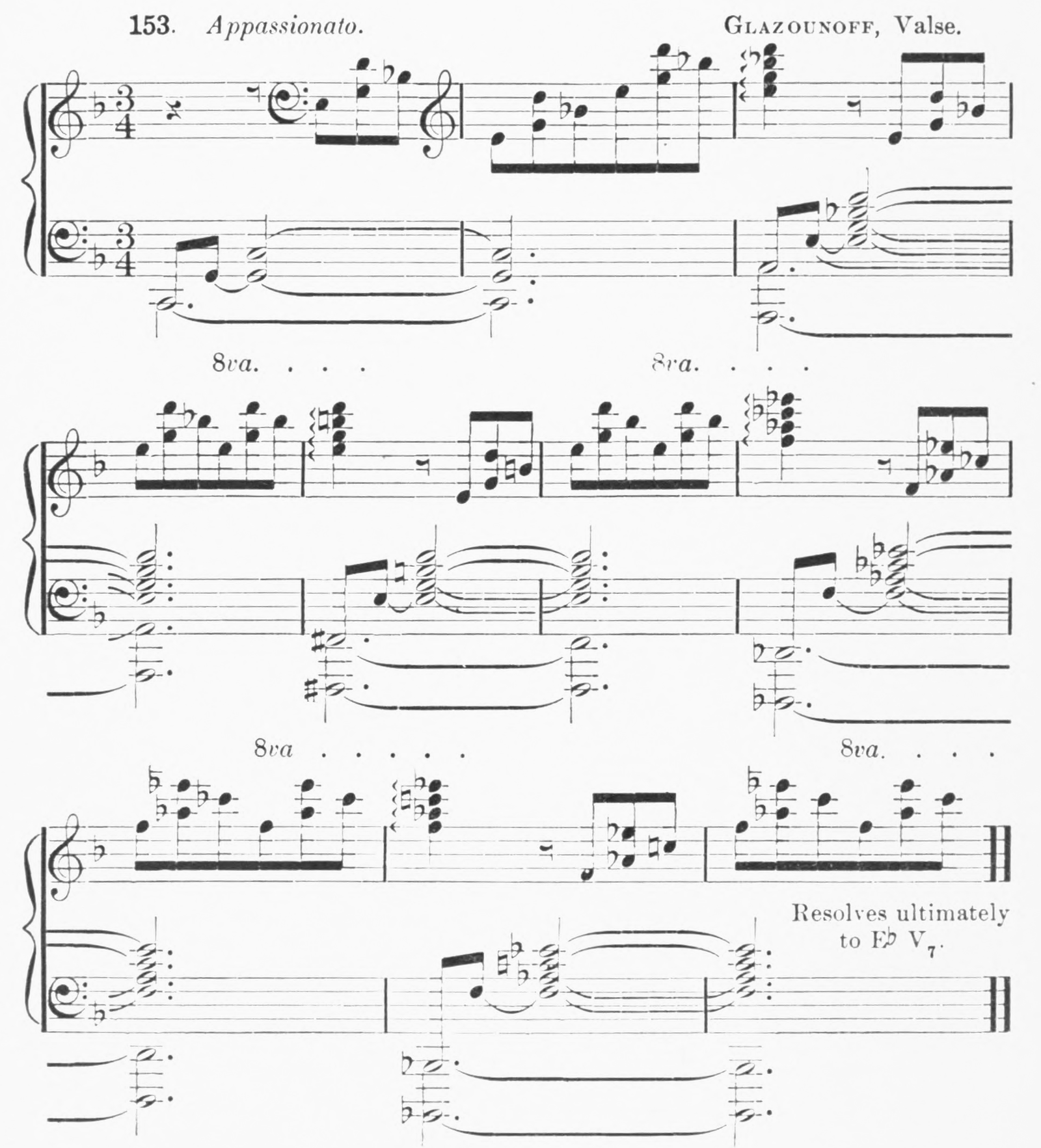
The difficulty in preparing this book was not what to use, but what not to use. To those who care to go farther and to investigate in a broad and general way, the author would recommend the best of Schubert’s Songs, Schumann’s Davidsbündler, the Kreisleriana, and the great C major Fantaisie, Chopin’s Etudes (possibly), the Brahms Variations, Wagner’s Die Walküre (put off examination of the other things until a more general view of modern harmonics has been taken), the short Piano Pieces and the Songs of the two racially different harmonists, Grieg and Tschaikowsky, the Beatitudes of César Franck, and his great Piano Pieces, returning again and again to the Beethoven of the Piano Sonatas and of the greater Variations. Verdi in his latest works—Othello, Falstaff, the Requiem—and Puccini in La Tosca, will display the new Italian school at its best, and the Extremists of the Russian piano writers—Glazounoff, for instance—will be found well worth the while. The chamber music of such radically diverse minds as Sinding the Norseman, and that man of the South, Goldmark, will, when studied and compared, give food for thought and criticism.
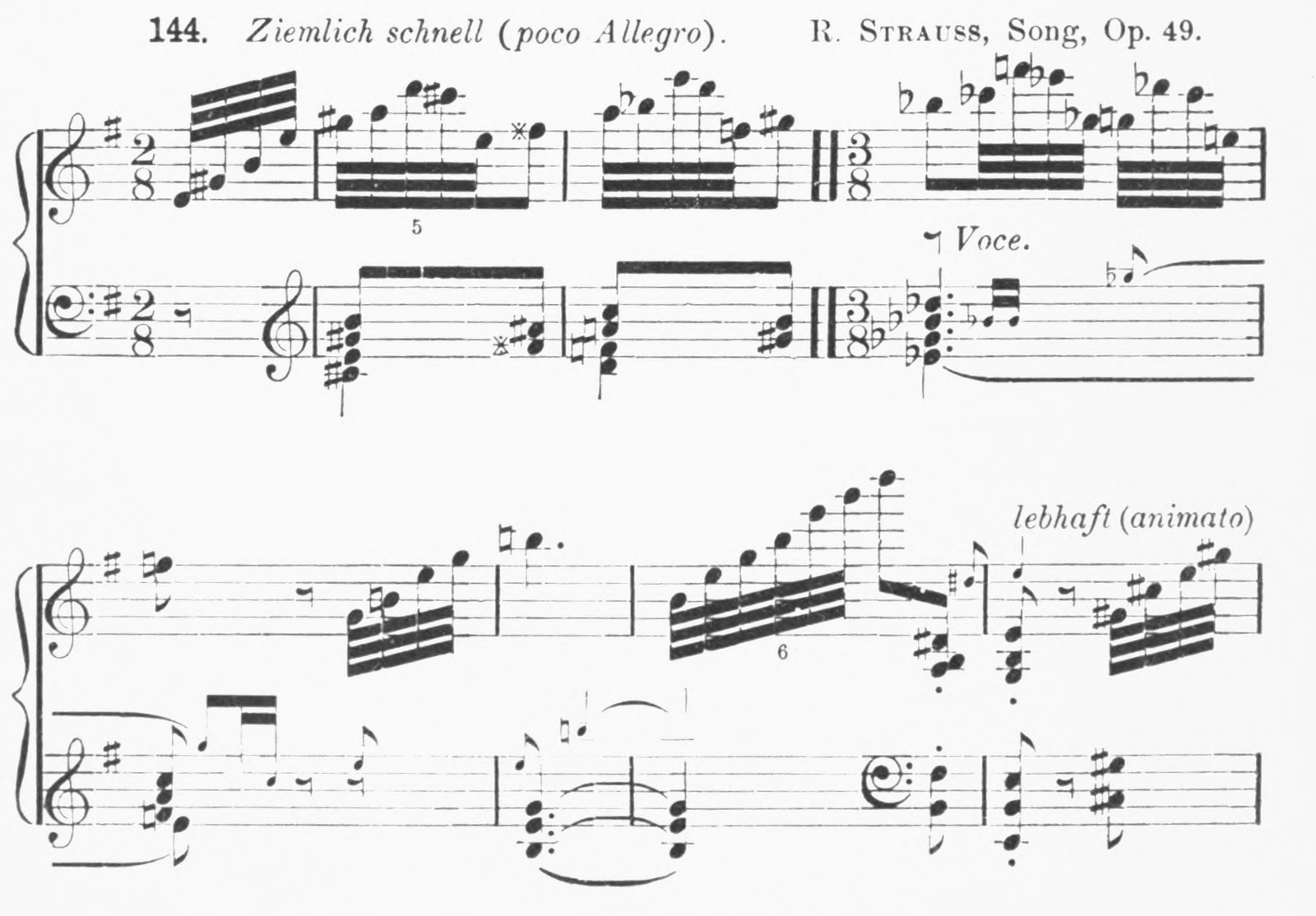
The investigating student will also find both startling and exquisite things in the works of not a few Americans, and he may draw profit from the Bohemian Dvořák, especially from his fine Requiem and from his Piano Trios. He may also learn that the new-Germans have said little of originality in a harmonic way; that Richard Strauss, for example, although he has gone far, has in many of his works given more color and counterpoint than harmony; he may find out that to go to the apparent End of Things in Harmony—that is, what we would call the End—he must go to the out and out Cacophanists, to the Frenchmen of this day, to D’Indy, to Bruneau, for instance, and to those occasional Americans who follow the same tendency.
 Playable Books