Playable Books
Cecil Forsyth · section 7 of 39
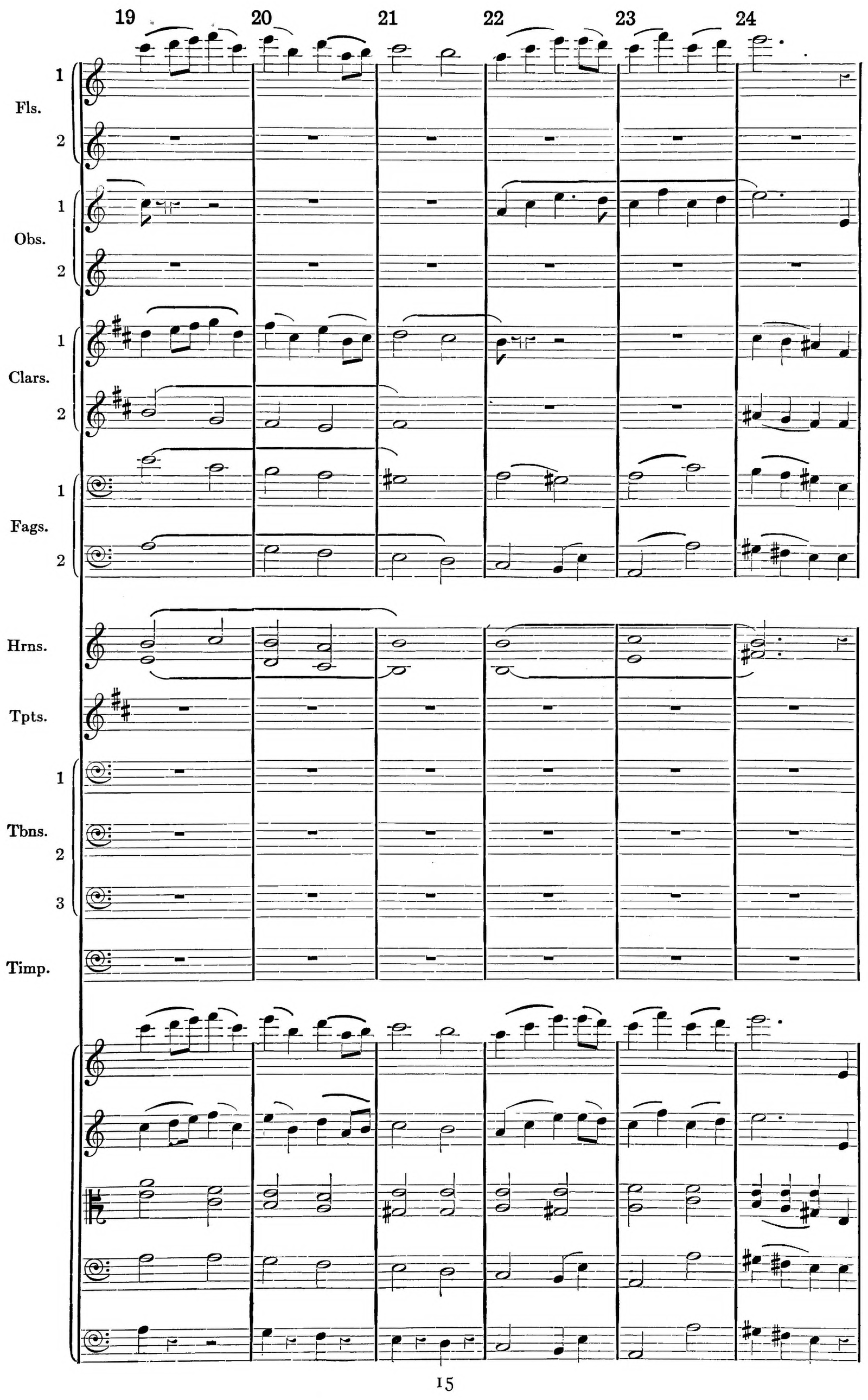
[Bars 19–24]
Read and hear this section in the playable edition →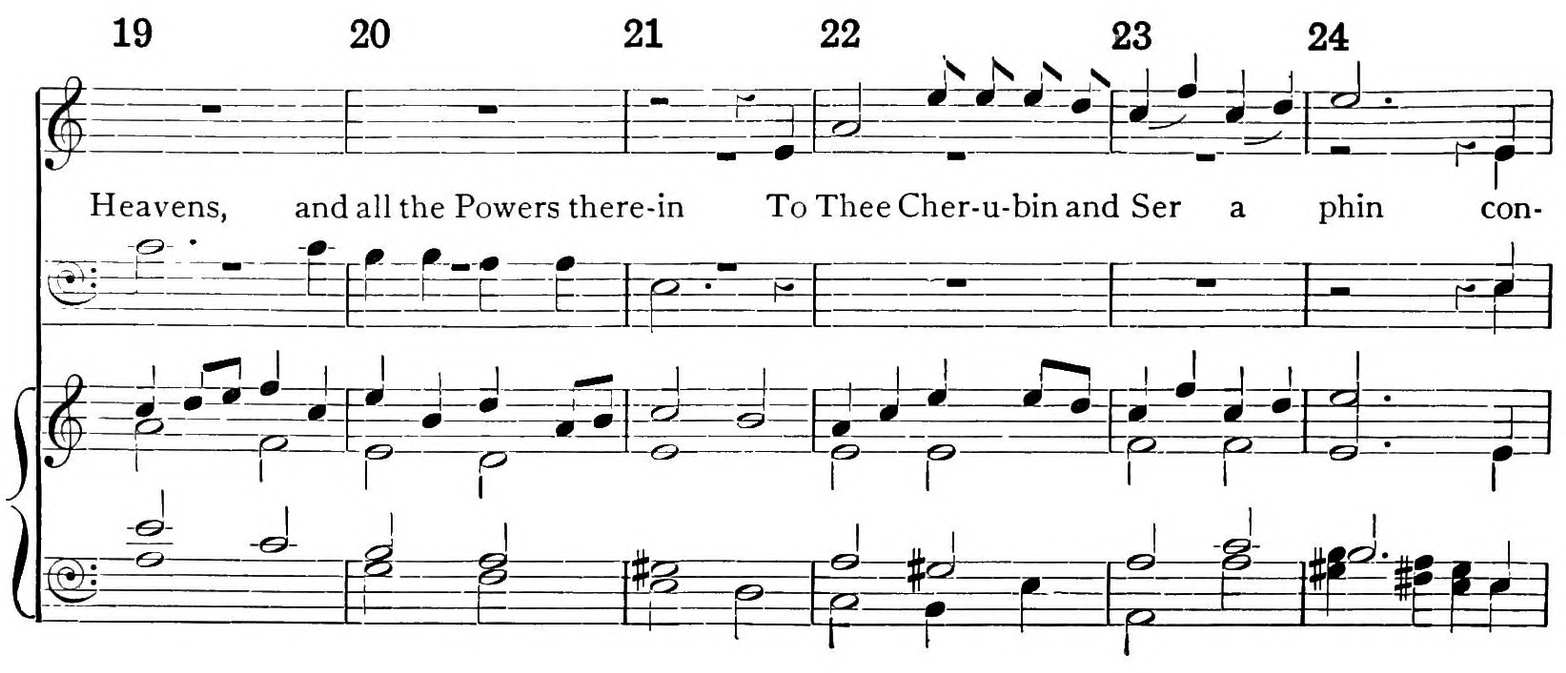
A word may be said here with regard to the filling in of orchestral parts. As a rule writers on orchestration—either from want of experience or from too much experience with bad music—lay it down as almost axiomatic that holding notes should be plastered in everywhere. The mental state of the listener, who is quite able to appreciate beautiful musical contours, is wholly forgotten. On goes the plaster; and the thicker the layer, the coarser the colour has to be on top of it. It is like drug-drinking: the more you take, the more you want.
I am totally opposed to this plastering business. In fact it is at the root of almost all orchestral uncertainties in the minds of composers. Nine times out of ten the logic at the bottom of these miscalculations is that the composer has written something which is orchestrally effective and charming in itself, and has then proceeded to prevent the audience hearing what he has written. If he does not score his own work, he is often liable to grotesque misrepresentation. There is no justification for this. The composer's “spread” and “placing” of his chords must be respected. A note totally omitted from a chord must be supposed to be omitted for a good reason. As a rule it is the easiest thing in the world to see when a composer has left out notes merely because they cannot be played by two hands on the pianoforte. A little license in the outside parts, and particularly for the brass when they are playing forte, is about all the orchestrator should demand.
But the beginner has another difficulty to face when it comes to filling in parts. Organist-composers who have occasionally brought me their scores for criticism have sometimes expressed a natural feeling of helplessness when faced with this somewhat mechanical task. Accustomed as they are to unloosing hvrricanes with a touch of their fingers, they confess to a certain blank dismay when they have to choose irrevocably between two or three puny wood-wind instruments. The modern organ gives them fifty different tone-colours, each of which is homogeneous from the top of its scale to the bottom. Within the orchestra this sort of smooth effortless perfection scarcely exists. In its place we have a dozen different instruments, mostly of high and ancient lineage. They are almost all “survivors of the fittest” in respect of their beautiful tone-colours. But their constitutions are amazingly cranky; and when mishandled by the injudicious composer they are liable to protest with dreadful shrieks and groans. I need not particularize here. The point is that the outsider, used to a machine-made balance of tone, is apt to be non-plussed when he first meets this stiff-necked generation of orchestral individualists. His complaint is that he knows what he wants, but that he has no idea how to get it on paper.