Playable Books
Cecil Forsyth · section 8 of 39
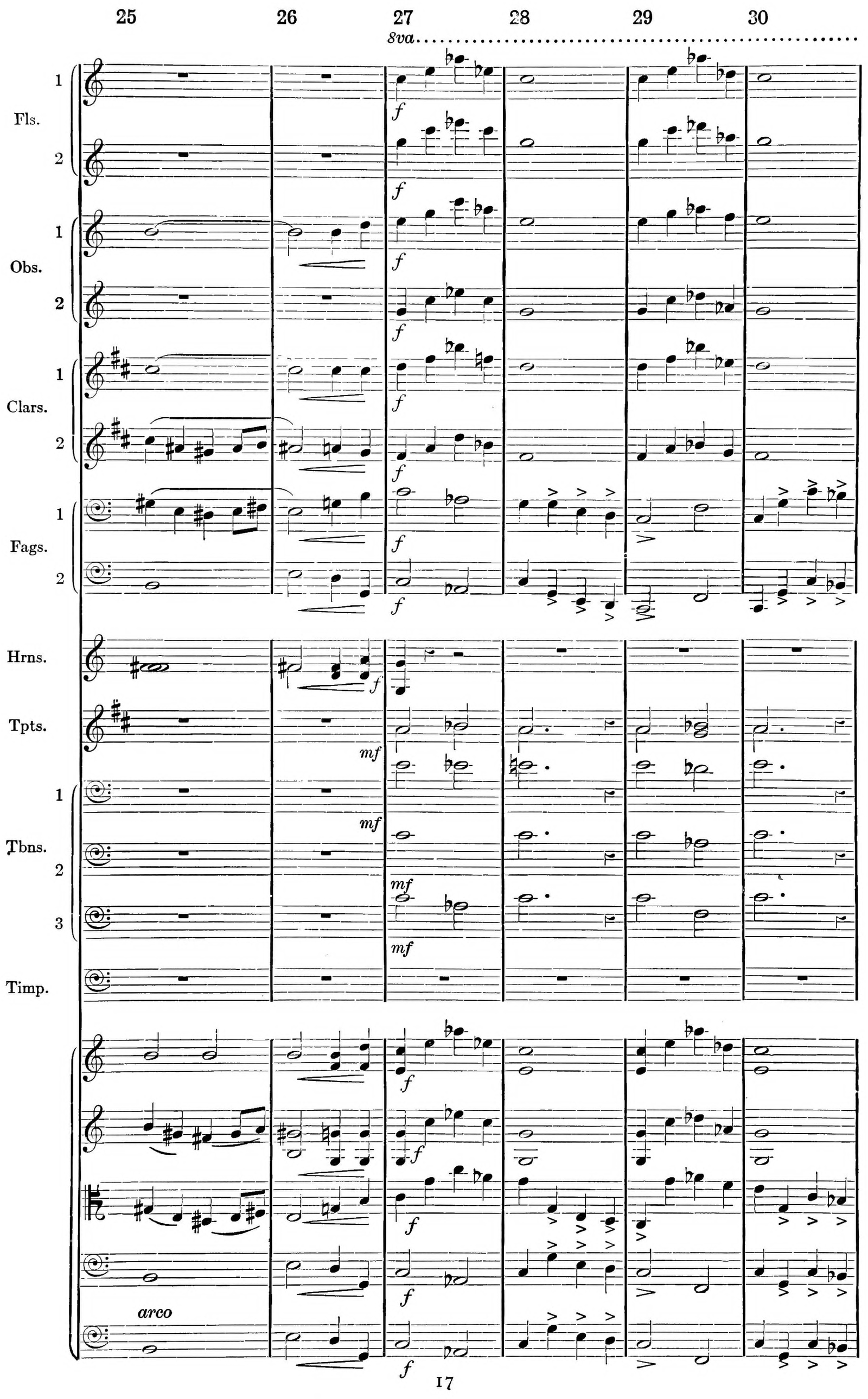
[Bars 25–30]
Read and hear this section in the playable edition →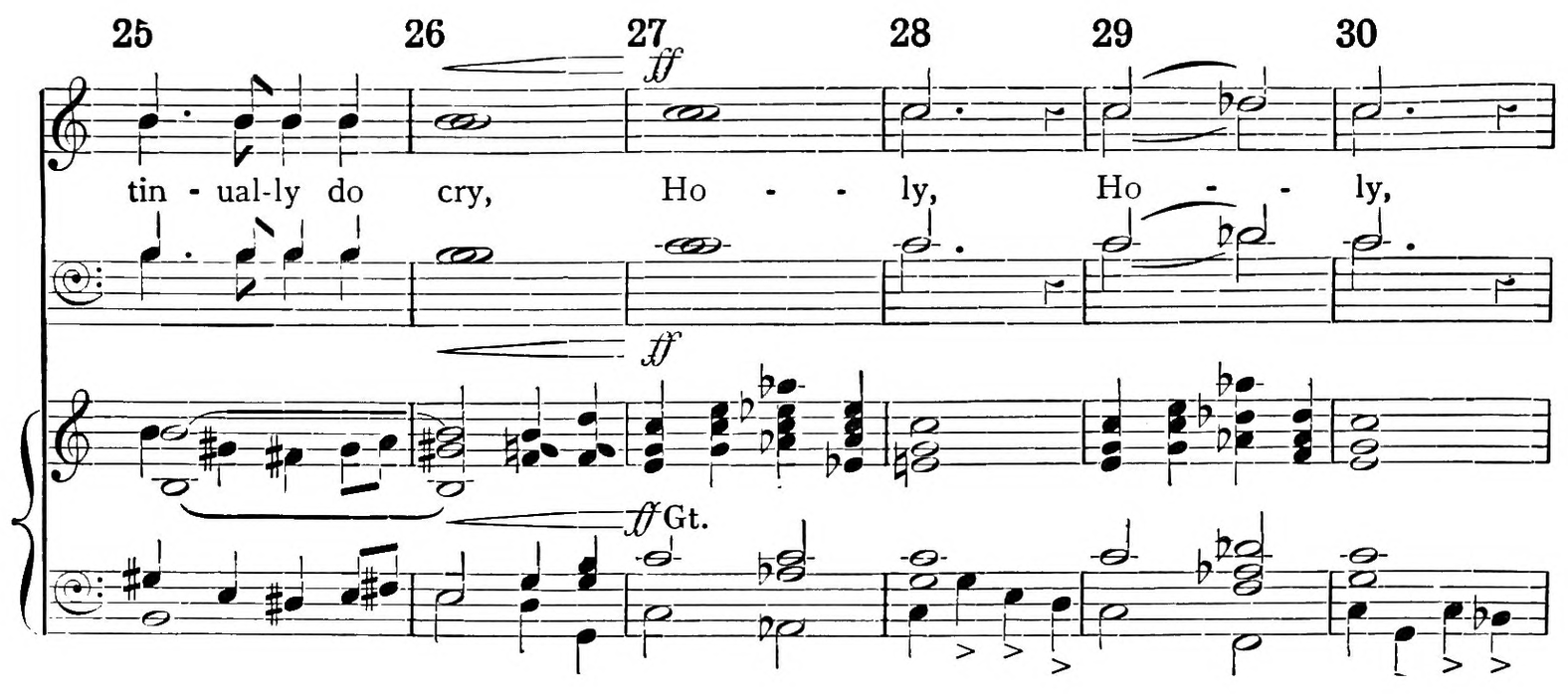
The usual answer to this complaint is that he lacks experience. The more helpful answer is that he lacks knowledge and analysis, both of which should precede experience. The first, that is to say the detailed knowledge of the orchestral instruments with their limitations and capabilities, he can and should get from instrumentation books. But he is earnestly advised to acquire this information from some book which presents him, not merely with the meagre statements of clefs and compasses, but with the treatment and historical background of the instruments as they exist today. If he intends to employ that marvellous organization the modern orchestra, the least he can do is to understand what it is. The analytical side of the matter is just as important, perhaps more so. And it is just in that field that heavy spade-work is an absolute necessity to the student. Miniature scores are almost useless. They have their value as guarantees of musical respectability to their owners. But for hard analytical study few of them are worth the paper on which they are printed.
However, the student must undertake the dissection of full-scores, even if he does not resort to the heroic old practice of copying them out. And it is for that reason that this book is arranged in its present form, so that the student, after reading the letterpress, can compare the two versions again and again, bar-by-bar and note-by-note.
Here I should like to suggest to him a little lesson on the subject of the additional notes which are sometimes necessary in transferring an organ-part to a full orchestral score. Let him take a sheet of music-paper, and number fifteen bars, corresponding to the first fifteen bars of the Te Deum. Let him compare the organ-part rigorously chord-by-chord with the full-score; and whenever he finds a sound in the latter that is not in the former, let him enter it on his blank sheet, however odd-looking the result may be. As an example bars 7, 8, 9, 10 would stand as follows:
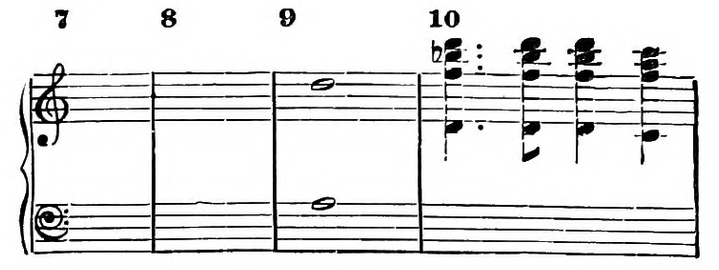
If he will do this conscientiously, and further notice how, whatever the instrumental combination may be, the outstanding instruments always have the main notes of the composer's chord, and the additional notes are always allotted to the feebler instruments, he will learn one good lesson in orchestration.